
 Worksheets
Ch 04 Life in Medieval Towns
Total questions: 83
Worksheet time: 46mins
Who would NOT entertain the fairgoers during the Middle Ages?
Minstrels
Dancers
Serfs
Jugglers
Clowns
For serious crimes, what would be the punishment?
Stock
Fine
Hanging
Jousting
Leperocy
Name the two types of guilds.
Merchant and Knights
Craft and Barrel
Apprentices and Journeymen
Merchant and Craft
Merchant and Master Piece
At what age did one become a full knight?
(a)
What is the definition for APPRENTICE?
skin and nerve disease that causes open sores on the body and can lead to serious complications and death
a deadly contagious disease caused by bacteria and spread by fleas
singer or musician who sang or recited poems to music played on a harp or other instrument
person who works for an expert in a trade or craft in return for training
person who has learned a particular trade or craft but has not become an employer, or master
What is the definition for JOURNEYMAN?
skin and nerve disease that causes open sores on the body and can lead to serious complications and death
a deadly contagious disease caused by bacteria and spread by fleas
singer or musician who sang or recited poems to music played on a harp or other instrument
person who works for an expert in a trade or craft in return for training
person who has learned a particular trade or craft but has not become an employer, or master
What is the definition for LEPROSY?
skin and nerve disease that causes open sores on the body and can lead to serious complications and death
a deadly contagious disease caused by bacteria and spread by fleas
singer or musician who sang or recited poems to music played on a harp or other instrument
person who works for an expert in a trade or craft in return for training
person who has learned a particular trade or craft but has not become an employer, or master
What is the definition for GUILD?
skin and nerve disease that causes open sores on the body and can lead to serious complications and death
organization of people in the same craft or trade
singer or musician who sang or recited poems to music played on a harp or other instrument
person who works for an expert in a trade or craft in return for training
person who has learned a particular trade or craft but has not become an employer, or master
Name the one opportunity open to Jews?
Weaver
Cobbler
Banker/Moneylender
Baker
Mason
Pages and squires were boys in training to become _______.
A. kings.
B. knights.
C. teachers.
D. landowners.
Bankers
What were the Middle Ages more commonly known as?
Renaissance
The Norman Invasion
The Fall of the Roman Empire
Upper Ages
Dark Ages
Name the town that was known for their fine woolen cloth.
Rome
Venice
Flanders
London
Paris
Name the town that was known for making glass.
(a)
During the Middle Ages, why did they throw their garbage into nearby ditches, canals, or simply out the window?
They wanted people to get diseases
In honor of their new King
So the animals would have some food
There was no garbage collection
What age do boys and girls become apprentices?
(a)
EQ: What was life like in medieval (a) towns?
Ch. 4 Life in (a) Towns
In Christian Europe, what group of people were often prejudice against?
Lepers
Romans
Greeks
Jews
English
A _____ is a space in their house where the family gathered to eat and talk.
Stocks
Guild
Solar
Domain
Charter
What group of people were ordered to live by themselves in isolated homes, far from town?
Lepers
Romans
Greeks
Jews
English
What was the most feared disease which had no cure?
West Nile Virus
Bubonic Plague
Small Pox
Covid
Polio
The _______ were a wooden frame with holes for the person’s legs and sometimes arms.
Charter
Guild
Solar
Domain
Stocks
Who would entertain the fairgoers?
Jugglers
dancers
clowns
minstrels
All of the above
Medieval doctors believed that ___________ helped restore balance to the body and spirit.
Leper colonies
the Bubonic Plague
bloodletting
tapping
solar
Medieval towns could be described as all of the following except....
Clean, Innovative
Dirty, full of diseases
Crowded, Cramped
Where people moved for jobs
Mostly, boys in the middle ages
were taught to do house work
had the same job as their father
could be any profession they wanted
Most business in medieval towns and cities would hang signs with colorful pictures outside, because...
people love colorful pictures.
people were mostly illiterate.
people didn't have time to read.
Why were towns very dangerous at night time?
There weren't any streetlights.
Too many watchmen on patrol.
Towns were unhealthy and smelly.
Pickpockets were always around.

Which word belongs in the empty box?
customer
journeyman
money lender
merchant seaman
Which of these did a girl’s education most often include?
logic
cooking
astronomy
mathematics
One of the biggest causes of disease in medieval towns was
unsanitary conditions.
poison in community wells.
refusal to use herbal medicines.
lack of care by family members.
Which game played today was popular in medieval towns?
lacrosse
basketball
badminton
ice hockey
Match the following

mystery play

miracle play

bubonic plague

leproocy

journeyman
Match the following

commerce

guilds

minstrel

Jew

apprentice
Match the following

charter

domain

common law

caravan

exile

During a history class, Abigail learned that a unique haircut was popular among Catholic monks in Europe during medieval times. Olivia, her classmate, called it the ______________. Michael, who was known for his knowledge in history, agreed with Olivia.
Bowl Cut
Crew Cut
Tonsure
Tenure
Soft Curved Bob

Avery, James, and Henry are having a debate about the Roman Catholic Church. They are trying to identify the supreme leader of the Roman Catholic Church. Who is it?
Nun
Pope
Knights
King
Crusaders

During their field trip to France, Aiden, Mia, and Lily noticed that the _____________ on the Notre-Dame Cathedral, a famous Gothic cathedral, were often carved in the shape of hideous beasts.
gargoyles
relic
flying buttress
moat
gothics
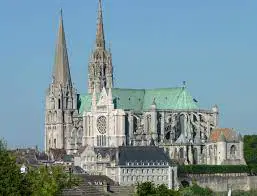
Grace, Benjamin, and Avery visited a large and important church during their field trip. They learned that such a church is called a _______________.
Cathedral
Castle
Moat
Chapel
synagogue

Evelyn, Nora, and Rohan are participating in a school play about the Crusades. In the play, what was a main goal of the Crusaders?
A. to teach Christians how to read
B. to set up monasteries in Germany
C. to take Jerusalem from the Muslims
D. to spread Christianity to the Byzantines
all of the above
During the Middle ages unfree peasants were called (a) .

Why were castles built during the Middle Ages?
To make nobles more comfortable
To impress guests
For protection
Nobles likes to show off their wealth


Match the following

fief

manor

jousting

chivalry

hierarchy
Match the following

Divine Right of Kings

Noble

Duke

Moat

King
Match the following:

armor

Christianity

Roman Catholic Church

Pope

barbarian

The (a) was at the top of the medieval social pyramid.

The Roman religion was?
Muslim
Christian
Buddhist
Shiekh

Let’s guess how many blocks in this tower?
5
7
9

What continent do we live on?
Africa
Europe
South America
North America

Dora's best friend
Diego
Map
Backpack
Boots

What dog is this?
Wolf
Husky
Doberman
German Shepherd

What type of Dog is this?
Golden Retriever
Goldendoodle
Rottweiler
Doberman

what dog breed is this
German Shepard
fish
cat
snake


Name that Flag!
Argentina
Israel
Japan
Venezuela



During the Middle ages unfree peasants were called (a) .
About what age did a squire become a knight?
early 30s
18 only
early teens
early 20s
early man
Two armed knights on horseback galloped at each other with their lances held straight out.
What is this describing?
Curling
Jousting
Archery
Longbow
Sparring
We get the modern idea of _____________ as traditional forms of courtesy and kindness towards women.
Jousting
Monarch
Heraldry
Chivalry
Bushido

Why were castles built during the Middle Ages?
To make nobles more comfortable
To impress guests
For protection
Nobles likes to show off their wealth
Match the following:
armor
Christianity
Roman Catholic Church
Pope
barbarian
Match the following
Divine Right of Kings
Noble
Duke
Moat
King
Match the following
fief
manor
jousting
chivalry
hierarchy
We are studying (a) Europe.
Flanders was the town that specialized in fine woolen cloth.
define specialized
A. To do many different things
B. To focus on making or doing one particular thing well
C. To stop making something
D. To trade goods with other towns
The average lifespan of a peasant during the Middle Ages was 55-60 years old.
You should never rest your ______ at the table.
(a)

