
 Worksheets
Space
Total questions: 57
Worksheet time: 42mins
What determines the length of a day here on Earth?
the moon's rotation
the Earth's revolution
the moon's revolution
the Earth's rotation
Which of the following is FALSE?
Stars orbit planets.
Galaxies orbit the center of the universe.
Planets orbit stars.
oons orbit planets.
Which is the correct order of the moon's phases?
first quarter, third quarter, new moon, full moon
new moon, first quarter, full moon, third quarter
new moon, full moon, first quarter, third quarter
first quarter, new moon, full moon, third quarter
What causes neap tides?
The moon casts a shadow on the Earth.
Both the sun and the moon are pulling the Earth's water in the same direction.
The Earth casts a shadow on the moon.
The moon is pulling the Earth's water perpendicular to the sun.
How much of the moon's surface is lit up at all times?
all of it
a fourth of it
half of it
It varies.
Which of the following is FALSE?
Waxing is when we can see more and more of the moon's surface.
A rotation is when an object spins one full time around its own axis.
Waning is when we can see less and less of the moon's surface.
A revolution is when an object orbits around its own axis.
What is the approximate time that it takes for the Earth to orbit the sun?
365 days
24 hours
30 days
10 years
Which phase does the moon begin with?
full moon
new moon
first quarter
last quarter
The length of a month here on Earth is determined by what?
the moon's revolution
the Earth's rotation
the moon's rotation
the Earth's revolution
Planets spin around
their moon.
their equator.
their axis.
their orbit.
The length of one year here on Earth is determined by
the Earth's revolution.
the Earth's rotation.
the moon's rotation.
the moon's revolution.
One full revolution of the moon around the Earth is approximately
24 hours.
28 days.
365 days.
5 years.
What force causes orbiting?
gravity
magnetism
mass
friction
What causes eclipses?
gravity from the sun on Earth
the rotation of the moon
the layers of the sun
light from the sun causing shadows
Which of the following is FALSE about the layers of the sun?
The corona is the sun's outermost layer that is made of very thin gases.
The convective zone is the region where gases circulate in convective currents.
The radiative zone is the thin layer of gases between the corona and the core.
The core is the very center of the sun.
What causes high tides and low tides?
the moon's gravity pulling on the Earth
the moon's gravity pulling on the sun
the Earth's gravity pulling on the sun
the Earth's gravity pulling on the moon
One full rotation of Earth is approximately
30 days.
365 1/4 days.
1 year.
24 hours.
What causes spring tides?
the sun and the moon pulling the Earth's ocean water in the same direction
the sun and the moon pulling the Earth's ocean water in opposite directions
the rotation and revolution of the moon combined
the sun and the moon pulling the Earth's ocean water in the same direction
Which of the following is NOT TRUE?
A solar wind is the wind we feel here on Earth from the sun.
A sunspot is a cooler area of the sun's surface (photosphere).
A solar flare is a giant storm on the surface of the sun.
A solar prominence is an eruption of gas from the surface of the sun.
The Moon is the Earth´s natural...
celestial body
satellite
comet
Planets and other celestial bodies orbit...
The Moon
The Earth
The Sun

What's the name of our galaxy?
Andromeda
Orion
The Rosy Way
The Milky Way
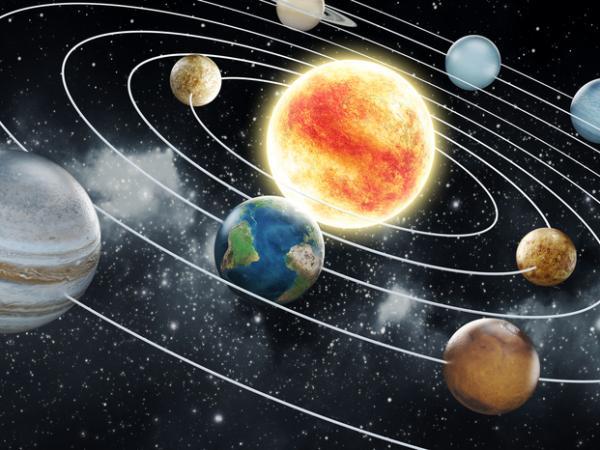
The universe started with an explosion that sent matter into space, and it continues to expand today.
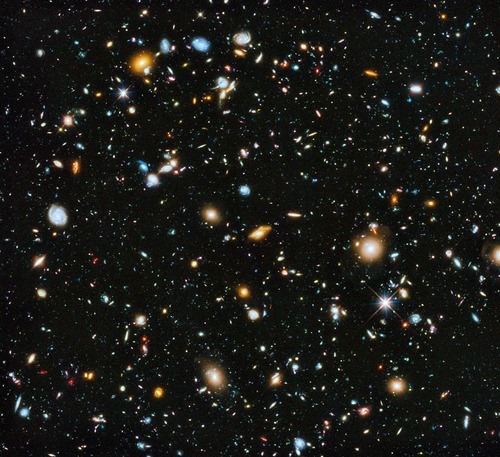
The Universe is a group of:
Celest bodies, matter and energy that are in the space.
Gas, dust and millions of stars
A great ball of gas that proyects light.
The MIlky way
Galaxies are:
gropus of Asteroids
Groups of planets
Groups of stars, gas and dust.
Group of satellites
Collections of ice and dust whose orbits are usually long, narrow elipses
Asteroid
Meteorite
Comet
Planet
Large conglomerations of stars
Galaxies
Planets
Solar system
Nebulas
A meteoroid that enters the Earth's atmosphere and vaporizes. Also called a shooting star
Comet
Meteor
Asteroid
Natural satellite
Meteor that hits the Earth without burning up in the Atmosphere
Meteorite
Asteroid
Comet
Star
Object larger than a meteoroid that orbits the sun and is made of rock and metal.
Meteor
Comet
Asteroid
Planet
Celestial body that is in orbit around a star and has enough mass and gravity to force a spherical shape
Comet
Asteroid
Planet
Meteor
Huge glowing ball of hot gas, mainly hydrogen and helium that helds nuclear fissions at its core
Comet
Star
Planet
Asteroid
Man-made device orbiting around the Earth, Moon or another planet that transmits information or is used for communication
Planet
Artificial satellite
Natural satellite
Star
One physical property of a star is apparent magnitude. Which of the following is used in determining the apparent magnitude of a star?
A. the constellation the star is in
B. the distance the star is from Earth
C. the number of times the star rotates
D. the number of prominences the star makes

The chart below displays the names of different stars and their colors. Which of the groups below best orders the stars from hottest to coolest?
A. Antares, Spica, Sun, Aldebaran
B. Sun, Spica, Antares, Aldebaran
C. Spica, Sun, Aldebaran, Antares
D. Antares, Aldebaran, Sun, Spica
One physical property of a star is absolute brightness. Which of the following is used in determining the absolute brightness of a star?
how bright the star actually is
how bright the star appears to be from the Earth
the number of prominences the star makes
the direction the star rotates

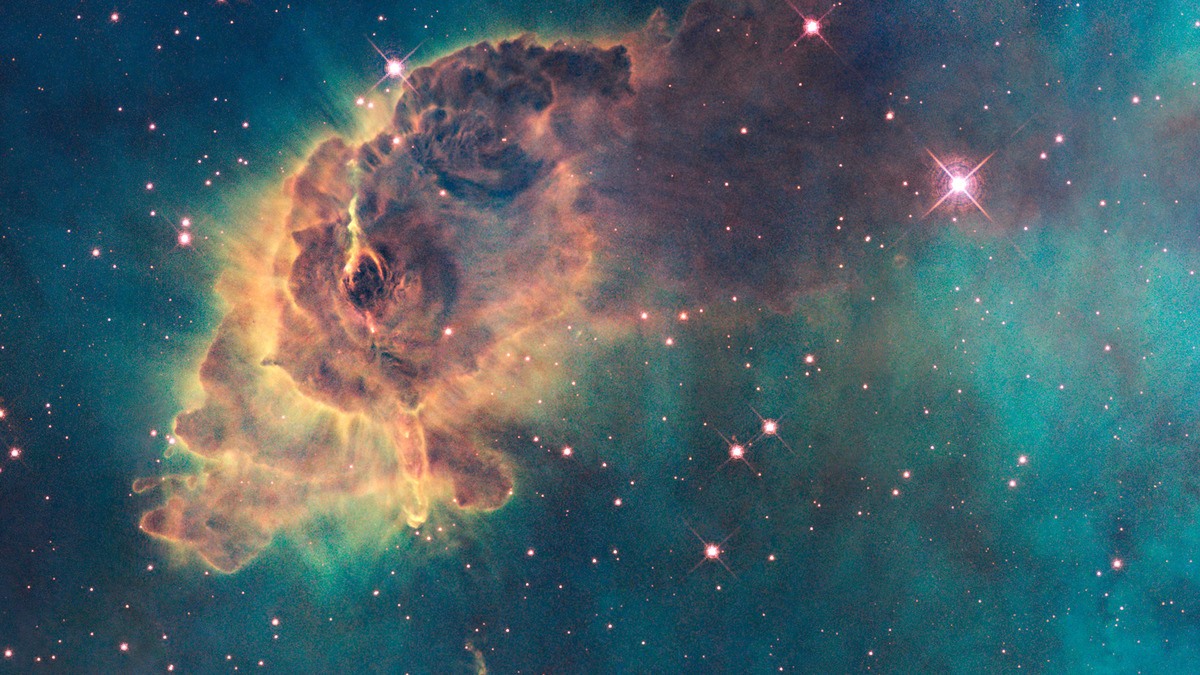
Stars that give off yellow light
Red Dwarf stars
White Dwarf
Neutron stars
Medium stars

Stars that are very bright, large & burn at the highest temperature
Blue Giant stars
Red Giant
Neutron stars
Proto stars
What are TWO things that happen on the surface of the Sun?
Sunspots
Explosions
Solar Flares
Greenspots



