
 Worksheets
Chapter 3 Assessment: Light
Total questions: 25
Worksheet time: 25mins
The theory that explains light as a particle.
corpuscular theory
electromagnetic wave theory
quantum theory
wave theory
Enlarged image can be formed by
concave mirrors only
convex mirrors only
either concave or convex mirror
neither concave nor convex mirror
The image formed by a convex mirror is always
real
inverted
bigger than the object
smaller than the object
If you are looking obliquely on a fish under water, in what direction should you aim your arrow to hit it?
above the fish
below the fish
directly to the fish
either below or above the fish
The term refraction refers to
the bending of light rays when they strike a mirror.
the bending of light rays when they enter a different medium.
the fact that white light is made up of many colors.
the fact that light travels in straight line in uniform medium.
As the angle of incidence increases, the index of refraction of a medium
increases
decreases
remains unchanged
none of the above
If you look down on a pool of still water, you see your face clearly. Which one of the following gives the best explanation for this observation?
Dispersion of light on entering water
Reflection of light by the surface of the water
Refraction of light by the surface of the water
Light is reflected from the surface of the water in different directions.
A diamond is a brilliant gem because
it has low index of refraction.
it has big critical angle.
most of the light is refracted.
most of the light is reflected internally.
A ray of light is reflected from a plane mirror. The angle of incidence is 20°. The angle between the incident and the reflected ray is
10°
20°
30°
40°
When you stand 3 m in front of a full length mirror, your image is
real and 1 m behind the mirror
real and 3 m behind the mirror
virtual and 2 m behind the mirror
virtual and 3 m behind the mirror
The bottom of a clear and deep lake appears to be shallow because of
diffraction
polarization
reflection
refraction
When sunlight strikes raindrops, it passes through them and produces
halo
heat
rainbow
shadow
Side mirrors of motor vehicles allow the driver to see wider areas. What best describes the images compared to the real object in this kind of mirror?
bigger
smaller
the same
inverted
Where does light travel fastest?
air
glass
vacuum
water
Light is what kind of wave?
Electromagnetic Wave
Mechanical Wave
Matter Wave
Surface Wave
What do you call the bending of light around the corners of objects?
diffraction
dispersion
reflection
refraction


What is happening in this picture?
Reflection
Refraction
Which of the following best models how light is reflected?
An arrow hitting a target
A ball bouncing off a wall
An apple falling from a tree
A marble rolling down a ramp
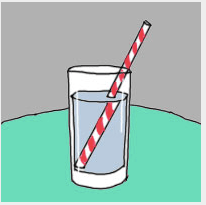
Why does the straw appear to be bent?
light is reflected
light is absorbed
light is turned
light is refracted


What is the angle of reflection (θr) in the image?
56o
90o
124o
34o
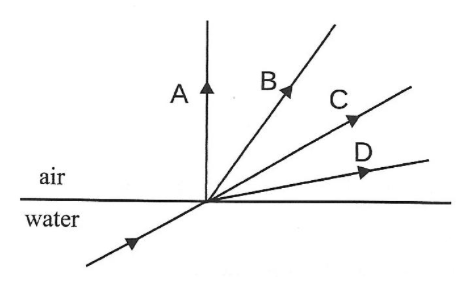
A light ray is incident from water to air. Which of the refracted rays is correct?
A
B
C
D
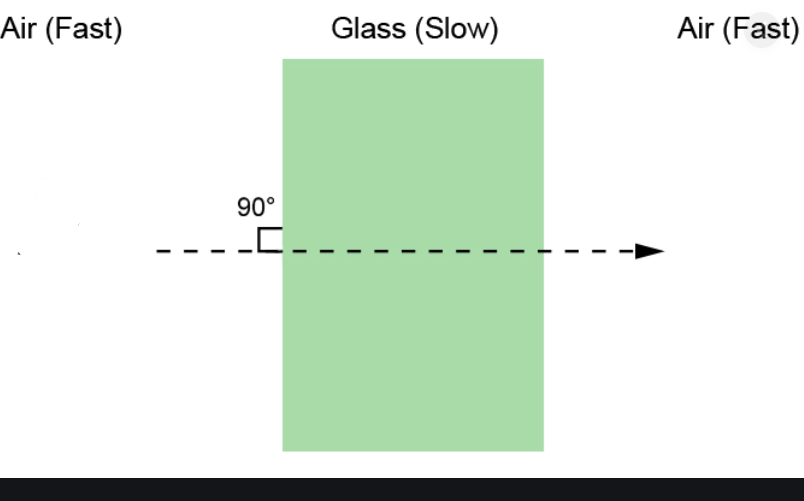
The line 90 degress through the refracting or reflecting surface is called?
Medium
Normal
Incidence
Reflection
A beam of light bends when it passes from air into water, and more when it passes from water into glass. What can you conclude from this fact?
Air is denser than glass
Water is denser than glass
Glass is denser than water
Air is denser than water

