wayground logo

Free Printable Worksheets

NEW

Font size

S
M
L
XL
Worksheets

Finalprep PS1

Total questions: 41

Worksheet time: 31mins

Name
Class
Date
1.
At which point is potential energy greatest?
a)
W
b)
X
c)
Y
d)
Z
2.
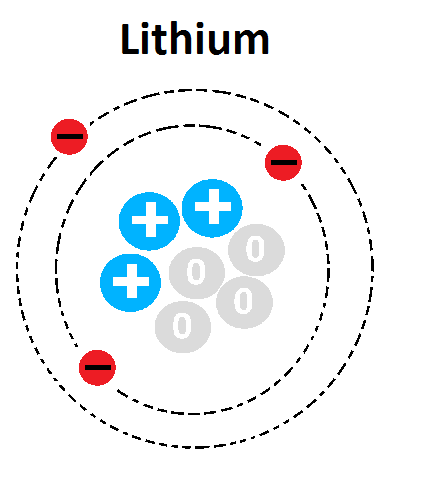
What is the name of this element?
a)
Lithium
b)
Boron
c)
Carbon
d)
Neon
3.
What is the acceleration of a 50 kg object pushed with a force of 500 newtons? To solve this problem you must do - 
a)
500 ÷ 50
b)
50 ÷ 500
c)
500 x 50
4.
According to the Law of Conservation of energy, the amount of energy before and after a reaction must be the same. Which statement below is true?
a)
The total amount of energy is conserved
b)
The total amount of energy is less after a reaction
c)
The total amount of energy is more after a reaction
5.
What is the mass number of this atom?
a)
1
b)
3
c)
4
d)
7
6.
What's a valence electron?
a)
electrons in the second energy level
b)
electrons in the outermost energy level
c)
the atomic number
d)
electrons in the first level
7.
Light has the highest velocity in which medium?
flint glass n=1.70
barium glass n=1.60
crown glass n=1.523
water n=1.33
diamond n=2.45
a)
diamond
b)
water
c)
flint glass
d)
barium glass
8.
As a pendulum swings from its highest to lowest position, what happens to its kinetic and potential energy? 
a)
The PE and KE increase and decrease together
b)
The PE decreases while the KE increases 
c)
Impossible to know without knowing the mass  
9.

This is a correct dot diagram for carbon (C)

a)

true

b)

false

10.
Two forces acting in opposite directions but equal in size or mass...
a)
unbalanced force
b)
speed
c)
average speed
d)
balanced force
11.
A net force of 250 N is applied to an object that accelerates at a rate of 5 m/sec2.  What is the mass of the object?
a)
50 kg
b)
245 kg
c)
.02 kg
d)
25.5 kg
12.
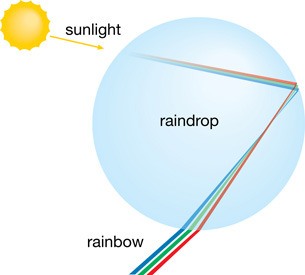
Light bending as it passes through a rain drop is an example of...
a)
Refraction
b)
Reflection
13.
a)
A
b)
B
c)
C
d)
D
14.
When does that ball have the greatest potential energy?
a)
A
b)
B
c)
C
d)
D
15.
Which has the LONGEST wavelength and, therefore, the lowest frequency/energy
a)
Gamma Rays
b)
Radio Waves
c)
Visible Light
d)
Infrared rays
16.

This could be the dot diagram of

a)

Mg

b)

Cl

c)

C

d)

O

17.
Wavelength =       4.8x10⁻¹² m
Frequency = ?
a)
6.2x10⁻¹⁹
b)
1.6x10⁻²⁰
c)
1.4x10⁻³
d)
3.2x10-45
18.

What is the right ratio of chemicals for the BCE (Balanced Chemical Equation)?

__Ca + __H2O --> __Ca(OH)2 + __H2

a)
2,1 --> 2,1
b)
1,2 --> 1,1
c)
1,2 --> 2,4
d)
1,2 --> 2,1
19.
Always starts with a Hydrocarbon that reacts with oxygen and produces carbon dioxide and water. 
a)
Decomposition
b)
Synthesis
c)
Combustion
d)
Single Replacement
20.
High frequency waves have _________ wavelengths.
a)
varying
b)
long
c)
the same
d)
short
21.
The following is what type of reaction:
NH3 + HCl  → NH4Cl
a)
Synthesis
b)
Decomposition
c)
Single Replacement Replacement
d)
Double Replacement Replacement
22.
One reactant into several products.
a)
Decomposition
b)
Synthesis
c)
Combustion
d)
Single Replacement
23.

Letter G represents...

a)

Compression

b)

Rarefaction

c)

Wavelength

d)

Amplitude.

24.

Which wave is carrying more energy?

a)

The blue wave because it has a larger amplitude.

b)

The blue wave because it has higher frequency.

c)

The red wave because it has higher amplitude.

d)

The red wave because it has higher frequency.
25.
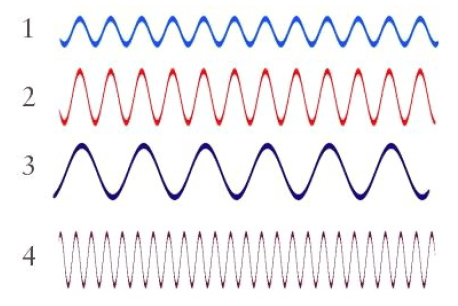
Which wave in the diagram has the greatest frequency?
a)
1
b)
2
c)
3
d)
4
26.
Which of the following lists the electromagnetic waves in order of increasing wavelength?
a)
X-rays, visible light, radio waves
b)
gamma rays, microwaves, UV rays
c)
infrared rays, radio waves, x-rays
27.
Is melting butter for popcorn a chemical or physical change?
a)
chemical
b)
physical
28.
During which interval is the object traveling at a constant velocity?
a)
B to C
b)
D to E
c)
F to G
d)
it traveling at a constant velocity during all of the intervals shown.
29.
Which of the following is NOT an example of chemical change?
a)
sour milk
b)
burning wood
c)
breaking a pencil
d)
rust
30.

The direction of force of friction is always _____ to the direction of motion

a)

same

b)

opposite

c)

unchanged

d)

none of these

31.

What letter on the diagram represents a liquid?

a)

A

b)

B

c)

C

d)

D

32.

During which interval is the object speeding up?

a)

A to B

b)

B to C

c)

D to E

d)

E to F

33.

The vertical (up and down) columns in the Periodic Table are called

a)

groups

b)

towers

c)

periods

d)

atomic numbers

34.

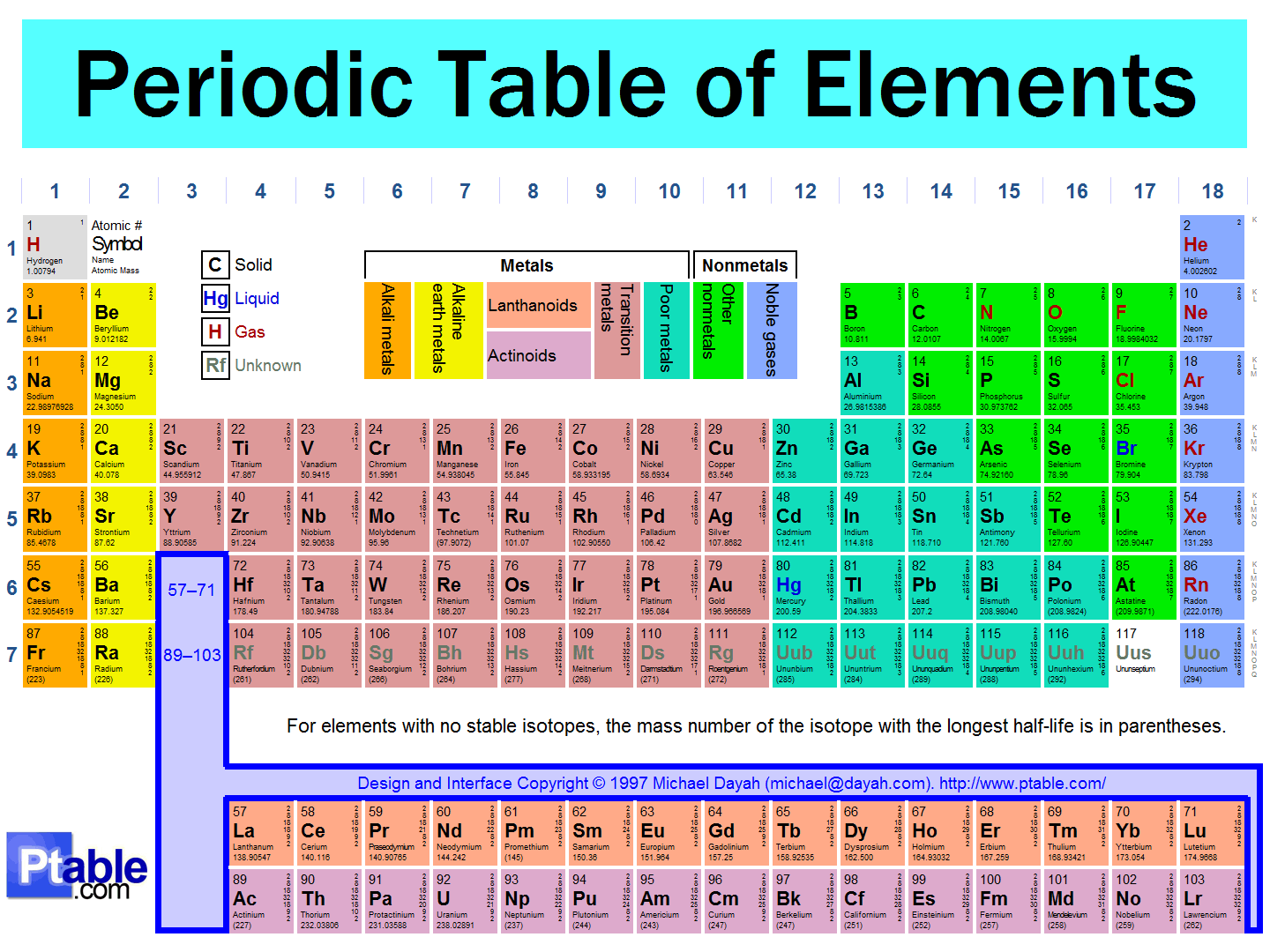
According to the diagram, which list represents elements that share the most similar chemical properties?

a)

O, Se, and Kr

b)

Se, Cl, and Ne

c)

S, Cl, and Ar

d)

Ne, Ar, and Kr

35.

Sodium (Na) is a highly reactive element. Which characteristic of sodium is responsible for its reactivity?

a)

Atomic mass.

b)

Nonmetal

c)

It has one valence electron and is in group 1

36.

What letter on the diagram represents a solid?

a)

A

b)

B

c)

C

d)

D

37.
The atoms along the staircase are called 
a)
metals
b)
nonmetals
c)
metalloids
d)
noble gases
38.
How many Valance electrons does Iodine Have?
a)
6
b)
16
c)
7
d)
17
39.
The atomic number tells you what?
a)
number of electrons
b)
number of protons
c)
number of neutrons
d)
both electrons and protons in an atom.
40.

What is the KE 1/2 of the way down?

a)

15,000 J

b)

3,750 J

c)

7,500 J

d)

11,250 J

41.

What letter on the diagram represents a gas?

a)

A

b)

B

c)

C

d)

D