
 Worksheets
Bio 3-4 s2 review
Total questions: 213
Worksheet time: 4hrs 31mins

Which type of symmetry does this organism have?
Asymmetrical
Radial Symmetry
Bilateral Symmetry
If an animal has a head and a tail, it has _____ symmetry.
It does not have symmetry.
bilateral
radial
super duper cool
A(n) ______ is a group of similar cells that performs a specific function.
organ
cell
tissue
organ system
Which is an example of an organ system?
Respiratory System
Heart
Blood
Jellyfish
A sea star has radial symmetry because ...
many imaginary lines can be drawn through a central point
one line of symmetry can be drawn to divide it into halves that are mirror images.
The embryo layer that forms the skin and nervous tissue is
endoderm
ectoderm
mesoderm
protostome
The animal's digestive tract forms from the
endoderm
extoderm
mesoderm
protostome
The middle layer of the blastocyst is the
endoderm
ectoderm
mesoderm
deuterostome
If the opening in the gastrula turns into the organisms mouth then it must be a
deuterostome
protostome
human
dog


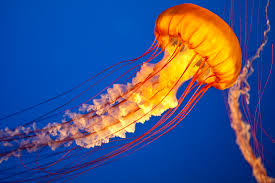

"Ventral" refers to which side of an organism?
Along the back side, near the vertebral column
Along the front side, away from the vertebral column
Closer to the head
Closer to the tail (rear)

___________ are tiny hard particles that give a sponge support and can provide protection if they are made out of calcium carbonate or silica glass.
spongin
bones
buds
spicules

How do sponges obtain food?
filter it from the water
grasp it with tentacles
pry it apart with tube feet
put it in their mouth with jointed legs


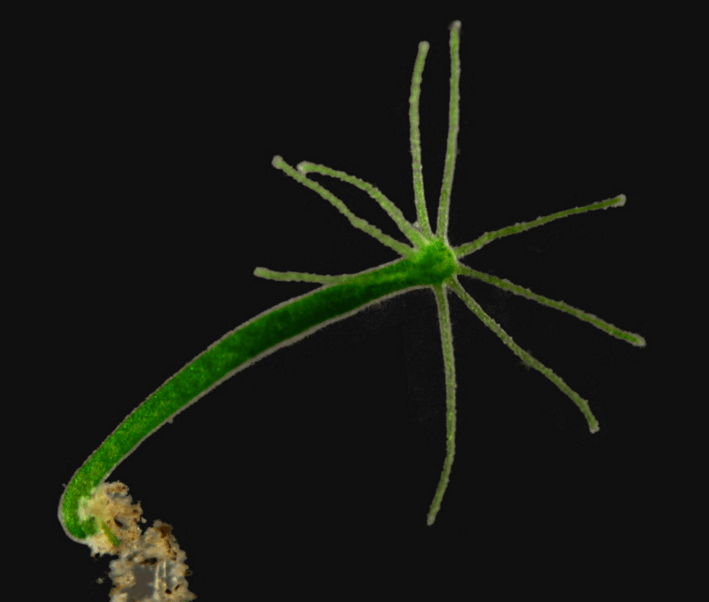
Sponges get their food by
photosynthesis
decomposing it
sponges do not eat
filter feeding
Multicellular
Sponge
Cnidarian
Both
Has a "stomach"
Sponge
Cnidarian
Both
A worm has no ______,______, or ______. (Choose 3)
arms
legs
circular rings
bones
Flatworm have __________, ___________, and __________. (Check 3)
no body openings
flattened bodies
one body opening
digestive system
three body openings


What structures do tapeworms have for attaching themselves to the intestinal lining of their host? (multiple answers possible)
suckers
pharynx
hooks
silk glands
How does a tapeworm get its nutrition?
Through its mouth and complex digestive system.
Absorbs food in the host's intestine directly through its skin.

PORIFERA's body is full of...
blood vessels
pores and channels
stinging cells
setae
What is cephalization?
Having male and female parts at the posterior end of the body..
A concentration of sense organs and nervous system at the anterior end of the body.
Feeding off of another organism either as a parasite or carnivore.
Exchanging gases through a thin, moist layer of skin.
Which of the following is a false statement?
Earthworms aerate the soil
Earthworms distribute organic matter
Earthworms remove nutrients from soil
Earthworms allow for water to go deeper into the soil
What is the definition of a "host"?
An organism that lives on another organism.
The organism that a parasite uses to get nutrition.
The organism that finds food on its own.
An organism that parasites find easily.
Which is a similarity between worms and mollusks?
Some have gills
They are invertebrates
Land dwelling organisms must stay moist to survive
All of the above
Which class of mollusks are mostly sessile?
Cephalopoda
Bivalvia
Gatropoda
Nematoda
Which class of mollusks has a name that means "head-foot"
Cephalopoda
Bivalvia
Gastropoda
Annelida
The classes Bivalvia, Cephalopoda, and Gastropoda belong to which phylum?
Annelida
Mollusca
Platyhelminthes
Nematoda
Organisms in the class Bivalvia have how many shells?
One
Two
None
It depends on the organism
What two things are used to group Mollusks into classes?
Shell and Mantle
Mantle and Foot
The way they feed and Shell
Shell and Foot

Which class of Mollusks does this organism fit into?
Gastropods
Bivalves
Cephalopods

Which class of Mollusks does this organism fit into?
Gastropods
Bivalves
Cephalopods

Which class of Mollusks does this organism fit into?
Gastropods
Bivalves
Cephalopods
Can be found in both terrestrial and marine environments.
Worms
Mollusks
Both
Neither
Has aquatic organisms breathe through their gills.
Worms
Mollusks
Both
Neither
Has terrestrial organisms breathe through their skin.
Worms
Mollusks
Both
Neither
In which organisms would you find a radula?
Worms
Mollusks
The tissue that secretes the mollusk's shell
Mantle
Radula
Setae
Crop
Type of circulatory system where blood moves into open spaces around the body organs
Closed
Spacious
Open
Diffuse
Tongue-like organ used by some Mollusk
Gizzard
Radula
Setae
Crop
Digestive organ used for storage
Gizzard
Radula
Setae
Crop
Stomach-footed mollusk with a single shell
Gastropod
Cephalopod
Bivalve
Polychaete
Which group of molluks are the most specialized and complex?
Gastropods
Bivalves
Cephalopods
Pseudopods
What is the job of the visceral mass in a mollusk?
Provides protection
Contains the body organs
Allows movement
Produces a shell
Which of the following are bivlaves? (Select all that apply)
Scallop
Clam
Oyster
Nautilus
Which of the following are gastropods? (Select all that apply)
Slug
Clam
Snail
Nautilus
How does an earthworm obtain oxygen?
Breathes with lungs
Breathes with gills
Breathes through its skin
Breathes through its mouth

Identify what is at #3
Crop
Gizzard
Aortic arches
Intestine
Identify what is at #4
Crop
Gizzard
Aortic arches
Intestine
Identify what is at #5
Crop
Gizzard
Aortic arches
Intestine

Mollusks such as a squid or octopus move quickly by ejecting water out of which of the following structures?
tentacle
siphon
beak
gill

The tentacles of a cephalopod are part of which structure?
foot
shell
mantle
head
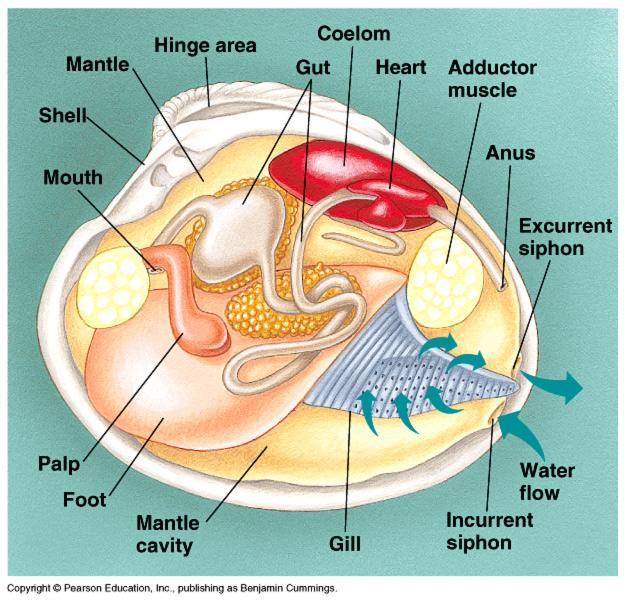

Which is the group of mollusks that use the foot to dig?
Bivalves
Cephalopods
Gastropods

To which group of mollusks this snail belong?
Gastropods
Cephalopods
Bivalves
What substance does bivalves secrete to form the shell?
carbon calcinate
Calcium carbonate
carbon calcium
carbonic calcinic
Which of the following are respiratory organs that facilitate exchange of gases with the air?
Gills
Lungs
Which of the following is the tongue-like organ that mollusks use to scrape food from surfaces (contains teeth).
Radula
Foot
Mantle
Roundworms are unsegmented worms with a pseudocoelem.
True
False
Arthropods exoskeleton is different than that of mollusks because it is made up of _______ instead of calcium.
sulfate
chitin
collagen
Arthropods have modified sections with appendages.
True
False
Arthropods contain ________ to help them detect and respond to stimuli.
Tentacles
Antennae
Which of the following are the arthropod classes?
Chiton, insects, crustaceans
Insects, crustaceans, arachnids
Gastropods, cephalopods, arachnids, myriapods
Insects, crustaceans, arachnids, myriapods
Which of the following arthropod classes includes mostly land organisms with antennae, wings, and compound eyes?
Insects
Arachnids
Crustaceans
Myriapods
Which of the following arthropod classes has animals with 2 distinct sections that are mostly marine and includes crabs and lobsters?
Insects
Arachnids
Crustaceans
Myriapods
Which of the following arthropod classes includes animals that can be venomous or parasitic and have 4 pairs of walking legs?
Insects
Arachnids
Crustaceans
Myriapods
Echinoderms have a system of fluid-filled tubes called a(n)...
water vascular system
nervous system
notochord
ampulla
Sea stars feed by
Injecting poison that digests the prey
Ejecting their cardiac stomach to digest prey
Chewing their prey with jaws and teeth
Ejecting their pyloric stomach to digest prey

What type of nervous system is exhibited in echinoderms?
Echinoderms have a central brain with nerves that extend through their body, but few sense organs.
Echinoderms have a nerve ring with nerves that extend through their body with sense organs to detect stimuli or light.
Echinoderms have a nerve ring with nerve that extend through their body, but no sense organs.
Echinoderms have a central brain with nerves that extend throughout their body and sense organs to detect stimuli or light.
How do crustaceans (such as the crawfish) respire?
through a McDonald's Straw
through a set of lungs attached to the swimmerets
through a set of gills attached to the walking legs
through their skin
Which of the following is NOT a function of the exoskeleton
Protection
Prevents water loss
Attachment of muscles
Aids in digestion
Which of the following correctly describes a crayfish's body regions?
head, thorax, abdomen
head, abdomen
cephalothorax, abdomen
head, cephalothorax
What two characteristics do all Arthropods have? These characteristics are also used for classifying arthropods.
two legs per body segment
jointed legs and a cephalothorax
three body segments and metamorphosis
jointed legs and segmented bodies
Respiratory organ in spiders that is modified for life on land
gills
book lungs
Tracheal system
pharynx
Which is not true about spiders?
They have book lungs
They produce enzymes that liquify the tissues of their prey
They have swimerettes used for reproduction
They have fangs also called chelicerates
They have 4 pairs of legs
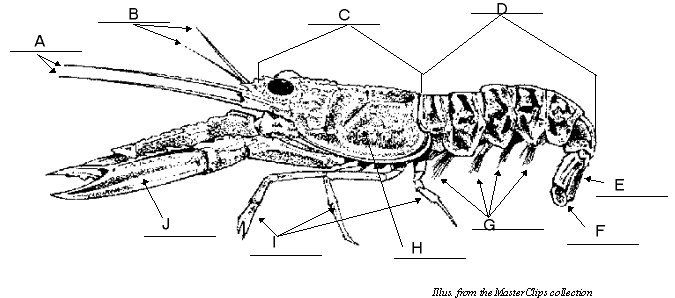
Letter D is identifying what part of a crayfish?
abdomen
cephalothorax
cheliped
telson

In order to conserve water most Arthropods excrete through _______ tubules.
Malpighian
hydrogen
capillary
thorax

This type of metamorphosis is the development of certain insects from larva to adult by molting, but without the stage of a pupa.
complete metamorphosis
incomplete metamorphosis
larva metamorphosis
arthropod metamorphosis

Arthropods have legs and in some cases wings, what part of the body are the legs and wings connected to?
thorax
abdomen
head
spine
Arthropods have a head, abdomen, and thorax. In some animals such as spiders the head and thorax are fused together what is this region called?
cephalothorax
spiracles
appendage
pedipalps
What is a way that arthropods prevent water loss? (select all that apply)
have a waxy exterior called an epicuticle
Live in moist and dark environments
don't excrete urine as often
eat other arthropods

What are the advantages of having jointed appendages? (select all that apply)
Greater range of motion
Greater flexiblity
allow for flying
increase vision


The three body segments of an arthropods body are:
Head, thorax and abdomen
Head, cephalothorax and abdomen
cephalothorax, appendages and abdomen
Cephalothorax and abdomen
The claw-like mouth-parts of a spider are called
mandible
antenna
chelicerae
cephalothorax

Which letter represents the caterpillar becomes a pupa?
A
B
C
D
E
Which letter represents the larva hatches from an egg?
A
B
C
D
E
During which stage of incomplete metamorphosis is the insect a mini version of the adult but can't fly or reproduce?
Adult
Egg
Larva
Nymph
Pupa


Where are the tube feet?
A
B
C
D
E
The bulblike sac on the top of each tube foot helps extend and retract them:
ampulla
pedicellariae
madreporite
nerve ring
Echinoderms have no head or brain.
True
False

What is the function of the water vascular system?
movement / locomotion
attachment / feeding
respiration / circulation
All answers are correct

The sea cucumber does what ingenious move to protect its self from predators?
Shoots poison
Runs away
Releases internal organs
Produces an ink screen

The echinoderm is protected from predators by its
Ability to run away
Endoskeleton
Poison glands
Biting mouth parts
What is the flexible skeletal support rod?
Dorsal Hollow Nerve Chord
Notochord
Pharyngeal slits
Endoskeleton
On which side of the body is the Hollow Nerve chord located?
Ventral
Anterior
Posterior
Dorsal
Which structures do all chordates have at some point during their life time?
Notochord, Hollow Nerve chord, Pharyngeal slits, Tail
Notochord, Gill slits, Tail
Hollow nerve chord, notochord, legs, wings
Pharyngeal slits, Head, Thorax, Tail
Which of the following chordates are also vertebrates?
Fish, Amphibians, Lancelets
Fish, Birds, Reptiles, Mammals
Tunicates, Sea squirts, Lancelets
Lampreys, Lancelets, Amphibians
Which of the following represents invertebrate chordates?
tunicates/lancelets
lampreys/hagfish
snakes/lizards
sharks/skates
Lancelets spend most of their lives in the
Sand
air
water
ground
Which of the following are characteristics of a chordate?
presence of pharyngeal pouches and presence of a backbone
existence of a nerve cord
both a and b
neither a nor b
Of the following, which do all fish have?
gills
fins
scales
movable jaws
Tunicates feed in which way?
Herbivory
Deposit feeding
Filter feeding
Hunting

Which is the Adult?
Picture on the LEFT
Picture on the RIGHT
Do all chordates have all the characteristics their entire lives?
YES
NO

What is Structre A?
Pharynx
Atrium
Anus
Stomach
Sea stars, sea urchins, sand dollars, sea cucumbers, sea lilies and feather stars are examples of ...
Echinoderms
Invertebrate Chordates
Vertebrates
Chordates
A close phylogenetic relationship between echinoderms and chordates is indicated by the fact that both have similar ...
Gills
Sizes
Larvae
Habitats
Tube feet, in addition to functioning in locomotion, aalso function in ...
Excretion and Digestion
Gas Exchange and Excretion
Digestion and Circulation
Gas Exchange and Digestion
In chordates, the bundle of nerves housed in a fluid-filled canal that lies above the notochord is called the _____.
Chordate
Spinal cord
Ventral nerve cord
Dorsal nerve cord
Invertebrate chordates have ...
Semirigid, rodlike structures
A bundle of nerves called the dorsal nerve cord
Paired openings in the pharynx called gill slits
All of the above
WHy do scientists think that echinoderms and chordates are closely related even though they structurally different?
They both have nervous systems.
They are both deuterostomes.
They are both marine animals.
They are both coelomates.

What are the defining characteristics of echinoderms?
marine animals, larval bilateral symmetry, and tube feet
adult radial symmetry, water vascular system, and endoskeletons with spines
adult bilateral symmetry, water vascular system, and endoskeletons with spines
marine animals, adult bilateral symmetry, and tube feet
The notochord of the invertebrate chordates made what type of body motion possible?
side to side fishlike motion
up and down undulating motion
quick, random swimming motions
curving snake like motion

Lampreys differ from other fish in the following ways:
They lack a backbone.
They lack an endoskeleton.
They lack jaws.
They lack a tail.
In fish, what is the name of the fluid-filled canal that detects movement and vibrations in water?
Lateral Line
Vertical Line
Horizontal Line
Lateral Spine
Chordates have contain ________ and _______.
Notochord, vertebra
Dorsal nerve cord, vertebra
Notochord, dorsal nerve cord
Dorsal nerve cord, sinuses
The firm but flexible tissue inside a shark
cartilage
pup
predator
grinding
Fish breathe using
gills
lungs
antennae
Sharks are fish
true
false

The structure labeled #5 is the
dorsal fin.
gill filament.
operculum.
lateral line.
Fish "swallow" water to
force it from the mouth and over the gills.
steady themselves in the water.
feed.
all of these answer choices.

In most fish, blood circulates from the heart to the
rest of the body, to the gills, and back to the heart.
gills, to the rest of the body, and back to the heart.
gills, back to the heart, and to the rest of the body.
lungs, to the rest of the body, and back to the heart.

The lateral line system enables a fish to
detect vibrations in the water.
see objects at a distance.
smell.
swim rapidly.
What do fishes use to maneuver while in the water?
Gallbladder
Fins
Swimbladder
Gills
A specialized organ found is all fishes that is filled with air that helps ensure stable buoyancy underwater.
Gallbladder
Fins
Swim bladder
Gills
Most fish are ectothermic or cold blooded, which means:
That they can't sleep
They can't make vitamin D from sunlight
They can't generate their own body heat
They can't eat sugars
What type of reproduction do most fish do?
Sexual
Asexual

Which of these parts are fish divided in?
Head, fin, wings
Horn, flippers, tail
Head, trunk, tail
Trunk, stem, gills
How many chambers does a fish heart have?
1
2
3
4
Where do amphibians live?
water
land
both
Where do amphibians live when they're born?
land
water
Where do amphibians spend most of their time when adults?
water
land
How do tadpoles breathe?
through their skin
with gills
How do frogs breathe when they are adults?
with lungs
with gills
through their skin
The amphibian heart _________.
has 4 chambers
has 3 chambers as larva and 2 chambers as adult
has 2 chambers as larva, 3 chambers as an adult
has 1 chamber
Frogs and Toads are classified in the Order___________.
Anura
Apoda
Salamander
Caudata
What is the cavity in which waste, eggs and sperm leave the body of amphibians?
cloaca
kidney
gallbladder
intestine

Which characteristic is an amphibian adaptation to land?
webbed feet
strong skeleton
eggs lack shells
ectothermy
Caecelians look and move very similar to ...
Snakes
Earthworms
Tadpoles
Frogs
What are the differences between the amphibian and fish circulatory systems?
Fish have 2 chambered hearts and amphibians have 3 chambered hearts
Fish have 1 chambered heart and amphibians have 3 chambered hearts
Fish have 3 chambered hearts and amphibians have 2 chambered hearts
Fish have 2 chambered hearts and amphibians have 1 chambered heart
True or False: Amphibian's skin is so thin, they are able to breathe and absorb water through it.
True
False
True or False: The digestive, excretory, and reproductive systems share the same body cavity called the colon.
True
False
Which of the following is the function of the ventricle?
to receive oxygenated blood from the lungs
to receive deoxygenated blood from the body
the main pumping chamber of the heart

