
 Worksheets
8th Grade Spring Review
Total questions: 56
Worksheet time: 48mins

Which statement best describes the relationship between the length of a metal spring and its potential energy as shown in the graph?
Increased potential energy in the spring forces it to extend.
Increased potential energy in the spring forces it to contract.
As the length of the spring increases, its potential energy increases.
As the length of the spring increases, its potential energy decreases.
Which of the following explains how a person walks down a staircase using potential and kinetic energy?
Both are used moving down the stairs
Only kinetic energy is used moving down the stairs
Only potential energy is used moving down the stairs
According to earth layers which process is correct?
Heat transfer from the core to the mantle
Heat transfer from the mantle to core
Water transfer from the core to the mantle
Water transfer from the mantle to the core
How does condensation affect weather in a region?
It cause ice to melt decreasing air temperature
It produces clouds
It changes liquid water into the vapor phase
Allows water to quickly move from higher to lowering temperatures
Which of the following represent a chemical change?
Heating wax to melt it
Mixing dye into melted candle wax
Lighting the candle
Watching melted candle wax dry

Which subatomic part of the atom are located in the middle?
Protons
Neutrons
Nucleus
Electrons

Which moon phase is represented at number four?
3rd quarter moon
Waning Gibbous
1st quarter moon
Waning Crescent
Which statement about the nervous system is true?
Protects inner organs
Supports movement of heart
Pumps blood through body
Sends signal from the brain to the legs
What is it called when species pass one traits from one generation to the next?
Heredity
traits
Mutation
homoeostasis
What part of the electromagnetic spectrum can be used for scanning suitcases at the airport?
x rays
microwaves
radio waves
infrared rays
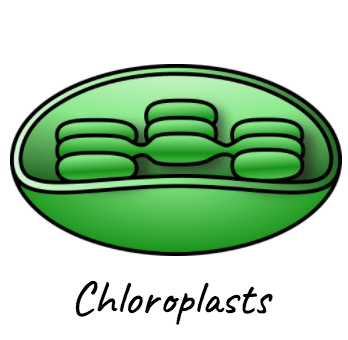
Which of the following describes mitochondria and chloroplasts?
Transport nutrients out of a cell
They are both apart of energy transformation
make up most of cell volume
turn sunlight into chemical energy

Which of the following are characteristic of sunspots?
Very hot spots on the sun
glowing loops on the sun
Cool areas on the photosphere
Large holes in the sun

According to the diagram and the Law of Superposition which layer is the youngest?
A
B
C
D
What happen to carbon and water in the process of photosynthesis?
They make sugar and oxygen
Used by sugar and oxygen to make chlorophyll in leaves
They're made when hydrogen, sugar and oxygen are released
They are when sugar and oxygen experience change

Gas, Petroleum, and coal are all found in which of earth's spheres?
Atmosphere
Hydrosphere
Geosphere
Biosphere
Which part of the human body is used to break down molecules in food for energy use?
Circulatory
Digestive
Musculatel
Nervous System
Arthritis is the swelling and tenderness of one or more of your joints. Which of the bodies systems is affected by arthritis?
Nervous and Circulatory
Respiratory and Digestive
Muscular and Skeletal
Respiratory and Excretory
Which of the following statement describes a scientific theory?
Scientific Laws that came first
Scientific evidence that support a hypothesis
explanation of scientific events that may change based on ongoing research
Predictions of events that's usually remain constant because scientific ideas don't change often
Which of the following is true of a hurricane moving towards Florida?
It will pass over aquifer
It will pass over coastline
It will pass over dunes
It will pass over the waves
How does the mass of a baseball on Earth compare to its mass on the moon?
There is no mass

Which of the following explains why the wooden stick appears bent?
Light waves are absorbed
Light waves from the stick are refracted
Light is reflected
The stick absorbed some of the water
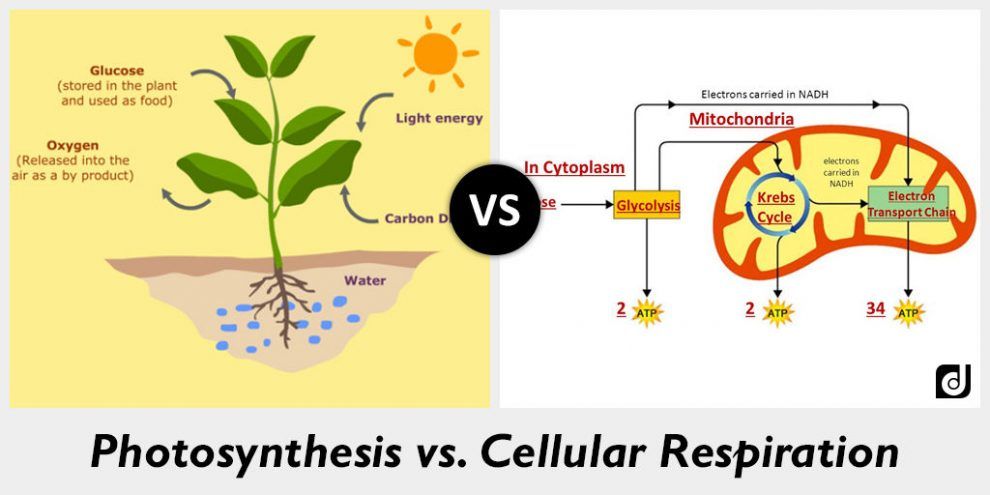
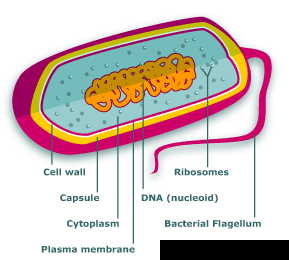
The picture shows a organism without a nucleus. Which type of cell is this?
Prokaryote
Eukaryote
The output/products of cellular respiration are -
glucose, hemoglobin, and water
glucose, energy and carbon dioxide
unicorn farts
carbon dioxide, energy and water

Which is needed to determine the amount of gravitational force between two objects?
distance and mass
weight and time
area and weight
Which of the following identifies the levels of classification in the correct order?
domain, kingdom, phylum, class, order, family, genus, species
genus, species, domain, kingdom, phylum, class, order, family
domain, kingdom, genus, species, phylum, class, order, family
genus, species, phylum, class, order, family, domain, kingdom
Taxonomy is the science of describing, classifying, and naming living things. Which classification includes all protists, fungi, plants, and animals?
Domain Bacteria, Kingdom Eubacteria
Domain Archaea, Kingdom Animalia
Domain Eukarya, Kingdom Animalia
Domain Eukarya, Kingdom Protista

How many protons does this atom have?
4
5
9
13
As temperature increases, what happens to particles?
They speed up
They slow down
Which elements have properties in common?
elements in a group
elements in a period
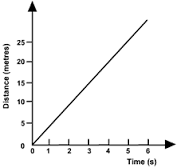
What is the line on this graph showing?
moving away from starting point at a constant speed
moving back towards the starting point at a constant speed
acceleration (getting faster)
deceleration (getting slower)

A mom and dad are heterozygous for brown eyes. What percentage of offspring will be homozygous dominant for brown eyes trait?
25%
50%
75%
100%
Which of the following is the correct order of organization of living things from most simple(basic) to most complex?
tissues-cells-organs-organ systems-organism
cell-tissue-organs-organ systems-organism
organism-cells-tissues-organ systems-organism
tissues-cells-organs-organ systems-organism
A major storm sweeps across the ocean and onto land, damaging the houses of the people who live along the coast. What spheres are affected by this natural disaster?
Biosphere
Hydrosphere
Geosphere
Atmosphere


Which Weather Patterns are being shown
Conduction
Convection
Radiation
absorption

The roller coaster cart has the most gravitational potential energy at position
Z
Y
W
X

An object falling from 50m will have ___________ potential than an object falling from
30m.
greater
less
equal

Sun Bathing
Conduction
Convection
Radiation


In this diagram, what scientific law tells us that rock layer E is older than rock layer C?
Cross-cutting
Superposition
Inclusions
Unconformities


Plants (__________) draw water (___________) and nutrients from the soil (___________) and release water vapor into the atmosphere.
biosphere; hydrosphere; geosphere
hydrosphere; biosphere; geosphere
biosphere; atmosphere; hydrosphere
cryosphere; biosphere; hydrosphere

The Himalayan mountains were formed because of a _______.
Convergent
Divergent
Transform
All of the above

What type of Plate boundary is this?
Convergent
Divergent
Transform
None of the above

Tell what process is in the photo.
Convergent
Divergent
Subduction
Hotspot

