
Font size
 Worksheets
Chemistry I Review
Total questions: 86
Worksheet time: 2hrs 46mins
4.2 Physical properties of matter...
can be measured or observed without changing to an entirely different substance.
cannot be measured because you can't measure light, energy and sound.
include all the chemical components of the elements on the periodic table.
change when water is added to the mixture.
4.3 Density is...
is the emptiness of a container.
reflects how closely packed the particles of matter are.
is anything that is used to fill an empty space.
is how big a container is regardless of what it is filled with.
4.4 Chemical properties...
are not measurable, therefore they are not observable.
cannot be seen without a microscope.
can be measured or observed only when matter undergoes a change to become an entirely different kind of matter.
are not measurable because the changes happen extremely fast.
4.5 A purse substance is called an...
proton.
electron.
atom.
element.
4.8 In physical change,
matter may change its size, shape or state, but its chemical properties do not change.
matter does not change size, shape or state.
matter changes it chemical properties to suit the need of an element.
matter keeps it shape regardless of the temperature.
4.9 Most chemical changes are not as dramatic as exploding fireworks, so how can you tell whether a chemical change has occurred?
You can't. You can't see chemical changes.
There needs to be bubbles release, a change of color, an odor produced or a loud sound.
Chemical changes need to be chemically checked.
Chemical changes only change shape, form or size.
4.10 Chemical changes in matter...
do not destroy matter.
discards protons and electrons.
destroy matter.
disappear completely.
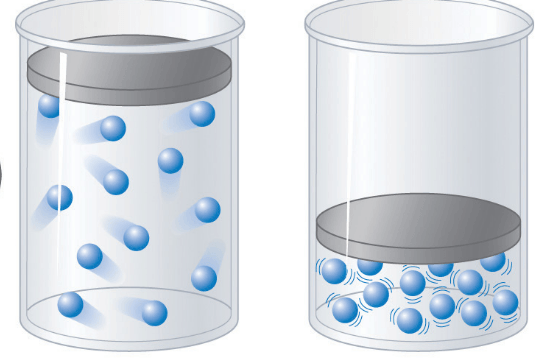
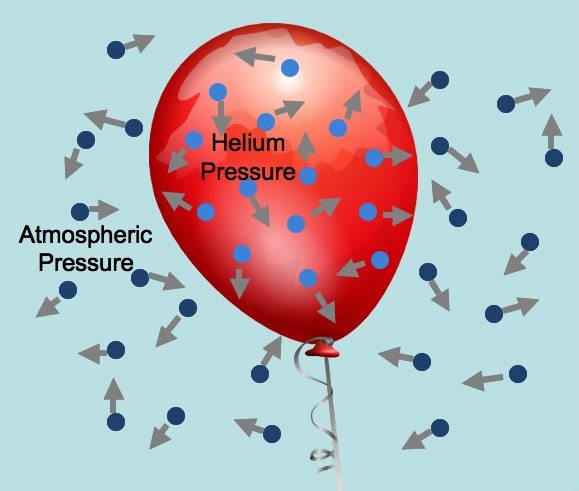
4.16 What theory or law states that particles of matter are in constant motion?
The Laws of Thermodynamics.
The Kinetic Theory of Matter.
The Law of Conservation of Mass.
Newton's firs law.


What is the most electronegative element? (Just write the symbol)
(a)
How many liters does 2 moles of CO2 occupy at STP?
44.8 L
22.4 L
11.2 L
Cannot calculate from the given information.
How many liters does 2 moles of CO2 occupy at 100 0C?
44.8 L
22.4 L
11.2 L
Cannot calculate from the given information.
How many grams are left after 1 half life?
What percentage of rubidium-87 atoms will be left after four half lives?
25.0%
12.5%
6.25%
3.125%
Isotopes have a different number of
protons
neutrons
electrons
Ions of the same element have a different number of
protons
neutrons
electrons
Different elements have a different number of
protons
neutrons
electrons
Any substance that does not conduct electricity when in solution is called a(n) ―
nonelectrolyte
electrolyte
conductor
semiconductor


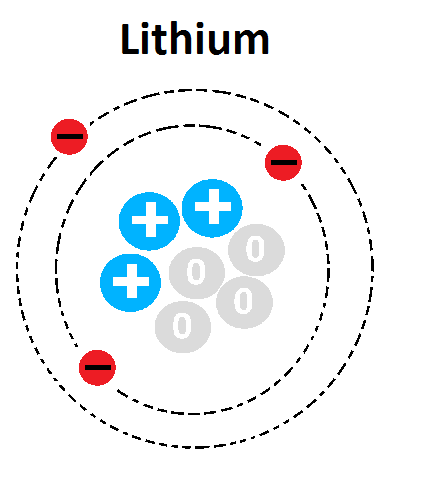

If the first and second energy levels of an atom are full, then what would be the total number of electrons in the atom?
6
8
10
18
Which of the following sub-levels is correctly designated?
1p5
3f9
2p6
3d11
If the 1st energy level is already filled up with 2 electrons, what level should be filled up next?
Second
Third
Fourth
Fifth
According to Pauli Exclusion Principle, how many electrons may occupy a single orbital?
1
2
4
8
“An electron should occupy the lowest energy level first before the higher energy level” is stated in what rule?
Hund's rule
Pauli Exclusion Principle
Aufbau Principle
All of the above.
What rule states that single electrons must occupy each equal-energy orbital before additional electrons can occupy the same orbitals.
Hund's rule
Pauli Exclusion Principle
Aufbau Principle
None of the choices.
What are the shapes of p orbitals ?
cloverleaf
spherical
dumbbell
How many electrons can occupy any single subshell orbital?
1
2
6
10


What geometry will this molecular structure have? PH3
bent
tetrahedral
linear
trigonal pyramidal

What geometry will this molecular structure have? H2S
bent
tetrahedral
linear
trigonal pyramidal


1s22s22p63s23p64s23d10

Molar mass of NaOH is ______________________
40 grams/mol
50 grams/mol
45 grams/mol
38 grams/nol
Molarity is measured in _____.
moles per g.
mols per L.
moles per mm.
moles per mL.
The _____ is the thing being dissolved.
solute
solvent
What is a solvent?
The substance that does the dissolving in a solution.
The substance that is being dissolved in a solution.
The mixing of different substances.
The process in which neutral molecules lose or gain electrons.
Which equation is used to find molarity?
Moles solute/L solution
Moles solute/kg solution
Moles solute/kg solvent
Grams solute/L solution
Molality (m) = moles of solute / _________________________.
kilogram of solvent
kiloliter of solvent
kilometer of solvent
ounces of solvent
What is the molarity of a solution if 2 moles of NaOH are dissolved in 1 L of water?
(a)
What is the molarity of a solution if 2.5 moles of HCl is dissolved in 5 L of water?
2 M HCl
0.5 M HCl
1 M HCl

The mass number of Neptunium (Np) is (a) .
The best time to wear a striped sweater is
All the time
Some of the time
Never
Cannot determine based on the information given

