
 Worksheets
Year 11 Biology - Module 2 Organisation of Living Things
Total questions: 47
Worksheet time: 40mins

This microscope image has to be a living thing because it is
green.
moving.
made of cells.
round throughout.
Which level of organization is the HIGHEST?
tissue
an organ
an organism
an organ system
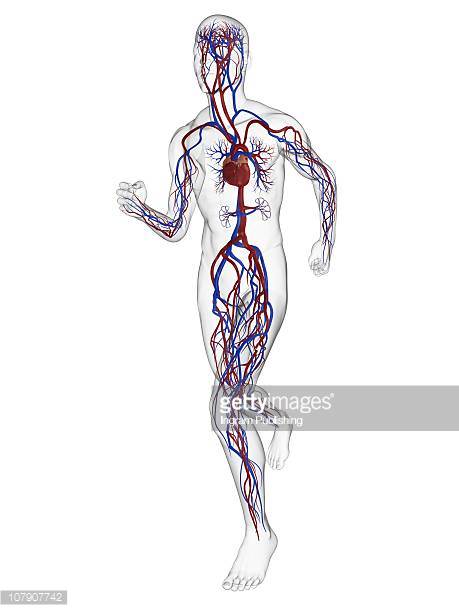
What is the main organ of the circulatory system?
small intestine
bone
lungs
heart
This particular blood vessel carries deoxygenated blood from the lower half of the body to the right atrium
super vena cava
inferior vena cava
pulmonary artery
pulmonary vein
Arteries carry oxygen rich blood away from the heart.
True
False
How does most of the water needed by the plant get into its leaves?
It enters through the stomata
The roots absorb it and then it travels up the xylem
It's made during a chemical reaction in the stem
The flowers capture water and deliver it to the leaves

The main driving force for the movement of water from the roots to the top of the plant is:
the negative gravitational pull from Earth.
the atmospheric pressure on roots.
osmosis in the roots.
the tension caused by the evaporation of water through the stomata.

The attraction of water molecules to each other is called:
adhesion
cohesion
attraction
transpirational pull.
The term given to (i) the movement of the products of photosynthesis throughout the plant and (ii) the direction of movement is:
(i) translocation and (ii) only one direction
(i) transpiration and (ii) only one direction
(i) transpiration and (ii) whichever direction is required
(i) translocation and (ii) whichever direction is required

Which of the following types of tissue are represented by the diagram below?
Xylem
Xylem and phloem
Vascular bundle
Phloem
The movement of substances in the phloem is caused by:
the formation of high pressure areas at the sink and low pressure areas at the source.
the movement of water in the xylem.
the formation of high pressure areas at the source and low pressure areas at the sink.
the formation of equal areas of pressure at both the source and the sink.
Which of the following best describes how a region of high pressure is formed in the phloem tissue?
Water is actively pumped into the phloem tissue, which creates a dilute solution, which in turn causes sugars to move by diffusion into the phloem.
Sugars are actively pumped into the phloem tissue, which creates a concentrated solution, which in turn causes water to move by osmosis into the phloem.
Sugars move by diffusion into the phloem tissue, which creates a concentrated solution, which in turn causes water to be actively pumped into the phloem.
Water moves by osmosis into the phloem tissue, which creates a dilute solution, which in turn causes sugars to be actively pumped into the phloem.
Invertebrate animals possess an open circulatory system.
An open circulatory system does NOT:
transport gases through the body of the organism.
possess a heart.
possess open-ended blood vessels
surround the organs with blood.
The component that makes up the greatest percentage in human blood is:
red blood cells
plasma
white blood cells
red and white blood cells combined
As blood circulates from the heart through the body, it changes colour.
Which of the following statements is correct?
Blood turns light red because the amount of oxygen it is carrying decreases.
Blood turns dark red because it is picking up oxygen.
Blood turns light red because it is picking up oxygen.
Blood turns dark red because the amount of oxygen in it decreases.
The composition of blood changes as it moves through the circulatory system. After blood has passed through a particular organ in mammalian body it was found to have less oxygen, more carbon dioxide, more glucose and more amino acids.
The organ that the blood has passed through is most likely:
the lungs.
the kidney.
the large intestine.
the small intestine.
What is the main function of the leaf?
To absorb sunlight and carry out photosynthesis
To provide shade for the plant
To provide food for animals
To carry out respiration
The leaves of plants are adapted to absorb the maximum amount of sunlight possible.
Which of the following options is NOT an adaptation of the leaf to absorb the maximum amount of sunlight?
Thin, flat structure
Palisade mesophyll cells packed with chloroplasts
Cuticle covering the upper and lower surface of the leaf
Vertical, elongated palisade cells
In an experiment, two leaves were taken from the same plant and examined under a light microscope. In leaf 1 most of the stomata were closed; in leaf 2, most of the stomata were open.
What is the most likely explanation for this difference?
Leaf 1 was removed when the plant was still growing; leaf 2 was removed when the plant was mature.
Leaf 1 was removed when the plant was water stressed; leaf 2 was removed when the plant was not water stressed.
Leaf 1 was removed on a cold day; leaf 2 was removed on a very hot day.
Leaf 1 was removed during the day; leaf 2 was removed at night.
The alveoli situated within the lungs is the gaseous exchange surface in mammals.
Which of the following is NOT a characteristic that would ensure efficient gas exchange?
The large number of small alveoli provides a large surface area.
Each alveolus has a single layer of flattened cells.
The surface of all parts of the respiratory system is moist.
A small number of capillaries surround each alveolus.
A terrestrial animal has a respiratory system that has openings, called spiracles, that contain valves to regulate their opening and closing. Air enters the spiracle and moves into tracheal tubes which branch into tracheoles that bring the air directly to the cells.
Which of the following correctly identifies the terrestrial animal that possesses this system for gaseous exchange?
Fish
Birds
Insects
Reptiles
We chew food in order to break it down from large pieces into small pieces to increase its surface area.
This is an example of:
chemical digestion.
initial digestion.
physical digestion.
mechanical digestion.
Which of the following organs in the digestive system are lined with villi?
Oesophagus
Stomach
Small intestine
Large intestine
Enzymes are secreted by many organs in the digestive system.
Which of the following does not secrete digestive enzymes?
Oesophagus
Stomach
Salivary glands
Pancreas

What does deoxygenated mean?
Oxygen-rich
Blood flow
Oxygen-poor
Water Flow

This type of vessel carries blood TO the heart:
vein
nerve
muscle
artery


The air sacs that are covered with capillaries where gas exchange takes place.
Bronchi
Trachea
Oxygen
Alveoli

Wolves have sharp teeth used for
cutting through skin and drinking blood
biting into other animals
grinding plant materials
eating insects
Horses have wide, flat teeth used for
cutting through skin and drinking blood
biting into other animals
grinding plant materials
eating insects
What is true about fish?
Fish have mouths that take in air
Fish have gills that take in oxygen.
Fish can breathe during digestion.
Fish can breathe using their hearts.
_________ use plants directly as their food.
Carnivores
Omnivores
Herbivores
Scavengers
Animals that depend on other animals for their food are _______
Herbivores
Carnivores
Omnivores
Decomposers

Name the small tubes that carry gases directly to and from the cells of an insect
tracheoles
system
spiracle
alveoli
What adaptations does the alveoli have for efficient gas exchange?
thick walls
thin walls
small surface area
Suggest appropriate units for comparing the distribution of stomata on leaves.
stomata per m2
stomata per mm2
stomata per cm2
stomata per km2

The diagram shows the structure of the human gas exchange system. Name organ P.
alveolus
trachea
bronchus
diaphragm
In this word equation for respiration, what is y representing?
Glucose + x --> y + water + energy
carbon dioxide
methane
oxygen
ATP

Name the structure that protects fish gills from damage.
filaments
lamellae
operculum
gill arch

