wayground logo

Free Printable Worksheets

Font size

S
M
L
XL
Worksheets

APEX Final Exam

Total questions: 126

Worksheet time: 2hrs 9mins

Name
Class
Date
1.

The Earth's lithosphere contains

a)

The upper mantle

b)

The oceanic crust

c)

The continental crust

d)

All are correct

2.
A break in Earth's crust
a)
Mantle
b)
Ozone
c)
Fault
d)
Volcano
3.
The area where two tectonic plates move apart from one another is known as a
a)
Hot spot
b)
Convergent boundary
c)
Divergent boundary
d)
Transform boundary
4.
The area where two tectonic plates move towards one another creating a subduction zone
a)
Convergent boundary
b)
Transform boundary
c)
Divergent boundary
d)
Fault
5.

The creation of new sea floor occurs at _____________________ plate boundaries.

a)

transform

b)

divergent

c)

convergent

d)

continental-continental

6.
The area where two tectonic plates slide along one another is known as a
a)
Convergent boundary
b)
Transform boundary
c)
Divergent boundary
d)
Volcano
7.

Where do convection cycles happen?

a)

core

b)

mantle

c)

crust

8.

Convection cycles move in the mantle. How does this affect the crust?

a)

crust has no motion

b)

crust moves in random direction

c)

crust moves in same direction convection cycle moves

9.

What layer of earth changes because of the convection cycle?

a)

Crust

b)

Core

c)

Mantle

10.
What do plates float on?
a)
corona
b)
upper mantle
c)
asthenospere
11.
What is the theory that states that parts of the Earth's crust slowly drift atop a liquid core.
a)
Theory of Evolution
b)
Heliocentric Theory
c)
Geocentric Theory
d)
Continental Drift Theory
12.
This rock formed when bits of other rocks became pressed into a solid. What type of rock is it?
a)
Sedimentary Rock
b)
Metamorphic Rock
c)
Igneous Rock
13.
This rock was formed when molten rock cooled into a solid. What type of rock is it?
a)
Igneous Rock
b)
Metamorphic Rock
c)
Sedimentary Rock
14.
When sediments are pressed together tightly, this is called ____________.
a)
Compaction
b)
Cementation
c)
Weathering
d)
Erosion
15.

The process by which metamorphic rock changes to igneous rock begins with

a)

melting

b)

erosion

c)

deposition

d)

crystallization

16.
The process by which igneous rocks are formed...
a)
heat and pressure
b)
melting and cooling
c)
weathering and erosion
17.
The process by which metamorphic rocks are formed...
a)
heat and pressure
b)
erosion and deposition
c)
melting and cooling
18.
Sedimentary rocks may contain fossils.
a)
True
b)
False
19.
The process in which dissolved minerals crystallize and glue sediment together.
a)
compaction
b)
deposition
c)
organic rock
d)
cementation
20.

Earth's crust moves due to

a)

the spinning of the Earth

b)

eruptions of magma

c)

inner core acting like a magnet

d)

convection currents in the mantle

21.
How is sediment formed?
a)
Weathering and Erosion
b)
Melting
c)
Pressure
22.

Which of the following is not part of soil?

a)

Weathered rock

b)

Minerals

c)

All of these are part of soil

d)

Air

e)

Organic material (humus)

23.
What happens to a rock when it weathers?
a)
It settles out of water that is carrying it.
b)
It creates a valley.
c)
It forms a delta.
d)
It breaks into small pieces.
24.
Physical and chemical weathering differ because
a)
only chemical weathering produces new materials.
b)
only physical weathering creates smaller pieces of rock.
c)
only physical weathering involves water.
d)
chemical weathering is faster than physical weathering.
25.
Humus is
a)
the water in soil that makes it moist.
b)
the dead plant and animal material in soil.
c)
the name for the smallest pieces of earth materials in soil.
d)
the layers of different-sized earth materials that form soil.
26.

Ice wedging is an example of -

a)

Physical weathering

b)

Chemical weathering

c)

Both physical AND chemical weathering

27.
This type of weathering occurs when rocks weaken then break down due to chemical changes in the composition of the rock.
a)
mechanical weathering
b)
chemical weathering
c)
erosion weathering
d)
deposition
28.

The weathering of landforms depends on various factors. Which area would most likely have the fastest rate of chemical weathering?

a)

cool and humid regions

b)

freezing and dry regions

c)

warm and moist regions

d)

hot and dry regions

29.
When people plant vegetation, they _____ erosion.
a)
Reduce
b)
Increase
c)
Start
d)
Do not effect 
30.
These rocks were made smooth by wind blowing smaller rock particles across their surface.  This is an example of:
a)
ice wedging
b)
chemical weathering
c)
acid rain
d)
abrasion
31.

What are the two factors that affect the rate at which weathering occurs?

a)

climate and mass of rock

b)

climate and size of rock

c)

type of rock and size of rock

d)

type of rock and climate

32.

The process by which chemicals combine with oxygen and a change results

a)

Abrasion

b)

Exfoliation

c)

Ice Wedging

d)

Oxidation

33.
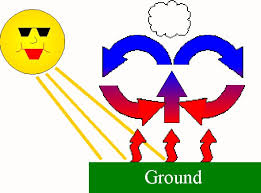
What is the transfer of heat by movement of liquids or gases?
a)
Radiation
b)
Convection
c)
Conduction
d)
Heat
34.
What is a transfer of heat energy by electromagnetic waves?
a)
Radiation
b)
Convection
c)
Conduction
d)
Heat
35.
What is the transfer of heat by direct contact?
a)
Convection
b)
Electromagnetic waves
c)
Radiation
d)
Conduction
36.
Warm air rises and the cool air sinks. This is...
a)
conduction
b)
convection
c)
radiation
37.
Heat transfers from an area of ________temperature to an area of ______ temperature.
a)
high to low
b)
low to high
c)
high to high
38.
As we go higher in  the atmosphere, the air pressure
a)
decreases
b)
increases
c)
does not change
d)
gets heavier
39.
Density of air is greater ________.
a)
at the top of the mountain
b)
at the bottom of the mountain
c)
at the center of the mountain
40.

Contains the Ozone Layer.

a)

Troposphere

b)

Stratosphere

c)

Mesosphere

d)

Thermosphere

e)

All of the above.

41.

Where ALL weather takes place.

a)

Troposphere

b)

Stratosphere

c)

Mesosphere

d)

Thermosphere

e)

All of the above.

42.

Located CLOSEST to Earth's surface.

a)

Troposphere

b)

Stratosphere

c)

Mesosphere

d)

Thermosphere

e)

All of the above.

43.

Contains molecules that absorb harmful ultraviolet rays.

a)

Troposphere

b)

Stratosphere

c)

Mesosphere

d)

Thermosphere

e)

All of the above.

44.

SUnburn occurs when your skin is exposed to harmful ______ rays

a)

radio

b)

magnetic

c)

ultraviolet

d)

infrared

45.
The main human activity that releases greenhouse gases is...
a)
using bottled water
b)
burning fossil fuels
c)
texting on cellphones
d)
eating meat
46.
Which layer in the atmosphere protects us form harmful UV radiation?
a)
Ozone
b)
Troposphere
c)
Ionosphere
d)
Exosphere
47.

Which of these statements is TRUE?

a)

All greenhouse gases are bad

b)

Humans are responsible for all greenhouse gases (humans make all greenhouse gases).

c)

If humans stopped putting greenhouse gases into the atmosphere, then our climate would stay the same forever

d)

Trees and plants take CO2 out of the atmosphere

48.

Why does hot air RISE?

a)

The molecules are spread farther apart and are LESS dense

b)

The molecules are spread farther apart and are MORE dense

c)

The molecules are close together and are LESS dense

d)

The molecules are close together and are MORE dense

49.

Why does cold air sink?

a)

The molecules are spread farther apart and are LESS dense

b)

The molecules are spread farther apart and are MORE dense

c)

The molecules are close together and are LESS dense

d)

The molecules are close together and are MORE dense

50.
How does the amount of water circulating in the water cycle change?
a)
The amount of water remains constant
b)
The amount of water increases each time it rains
c)
he amount of water decreases and then increases each day
d)
The amount of water decreases every time evaporation occurs
51.
How does the air move in a land breeze?
a)
From east to west
b)
From west to east
c)
From the land to the ocean
d)
From the ocean to the land
52.
The strength of a sea breeze depends on
a)
the heat of the day
b)
the difference between the temperature of the sea and the land
c)
the wind speed
d)
the amount of precipitation that day
53.
How does the air move in a sea breeze?
a)
wind moves from north to south
b)
wind moves from ocean to the land
c)
wind moves from the land to the ocean
d)
wind moves from south to north
54.
In a sea breeze, the air is warmer above the _____.
a)
land
b)
ocean
c)
sky
d)
beach
55.
Where does the initial source of energy come from that creates winds?
a)
the moon
b)
the sun
c)
the Earth's surface
d)
the rotation of the Earth
56.
Why do land breezes occur at night?
a)
Land cools off slower than water, so the air above water is cooler.
b)
Water cools off faster than land, so the air above land is warmer.
c)
Land heats up slower than water, so the air stays cooler during the day.
d)
Water cools off slower than land, so the air above water is warmer.
57.
Why does warm air rise?
a)
Warm air is more dense than cooler air.
b)
Warm air has more pressure than cooler air.
c)
Warm air is less dense than cooler air.
d)
Warm air has a higher dew point than cooler air.
58.

What Is Dew point

a)

that xbox is better that the nintendo switch

b)

How big fortnite's community is

c)

the temperature to which air must be cooled to become saturated with water vapor.

d)

how humid the air can be

59.

why is it used to describe the weather.

a)

The amount of rebels lost in the revolutionary war

b)

to see how many kills you will get in fortnite before it dies

c)

to measure the amount of moisture in the air

60.

why is dew point important

a)

to see how cold it would feel like and if frost will form.

b)

to see how strong the winds will be

c)

to see how cold it will be

d)

if there is a storm coming

61.

Most ocean waves are formed by

a)

earthquakes

b)

landslides

c)

impacts of cosmic bodies

d)

wind

62.

How do deep ocean currents form?

a)

The form as warm, dense water sinks and flows beneath cold ocean water.

b)

They form as cold, dense water sinks and flows beneath warm ocean water.

c)

They form as warm, dense water sinks and flows with other warm ocean water.

d)

The wind blows causing the deep ocean currents.

63.
A _____ is a transfer of energy from one water molecule to the next.
a)
current
b)
wave
c)
breaker
64.

____________are caused by the moon’s gravitational pull on the Earth.

a)

Tides

b)

Breaker

c)

Through

d)

Current

65.

Tides are the regular rise and fall of ocean water.

a)

True

b)

False

66.

_______________ are flowing streams of water that move continually through the ocean in a specific direction.

a)

Carrots

b)

Breakers

c)

Currents

d)

Tides

67.
What type of galaxy is this?
a)
Spiral
b)
Elliptical
c)
Irregular 
d)
Irrational
68.
What type of galaxy is this?
a)
Spiral
b)
Elliptical
c)
Irregular
d)
Irrational
69.
What type of galaxy is this?
a)
Spiral
b)
Elliptical
c)
Irregular
d)
Irrational
70.
The type of galaxy that is composed of the older stars and low-mass stars.
a)
Spiral
b)
Elliptical
c)
Irregular
d)
Constellation
71.
What type of galaxy has no defined pattern or shape?
a)
Spiral 
b)
Elliptical
c)
Irregular
d)
Constellation
72.

Temperature in the Arctic region is cold . This statement is an example of

a)

Weather

b)

Climate

73.

Weather is the state of the atmosphere over a longer period of time. True or False

a)

True

b)

False

74.

Weather changes

a)

Every Day

b)

Every week

c)

Twice a week

75.
A student states the weather is the same as the climate. Which response BEST tells the student the difference between weather and climate?
a)
Weather is about the wind and the rain, but climate is about the clouds.
b)
Weather is the conditions in one day, but climate is the conditions over a long time.
c)
Weather is measured with tools like thermometers, but climate is measured with tools like forecasts.
d)
Weather is recorded on charts, but climate is recorded on world maps.
76.

If you wanted to find an asteroid with a telescope, where would be the best place to look?

a)

Between Mars and Jupiter

b)

Between Earth and Venus

c)

Between Jupiter and Saturn

d)

Between Mercury and Venus

77.

What is the difference between a meteor and a meteorite?

a)

Meteors burn up in the earth's atmosphere; meteorites strike the earth.

b)

Meteors are found throughout the solar system; meteorites are found only in the asteroids belt.

c)

Meteors are similar to comets; meteorites are similar to dwarf planets.

d)

Meteors are much larger than meteorites.

78.

What is the meteoroids?

a)

Solid particles that are not moving

b)

Large pierces of rocks in the solar system

c)

solid particles that are build from ice

d)

Debris of rocks and iron floating in space

79.

What is the definition of an Asteroid?

a)

A small rocky body orbiting the Sun between Mars and Jupiter

b)

A celestial body with a nucleus of ice and dust, has a tail

c)

A small body or object that enters Earth’s atmosphere

d)

A small rocky body that reaches Earth’s surface

80.

What is the definition of a Comet?

a)

A small rocky body, orbits the Sun between Mars & Jupiter

b)

An object with a nucleus of ice and dust that has a tail

c)

A small rocky object that enter Earth’s atmosphere

d)

An object that touches down on Earths surface

81.

What is an object called when it enters Earth’s atmosphere but DOES NOT reach the surface?

a)

Meteoraid

b)

Meteorite

c)

Meteoroid

d)

Meteor

82.

What is it call when dozens of space rocks fall into earth’s atmosphere & burn up all at once?

a)

Asteroid showers

b)

Comet showers

c)

Meteor shows

d)

Meteor showers

83.
What happens when the area in which you live tilts away from the sun?
a)
It is summer.
b)
It is spring.
c)
It is winter.
d)
It is fall.
84.
Why does the area around the equator stay the same temperature all year?
a)
The equator rotates slower than the poles 
b)
The equator remains the same distance from the sun.
c)
The equator always receives direct sunlight.
d)
The equator has 18 hour days.
85.
What is the Earth's tilt in degrees?
a)
25.3 degrees
b)
32.5 degrees
c)
28.5 degrees
d)
23.5 degrees
86.
What are the reasons for the seasons?
a)
Earth's tilt and rotation.
b)
Earth's rotation and revolution.
c)
Earth's tilt and revolution.
d)
Earth's tilt and resolution
87.
What is Earth's annual motion around the sun called?
a)
Rotation
b)
Revolution
88.
Which movement of Earth causes day and night?
a)
rotation
b)
revolution
89.
How long does Earth take to make a complete rotation?
a)
365 days
b)
24 hours
90.

The path that Earth takes around the sun is called its

a)

Rotation

b)

Revolution/Orbit

c)

Axis

91.

When daylight hours are almost equal to night time hours, it is called

a)

equinox

b)

solstice

92.

On the day that the northern hemisphere has it's longest day, the southern hemisphere will have it's shortest day.

a)

True

b)

False

93.

When the sun rays fall vertically on the Tropics, it is known as __________.

a)

Equinox

b)

Solstice

94.

A solstice event occurs when

a)

the sun's rays reach their highest or lowest point in respect to the equator

b)

the sun's rays shine most directly at the equator

c)

the Earth has it's longest period of daylight hours

95.

An equinox occurs when

a)

The sun's rays reach their highest or lowest point in respect to the equator

b)

The sun's rays shine most directly on the equator

c)

The Earth experiences the greatest period of daylight hours

96.

When the Moon is directly between the Sun and the Earth, what phase would the Moon be in?

a)

Full Moon

b)

New Moon

c)

Half Moon

d)

Waxing Crescent

97.

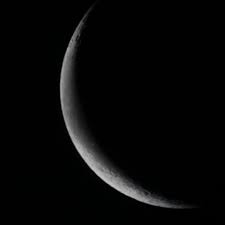
What phase of the moon is this?

a)

Waxing Gibbous

b)

Waning Gibbous

c)

Waxing crescent

d)

Waning crescent

98.

What phase of the moon is shown?

a)

waning gibbous

b)

1st quarter

c)

waxing crescent

d)

Waxing gibbous

99.
Name the phase of the moon that comes BEFORE this moon phase.
a)
waxing gibbous
b)
waning gibbous
c)
waning crescent
d)
waxing crescent
100.

What is the phase of the Moon at position #5?

a)

New Moon

b)

Third Quarter Moon

c)

First Quarter Moon

d)

Full Moon

101.
The moon cycle (lunar cycle) takes approximately _______________ to complete.
a)
14 days
b)
28 days/approximately one month
c)
58 days
d)
1 week
102.
Name the moon phase
a)
waning crescent
b)
waxing crescent
c)
waning gibbous
d)
waxing gibbous
103.
What is the correct order of the Moon Phases?
a)
1st Quarter, 3rd Quarter, New, Full
b)
New, 1st Quarter, Full, 3rd Quarter
c)
New, Full 1st Quarter, 3rd Quarter
104.
Name the phase of the moon for letter f
a)
Waning Gibbous
b)
Waxing Gibbous
c)
Waning Crescent
d)
Waxing Crescent
105.
A solar eclipse occurs when:
a)
The earth blocks sunlight from reaching the moon.
b)
The moon blocks sunlight from reaching the earth.
c)
The sun blocks sunlight from reaching the earth.
d)
The sun doesn't come out during the day. 
106.
What is the correct alignment during a solar eclipse?
a)
sun, earth, moon
b)
earth, sun, moon
c)
sun, moon, earth
d)
moon, earth, sun
107.
During what moon phase does a solar eclipse occur?
a)
full moon
b)
first quarter moon
c)
third quarter moon
d)
new moon
108.
If these three bodies are lined up with each other, what would this diagram represent?
a)
full moon
b)
new moon
c)
lunar eclipse
d)
solar eclipse
109.

A lunar eclipse occurs at which moon phase?

a)

quarter moon

b)

new moon

c)

crescent moon

d)

full moon

110.

During a lunar eclipse

a)

Earth's shadow covers the moon

b)

the sun's shadow covers the moon

c)

the moon covers the sun

d)

Earth's shadow covers the sun

111.

The position of the Earth, moon and Sun during a lunar eclipse is

a)

sun--moon--Earth

b)

Earth--sun--moon

c)

sun--Earth--moon

d)

moon--sun--Earth

112.

The planet that is closest to the Sun is....

a)

Mars

b)

Venus

c)

Earth

d)

Mercury

113.

The arrow is pointing to which planet?

a)

Mercury

b)

Venus

c)

Mars

d)

Neptune

114.

The arrow is pointing to which planet?

a)

Mercury

b)

Saturn

c)

Mars

d)

Neptune

115.

The arrow is pointing to which planet?

a)

Mars

b)

Jupiter

c)

Mercury

d)

Neptune

116.
Our Sun is one of many stars in the Milky Way Galaxy. Which term BEST describes our Sun?
a)
large
b)
average sized
c)
small
117.

How many stars are in our Solar System?

a)

Billions

b)

1

c)

5,000

d)

8

118.

A day is longer than a year on this planet

a)

Jupiter

b)

Mars

c)

Venus

d)

Earth

119.
Earth and Venus are often called sister planets because they have similar...
a)
atmospheres
b)
size, density and composition
c)
surface temperature and pressure
d)
cloud composition and meteorology
120.
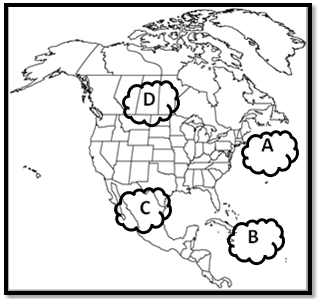
Which type of air would you find at air mass A?
a)
cold, dry
b)
warm, humid
c)
warm, dry
d)
cold, humid
121.
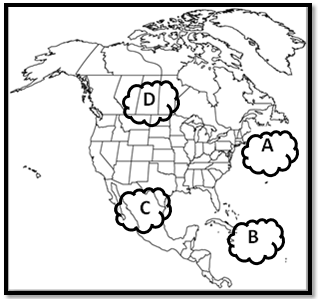
Which type of air would you find at air mass D?
a)
cold, dry
b)
warm, humid
c)
warm, dry
d)
cold, humid
122.

What is at the middle of a Heliocentric system?

a)

Mars

b)

Moon

c)

Sun

d)

Earth

123.

What is at the middle of a Geocentric system?

a)

Sun

b)

Neptune

c)

Earth

d)

The Universe

124.

Condensation involves a change of state from ___ to ___

a)

Liquid to Solid

b)

Liquid to Gaseous

c)

Solid to Liquid

d)

Gaseous to Liquid

125.

The process of changing of water vapour to water droplets is called _____

a)

evaporation

b)

condensation

c)

precipitation

126.

Formation of clouds, dew, snow are examples of ___

a)

condensation

b)

evaporation