
 Worksheets
Chemistry Review Honors
Total questions: 74
Worksheet time: 1hrs 16mins
the basic structural unit of matter
atom
matter
element
nucleus
a collection of atoms of one type that cannot be broken down into simpler substances by ordinary chemical or physical means
element
subatomic particle
electron
matter
the positively charged subatomic particle contained in the nucleus of an atom
proton
neutron
electron
matter
a negatively charged subatomic particle that orbits the nucleus of an atom
proton
neutron
electron
matter
a subatomic particle, contained in the nucleus of an atom, having the same mass as a proton but no electrical charge
proton
neutron
electron
matter
the mass of an atom, calculated by adding the number of protons and neutrons in the nucleus of the atom
element name
element symbol
atomic number
atomic mass
a unique number for each element that equals the number of protons in an atom of that element
element name
element symbol
atomic number
atomic mass
one of several forms of a single element, which contains the same number of protons, but different numbers of neutrons
isotope
ion
orbital
nucleus
an atom or group of atoms that has gained or lost one or more electrons and is now either positively or negatively charged
isotope
ion
orbital
nucleus

How many Oxygen atoms are present?
How many H2O molecules are present?
This number tells the number of atoms present.
What is a positive ion called?
anion
cation
isotope
covalent
What is a negative ion called?
anion
cation
covalent
isotope
If an atom loses electrons, the charge will be positive.
true
false
A Bromine ion gains 1 electron, which of the following is the correct symbol for a Bromine ion?
Br-1
Br+1
Br+7
Br-7


How many protons does this isotope of titanium have?
22
26
48
70
How many neutrons are in an atom of carbon-14?
6
8
10
14
How many electrons are in an atom that has an atomic number of 34, an atomic mass of 74 and a charge of -2?
2
34
36
40
The law of _____ states that mass is neither created nor destroyed during chemical reactions or physical changes.
multiple proportions
definite proportions
universal gravitation
conservation of mass

How many different types of molecules are pictured?
2
3
4
8

What type of substance is pictured?
element
compound
mixture
solution
Matter is anything that has...
weight and volume
mass and density
mass and weight
mass and volume
What is this?
lithium (Li)
element
compound
mixture
What is the left part of a chemical equation called?
2H2 + O2 ---> 2H2O
Reactants
Yields
Products
Chemical equation
What is the right part of a chemical equation called?
2H2 + O2 ---> 2H2O
Reactants
Yields
Products
Chemical Equation
What is the total number of atoms present in 5Na3PO4?
5
55
40
8
Is the following equation balanced?
Al + O2 ---> 2Al2O3
YES
NO
2CH3OH + 3O2 --> 2CO2 + 4H2O
Balance the following equation:
___ SeCl6+ ___ O2→___ SeO2+____Cl2
1, 1, 1, 3
2, 1, 2, 1
1, 2, 1, 2
2, 2, 2, 4
Balance the following equation:
___ Mg+ ___ O2→___ MgO
1, 1, 3
2, 1, 2
1, 2, 1
2, 2, 2
Balance the following equation:
___ H2+ ___ O2→___ H2O
1, 1, 3
2, 2, 2
1, 2, 1
2,1, 2
What are the most common Elements found on Earth?
O, H, Mg, Si
O, C, H, N
H, C, H20 and SALT
H20, S, N


99.9% of the atom's mass is located in the
electrons
nucleus
protons
neutrons

What is the difference between butane and isobutane?
They have different chemical formulas
They have different atomic masses
They have different chemical structures
They have different elements in them

Given the formula representing a compound:
Which formula represents an isomer of this compound?


What is the molecular formula for structure showed?
C8H18
C3H3
C8H3
C3H2(CH3)3
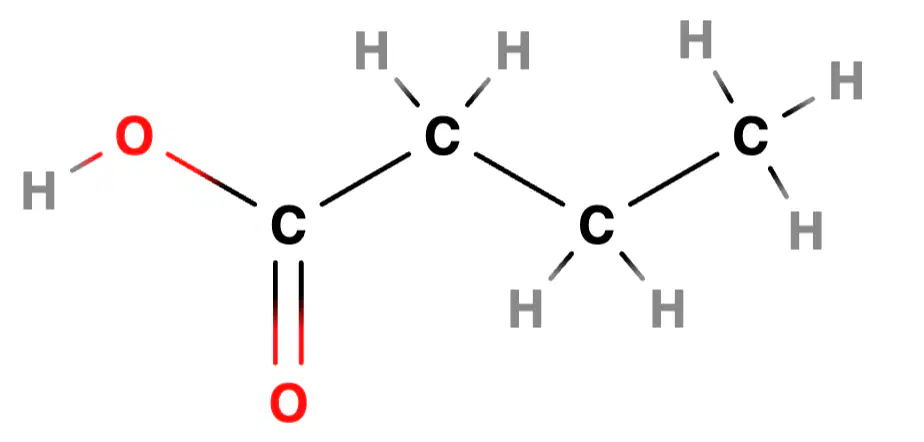
Put the subscripts into the correct position for the formula of this compound
C (a) H (b) O (c)

(on the model: WHITE is Hydrogen and RED is Oxygen)
Each element is defined by the number of
Atoms
Isotopes
Neutrons
Protons
Nuclei.

Students mix 25 grams of baking soda with 15 grams of vinegar to observe the chemical reaction that takes place. How many grams of products would be expected?
15 grams
25 grams
40 grams
50 grams
Identify whether the following reaction correctly represents the Law of Conservation: SnO₂ + 2H₂ → Sn + 2H₂O
Yes
No
A process in which atoms rearrange to form new substances.
extended structure
boiling point
chemical reaction

In a chemical equation the products are on the right side of the arrow. Are the products the beginning substances or the ending substances?
beginning
ending
In order for an equation to be balanced, there must be ...
an equal amount of atoms on both sides
a greater mass on the product side
a greater mass on the reactant side
elements with the same atomic # on both sides
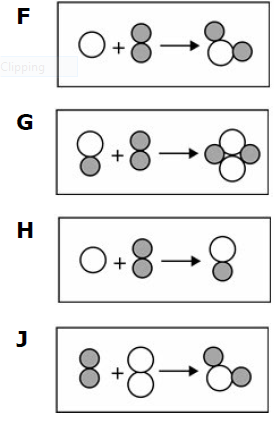
How many of each element are in 3Al2(SO4)3
6Al, 9S, 36O
3Al2, 3S, 12O
18Al, 9S, 12O
6Al, 12SO

What is D?
Electron
Proton
Neutron
Nucleus

How many bonds will a C atom form?
1
2
3
4
CHCl3 has how many double bonds?
0
1
2
3



