
 Worksheets
Y9 Semester 1 revision
Total questions: 203
Worksheet time: 3hrs 41mins
What is the smallest unit of matter? It is composed of protons and neutrons, held together in the nucleus, and electrons around the nucleus in different electron orbitals, which form an electron cloud.
cell
nucleus
atom
electron
What are any of the various self-contained units of matter or energy that are fundamental parts of all matter. These particles include electrons, protons, and neutrons.
subatomic particles
elements
nucleus
electron cloud
What is a subatomic particle with a positive charge that is in the nucleus of an atom?
neutron
proton
electron
valence electron
What is a subatomic particle without an electric charge, located in the nucleus of an atom?
neutron
proton
electron
valence electron
What is a subatomic particle with a negative charge? It is found in the electron cloud surrounding the nucleus.
neutron
proton
electron
electron cloud
What is the system of electrons surrounding the nucleus of an atom?
valence electrons
nucleus
electrons
electron cloud
What is the center of an atom containing protons and neutrons?
nucleus
neutron
proton
electron cloud
What is the number of protons in the nucleus of an atom that determines the chemical properties of an atom?
mass number
atomic mass
atomic number
atomic symbol
What is the combined mass of all the protons and neutrons of an atom and is approximately equal to the number of protons and neutrons?
atomic mass
atomic number
subatomic particles
nucleus weight
What is material that has mass and takes up space?
volume
mass
matter
density
Subatomic particles with a negative charge
Electrons
Neutrons
Protons
Quarks
The term given to unstable radioactive atoms.
Parent
Daughter
Half Life
Igneous
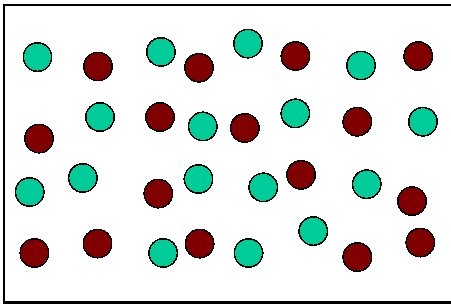
The diagram shows 32 atoms.
16 of the Red are parent isotopes
16 of the Green are daughter isotopes
How many half-lives have occurred?
0
1
2
3
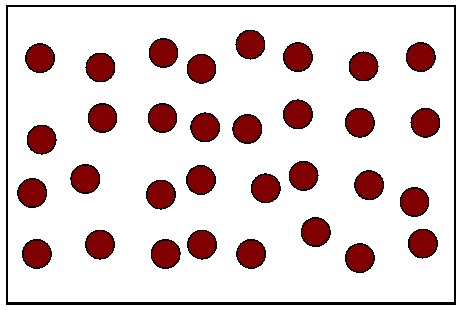
The diagram shows 32 atoms
32 of the Red are the parent isotope
0 of the atoms are daughter isotopes
How many half-lives have occurred?
0
1
2
3

The diagram shows 32 atoms
8 of the Red are parent isotopes
24 of the Green are daughter isotopes
How many half-lives have occurred?
0
1
2
3
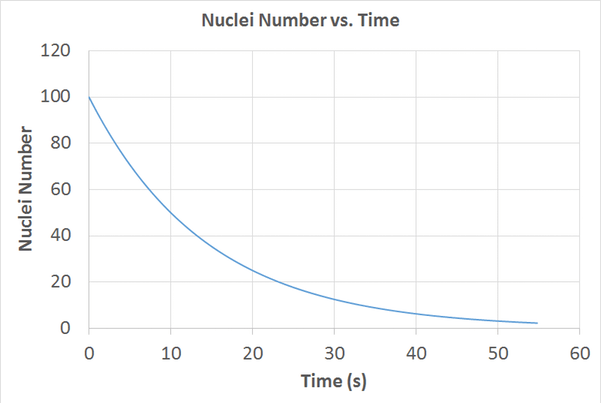
What is the Half life of this isotope?
5 seconds
10 seconds
15 seconds
20 seconds
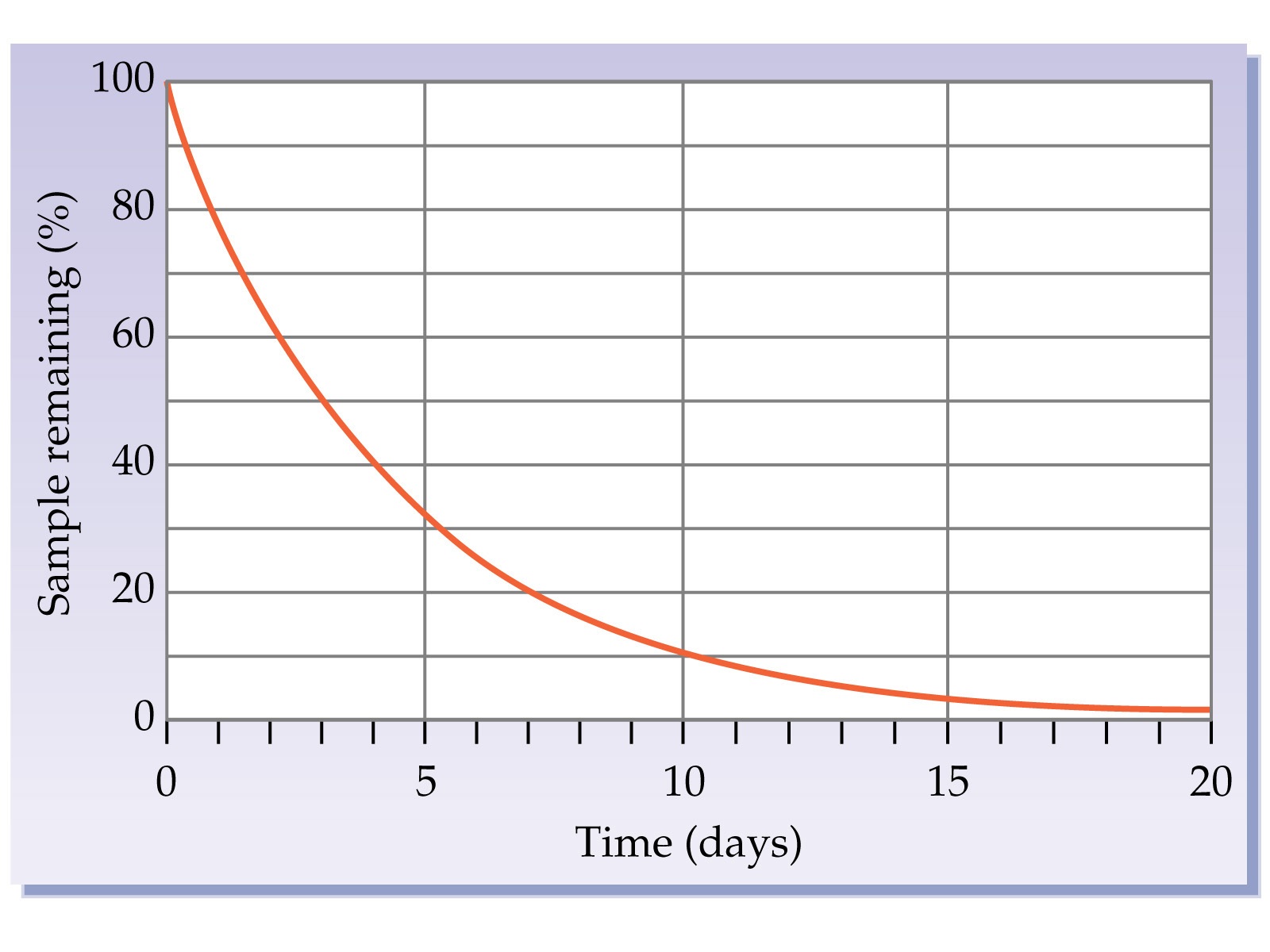
What is the Half Life of this isotope?
3 days
5 days
8 days
10 days


A chemical change is different than a physical change because in a chemical change
chemicals are used
molecules do not physically touch
a new substance is formed and in a physical no new substance is formed
the change can be seen but in a physical change it cannot
Which of the following 2 are chemical reactions?
sugar dissolving in water
water turning into steam
burning wood
mixing baking soda and vinegar
tearing paper

In a chemical reaction, if the reactants are heated, the reaction usually happens
slower
faster
at the same rate
in a smaller volume

Is this chemical equation balanced? Why or why not? Choose the BEST answer.
Yes, the amount of atoms for each element are equal on both the reactant and product side.
No, the carbons are not the same number on both the reactant and product side.
No, neither the carbons or hydrogens are the same amount on both the reactant and product side.
No, none of the elements (carbon, hydrogen, or oxygen) are the same amount on both the reactant and product side.
Which of the following is the word equation for cellular respiration?
water + carbon dioxide + energy ---> glucose + oxygen
water + glucose ---> energy + carbon dioxide + oxygen
oxygen + carbon dioxide ---> water + energy + glucose
glucose + oxygen ---> water + carbon dioxide + energy
What is the purpose of cellular respiration. Select all that apply.
to form glucose
to form oxygen
to form carbon dioxide
to form energy
to form water
Which of the following is a common sign that a chemical change has occurred?
A chemical has turned a different color, bubbled, and/or changed temperature.
A chemical has changed to a different state of matter, such as a liquid to a solid.
A chemical has changed size.
A chemical has become a different shape.
1. How is a chemical change different from a physical change?
there is no difference
a physical change creates a new substance
a chemical change creates a new substance
In chemical reactions, what does the Law of Conservation of Matter mean?
Matter is not created or destroyed.
The total mass of the reactants is greater than the total mass of the products.
The total mass of the reactants is less than the total mass of the products.
Matter is not changed.


A substance produced during a chemical reaction
Product
Reactant
Properties
A substance that takes part in and undergoes change during a reaction
Product
Molecule
Reactant

The reactants in the image above are:
CH4 and 2 O2
2 H2O and CO2
All of these are reactants
All of these are products
The products in the image above are:
CH4 and 2 O2
2 H2O and CO2
All of these are reactants
All of these are products

Energy is ______ when bonds break.
gained
lost
released
absorbed
C2H6 + 5O2 → 2CO2 + 3H2O2
Given this chemical equation, what are the REACTANTS?
C2H6 and 5O2
2CO2 and 3H2O2
The formula shown here represents the breakdown of a metal into rust. What elements are involved in this reaction? Check all that apply. 4Fe + 3O2 → 2Fe2O3
Iron
Oxygen
Carbon
Nitrogen

Review the image here. Which type of equation- balanced or unbalanced, accurately follows the Law of Conservation of Mass?
Balanced Equations
Unbalanced Equations

Observe the reaction shown here. The formula for this equation is N2 + H2 → NH3 . What do you observe about the atoms of hydrogen in this reaction?
There are 2 atoms of hydrogen in the reactants and only 1 in the products. This violates the Law of Conservation of Mass.
There are 2 atoms of hydrogen in the reactants and 3 in the products. This violates the Law of Conservation of Mass.
There are 2 atoms of hydrogen in the reactants and 2 in the products. This is in line with the Law of Conservation of Mass.
Fe + O2 -> Fe2O3
Mg + __HCl ---> MgCl2 + H2
_Al +_HCl --> _H2 +_AlCl3
What is an example of endothermic process?
Chemical Ice Pack
Boiling Water
Bonfire
In an endothermic reaction, energy is _________.
absorbed
released
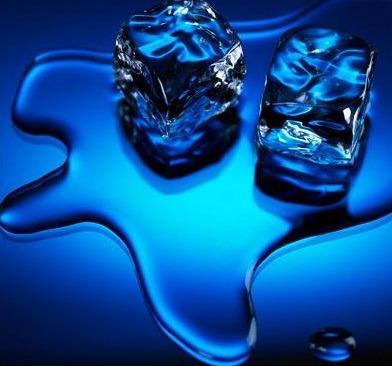
____ reactions usually feel cold.
endothermic
exothermic
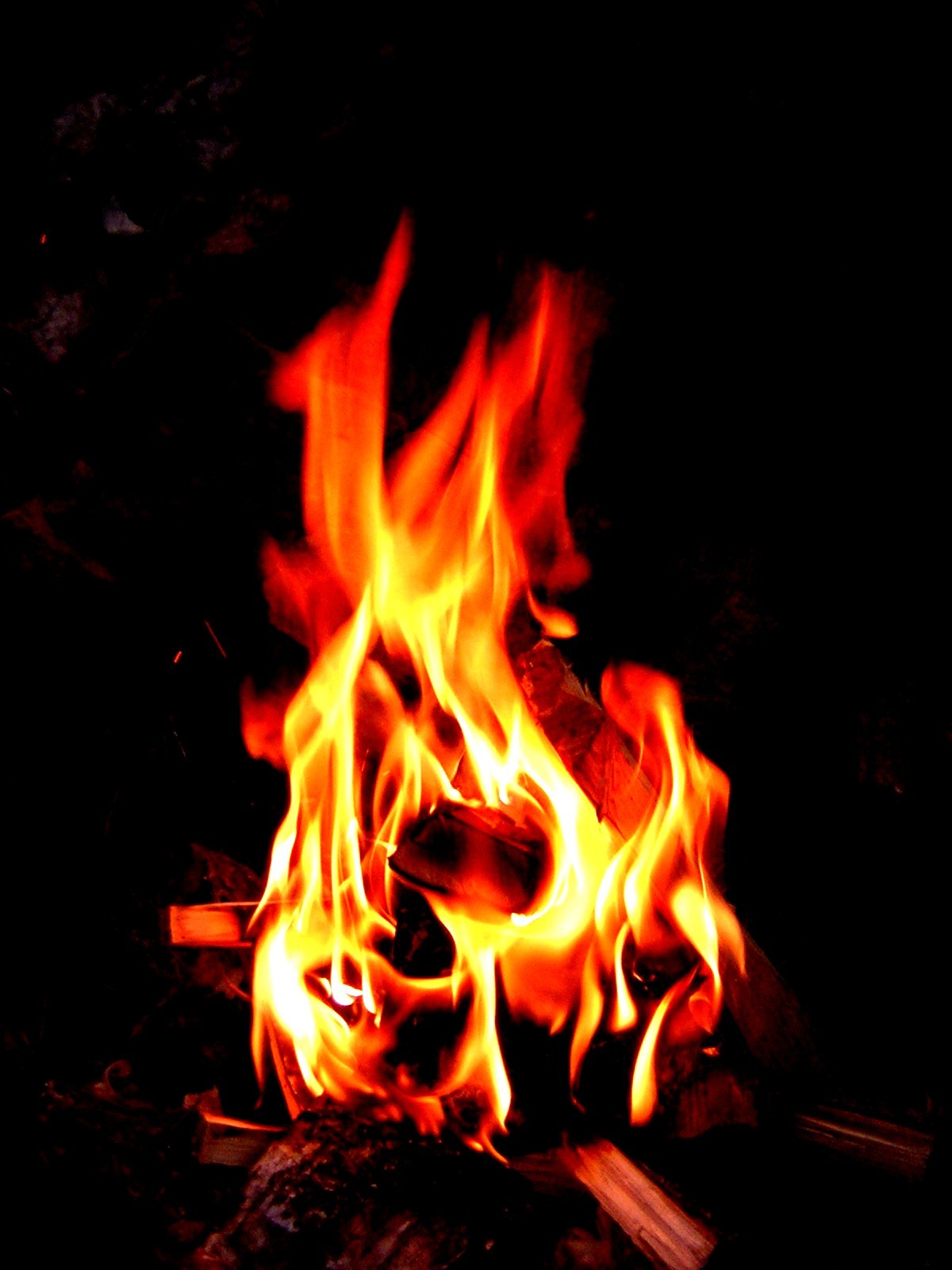
_____ reactions usually feel hot!
endothermic
exothermic
gas --> liquid --> solid is what type of reaction?
endothermic
exothermic
catalytic
inhibited

Baking pizza in the oven
endothermic
exothermic

Ice cubes in your glass of soda melt.
endothermic
exothermic

A sunflower makes food during photosynthesis.
exothermic
endothermic
In an endothermic reaction, heat is ...
taken in
given out
Which of these pH values represent an acid?
4
8
10
12

Milk is a very weak acid. What might its pH value be?
6.5
7.8
4.2
12.2
Which of the following is a property of a base?
bitter taste
reacts with metals
salty
sour taste
Bases have many uses. They are mainly used to make
cleaning products
soaps
concrete
all of the answer choices
The strongest bases have pH values close to
0
14
7
5
If the substance is neutral, what would the pH be?11
3
5
7
9
11
What would be considered the weakest base?
3
14
8.2
11.6
Which property is not associated with acids?
Sour taste
strong acids can burn you
turns litmus paper blue
reacts with metals
Which of the following is true about acids and bases?
The lower the pH #, the stronger the acid
the higher the pH #, the stronger the acid
The lower the pH #, the more neutral the acid
The higher the pH #, the weaker the base
You test a solution with pH paper, and the paper turns blue. The solution is ______.
neutral
an acid
a base
an acid & a base


8.7: Combustion is when a __________ reacts with oxygen
petrol
fuel
fire triangle
carbon dioxide
fuel + oxygen -->
water + ________ __________
What is the main function of the nervous system?
to inhale oxygen and exhale carbon dioxide
to break down food consumed by a person for nutrients
to control the body's activities by relaying messages
to control the body's movements
What are the two divisions of the nervous system?
Central and Lower nervous systems
Central and Peripheral nervous systems
Lower and Cerebral nervous systems
Central and Muscular nervous systems
A nerve cell is called a:
neutron
nerve
neuron
synapse
Dendrites are part of a neuron that carries electrical signals _______ the cell body.
to
away
in between
Axons are part of a neuron that send electrical signals ________ the cell body
to
away from
in between
The space between an axon of a neuron that is communicating with a dendrite of another neuron is called a ________________.
Neuron
Brain message
Stimulus
Synapse
Senses recognize ____________ which are recognized by the brain and results in a response.
Synapses
Brain messages
Stimuli (plural of stimulus)
Cerebrums

The cerebellum is labeled as #...
1
2
3

The brain stem/medulla is labeled as #...
1
2
3

#1 is pointing to the...
cerebrum
cerebellum
medulla
Which part of the brain controls involuntary movements such as digestion and your heartbeat?
cerebrum
cerebellum
medulla/spinal cord
Which part of the brain controls senses, thinking, and memory?
cerebrum
cerebellum
medulla
When the spinal cord responds in an emergency to a stimulus before the brain, this is called a...
response
synapse
cerebral response
reflex
Which of the following is NOT a sense?
hearing
nose
smell
touch


What is the biggest function of the muscular system?
to help digest food
to help us move
to help us breathe
to help us remove waste
What is the biggest function of the respiratory system?
to pump blood
to help us digest food
to take in oxygen and release carbon dioxide
to help us fight disease and infection
Which of the following statements describes the function of the heart?
The heart produces white and red blood cells.
The heart controls the nervous system.
The heart makes oxygen and carbon dioxide.
The heart pumps blood throughout the body.
Which system in the human body functions primarily to supply the blood with oxygen and remove carbon dioxide?
excretory
immune
respiratory
cardiovascular
Which two body systems are primarily responsible for gas exchange between the body and the environment?
skeletal and muscular
circulatory and respiratory
circulatory and digestive
respiratory and excretory
How does the respiratory system depend on the circulatory system in order to function?
The circulatory system brings waste gases to the lungs and exchanges them for oxygen.
The circulatory system provides structural support and protection to the respiratory system.
The circulatory system pushes gases out of the body through the mouth and nose.
The circulatory system sends messages to the lungs so that one can breathe in and out.
How does the circulatory system depend on the respiratory system in order to function?
The respiratory system removes bacteria from the circulatory system.
The respiratory system produces circulatory system cells.
The respiratory system delivers oxygen to the circulatory system.
The respiratory system provides protection to the circulatory system.
How does the circulatory system depend on the skeletal system?
The skeletal system removes carbon dioxide from the circulatory system.
The skeletal system produces blood cells in the bone marrow.
The skeletal system is responsible for voluntary movement.
The skeletal system helps to digest food for the circulatory system.
What is the most important function of the digestive system?
Gas exchange
Break down food
Voluntary movement
Fight bacteria and disease
Which is not an important organ in the excretory system?
Bladder
Large Intestine
Esophagus
Kidneys
How does the immune system depend on the circulatory system in order to function?
The circulatory system produces antibodies used by the immune system.
The circulatory system sends bacteria and viruses to the immune system.
The circulatory system transports immune system cells throughout the body.
The circulatory system protects the immune system from diseases.


Which of the following is an example of positive feedback?
Thermoregulation
Blood Pressure
Childbirth
Blood Sugar Levels
Which body system controls the body to maintain homeostasis?
excretory
nervous
circulatory
skeletal
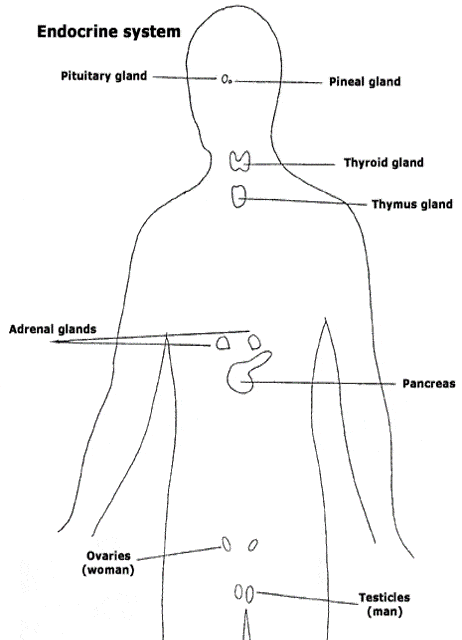

something that causes a response is called a
response
stimulus
touch
survival
Define stimulus.
Change in an organism’s environment that causes it to react.
How the organism reacts to the stimulus.
Bright light
stimulus
response
Screaming due to fear
stimulus
response

What type of neuron is A?
Sensory
Inter
Motor
What type of neuron is C?
Sensory
Inter
Motor
What type of neuron is C?
Sensory
Inter
Motor

Name an effector in this diagram.
A
B
D
E
F
An example of a reflex action includes
Touching a butterfly
Brushing your hand against the side of your body
Touching a hot stove
Your legs moving as you walk
In a reflex arc, the sensory neuron leads to the ___________ and the motor neuron leads to the __________
Spinal cord, CNS
CNS, muscle
Spinal cord, muscle
Muscle, CNS
Reflex actions are important because
They provide a quick, involuntary response
They prevent injury
They are essential to the survival of organisms
All of the above
Which type of neuron causes a muscle to contract in a reflex arc?
Motor Neuron
Sensory Neuron
Interneuron
Effector
True or False: Interneurons can be found in the spinal cord.
True
False
Which pathogen is non-living?
Virus
Bacteria
Fungi
Parasite/Protist
They are all alive
Which pathogen is treated with antibiotics?
virus
bacteria
parasite
fungi
Influenza is caused by:
virus
bacteria
parasite
fungi
Malaria is caused by:
parasite
fungi
virus
bacteria
Athlete's Foot is caused by:
fungus
bacteria
parasite
virus
Allergies are an infectious disease?
Asthma is a non-infectious disease?
Non-infectious diseases can be caused by
Pathogens
Animal bites
Lifestyle choices
Contaminated water


Which of the following cells is a first line of defence against staphylococcal bacteria?


First line defenses include
skin
hair
mucus
all of the above
Skin protects a person from pathogens by _______________.
being thin and easy to allow things through
shedding occasionally
serving as a protective layer that keeps foreign objects out
allowing bacteria to enter if it is healthy
Which parts of the respiratory system keep pathogens from reaching the inside of your body? (select all that apply)
nose hair
lungs
mucus
blood
Select 3 ways that your digestive system works to protect you form pathogens that have entered your body on food?
by using stomach acids to neutralize the pathogen
causing you to vomit
causing you to have diarrhea
causing you to burp
White blood cells and inflammatory response is part of what line of defense?
first line
second line
third line
fourth line
What is the best definition of antibodies?
antibiotics that help you when you are sick
organs that create pathogens
pathogens that enter the bloodstream
proteins that attach to antigens and make them useless
All bacteria cause illness and disease.
TRUE
FALSE
Lymphocytes produce
antigens
phagocytes
antibodies
pathogens
Vaccines only work if at least
85% of the people are vaccinated
80% of the people are vaccinated
90 % of the people are vaccinated
100% of the people are vaccinated
A vaccination
Is a type of white blood cell that eats bacteria
Protects your body via needle or capsule
Causes your body to react as if it had met a pathogen
Is made up of collagen, and can be in the form of gelatine

Name the system that will directly respond to these vaccines.
Excretory
Digestive
Immune
Endocrine
An immune response is primarily due to the body’s white blood cells recognizing
a hormone imbalance
abiotic organisms
foreign antigens
known antibiotics

