
 Worksheets
Unit 1 Review
Total questions: 200
Worksheet time: 4hrs 51mins
The fossils found closer to the surface of the ground are generally -
(a)
A bat wing and a butterfly wing are both used for flying but they are made differently. What type of structure is this?
Homologous structure
Analogous structure
Vestigial structure
Fossil structure
A human arm and a whale fin have similar bone structure but the whale fin is used for swimming and the arm is used for reaching and grabbing. What type of structures are these?
Homologous structures
Analogous structures
Vestigial structures
Fossil structures
When comparing the DNA of two different organisms, the more differences in the DNA base pairs the more-
Closely related they are.
Distantly related they are.
It doesn't prove anything.
They look alike.

The moth wing and the bat wing are example of structures.
(a)

Which of the pictures above would be examples of homologous structures? (pick 2)
1
2
3

What type of evidence is shown with the diagram above?
Molecular
Anatomical
Embryological
Fossil

The similarities of bone structure in the diagram provide evidence of what?
The organisms probably use there forelimbs for the same thing.
The organisms evolved from a common ancestor.
The organisms have the same DNA.
All vertebrate species have identical forelimbs.
Analogous Structure
Same function different structure
Homologous Structure
Same structure different function
Comparative Embryology
Comparing embryological development of different species
Biochemical Evidence
Comparing DNA and amino acid sequences of different species
Vestigial Structures
Structures in the body of an organism that no longer work.
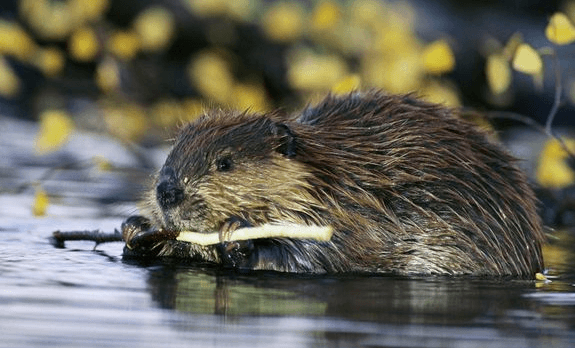

What is the process of which humans breed organisms for certain traits?
artificial selection
survival of the fittest
inheritance of acquired characteristics
natural selection
If an organism is made entirely of one cell it is called...
Multicellular
Prokaryotic
Unicellular
Eukaryotic
Reproduction that involves two cells from different parents unite to produce the first cell of a new organism.
Asexual
Sexual
Budding
Division
Maintaining a stable internal
environment is called
homeostasis
equilibrium
balance
evenness


The ability to produce fertile offspring is called
Growth and Development
Metabolism
Cellular Organization
Reproduction
All organisms begin their life as
a group of cells
a single cell
an embryo
a fully developed offspring
An organism that must obtain its nutrients by ingesting another organism is called
Autotroph
Heterotroph
unicellular
multicellular
An organism that can make its own nutrients through cellular processes involving light is called
Autotroph
Heterotroph
Unicellular
Multi-cellular
Which of the following is a term used to describe all the chemical reactions that take place in a living thing?
A plant growing towards a light source is an example of which of the following?
attracting a mate
destroying infectious germs
responding to a stimuli
obtaining moisture from the air
Infants will often smile when they hear a parent’s voice. In this situation, the parent’s voice is considered
stimulus
response
adaptation
resource
Identify all of the following that are living.
Volcano
Tree
Sun
Fungus
Identify all of the following that are nonliving.
Rock
Oxygen
Bacteria
Battery

Which characteristic of living things is represented in the picture?
Share similar chemicals
Grows and develops
Responds to stimuli
Evolves (as a population)

Which characteristic of living things is represented in the picture?
Respond to stimuli
Grow and develop
Evolution
Made of cells

The combination of chemical reactions through
which an organism builds up or breaks down
materials as it carries out its life processes is called ...
absorption
metabolism
digestion
consumption
Maintaining a stable internal
environment is called
homeostasis
equilibrium
balance
evenness
Over three years, Tim's height has increased from 5'4" to 5'11". Which characteristic of life does this represent?
All living things contain cells
All living things maintain homeostasis
All living things use energy
All living things grow

The one factor that a scientist changes during an experiment.
Controlled Variable
Dependent Variable
Independent Variable
The variable that is measured.
Controlled Variable
Dependent Variable
Independent Variable
Why is it important to have only one independent variable and to control the other variables when performing science experiments?
So you can tell which factor is causing the change in the experiment.
It does not matter, you can have as many independent variables as you want.
Ben makes five paper helicopters with different wing lengths. He drops them the same way from a height of two meters for five trials each. He records the amount of time it takes for each helicopter to fall to the ground.
What is the independent variable?
Dropping the same way
Wing Length
Amount of time it takes the helicopter to hit the floor
Dropping from the same height
Ben makes five paper helicopters with different wing lengths. He drops them the same way from a height of two meters for five trials each. He records the amount of time it takes for each helicopter to fall to the ground.
What is the dependent variable?
Dropping the same way
Wing Length
Amount of time it takes the helicopter to hit the floor
Dropping from the same height
Ben makes five paper helicopters with different wing lengths. He drops them the same way from a height of two meters for five trials each. He records the amount of time it takes for each helicopter to fall to the ground.
What are two controlled variables? (Select 2 answers)
Dropping the same way
Wing Length
Amount of time it takes the helicopter to hit the floor
Dropping from the same height
What is a hypothesis?
the thing changed on purpose in the experiment
an explanation about what you observed
using your 5 senses to gather data
an educated guess about the outcome of an experiment
What two words should be in your hypothesis?
I think
If ...then...
It will
No idea
When is a hypothesis written?
before you decide on a question
after the experiment
before the experiment
after the conclusion
Choose the correctly written hypothesis for "What is the effect of putting Pam Cooking Spray on the bottom of a sled?"
I think the sled will slide faster.
If I put Pam Cooking Spray on the bottom of my sled, then I will win the race."
If I put Pam Cooking Spray on the bottom of my sled, then I will slide faster.
Which sentence is the claim?
Which sentence is the evidence?
Which sentence is the reasoning?
Inductive Reasoning means...
Guessing without any information
Testing and observing patterns to make conjectures
Drawing conclusions from situations based on facts and definitions
Sounding knowledgeable even when you are not
Deductive reasoning means...
Guessing without any information
Sounding knowledgeable even when you are not
Testing and observing patterns to make conjectures
Drawing conclusions from situations based on facts and definitions
AND 24...27...30...?
THEN the next term is going to be 33
When you use your 5 senses to gather information, you are making a/an
Observation
Inference
Scientific Wondering
These kind of observations are made using instruments such as rulers, balances and thermometers
Qualitative
Quantitative
Scientific
These type of observations are described, not measured.
Qualitative
Quantitative
Why is it important to have a control group in an experiment?
To ensure the experiment can be done more quickly
To have a group that receives all the treatments
To provide a standard of comparison for checking the effect of the treatment
To increase the sample size of the experiment
Which of the following best describes the purpose of conducting experiments?
To prove a hypothesis beyond any doubt
To test the validity of a hypothesis
To demonstrate the researcher's expertise in the field
To gather data unrelated to the hypothesis
What is the role of data analysis in scientific research?
To make the data look more appealing in presentations
To confirm the researcher's personal beliefs
To draw conclusions based on the data collected from experiments
To choose which data to ignore
How can the validity of scientific conclusions be evaluated?
By the number of experiments conducted
Through peer review and replication of results
Based on the complexity of the experiments
By the reputation of the scientists involved
Why is it important to communicate scientific findings?
To gain fame and recognition
To fulfill funding requirements
To contribute to the body of scientific knowledge and inform future research
To ensure the research is not forgotten

Which statement best describes Natural selection?
The best adapted organisms survive and reproduce.
There are a set amount of organisms.
Organisms only change through genetic engineering.
Organisms slowly adapt to their surroundings over a lifetime.
What is the mechanism by which species adapt to their environment in order to survive?
artificial selection
natural selection
development
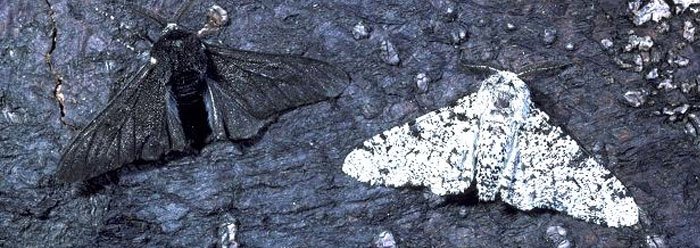
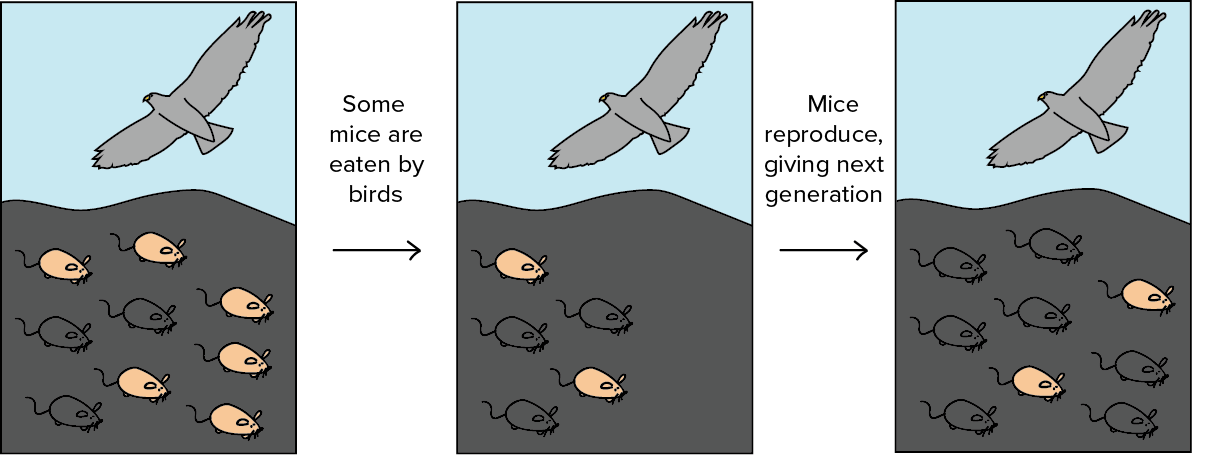
Natural selection results in change in a population's _____________ traits over time.
inherited
acquired
Identify the observation that supports the following conclusion of the theory of natural selection: "Small variations within species can confer advantages to certain individuals that allow them to survive & reproduce"
Monkeys and orangutans are found on Borneo, while other islands are home to tree kangaroos but no monkeys.
Individuals within a given species are not exactly alike.
Animals have distinct geographic ranges, but more similar species tend to live closer to each other.
Fossils of extinct animals turn up where similar animals live today.
MRSA stands for Methicillin-resistant Staphylococcus aureus (MRSA)
True
False
A patient has a severe bacterial infection. Within a few weeks of treatment with an antibiotic, the bacterial population consists entirely of antibiotic-reisstant bacteria. How can this outcome most likely be explained?
The bacteria began reproducing at a faster rate than before the antibiotic treatment.
A small population of antibiotic-resistant bacteria were present before the treatment, and natural selection increased their frequency.
The antibiotic caused a mutation in the bacteria's DNA.
The antibiotic created resistance in the bacteria, and the bacteria are passing the resistance to one another.
Rhinoceroses and horses are related. They have very similar digestive systems and an odd number of toes on their feet. Horses have on toe, and rhinoceroses have three. These facts best support which claim?
Horses and rhinos share a common ancestor.
Horses and rhinos are genetically identical.
Horese are the ancestors of modern rhinos.
Horses have descended from modern rhinos.
Which would most likley be biochemical evidence of evolution?
Digestion in all organisms follows a very similar pathway.
Humans, whales, and bats have similar looking forelimbs.
Fish, birds, rabbit, and human embryos all have gill slits and tails.
Chimpanzees and humans have a similar gene for producing hemoglobin.

The three species pictured do not share a common ancestor, yet have evolved to have a similar anatomy and life style. This is an example of ?
Homologous Structures
Divergent Evolution
Vestigial Organs
Convergent Evolution

The three species pictured share a common ancestor and have adapted so that each lives in a different environment. This is an example of
Law of Superposition
Evolutionary Arms Race
Divergent Evolution
Convergent Evolution

By what mechanism did the anoles on Puerto Rico diverge to occupy species specific niches?
Adaptive Radiation
Artificial Selection
Stabilizing Natural Selection
Coevolution
In the ocean surrounding Antarctica, there are fish that survive the cold water by using a molecule made of glycoproteins that circulates the blood and keeps it from freezing. Certain kinds of worms that live in the Arctic ocean also make antifreeze proteins that help them live in icy water. Identify the type of evolution: Convergent, Divergent, or Coevolution.
(a)
Ants are the correct size and weight needed to open the flowers for the peony plant. The peony plant provides food for the ant and the ant fertilizes the peony’s flowers. Identify the type of evolution: Convergent, Divergent, or Coevolution.
(a)
The Galloti atlantica and Galloti galloti lizards evolved through natural selection from a common ancestor into a wide variety of different looking lizards. Identify the type of evolution: Convergent, Divergent, or Coevolution.
(a)
Ostriches (birds) and giraffes (mammals) are both native to the savannahs of Africa. They share the same characteristic of a very long neck. Identify the type of evolution: Convergent, Divergent, or Coevolution.
(a)
The Galápagos finches evolved through natural selection from a common ancestor into a wide variety of different looking species. Identify the type of evolution: Convergent, Divergent, or Coevolution.
(a)
Bees don’t see red, but do see yellow, blue, and ultra-violet light. Thus, bee-pollinated flowers are mostly yellow or blue with UV nectar guides (landing patterns) to guide the bee. They usually have a small, narrow floral tube to fit the tongue-length of that species of bee. Identify the type of evolution: Convergent, Divergent, or Coevolution.
(a)
Match the image with the correct pattern of evolution

divergent evolution

coevolution

convergent evolution
Match the image with the correct pattern of evolution.

convergent evolution

divergent evolution

coevolution
What is the purpose of sending Perseverance to the red planet?
To get closer to Jupiter
To communicate with aliens
To build a space station
To look for signs of ancient (past) life

How many bonds will a C atom form?
1
2
3
4
In the CHNOPS abbreviation, what does the N stand for?
Nickel
Nitrogen
Nitrous Oxide
Neon
In CHNOPS, what does the P stand for?
Potassium
Phosphorus
Platinum
Polonium
In CHNOPS, what does the O stand for?
Oxygen
Orphium
Oganesson
Optium
In CHNOPS, what does the S stand for?
Sulfur
Strontium
Silicon
Selenium
In CHNOPS, what does the H stand for?
Helium
Hafnium
Hassium
Hydrogen
(No Charge)
Stimulus is
organisms that are made up of more than one cell
a membrane-covered structure that contains all of the materials necessary for life.
a change that affects the activity of an organism.
the maintenance of a stable internal environment.
Which of the following is an example of homeostasis?
adapting to your environment
maintaining an appropriate respiration rate
the sum of all of your chemical reactions
being composed of more than one cell
The sum of all the chemical reactions in your body?
organization
metabolism
homeostasis
evolution
Living things are made up of units called
DNA
Cells
Homeostasis
Seeds
Living things are based on a universal genetic code. What molecule is responsible for that code?
RNA
Lipid
Protein
DNA
In order for something to be considered a living organism, it must display _____ of the nine characteristics of living things.
Which of the following lists the biological levels of organization in order from smallest to largest?
molecule
cell
organ
organ system
tissue
organism
community
biome
ecosystem
population
biosphere
molecule
cell
tissue
organ
organ system
organism
population
community
ecosystem
biome
biosphere
cell
molecule
tissue
organ
organ system
organism
biosphere
biome
population
community
ecosystem
cell
molecule
organism
organ system
organ
tissue
population
ecosystem
community
biome
biosphere


What is matter?
Matter is anything that has mass and takes up space.
Matter is a type of energy.
Matter is a form of light.
Matter is a type of sound.

Which of the following is NOT a state of matter?
Solid
Liquid
Gas
Light
Label the 3 states of matter shown here
Solid
Liquid
Gas
Which bond involves an unequal sharing of electrons?
Ionic bond
Nonpolar covalent bond
Polar covalent bond
Metallic bond
If sodium and oxygen formed a bond, it would be classified as --
polar covalent
nonpolar covalent
ionic
metallic
Which electrons are involved in a chemical bond?
Valence electrons
Inner shell electrons
Electrons are not involved in bonding
__________ bonds involve an unequal sharing of electrons, while __________ bonds involve an equal sharing of electrons.
Nonpolar, polar
Polar, metallic
Metallic, nonpolar
Polar, nonpolar

The difference in electronegativity affects the type of bond will be formed. What type of bond would be formed with a difference of 0.8?
Nonpolar Covalent
Polar Covalent
Ionic
True or False: The smaller the difference in electronegativity, the more polar the bond
True
False
If carbon forms a covalent bond with chlorine, which end of the bond will be partially negative?
the carbon end
the chlorine end

How do nonpolar covalent bonds differ from polar covalent bonds?
Nonpolar bonds have a partial positive charge
Nonpolar bonds have a buildup of electrons
Nonpolar bonds have equal sharing of electrons
Nonpolar bonds have no charge

Classify the following molecule.
polar
nonpolar

Classify the following molecule.
polar
nonpolar

Is the following molecule polar or nonpolar?
polar
nonpolar

Why is the molecule polar?
There is a nonbonding pair on the central atom.
There are different types of elements bonded to the central atom.
There are no nonbonding pairs on the central atom and all of the atoms bonded to the central atom are the same.

Use your knowledge and electronegativity sheet to predict what the following compound is classified as.
nonpolar covalent
polar covalent
ionic
metallic

Use your knowledge and electronegativity sheet to predict what the following compound is classified as.
non-polar covalent
polar covalent
ionic
metallic
In a polar covalent bond, electrons are shared:
equally
unequally
between two metals
between a metal and a non-metal
What type of bond is found BETWEEN water molecules?
Hydrogen bonds
Ionic bonds
Nonpolar covalent bonds
Polar covalent bonds
Surface tension of water is the cohesive force between water molecules and other molecules.
True
False
Cohesive force between water molecules and adhesive force between water molecules and other molecules enable this phenomenon to occur.
Surface tension
Capillary action
Float on water
Photosynthesis
Which end of the water molecule has a slightly positive charge?
The hydrogen end
The oxygen end
Both ends are slightly positive
Neither end is positive
What word describes when water is attracted to other substances?
Cohesion
Adhesion
Capillary action
Surface tension
When water molecules stick easily to other water molecules, this is called what?
Cohesion
Adhesion
Solution
Polar molecule
Water beads up on the surface of a penny because of what property?
Adhesion
High surface tension
Universal solvent
Changes in density
The fact that ice floats on liquid water is due to the fact that water's solid form is _____________ than its liquid form.
Less polar
More polar
Less dense
More dense
The tightness across the surface of water that enables insects to walk on it is
Adhesion
Capillary action
Surface tension
Polarity
Which statement explains why water molecules stick together?
Both sides are negative
One side has a positive charge and the other side has a negative charge
One side has a negative charge and the other side has a neutral charge
Both sides are positive
Large bodies of water help to keep nearby climates from being too hot or too cold because they
Absorb heat in the spring and slowly release that heat in the fall
Absorb heat in the fall and slowly release that heat in the spring
Absorb heat in the summer and slowly release that heat in the winter
Absorb heat in the winter and slowly release that heat in the summer
A material is hydrophobic, that means it...
Doesn't mix with water or dissolve in water easily
Mixes with water or dissolves in water easily

Hydrophobic substances such as vegetable oil are
nonpolar substances that repel water molecules.
nonpolar substances that have an attraction for water molecules
polar substances that repel water molecules
ar substances that have an affinity for water.
charged molecules that hydrogen-bond with water molecules.
Because of the unique properties of water associated with hydrogen bonding, water evaporates from pores on the leaves of plants and draws water molecules in a continuous chain from the roots up through the vascular tissues of plants. Which of these groups of terms describes the process and the properties of water that explain this?
adhesion, cohesion, and translocation
adhesion, cohesion, and transcription
cohesion, adhesion, and transpiration
cohesion, hybridization, and transpiration
For a solution, pH + pOH =
7
14
1.0 x 10⁻¹⁴
-log (1.0 x 10 -14)
If the pH of a solution is 4.0, what is the pOH?
4.0
10.0
1.0 x 10 -4
cannot be determined from the information

What is the pOH of a solution where the [OH-] is 1.0 x 10⁻¹¹?
11
13
14
1
What does pH measure?
the amount of hydrogen (H+) ions
the amount of hydroxide (OH-) ions
amount of water
all of the above
Neutral solutions have a pH of
pH of 2
pH of 0
pH of 7
A neutral solution does not have a pH
A base is a substance
That releases OH- ions when dissolved in water
That releases H+ ions when dissolved in water
Does not release any ions when dissolved in water
None of the above

