wayground logo

Free Printable Worksheets

Font size

S
M
L
XL
Worksheets

7bio preparation for comp

Total questions: 58

Worksheet time: 59mins

Name
Class
Date
1.
Which domain is capable of living in extreme environments like hot springs, geysers, or very salty waters?
a)
Bacteria
b)
Archaea
c)
Eukarya
2.
Which domain includes all animals and plants?
a)
Archaea
b)
Eukarya
c)
Bacteria
3.
To say that an organism is heterotrophic means...
a)
it cannot reproduce asexually
b)
it cannot make its own food
c)
it cannot breathe oxygen gas
4.
Organisms whose cells have NO nucleus are classified as...
a)
Eukaryotic
b)
Prokaryotic
c)
Dead
5.
True or False: All living things are made of one or more cells.
a)
True
b)
False
6.
What is the genus name here:
Canis lupus
a)
Canis
b)
lupus
7.
I am a eukaryote, photosynthetic, and autotrophic. What kingdom do I belong to?
a)
Archaebacteria
b)
Plantae
c)
Protista
d)
Eubacteria
8.
Identify the kingdom...
Microscopic unicellular organism found in a mud puddle.  Organism's DNA is contained in a nucleus and it moves by beating tiny hairs in the water.
a)
Archaebacteria
b)
Eubacteria
c)
Protista
d)
Fungi
9.

autotroph

a)

an organism that makes its own energy (self-nourishment)

b)

an organism made of only ONE cell (bacteria for example)

c)

an organism that has to get its energy/nourishment from eating DIFFERENT organisms

d)

organisms that do not have a nucleus. they came BEFORE eukaryotic cells

10.

abiotic

a)

any organism that is living or was once living

b)

anything that is NOT living and never was living

c)

organisms with a TRUE nucleus!

d)

an organism made of MANY cells (animals for example)

11.

What do we call structures that no longer perform their original function?

a)

Natural Selection

b)

Analogous Structure

c)

Vestigial Structure

d)

Homologous Structure

12.
What do viruses need to reproduce?
a)
they need genetic material
b)
They need a host cell
c)
They need  bacteria
d)
They need insulin
13.
Which of the following occurs after a virus attaches to a host cell in the viral reproduction process?
a)
The host cell dies
b)
The virus dies
c)
The virus inserts its genetic information into the host cell
d)
copies of the virus are immediately released from the host
14.
 Bacteria that help break down dead material in the environment are called 
a)
vaccines
b)
decomposers
c)
oats
15.
Which occurrence represents an example of evolution?
a)
 Exposure to radiation reduces the rate of mutation in leaf cells.
b)
A mutation in a liver cell causes a person to produce an enzyme that is less efficient.
c)
 Cells in a zygote eventually change into bone cells or skin cells
d)
Some antibiotics are almost useless, because pathogens have developed a resistance to these antibiotics.
16.
This makes an organism more suited to its enviornment
a)
species
b)
lifespan
c)
adaptation
d)
mutation
17.
Dolphins have the same arm structure as wolfs, what type of evidence for evolution does this represent?
a)
DNA
b)
vestigial structures
c)
homologous structures
d)
embryology
18.
Which organisms are most closely related?
a)
Equus caballas (Horse) & Equus burchellii (Zebra)
b)
Cyanea artica (Jellyfish) &
Ctenodiscus crispatus (Mud Starfish)
c)
Naja naja (cobra) & Glycine max (soya bean)
d)
Ophiocomina nigra (black brittle star) & Brassica nigra (black mustard)
19.
The 8 levels of classification, most broad to most specific.
a)
Domain, Genus, Family, Order, Class, Phylum, Kingdom, Species
b)
Domain, Species, Kingdom, Genus, Phylum, Family, Class, Order
c)
Domain, Kingdom, Phylum, Class, Order, Family, Genus, Species
d)
Domain, Kingdom, Species, Phylum, Family, Order, Class, Genus
20.
Waxes, oils and fats are examples of
a)
Carbohydrates
b)
Lipids
c)
Proteins
d)
Nucleic Acids
21.
DNA and RNA are examples of 
a)
Carbohydrates
b)
Lipids
c)
Proteins
d)
Nucleic Acids
22.
What are the single sugars that are the building blocks of carbohydrates?
a)
monosaccharides
b)
disaccharides
c)
polysaccharides
d)
amino acid
23.
What are the building blocks of proteins?
a)
amino acid
b)
fatty acid
c)
nucleotide
d)
lipid
24.

What are the "protein-makers" of a cell?

a)

Ribosomes

b)

Mitochondria

c)

ER

d)

Golgi Body

25.
Your body shivers when you are cold. This is because of the concept of...
a)
homeostasis
b)
heredity
c)
energy metabolism
d)
cellular organization
26.
Soft bodied invertebrate with a thick muscular foot for movement: some have shells
a)
molluks
b)
arthropod
c)
segmented worm
d)
sponge
27.
This group is made of filter feeders and has lots of pores in its body:
a)
Segmented Worms
b)
Arthropods
c)
Mollusks
d)
Sponges
28.
This group has jointed legs and segmented bodies and exoskeletons:
a)
Segmented Worms
b)
Mollusks
c)
Sponges
d)
Arthropods
29.
sea cucumber, brittle stars, and sea stars 
a)
Mollusks
b)
Echinoderms 
c)
Segmented Worms
d)
Arthropods 
30.
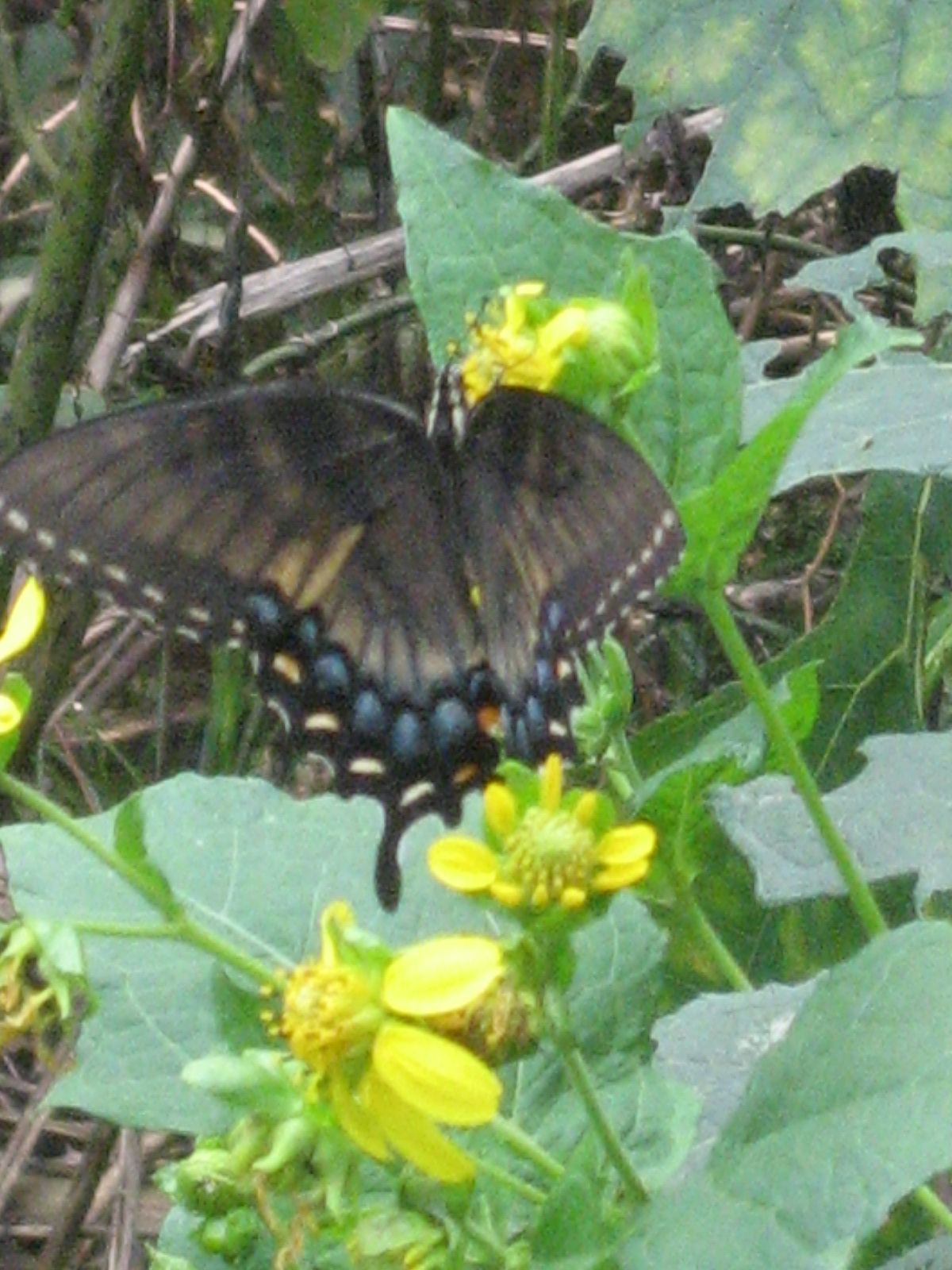
What am I?
a)
Mollusk
b)
Annelid
c)
Arthropod
d)
Cnidarian
31.
I have a digestive cavity with one opening, and have tentacles.  I am a hydra.
a)
Echinoderm
b)
Cnidarian
c)
Arthropod
d)
Mollusk
32.
What is the scientific word for warm-blooded? 
a)
warmtherm
b)
ectotherm
c)
thermal
d)
endotherm
33.
I live part of my life in water, leave, then return to the water. What am I?
a)
Mammal
b)
Arthropod
c)
Reptile
d)
Amphibian
34.
What kind of animal changes their temperature with the environment?
a)
Mammal
b)
Ectotherm
c)
Endotherm
d)
Bird
35.
I am covered in dry scales and I lay eggs.  What am I?
a)
Mammal
b)
Fish
c)
Amphibian
d)
Reptile
36.
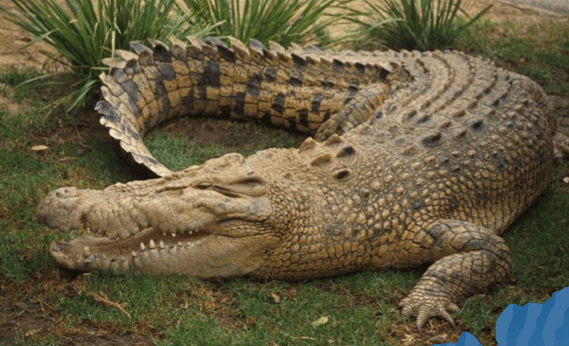
My body is cold, am covered in scales, use gills to breathe under water, and I lay eggs.  What am I?
a)
Fish
b)
Mammal
c)
Reptile
d)
Amphibian
37.

A human is a mammal and is in what phylum?

a)

Chordata

b)

Eukarya

c)

Animalia

d)

Echinoderm

38.
Which conducting tissue transports and helps circulate water and dissolved minerals from the roots to the leaves of a plant? 
a)
xylem
b)
phloem 
39.
Which part of the flower contains the egg cells?
a)
Ovules
b)
Stamen
c)
Penduncle
d)
Sepal 
40.
Tell whether it is monocot or dicot.
 
a)
Monocot
b)
Dicot
41.
Tell whether it is monocot or dicot.
a)
Monocot
b)
Dicot
42.

Cycads, ginkgo, and conifers are examples of __________.

a)

Angiosperm

b)

Gymnosperm

c)

Pteridophytes

d)

Bryophytes

43.

Ferns: ______________ :: Mosses: Bryophytes

a)

Pteridophytes

b)

Angiosperm

c)

Gymnosperm

d)

Atracheophytes

44.
The leaf's cuticle
a)
stores water
b)
reduces evaporation
c)
transports water in the leaf
d)
absorbs water for the leaf
45.
What produces egg and sperm cells during the life cycle of a plant?
a)
gamete
b)
gametophyte
c)
sporophyte
d)
zygote
46.
Gases pass in and out of a leaf through the 
a)
stomata
b)
phloem
c)
xylem
d)
cuticle
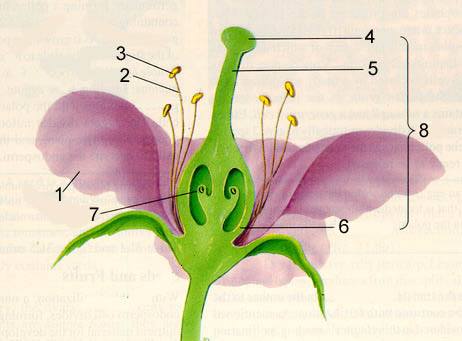
47.
What is #3 pointing to?
a)
stigma
b)
filament
c)
ovary
d)
anther
48.
What is #4 pointing to?
a)
anther
b)
style
c)
stigma
d)
ovary
49.
The female reproductive structure is called .... 
a)
stamen 
b)
style 
c)
pistil 
d)
filament 
50.
The formula for glucose is...
a)
C12 H22 O11
b)
NaCl
c)
NaOH
d)
C6 H12 O6
51.
The reactant of photosynthesis are...
a)
sunlight and chlorophyll
b)
glucose and oxygen
c)
carbon dioxide and water
d)
sunlight and water
52.
The rabbit in this food web would be considered a:
a)
Decomposer
b)
Producer
c)
Secondary Consumer
d)
Primary Consumer
53.
The amount of energy that usually transfers from one trophic level to the next...
a)
10%
b)
20%
c)
80%
d)
50%
54.
What are the Abiotic factors in this image? 
a)
water, sunlight, dirt, air
b)
birds and plants
c)
birds, water, dirt
d)
plants, water
55.

Check all the boxes for each organelle that plant and animal cells both have.

a)

lysosomes

b)

cell membrane

c)

mitochondria

d)

nucleus

e)

cell wall

56.

Sometimes called the “powerhouse” of the cell, this organelle is where respiration takes place.

a)

Mitochondria

b)

Nucleus

c)

Vacuole

57.
Which structures are found in every living cell?
a)
cell membrane and cytoplasm
b)
chloroplasts and mitochondria
c)
a cell wall and nucleus
d)
chloroplasts and cell wall
58.
In what part of the plant cell does the process of photosynthesis take place?
a)
nucleus
b)
mitochondria
c)
chloroplasts
d)
vacuoles