Wayground logo

Free Printable Worksheets

Font size

S
M
L
XL
Worksheets

SUPER Computer Systems GCSE

Total questions: 75

Worksheet time: 43mins

Name
Class
Date
1.

What is a computer?

a)

A machine that processes letters.

b)

A machine that processes information.

c)

A machine that processes data.

d)

A machine that processes stuff.

2.

The physical stuff that makes up the computer is called...

a)

Software

b)

Hardware

3.

Programs that a computer system runs is known as....

a)

Software

b)

Hardware

4.

Application software is...

a)

help the user run specific tasks like word processors, web browser, email, clients, games, etc

b)

run tasks like the operating systems, utilities, etc

c)

help the user run things down

d)

run tasks like the doing my homework, revision, etc

5.

What runs tasks like the operating systems, utilities, etc

a)

Embedded systems

b)

Application software

c)

System software

d)

Dedicated systems

6.

Embedded systems are computers inside a larger system...examples of this...

a)

an aeroplane

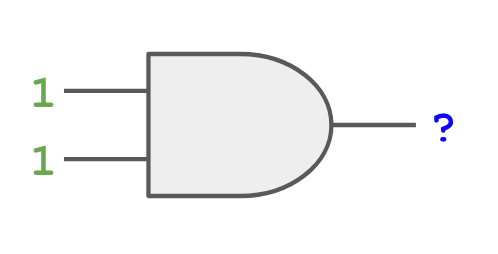
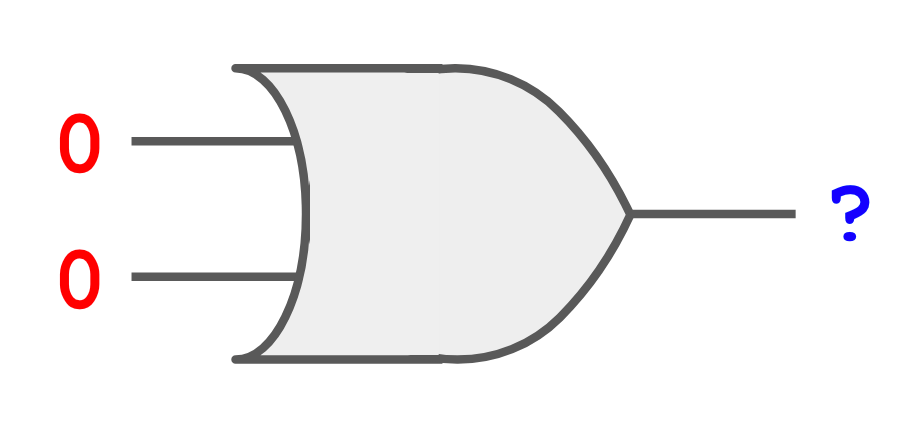
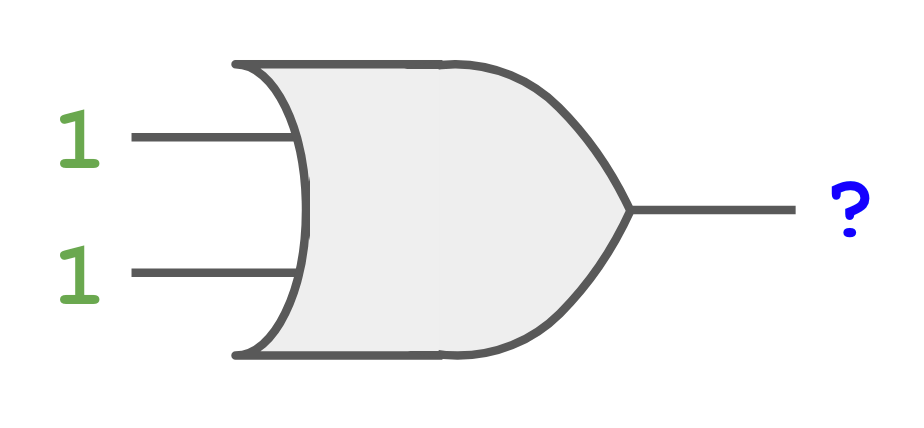
b)

microwaves

c)

traffic lights

d)

dishwashers

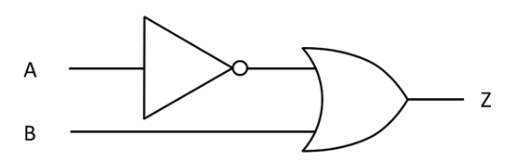
7.
RAM & ROM are known as what kind of memory?
a)
Secondary storage
b)
Main memory
c)
Registers
d)
Flash memory
8.
What does the acronym RAM stand for?
a)
Random Alignment Memory
b)
Read Access Memory
c)
Random Access Memory
d)
Read All Memory
9.
What does the acronym ROM stand for?
a)
Read Only Memory
b)
Random Option Memory
c)
Read Once Memory
d)
Random Operating Memory
10.
In terms of computer memory, what is meant by the term 'volatile'?
a)
It retains its content when power is cut
b)
It loses its contents when power is cut
c)
It is not stable and should not be used
d)
Memory chips can overheat
11.
Which statement best describes RAM?
a)
Fast, permanent storage
b)
Slow, volatile stoage
c)
Fast, volatile storage
d)
Slow, permanent storage
12.
Which statement best describes ROM?
a)
A flash memory chip that contains a small amount of non-volatile memory
b)
A memory store containing a large amount of volatile memory
c)
A register within the CPU responsible for storing memory addresses
d)
A memory store containing a small amount of volatile memory
13.
What is usually held in the contents of RAM?
a)
BIOS and Boot sequence needed to start the computer
b)
Operating System and currently running programs
c)
Software programs stored within the computer
d)
Recently executed instructions in case they are needed again
14.
What is stored in Read Only Memory (ROM)?
a)
Recently opened programs
b)
Operating system and currently running programs
c)
BIOS and boot sequence (the computer's initial start-up process)
d)
The CPU's registers
15.
True or False? The closer a memory type is to the CPU, the slower it takes for the CPU to access the instructions and execute them. However, the closer it is to the CPU the larger and cheaper the memory is.
a)
TRUE
b)
FALSE
16.
What is the average size of RAM in a PC or laptop computer?
a)
512 MB
b)
1 - 2 GB
c)
8 - 16 GB
d)
32 - 64 GB
17.
What is Virtual Memory?
a)
An additional memory slot located in one of the RAM ports
b)
A section of volatile memory created temporarily on the storage drive
c)
Memory stored in the 'cloud'
d)
Memory that doesn't exist inside the computer but on an external device such as a USB pen drive
18.
What does CPU stand for?
a)
Central Processing Unit
b)
Computer Protocol User
c)
Cool Pokemon Unit
d)
Computer Processing Unit
19.
Which of these is not a step in the FDE cycle?
a)
Instructions are fetched from main memory
b)
Instructions are decoded in the control unit
c)
The decoded instruction is executed
d)
The ALU decodes the instructions
20.
Clock speed measures what?
a)
Speed at which instructions are fetched from main memory
b)
Time taken to perform a single Fetch-Decode-Execute cycle
c)
Number of Fetch-Decode-Execute cycles that can be completed in 1 sec
d)
Speed at which instructions are decoded 
21.
What does ALU stand for?
a)
Arguable Logic Unit
b)
Arithmetic Larger Unit
c)
Arithmetic Logic Unit 
d)
Arithmetic Logic Utility
22.

According to the von Neumann model, _______ are stored in memory.

a)

only data

b)

only programs

c)

data & programs

d)

neither data nor programs

23.
The small high speed storage areas within the memory and processor are known as..?
a)
Registers
b)
Addresses
c)
Cache
d)
Buses
24.

The Control Unit

a)

Controls the flow of data around the CPU and also decodes instructions

b)

Only controls the flow of data around the CPU

c)

Only decodes instructions

d)

Controls how much power is directed to all components within the computer

25.

The Arithmetic Logic Unit (ALU)

a)

Carries out numerical calculations and logical decisions

b)

Calculates the different items of number data stored within the Accumulator and converts them into logical decisions

c)

Calculates graphic data as they are only found within GPU units.

d)

Calculates the flow of execution in a program and decodes instructions into small steps to be carried out by the program counter.

26.
What is the purpose of Cache?
a)
Performs Arithmetic and Logical operations
b)
Decodes and directs instructions to be carried out
c)
Stores frequently used data and instructions
d)
Processes graphical functions
27.
How does a CPU process instructions?
a)
Using the Fetch Decode Execute cycle
b)
Linearly using parallel processing
c)
Using machine code
d)
Through the Control Bus
28.
What is the purpose of the CPU?
a)
To process all the data and instructions.
b)
To turn the computer on.
c)
To create PowerPoint presentations.
d)
To provide power to the computer.
29.
What are registers used for?
a)
To check that students are in school.
b)
To temporarily hold bits of data needed by the CPU.
c)
To make sure that the CPU runs properly.
d)
To make the CPU faster.
30.
What happens at the Decode step of the fetch-decode-execute cycle?
a)
The CPU makes sense of the instructions.
b)
The CPU fetches the information from RAM.
c)
The instructions are executed.
31.
Which of the following CPU's will have a better better performance:
A: 3 GHz Quad Core CPU
B: 3 GHz Duel Core CPU 
a)
A
b)
B
32.
How does clock speed affect computer performance?
a)
The higher the clock speed the slower the computer will run.
b)
It improves the amount you can store on the computer.
c)
The higher the clock speed the better the performance.
d)
It will make loading program slower
33.
What is a bus?
a)
A circuit that connect one part of CPU to other components.
b)
A type of long term memory
c)
A type of permanent memory
d)
A method of transport
34.
In a processor, a core is
a)
A type of RAM
b)
A single processor which can fetch and decode instructions
c)
The middle part of the CPU
d)
A type of secondary storage
35.
A quad core processor has how many cores
a)
1
b)
2
c)
4
d)
8
36.
The higher the number of cores, the better the performance of the computer.
a)
true
b)
FALSE
37.
A dual core processor will always process data faster than a single core processor
a)
true
b)
FALSE
38.
Secondary storage is usually smaller than memory
a)
True
b)
False
39.
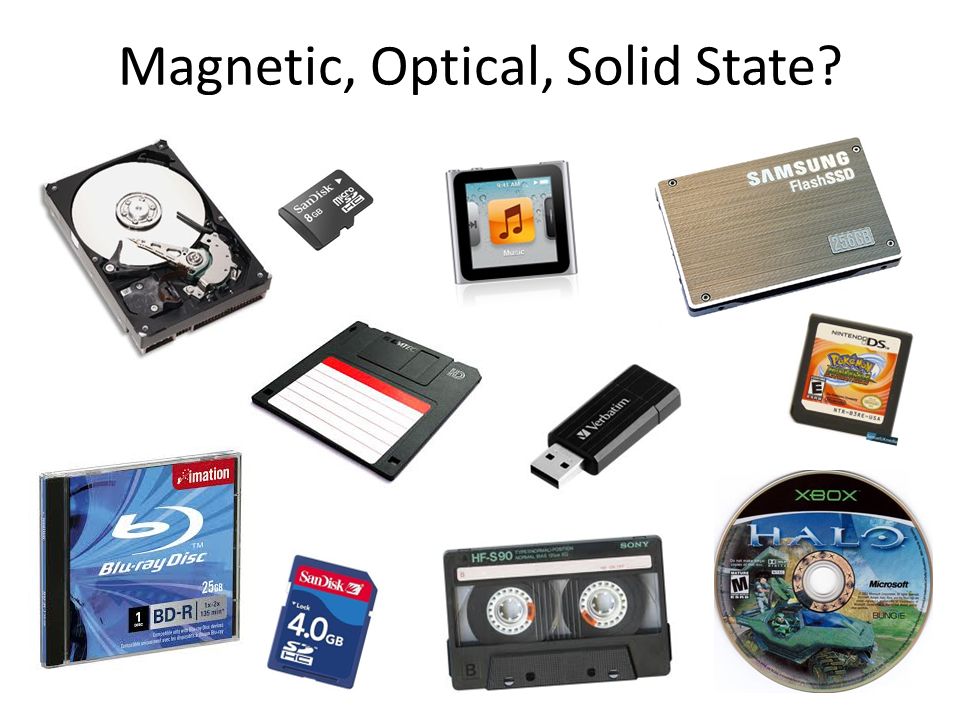
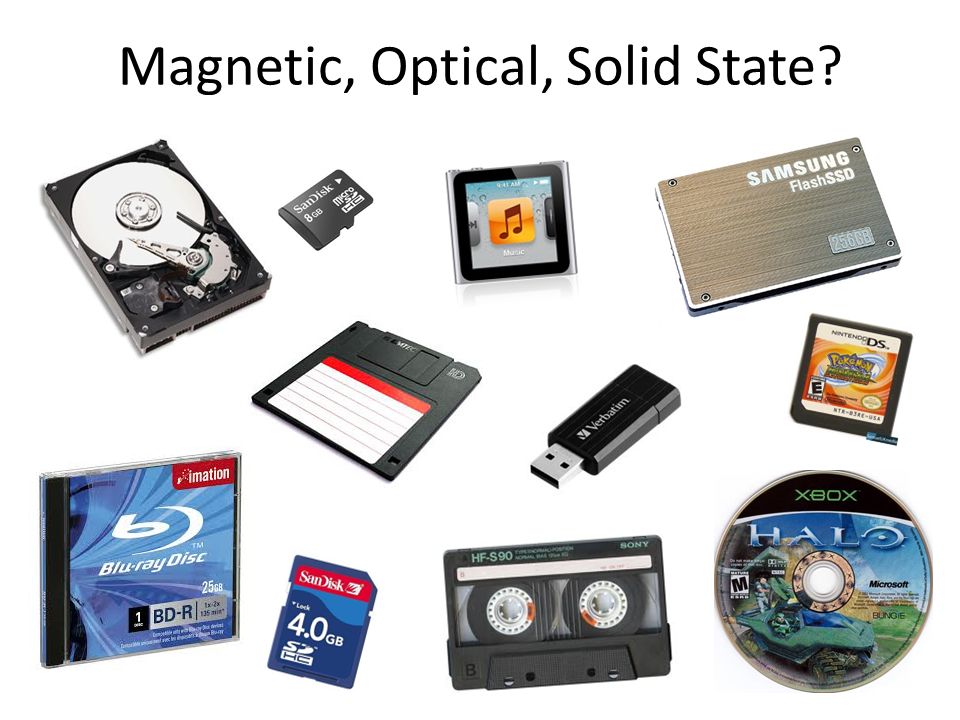
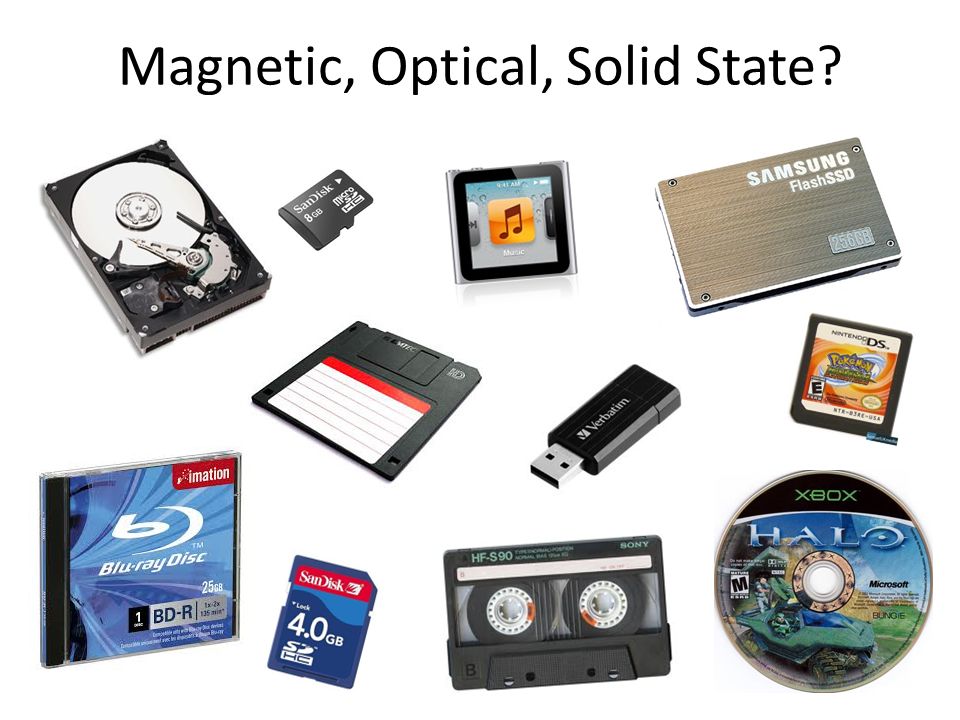
Which is the Optical Storage
a)
DVD
b)
HDD
c)
SSD
d)
USB
40.
Which type of storage has moving parts?
a)
Hard Disk Drive
b)
Flash Drive
c)
DVD
d)
Solid State Drive
41.
Which storage does NOT use light?
a)
DVD
b)
CD
c)
HDD
d)
Blue Ray
42.
Magnetic disks are organised into.....
a)
circles and wedges
b)
sectors and tracks
c)
chunks and stretches
d)
disks and docks
43.
Optical storage uses what for 0s and 1s
a)
Pits and pots
b)
Pits and lands
c)
Highs and Lows
d)
Light and dark
44.
Flash memory stores 0s and 1s as
a)
Trapped electrons 
b)
Trapped Protons
c)
Magnetic Particles
d)
Light and dark
45.
Large computers used for backup storage are called
a)
Supercomputers
b)
Servers
c)
Clients
d)
Giants
46.

Why is secondary storage needed?

a)

It is non-volatile

b)

It is volatile

c)

It is quicker

d)

It is online

47.

True or False: Cloud storage is data saved on satellites high above the sky

a)

True

b)

False

48.

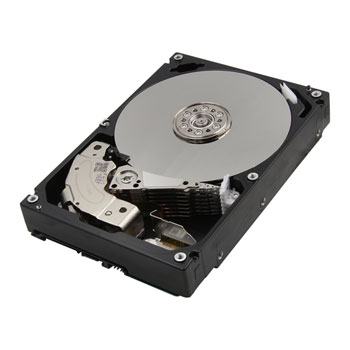
Hard Disk Drives are a type of...

a)

Optical storage device

b)

Magnetic storage device

c)

Solid State memory

d)

Primary memory

49.

Which category of secondary storage devices has the fastest access speeds? (i.e. quicker to read and write to)

a)

Magnetic storage

b)

Solid state storage

c)

Primary memory

d)

Optical memory

50.

Which category of secondary storage devices has the slowest access speeds? (i.e. slower to read and write to/from)

a)

Magnetic devices

b)

Optical devices

c)

Solid state memory

d)

Primary storage

51.

Which of the TWO categories of secondary storage devices are highly portable? (i.e. easy to carry)

a)

Magnetic and Optical

b)

Solid state and Optical

c)

Solid state and Magnetic

52.

Which of the secondary storage categories are the most durable (or strong/ toughest to break)?

a)

Magnetic

b)

Solid State

c)

Optical

d)

Primary memory

53.

Which of the 3 categories of secondary storage are the cheapest to buy, per megabyte (MB)?

a)

Magnetic

b)

Optical

c)

Solid State

54.

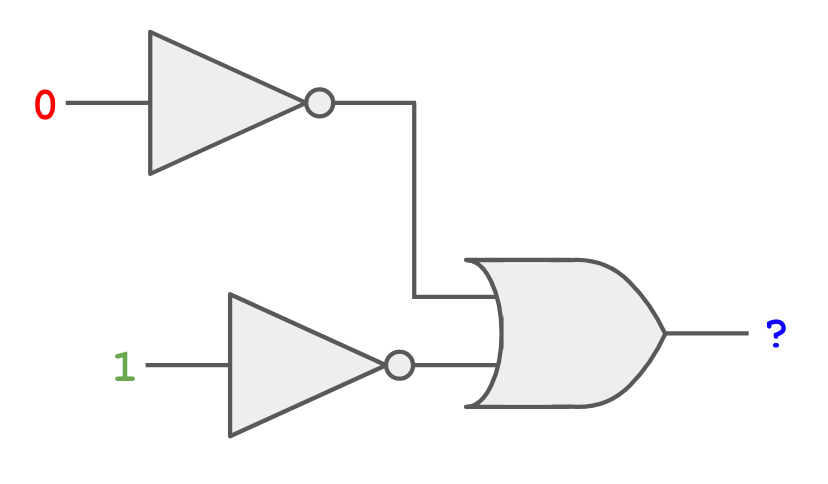
What will the circuit's output be?

a)

1

b)

0

55.

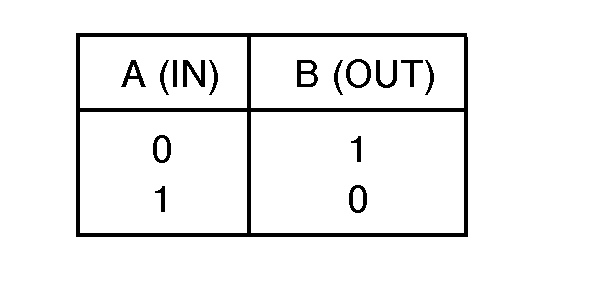
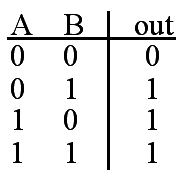
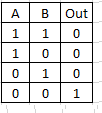
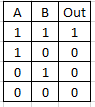
What type of logic gate is this table showing?

a)

AND

b)

OR

c)

NOT

56.

What type of logic gate is this table showing?

a)

AND

b)

OR

c)

NOT

57.

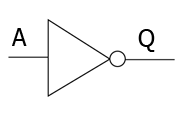
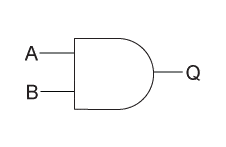
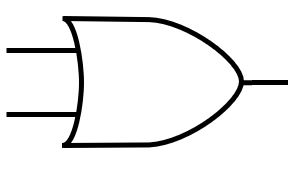
Which logic gate is this?

a)

AND

b)

OR

c)

NOT

58.

Which logic gate is this?

a)

AND

b)

OR

c)

NOT

59.

Which logic gate is this?

a)

AND

b)

NOT

c)

OR

60.

What will this gate's output be?

a)

0

b)

1

61.

What will this gate's output be?

a)

0

b)

1

62.

What will this gate's output be?

a)

0

b)

1

63.

How many different combinations of 1 and 0 are possible with 2 bits?

a)

2

b)

4

c)

6

d)

8

64.

How many different combinations of 1 and 0 are possible with 3 bits?

a)

2

b)

4

c)

6

d)

8

65.

How do we get all the inputs for a truth table with 3 inputs?

a)

Guess all the combinations of 1s and 0s

b)

Count up in binary from 000

c)

Count up in binary from 111

d)

Count up in binary from 1

66.

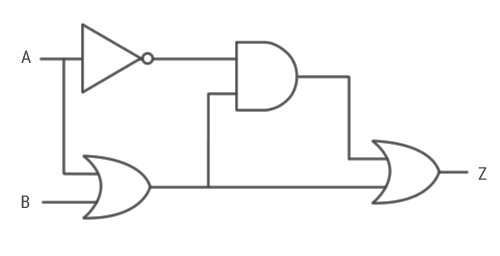
What is the Logic Expression for this circuit?

a)

Z = NOT (A AND B)

b)

Z = NOT (A OR B)

c)

Z = (NOT A) AND B

d)

Z = (NOT A) OR B

67.

True or False:

Both inputs need to be 1 for an OR gate to output a 1

a)

True

b)

False

68.

True or False:

AND gates output a 1 if both inputs are 0

a)

True

b)

False

69.

True or False:

NOT gates output the opposite of the input

a)

True

b)

False

70.

Identify the logic gate.

a)

NOR

b)

XNOR

c)

XOR

d)

OR

71.

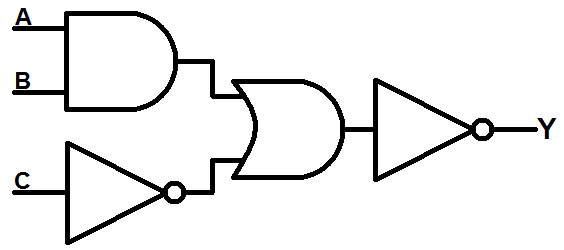
What is the output Y of this logic cricuit if A = 1, B = 1, and C = 1

a)

0

b)

1

72.

What is the output Z of this logic cricuit if A = 1 and B = 1

a)

0

b)

1

73.
A NOT gate has…
a)
Two inputs and one output
b)
One input and one output
c)
One input and two outputs
d)
Two inputs and two outputs
74.

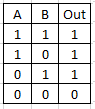
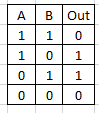
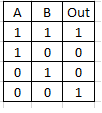
Which is the truth table for the AND gate?
a)
b)
c)
d)
e)
75.
A truth table lists every possible combination of input and the resulting output
a)
True
b)
False