wayground logo

Free Printable Worksheets

NEW

Font size

S
M
L
XL
Worksheets

Heart Quiz Review

Total questions: 52

Worksheet time: 39mins

Name
Class
Date
1.
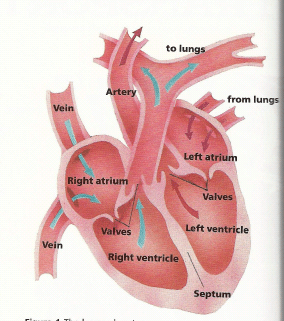
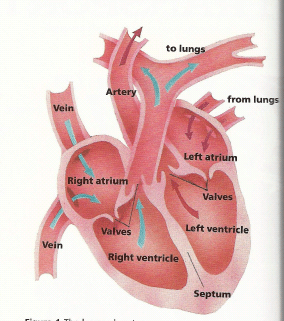
Separates the chambers of the heart.
a)
mitral valve
b)
septum
c)
aortic valve
2.
name of the valve that separates right atrium from right ventricle.
a)
tricuspid
b)
aortic
c)
mitral
3.
Unoxygenated blood enters the right atrium from the bottom of the heart.
a)
inferior vena cava
b)
superior vena cava
c)
pulmonary veins
4.
Unoxygenated blood enters the right atrium from the top of the heart.
a)
inferior vena cava
b)
superior vena cava
c)
aorta
5.
Valve that blood is forced through from right ventricle into pulmonary arteries.
a)
pulmonary valve
b)
aortic valve
c)
mitral valve
6.
Name of the valve that separates left atrium from left ventricle.
a)
mitral valve
b)
tricuspid
c)
pulmonary valve
7.
Major artery at the top of the heart sends oxygenated blood from the left ventricle to the rest of the body.
a)
aorta
b)
pulmonary artery
c)
inferior vena cava
8.
Build up of plaque causing the narrowing of the walls of the arteries of the heart. 
a)
Atherosclerosis
b)
Arrhythmia
c)
Stroke
9.

There are _____________chambers in the heart.

a)

3

b)

4

c)

5

10.

The ______________pump blood into the body.

a)

septum

b)

atria

c)

ventricles

11.

The fibrous "strings" of the AV valves that prevent them from blowing out

a)

aponeuroses

b)

chordae tendinae

c)

semilunar cusps

d)

anastomoses

12.
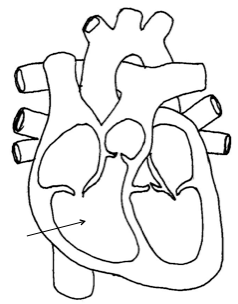
Name this part.
a)
Right ventricle
b)
Pulmonary artery
c)
Left ventricle
d)
Right atrium
13.
______ carry blood to the heart.
a)
Arteries
b)
Veins
c)
Capillaries
d)
Vena Cava
14.
_____ carries blood away from the heart.
a)
Blood cells
b)
Veins
c)
Capillaries
d)
Arteries
15.
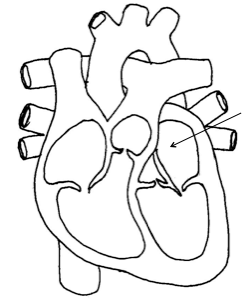
Name this part.
a)
Right atrium
b)
Left ventricle
c)
Right ventricle
d)
Left atrium
16.
5?
a)
Aorta
b)
Pulmonary Valve
c)
Atrium
d)
Ventricle
17.
1?
a)
Right Ventricle
b)
Right Pulmonary Vein
c)
Superior Vena Cava
d)
Inferior Vena Cava
18.
7?
a)
Left Atrum
b)
Left Ventricle
c)
Mitrial Valve
d)
Aortic Valve
19.
9?
a)
Left Ventricle
b)
Left Atrium
c)
Left Pulmonary Vein
d)
Left Pulmonary Artery
20.
Pumps the oxygen-rich blood to all parts of the body
a)
Right Ventricle
b)
Left Ventricle
c)
Right Atrium
d)
Left Atrium
21.
A flap of tissue that prevents blood from flowing backward
a)
Aorta
b)
Atrium
c)
Septum
d)
Valve
22.
Which side of the heart pumps blood into the lungs?
a)
Right
b)
Left
23.

The upper chambers of the heart are called______________.

a)

atria

b)

ventricles

c)

septum

24.

The ______________pump blood into the body.

a)

septum

b)

atria

c)

ventricles

25.

The beating sound your heart makes comes from

a)

blood going in the wrong direction

b)

valves closing

c)

the heart skipping beats

d)

your ears playing tricks on you

26.
Largest artery in the human body:
a)
Pulmonary artery
b)
femoral artery
c)
aorta
d)
carotid artery
27.
The pressure exerted on the arterial walls when the heart relaxes is called the
a)
diastolic pressure
b)
systolic pressure
c)
hydrostatic pressure
d)
osmotic pressure
28.
The pressure exerted on the arterial walls when the heart contract is called
a)
diastolic pressure
b)
systolic pressure
c)
hydrostatic pressure
d)
osmotic pressure
29.
Why are the walls of the left ventricle thicker than that of the right ventricle?
a)
The left ventricle must force blood into all the capillaries of the lungs 
b)
the left ventricle doesn't skip leg day
c)
This is false, the walls of the right ventricle are thicker
d)
Blood from the left ventricle is pumped throught the entire body 
30.

The 'Lub' sound of the heart is caused by .....

a)

Atrioventricular valves closing

b)

Semilunar valves closing

c)

Blood flowing through the Pulmonary artery and aorta

d)

Blood Flowing down into the ventricles

31.

Which of the following is true about the semi-lunar valves in the heart?

a)

They are between atria and ventricles

b)

They close when pressure in the arteries is higher than pressure in the atria

c)

They prevent backflow of blood into the atria

d)

They open when pressure in the ventricles is higher than pressure in the arteries

32.
The pointed, inferior portion of the heart, known as the ________ rests on the diaphragm and is oriented towards the left hip.
a)
base
b)
mediastinum
c)
apex
d)
pericardium
33.

Layer of the heart wall made up mostly of cardiac muscle

a)

Pericardium

b)

Epicardium

c)

Myocardium

d)

Endocardium

34.

Layer of the heart wall that lines all of the heart chambers

a)

Pericardium

b)

Epicardium

c)

Myocardium

d)

Endocardium

35.
Another name for the mitral valve
a)
Tricuspid
b)
Pulmonary
c)
Bicuspid
d)
Aortic
36.

What valve will deoxygenated blood pass through as it leaves the right atrium?

a)

tricuspid

b)

bicuspid

c)

aortic semilunar

d)

pulmonary semilunar

37.

What chamber of the heart pumps deoxygenated blood to the lungs?

a)

right atrium

b)

right ventricle

c)

left atrium

d)

left ventricle

38.

How does deoxygenated blood get to the lungs from the right ventricle?

a)

pulmonary veins

b)

pulmonary arteries

c)

brachiocephalic artery

d)

aorta

39.

Oxygenated blood is carried from the lungs to the left atrium by the ____.

a)

pulmonary veins

b)

pulmonary arteries

c)

aorta

d)

vena cava

40.

Oxygenated blood in the left atrium must pass through what valve to get to the left ventricle?

a)

tricuspid

b)

bicuspid

c)

pulmonary semilunar

d)

aortic semilunar

41.

Oxygenated blood will be pumped from the left ventricle through the ______ to be delivered to the body.

a)

pulmonary veins

b)

pulmonary arteries

c)

aorta

d)

vena cava

42.

What valve separates the left ventricle from the aorta?

a)

tricuspid

b)

bicuspid

c)

mitral

d)

aortic semilunar

43.

This layer of heart tissue is also known as visceral pericardium:

a)

epicardium

b)

endocardium

c)

myocardium

44.

Thickest and toughest layer of the pericardium.

a)

serous pericardium

b)

visceral pericardium

c)

fibrous pericardium

d)

parietal pericardium

45.

Indicate some defects in the valves of the heart

a)

Murmurs

b)

Myocardial ischemia

c)

Varicose Veins

d)

Atherosclerosis

46.

Disease that occurs when deposits of fatty substances form along the walls of the arteries.

a)

Atherosclerosis

b)

Heart Failure

c)

Myocardial Infarction

d)

Claudication

47.
What is it called when heart muscle cells die and the heart muscle is damaged?
a)
myocardial infarction
b)
congestive heart failure
c)
coronary artery disease
d)
hypertension
48.

Which one of the following represents the correct path for the transmission of an impulse in the intrinsic conduction system of the heart?

a)

AV node, AV Bundle, SA node, Purkinje fibers, bundle branches

b)

SA node, AV node, AV Bundle, bundle branches, Purkinje fibers

c)

SA node, AV Bundle, AV node, Purkinje fibers, bundle branches

d)

SA node, AV Bundle, bundle branches, Purkinje fibers, AV node

49.

The P wave correlates with which event?

a)

Atrial contraction

b)

Ventricular contraction

c)

Ventricular repolarization

d)

Both atrial and ventricle contraction

50.

The T wave correlates with which event?

a)

Atrial contraction

b)

Ventricular contraction

c)

Ventricular repolarization

d)

Both atrial and ventricle contraction

51.

The QRS wave (complex) correlates with which event?

a)

Atrial contraction

b)

Ventricular contraction

c)

Ventricular repolarization

d)

Both atrial and ventricle contraction

52.

The place where the electrical current starts and is considered the heart's pacemaker:

a)

Sinoatrial (SA) node

b)

Atrioventricular (AV) bundle

c)

Atrioventricular (AV) node

d)

Purkinje fibers