wayground logo

Free Printable Worksheets

NEW

Font size

S
M
L
XL
Worksheets

Waves Unit Test

Total questions: 77

Worksheet time: 1hrs 5mins

Name
Class
Date
1.

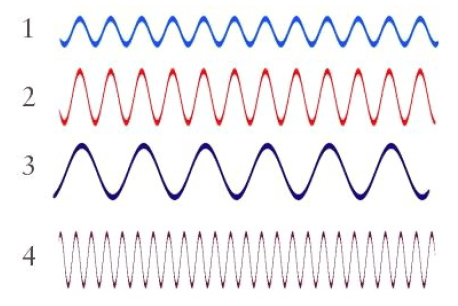
Which transverse wave has the highest frequency?

a)

1

b)

2

c)

3

d)

4

2.
The measurement of the distance the particles move from the resting point of the wave
a)
Wavelength
b)
Frequency
c)
Amplitude
d)
Crest
3.

The measurement of the length of a wave from one point of the wave to the next identical part of the wave (for example, top to top or bottom to bottom)

a)

Crest

b)

Amplitude

c)

Frequency

d)

Wavelength

4.

The number of waves that passes a certain point in a set period of time

a)

Frequency

b)

Amplitude

c)

Wavelength

d)

Amplength

5.
What kind of wave is pictured below?
a)
compressional wave
b)
transverse wave
c)
sound wave
d)
mechanical wave
6.

What is transferred in waves?

a)

Energy

b)

Objects

c)

Magic

d)

Light

7.

In a transverse wave, how do the particles move?

a)

They don't move

b)

Sideways

c)

Up and down

d)

In a square

8.

Which one shows the amplitude of a wave?

a)
b)
c)
9.

Which one shows the wavelength of a wave?

a)
b)
c)
10.

Sound travels in which kind of wave?

a)

Longitudinal waves

b)

Transverse waves

11.
Which wave travels parallel in relation to a medium?
a)
Transverse
b)
Longitudinal
c)
Both
d)
Neither
12.
Law of reflection state that - The angle of incidence is .................. to the angle of reflection.
a)
equal
b)
double
c)
half
13.
........... – the angle between the normal and the incident ray.
a)
Angle of incidence
b)
Angle of reflection
c)
Angle of coincidence
d)
Angle of direction
14.
The ray of light that strikes a reflecting surface is called ________.
a)
incident ray
b)
reflected ray
c)
normal ray
d)
none of the above
15.
What is this called?
a)
refraction
b)
reflection
c)
reconstroction
d)
retraction
16.
According to the Law of reflection, a light ray striking a mirror
a)
continues moving through the mirror in the same direction
b)
moves into the mirror at a slightly different angle
c)
bounces off the mirror toward the direction it came from
d)
bounces off the mirror at the same angle it hits.
17.

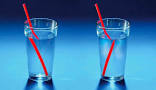
A student placed a pencil in a cup of water. The pencil appears broken because light

a)

always travels in a straight line.

b)

bends when it passes through water.

c)

makes the water in the glass evaporate.

d)

reflects the pencil on the water's surface.

18.
If you want to change the pitch of a sound, you have to change the ___
a)
frequency
b)
amplitude
c)
speed
d)
volume
19.
A part in a longitudinal wave where the particles are spread apart
a)
compression
b)
rarefaction
c)
crest
d)
trough
20.
The part of a longitudinal wave where the particles of the medium are close together.
a)
rarefaction
b)
compression
c)
crest
d)
trough
21.
Material (matter) through which a wave travels
a)
medium
b)
Doppler Effect
c)
sound
d)
pitch
22.

What is A?

a)

crest

b)

trough

c)

compression

d)

rarefaction

23.
travels through solids fastest because the molecules are closer together
a)
speed of sound
b)
wavelength
c)
frequency
d)
amplitude
24.

How high or low a sound is; depends on the frequency

a)

pitch

b)

frequency

c)

sound

d)

medium

25.
A wave in which the vibration is in the same direction as that in which the wave is traveling; sound waves
a)
longitudinal wave
b)
ocean wave
c)
transverse wave
d)
mechanical wave
26.

The diagram shows a cartoon of a sound wave produced while a student is speaking.


What happens to the sound wave when the student speaks louder?

a)

The amplitude increases

b)

the wavelength will double

c)

the speed will increase

d)

the amplitude will decrease

27.

A boy has a cork on his fishing line in a lake. His brother throws a rock in the lake near where he is fishing, and the waves created from the rock splashing cause the boy's cork to bob up and down for over a minute. What is the medium for the waves in this scenario?

a)

the cork

b)

the water

c)

the rock

d)

the fishing line

28.

Longitudinal waves move:

a)

at a right angle compared to the direction the wave is traveling

b)

in a circle compared to the direction the wave is traveling

c)

matter

d)

in the same direction as the wave is traveling

29.

How are sound waves like ripples in a pond?

a)

They are both types of electromagnetic radiation.

b)

They travel faster in water than they do in the air.

c)

They radiate outward from a central point.

d)

They have the same wavelengths.

30.

Sound is measured in

a)

pitch

b)

hertz

c)

frequency

d)

decibels

31.
Which travels faster: sound or light waves?
a)
sound
b)
light
32.

Calculate the speed of sound if a sound wave travels 680 m in 2 seconds.

a)

1360 m/s

b)

340 m/s

c)

The speed of sound is always the same

d)

250 m/s

33.

This is a picture of:

a)

Audiograss

b)

Audiogran

c)

Audiogram

d)

Selfie

34.
A wave in which the vibration is in the same direction as that in which the wave is traveling; sound waves
a)
longitudinal wave
b)
ocean wave
c)
transverse wave
d)
mechanical wave
35.
A reflected sound wave
a)
frequency
b)
pitch
c)
echo
d)
rarefaction
36.

You can't hear sounds in outer space because there is no

a)

medium

b)

light

c)

energy

d)

heat

37.
Which wave in the diagram has the greatest frequency?
a)
1
b)
2
c)
3
d)
4
38.
What two factors effect the amount of energy a wave has?
a)
Frequency and wavelength
b)
Frequency and amplitude
c)
Amplitude and rest
d)
Wavelength and crest
39.

when a wave is bent by traveling from one medium to another

a)

reflection

b)

refraction

c)

absorption

d)

propagation

40.
A part in a longitudinal wave where the particles are spread apart
a)
compression
b)
rarefaction
c)
crest
d)
trough
41.
The part of a longitudinal wave where the particles of the medium are close together.
a)
rarefaction
b)
compression
c)
crest
d)
trough
42.
The number of wavelengths that pass a point each second
a)
frequency
b)
wavelength
c)
pitch
d)
amplitude
43.

What is A?

a)

crest

b)

trough

c)

compression

d)

rarefaction

44.
A disturbance that travels through a medium as a longitudinal wave
a)
sound
b)
wavelength
c)
pitch
d)
frequency
45.
travels through solids fastest because the molecules are closer together
a)
speed of sound
b)
wavelength
c)
frequency
d)
amplitude
46.
A wave in which the vibration is in the same direction as that in which the wave is traveling; sound waves
a)
longitudinal wave
b)
ocean wave
c)
transverse wave
d)
mechanical wave
47.
A disturbance that transfers energy from one place to another without transferring energy
a)
wave
b)
trough
c)
pitch
d)
sound
48.

The diagram shows a cartoon of a sound wave produced while a student is speaking.


What happens to the sound wave when the student speaks louder?

a)

The amplitude increases

b)

the wavelength will double

c)

the speed will increase

d)

the amplitude will decrease

49.

A boy has a cork on his fishing line in a lake. His brother throws a rock in the lake near where he is fishing, and the waves created from the rock splashing cause the boy's cork to bob up and down for over a minute. What is the medium for the waves in this scenario?

a)

the cork

b)

the water

c)

the rock

d)

the fishing line

50.

Sound is measured in

a)

pitch

b)

hertz

c)

frequency

d)

decibels

51.
Which travels faster: sound or light waves?
a)
sound
b)
light
52.

Calculate the speed of sound if a sound wave travels 1020 m in 3 seconds.

a)

3060

b)

365 m/s

c)

340 m/s

d)

250 m/s

53.

Calculate the speed of sound if a sound wave travels 680 m in 2 seconds.

a)

1360 m/s

b)

340 m/s

c)

The speed of sound is always the same

d)

250 m/s

54.
Name the type of wave that matter moves at right angles to the direction of the wave?
a)
compressional waves
b)
mechanical waves
c)
transverse waves
d)
ultraviolet rays
55.
Why would a wave change direction?
a)
Because it kept traveling through the same medium
b)
Because it went from one medium to another
c)
the amplitude was too large
d)
the frequency was too small
56.
Which letter represents wavelength?
a)
A
b)
B
c)
C
d)
D
57.
Which letter represents the wave crest?
a)
A
b)
B
c)
C
d)
D
58.
Which letter represents the wave trough?
a)
A
b)
B
c)
C
d)
D
59.
Which letter represents amplitude?
a)
A
b)
B
c)
C
d)
D
60.
_______ waves need matter to travel but ________ waves do not.
a)
Sound; light
b)
Light; sound
c)
Sound; electrical
d)
Electrical; light
61.
Waves move _______, not matter.
a)
light
b)
sound
c)
energy
d)
water
62.
A ___ amplitude light wave will be brighter, and a __ amplitude light wave will be dimmer.
a)
lower; higher
b)
higher; higher
c)
higher; lower
d)
lower; lower
63.

What word is used to describe light as it strikes a smooth, shiny surface and bounces off?

a)

shadow

b)

energy

c)

reflection

d)

wave length

64.

Which of the following materials will reflect light the best?

a)

a piece of wood

b)

a glass of water

c)

a plastic spoon

d)

a metal spoon

65.

What type of surface scatters light unevenly?

a)

shiny

b)

rough

c)

smooth

d)

transparent

66.

When you place things into water they sometimes look bent (see the image below). What is this an example of?

a)

Refraction

b)

Diffraction

c)

Transmission

d)

Absorption

67.
a)

absorption

b)

diffraction

c)

reflection

d)

refraction

e)

transmission

68.
a)

absorption

b)

diffraction

c)

reflection

d)

refraction

e)

transmission

69.

The incident angle and the reflected angle are______

a)

equal

b)

obtuse

c)

90 degrees

70.

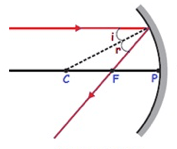
This ray diagram is for which mirror?

a)

concave

b)

convex

c)

plane

d)

window

71.
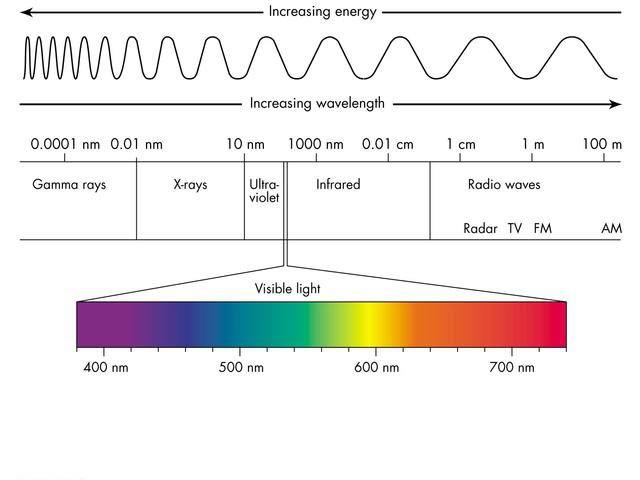
True or false: as you move along the spectrum, radio to gamma waves, the wavelengths decrease in size (get smaller)
a)
true
b)
false
72.
Select the correct order of waves on the EMS from the longest wavelength to the shortest wavelength
a)
Radio, Micro, Infra, Visible, Ultra, X-ray, Gamma
b)
Gamma, X-ray, Ultra, Vis, Infra, Micro, Radio
c)
Vis, Micro, Infra, Ultra, X-ray, Gamma, Radio
d)
Micro, Radio, Vis, Infra, Ultra, X-ray, Gamma
73.
Which has the LONGEST wavelength and, therefore, the lowest frequency/energy
a)
Gamma Rays
b)
Radio Waves
c)
Visible Light
d)
Infrared rays
74.
Which has the SHORTEST wavelength and, therefore, the highest frequency/most energy
a)
Radio waves
b)
Ultraviolet Rays
c)
Gamma Rays
d)
X-rays
75.
Which section of the spectrum is the ONLY one we can see?
a)
X-rays
b)
Visible Light
c)
Gamma Rays
d)
Ultraviolet Rays
76.
Which of the following electromagnetic waves has the lowest energy?
a)
gamma ray
b)
infrared wave
c)
visible light wave
d)
microwave
77.

What is the correct order of the visible light spectrum starting with the longer wavelength?

a)

Red, yellow, orange, blue, violet, indigo

b)

Violet, indigo, blue, green, yellow, orange, red

c)

Green, yellow, blue, indigo, red, orange

d)

Red, orange, yellow, green, blue, indigo, violet