wayground logo

Free Printable Worksheets

Font size

S
M
L
XL
Worksheets

Final Exam Review

Total questions: 121

Worksheet time: 2hrs 46mins

Name
Class
Date
1.

Lincoln's Reconstruction needed southern states to have at least ________ % of the voting population take a loyalty oath.

a)

10

b)

30

c)

50

d)

99

2.

The __________Amendment outlawed slavery.

a)

13th

b)

14th

c)

15th

3.

Schools in the south to educate freedmen were set up by the ______________

a)

Union Army

b)

Special Field Order 15

c)

Freedmen's Bureau

4.

What amendment made all people born in the United States citizens?

a)

13th Amendment

b)

14th Amendment

c)

15th Amendment

5.

Literacy tests were created as a way to suppress African American voters after the passage of the _______________.

a)

Civil Rights Act of 1964

b)

13th Amendment

c)

14th Amendment

d)

15th Amendment

6.
Which of the following was not a goal of Reconstruction?
a)
Reunite the North and the South
b)
Rebuild the South
c)
Develop the system of sharecropping
d)
Determine what to do with African Americans
7.
What group in Congress felt that Lincoln's plan was too lenient?
a)
Deciduous Democrats
b)
Radical Republicans
c)
Wistful Whigs
d)
Fancy Federalists
8.
Laws passed by southern states soon after the Compromise of 1877.  These laws legalized segregation whites and blacks to use separate facilities. 
a)
Jim Crow Laws
b)
Black Codes
c)
Freedman's Bureau
d)
Reconstruction
9.
All of the following resulted from the end of Reconstruction EXCEPT:
a)
Ku Klux Klan is founded
b)
Jim Crow laws were passed to segregate blacks from whites and place other limits on their rights. 
c)
Sharecropping becomes the dominant economy in the South
d)
Blacks continued to enjoy increased freedoms and equality
10.
Which three Amendments where designed to ensure equality for the slaves?
a)
17th,18th,19th
b)
13th,14th,15th
c)
13th,14th,16th
d)
8th,9th,10th
11.
In 1866, a group formed in the South to fight against the rising influence of African Americans in the South. Members of this group often turned to violence and intimidation, What was the name of this controversial group?
a)
Sons of the Confederacy
b)
Neo-Nazis
c)
Ku Klux Klan
d)
Black Separatists
12.
assimilation means...
a)
to become a part of a different culture
b)
to forget your name
c)
to leave your home
d)
to ignore another culture
13.
The Chinese and Irish immigrants were responsible for...
a)
completing the Trans. RR
b)
completing the Chisholm Tr.
c)
completing the ghost dance
d)
completing the puzzle
14.
What is the name given to the belief that the United States had the right and duty to expand across the North American continent?
a)
Manifest destiny 
b)
Monroe Doctrine 
c)
Great Awakening 
d)
Louisiana Purchase
15.

What was the main reason Chinese immigrants came to America?

a)

to experience the wagon trail

b)

to search for Gold in California

c)

to help America fight Mexico

16.
Why were many Americans moving out West?
a)
To be with their families 
b)
Better weather conditions
c)
Good, cheap farmland
17.
How did the growth of railroads affect the geographical expansion of the US?
a)
People and goods could not be transported easily
b)
More buffalo killed
c)
People and goods could be transported easily
d)
It cost a lot of money
18.
How did building the Transcontinental Railroad affect the bison?
a)
Bison populations increased
b)
Bison populations decreased
c)
Bison populations stayed the same
d)
Bison populations completely disappeared
19.
What did farmers use to protect their land from the cowboys?
a)
Guns
b)
Tape
c)
Talking
d)
Barbed wire
20.
What government grant gave 160 acres of land to pioneers to farm for 5 years?
a)
New Land Act
b)
Homestead Act
c)
Free Land Act
d)
Welcome Home Act
21.
Where did the US government force Native Americans to live during Westward Expansion?
a)
Reservations
b)
Hotels
c)
Caves
d)
Apartments
22.

What economic system gives private ownership the power to produce and invest as they see fit.

a)

democracy

b)

Capitalism

c)

socialism

d)

totaltarianism

23.
He was known as a major entrepreneur in the Oil Industry
a)
John Rockefeller
b)
Andrew Carnegie
c)
Cornelius Vanderbelt 
d)
Gustavus Swift
24.
Known as the "Master of Steel"
a)
John D. Rockefeller
b)
Cornelius Vanderbilt
c)
Gustavus Swift
d)
Andrew Carnegie
25.
_______ is when workers refuse to work in order to force an employer to meet their demands.
a)
labor unions
b)
party
c)
strike
d)
sweatshop
26.
Formation of national labor unions in the late 1800's was mainly because of
a)
passage of laws that supported workers
b)
laws restricting immigration
c)
poor working conditions and low wages
d)
economic depression that led to high unemployment
27.
This group of immigrants was especially discriminated against with an Exclusion Act made in 1882.
a)
Chinese
b)
Irish
c)
Italian
d)
German
28.
The 1894 Pullman Strike, like many strikes at the end of the 1800s:
a)
involved little violence upon the part of the workers and the businesses.
b)
was a victory for labor both politically and socially.
c)
was supported by President Cleveland.
d)
collapsed as a result of the Federal Government's support of businesses
29.
Which of the following occurred as a result of the Sherman Antitrust Act?
a)
Workers secured a greater share of company profits
b)
The influence of labor unions on factory owners was reduced
c)
The federal government could dissolve business monopolies
d)
Businesses were required to pay fees to open overseas locations
30.
In The Jungle, Upton Sinclair exposed
a)
Dangers faced by coal miners
b)
Corrupt business practices of the Standard Oil Company
c)
Unsanitary conditions in the meat-packing industry
d)
Illegal deals between special interests and the government
31.
Which of the following best states the goal of prohibitionists?
a)
To eliminate the sale of alcohol to children
b)
To eliminate the use of alcohol in society
c)
To reduce accidents in the workplace
d)
To reduce the availability of alcohol to minors
32.
Suffrage refers to:
a)
Discrimination
b)
Women’s Rights
c)
The Right To Vote
d)
The Denial of Voting
33.
What amendment provided suffrage for women (1920)?
a)
16th
b)
17th
c)
18th
d)
19th
34.
Whose book led to the direct passage of the Meat Inspection Act and indirect of the Pure Food and Drug Acts?
a)
Jacob Riis
b)
Lewis Hines
c)
Ida Tarbell
d)
Upton Sinclair
35.
Banned people from making, drinking or selling alcohol
a)
17th Amendment
b)
18th Amendment
c)
19th Amendment
d)
21st Amendment
36.
Reporters, journalists, photographers, and authors who used the media to raise concerns about the negative effects of industrialization were known as
a)
muckrakers
b)
suffragists
c)
immigrants
d)
abolitionists
37.
Progressive reformers, or muckrakers  known for taking photographs to expose unsafe or unsanitary conditions
a)
Ida Tarbell and Upton Sinclair
b)
WEB DuBois and Booker T Washington
c)
Jacob Riis and Lewis Hine
d)
Alice Paul and Carrie Catt
38.
During the Progressive Era, Jane Addams responded to urban conditions by working to establish-
a)
free public schools located in inner-city neighborhoods
b)
settlement houses that provided assistance to the poor
c)
newspapers that helped to inform Americans about slum conditions
d)
laws that restricted certain immigrant groups
39.
The founder of the NAACP who encouraged African Americans to fight to end segregation
a)
Booker T. Washington
b)
George Washington Carver
c)
WEB Dubois
d)
Upton Sinclair
40.

What were photographs such as this one taken by Lewis Hine primarily intended to accomplish?

a)

Encourage leaders to make segregation in schools illegal

b)

Document labor conditions during an economic crisis

c)

Depict the evils of capitalism in communist propaganda

d)

Focus attention on the need for child labor reforms

41.
What is one example of US governments assimilation of Native Americans?
a)
Native American schools
b)
killing the buffalo
c)
Native American Wars
d)
Massacre at Wounded Knee
42.
Imperialism is __________.
a)
when a powerful nation uses its resources to help a weaker nation
b)
when a weaker nation invites a powerful nation to help it industrialize
c)
when a powerful nation takes control of the economy and government of a weaker nation
d)
when weak nations join together to fight a strong nation
43.
Economic motives for imperialism include _________.
a)
a desire to spread Christianity
b)
a need for military bases around the world
c)
a need for raw materials to be used in factories
d)
a desire to gain glory
44.
The poem, The White Man's Burden, by Rudyard Kipling, represents the belief that European culture was _______.
a)
superior to other cultures
b)
misunderstood by Americans
c)
the oldest culture in the world
d)
a replica of Ancient Greek culture
45.

US entered war to gain control of Puerto Rico, Guam, Cuba, and the Philippines in this war...

a)

Rico War

b)

Spanish American War

c)

War on terrorism

d)

Island war

46.

Buying Alaska was beneficial to the U.S. when what was found there?

a)

a new river connecting the oceans

b)

New types of weapons

c)

a faster route to Asia

d)

Natural resources, like gold, timber and oil

47.

Which of these would best describe how Hawaii became part of the United States.

a)

The Queen was removed and then Hawaii added

b)

Hawaii has always been part of the U.S.

c)

U.S. added it after the Boxer Rebellion

d)

Won it during the Spanish American War

48.

Which was not a reason the U.S. wanted to get involved in the Spanish-American War?

a)

to gain colonies with a Pacific port

b)

the U.S.S. Maine exploded

c)

to build the Panama Canal

d)

the Spanish were being mean in Cuba

49.

What was the event that started the Spanish-American War?

a)

explosion of the U.S.S. Maine

b)

Boxer Rebellion in China

c)

Japanese attack on Pearl Harbor

d)

Spanish colonization in Alaska

50.

How did the U.S. benefit from winning the Spanish American War?

a)

adopted Spanish as a second language

b)

won colonies, Puerto Rico, Cuba and the Philippines

c)

Got control of the Panama Canal

d)

Added new states from Asia

51.

When newspapers exaggerate the stories to get more readers it is called....

a)

Yellow Journalism

b)

Carpetbagging

c)

Muckraking

d)

Freeloading

52.

Why did the U.S. want to build the Panama Canal?

a)

To allow Canada and Mexico to be connected easier

b)

In order to take over and gain more territory for the U.S.

c)

For shorter travel between the Atlantic and Pacific Oceans

d)

Because it allowed the U.S. to gain more pineapples

53.

Propaganda can be best described as

a)

fake news

b)

objective coverage of a news story, event, person, etc.

c)

providing information, ideas, and even rumors to help or hurt a cause

d)

tabloid type publications, celebrity gossip, etc.

54.

The belief that a country needs a strong army is called

a)

Imperialism

b)

Militarism

c)

Nationalism

d)

Socialism

55.

This is what the Germans called their submarines

a)

U-Boats

b)

Convoy System

c)

Red Scare

d)

Reparations

56.
Policy of not getting involved in foreign affairs?
a)
Isolationism
b)
Appeasement
c)
Containment
d)
Imperialism
57.
Soldiers fought in long deep ditches dug for protection across from France from the English Channel to the border with Switzerland.
a)
Nuclear Warfare
b)
Guerrilla Warfare
c)
Trench Warfare
d)
Defensive Warfare
58.
President Woodrow Wilson’s goals for peace after World War I.
a)
Fourteen Points
b)
League of Nations
c)
Schifflen Plan
d)
Emancipation Proclamation
59.

What promise did the Zimmerman note make to Mexico?

a)

Mexico promised Germany to help defeat the United States during World War I.

b)

Germany promised the United States more land from Mexico.

c)

Germany promised to help Mexico retrieve land taken by the United States during the Spanish-American War.

60.

The US government wanted to Americans at home to support the war effort. Select the ways that citizens helped.

a)

Planted "Victory Gardens"

b)

Collected scrap metal for recycling

c)

Sent money to soldiers

61.

What was the purpose of the League of Nations?

a)

to give power to one country over Europe

b)

to punish Germany for starting WWI

c)

to promote peace among countires

62.
Which event sparked World War I?
a)
the German-French dispute over Alsace-Lorraine
b)
Russia’s quest for a warm water port
c)
assassination of the heir to the Austro-Hungarian throne
d)
sinking of the Lusitania
63.
What was one of the three reasons United States joined the war?
a)
Germany bombed America
b)
Britain declared war on the U.S. 
c)
Germany used unrestricted submarine warfare
d)
France invaded Germany
64.

What was propaganda used for during WWI?

a)

Get Americans to support the war

b)

Convince Germans to fight back

c)

Convince Americans to not support the war

d)

Convince Americans to speak their mind

65.
In what ways did women help with the war effort at home?
a)
Worked in factories and conservation
b)
Joined the Army
c)
Drive tanks and Airplanes 
d)
Join the American Red Cross
66.
Why did Congress not join the League of Nations? 
a)
They thought it was too expensive. 
b)
They feared it would involve them in future conflicts.
c)
They thought it was unfair to Great Britain. 
d)
Woodrow Wilson encouraged them not to. 
67.
What was the event that led to The United States joining World War II?
a)
The forming of an alliance.
b)
The sinking of the Lusitania.
c)
The Zimmerman Telegram
d)
None
68.
This was known as the killing of 6 million Jews and others.
a)
Bombing of Hiroshima.
b)
The Holocaust
c)
The fall of the Berlin Wall
d)
The battle between Russians and Germans.
69.

Which phrase describes how people in the 1920’s bought things without actually having the cash to buy it (credit)?

a)

Recession

b)

Drought

c)

Buying on margin

d)

The Bull Market

70.

What was the name of homes made out of scrap wood and materials that poor people lived in during the Depression?

a)

Hoovertowns

b)

Pleasantville

c)

Palm Cities

d)

Shanties/Hoovervilles

71.

To encourage Americans to "buy now" and "pay latter" when purchasing products in their stores they encouraged

a)

Credit

b)

Margin Buying

c)

Muckraking

d)

Imperialism

72.
Women who cut their hair short, wore makeup, and wore short dresses were known as 
a)
Flappers
b)
Muckrakers
c)
Hippies
d)
Victorian Women
73.
What Amendment made it illegal to purchase and distribute Alcohol? 
a)
18th
b)
19th
c)
20th
d)
21st
74.
With Alcohol being illegal, this became known as ___________.
a)
Prohibition 
b)
Progressive
c)
Intolerance
d)
Imperialism 
75.
Hidden bars and establishments that sold alcohol became known as 
a)
Speakeasies 
b)
Night Clubs
c)
Cotton Clubs
d)
Raves
76.
The Harlem Renaissance was focused on the writing and music related to
a)
African Americans
b)
Immigrants
c)
Communists
d)
Republicans
77.
What innovation did Henry Ford use to boost the automotive industry?
a)
Interchangeable Parts
b)
The Assembly Line
c)
The Seaplane
d)
Washing Machine
78.
President during the 1930s who was considered a failure because he couldn't fix the Great Depression.
a)
Franklin D. Roosevelt
b)
Herbert Hoover
c)
Margaret Mitchell
d)
Jessie Owens
79.
The president who promised the people a "New Deal" during the Great Depression.
a)
Jesse Owens
b)
Herbert Hoover
c)
Franklin D. Roosevelt
d)
George Washington
80.
What program did Franklin Roosevelt create in order to help Americans during the Great depression?
a)
Roosevelts boys
b)
Newer Deal
c)
New Deal
d)
FDR's relief
81.
What event valued stocks lower than their worth and caused people to panic, lose their jobs, homes and life savings?
a)
Black Friday
b)
Stock Market Crash
c)
The First Day of School
d)
The Solar Eclipse
82.
During the Great Depression, there was a severe drought in the Great Plains. Strong prairie winds picked up the topsoil and spread dust everywhere. Many farm families packed everything up and moved west. What was this event called?
a)
Dust Bowl
b)
Salad Bowl
c)
Great Plains Panic
d)
Depressing Dust
83.
Henry Ford created the assembly line. This allowed for him to sell his cars at a cheaper price. Why would he sell them at a cheaper price?
a)
He could make cars quickly, so he had more to sell and could still make a good profit. 
b)
He sold them for an even higher price
c)
His competition was dropping their price
d)
He wasn't making any money at all
84.
After the Stock Market Crash, many people lost their life savings because _______________.
a)
banks closed
b)
banks gave away their money
c)
they couldn't remember where they put it
d)
someone stole it
85.
The Bonus Army incident in 1932 best illustrates the idea that
a)
F.D.R.'
s relief programs were unsuccessful.
b)
many felt that Herbert Hoover was not handling the Depression well.
c)
protests by veterans during the Depression were effective.
d)
the U.S. Army had increased in size and power during the Depression.
86.

The term appeasement refers to ---

a)

giving in to an aggressor to avoid war

b)

depending on allies to fight for you

c)

disarming to show your unwillingness to fight

d)

standing up for one's beliefs

87.

Which two cities were attacked with atomic bombs by the United States?

a)

Nagasaki & Hiroshima

b)

Tokyo & Kyoto

c)

Tokyo & Yokohama

d)

Osaka & Kyoto

88.

What event changed the role of the US and led to us declaring war and sending troops into battle?

a)

attack on Pearl Harbor

b)

Lend-Lease Act

c)

Operation Torch

89.

What was the purpose of rationing?

a)

increase supply of natural resources

b)

cause a shortage of crops

c)

provide supplies to the troops

90.

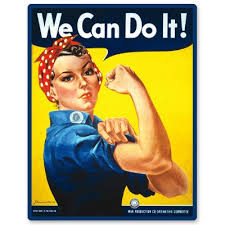
Who is this a image of and what did she a symbol of .....

a)

June the Fighter symbol of women's suffrage

b)

Susan the solider symbol of women working on airplanes

c)

Rosie the Riveter symbol of women working in factories during the war.

91.

What is another name for the Invasion of Normandy?

a)

Battle of France

b)

Battle of the Bulge

c)

D-Day

d)

V-E Day

92.
In what way did the Treaty of Versailles establish conditions that led to the outbreak of WWII?
a)
It called for the dissolving of the League of Nations, thus removing an organization for resolving future conflicts
b)
It gave Germany too much power by letting Germany keep the Alsace-Lorraine region of France
c)
It weakened the Allied countries by making France, England, and Russia reduce the size of their armies
d)
It imposed harsh reparation payments on Germany, which led to economic and political instability
93.
Japanese and Japanese Americans from the West Coast of the USA during WWII who were sent to camps called "War Relocation Centers" in remote portions of the nation's interior
a)
Cornelia Fort
b)
Japanese Internment
c)
Allied Powers
d)
Axis Powers
94.
This is the name of the Organization that was created by Western European Countries, America and Canada to help contain the spread of Communism.
a)
United Nations
b)
Alliance
c)
League of Nations
d)
NATO
95.
In 1946, Winston Churchill used the term “Iron Curtain "when describing conditions in Europe. What did he mean by this term?
a)
•European nations needed to build more factories
b)
•Peace had finally spread throughout the countries of Europe.
c)
•The militaries of Western Europe were becoming too powerful.
d)
•There was a division between the communist Eastern Europe and Western Europe. 
96.
The Cold War was a time of tension between the United States and the former Soviet Union. In 1962, the United States was involved in
the Cuban Missile Crisis. Which was the importance of this event?
a)
•The United States wanted the former Soviet Union to provide aid to Cuba.
b)
•The United States attacked Cuba.
c)
•The United States wanted the former Soviet Union to remove missiles from Cuba.
d)
•The United Stated placed missiles in Cuba.
97.
In 1950, the United States and other countries from the United Nations became involved in the Korean War. What was the cause of this war?
a)
•North Korea attacked South Korea to spread communism.
b)
•South Korea wanted to drive out troops from Vietnam.
c)
•North Korea attacked China to spread communism.
d)
•South Korea attacked North Korea to spread democracy.
98.

How was the United States involved in the Vietnam War?

a)

The United States dropped an atomic bomb on South Vietnam.

b)

The United States was allied with North Vietnam.

c)

The United States provided economic and limited military aid to prevent the spread of communism.

d)

The United States did not want to get involved in other countries' conflicts.

99.

What is the term used to describe the invisible line that separated communist Eastern Europe from democratic Western Europe?

a)

Berlin Wall

b)

Iron Curtain

c)

No Man's Land

d)

Iron Wall

100.
A form of economy that promotes free trade, reduced government intervention and entrepreneurism is ________
a)
Capitalism
b)
Communism
c)
Socialism
d)
Marxism
101.
Why did Western Europe want to the contain communism?
a)
They did not want another world war.
b)
They feared communism would destroy democracy.
c)
They wanted to have more control over the land.
d)
They believed people would like communism more than democracy.
102.
How did President Truman respond to the blockade that prevented supplies from getting the West Europe?
a)
He sent troops to attack the Soviet blockade.
b)
He authorized the use of the atomic bomb.
c)
He organized the Berlin Airlift to fly supplies to them.
103.
What was the arms race?
a)
The US and Soviet Union began to race and see who could conquer more countries.
b)
The US and Soviet Union began building and storing powerful weapons.
c)
The US wanted to have peace with the Soviet Union
d)
The Soviet Union wanted to become allies with the United States
104.
What two nations were in competition with each other during the Cold War?
a)
Spain and Portugal
b)
England and France
c)
Germany and Italy
d)
United States and Soviet Union
105.

During the Cold War, what bill did the U.S. Congress pass to provide financial assistance to western European countries?

a)

Truman Doctrine

b)

Open Door Policy

c)

Marshall Plan

d)

Domino Theory

106.

What policy implemented in the Cold War said the U.S. would give military aid to a country that needed to resist communism?

a)

Marshall Plan

b)

Truman Doctrine

c)

Domino Theory

d)

Open Door Policy

107.

During the Cold War, what policy did the U.S. follow to stop the spread of communism?

a)

Open Door Policy

b)

Big Stick Policy

c)

Containment Policy

d)

Dollar Diplomacy

108.

Atlanta born Civil Rights activist that believed in non-violent protests.; gave his famous "I Have a Dream" speech at the March on Washington.

a)

Rosa Parks

b)

Martin Luther King, Jr.

c)

Cesar Chavez

d)

Thurgood Marshall

109.

More than 200,000 Americans gathered in Washington, D.C., for a political rally for jobs and freedom.

a)

Civil Rights Act of 1964

b)

Montgomery Bus Boycott

c)

Freedom Riders

d)

March on Washington

110.

Refused to give up her seat to a white man on a bus.

a)

Mary Washington

b)

Jackie Kennedy

c)

Cesar Chavez

d)

Rosa Parks

111.

Desegregated all public schools. This was a major court case that involved Linda Brown attending an all-black school when an all-white school was closer to her home.

a)

Brown vs. the Board of Education

b)

13th Amendment

c)

Civil Rights Act of 1964

d)

Jim Crow Laws

112.

When African Americans refused to ride the public busses as a sign of protest; this began when Rosa Parks was jailed for refusing to give up her seat to a black man.

a)

Voting Rights Act of 1965

b)

March on Washington

c)

Montgomery Bus Boycott

d)

15th Amendment

113.

Outlawed racial discrimination in the workplace and in public places, including schools.

a)

13th Amendment

b)

Jim Crow Laws

c)

Civil Rights Act of 1964

d)

Voting Rights Act of 1964

114.

Prohibits racial discrimination in voting (voting people, voting)

a)

13th Amendment

b)

Jim Crow Laws

c)

Civil Rights Act of 1964

d)

Voting Rights Act of 1965

115.

Separation of two or more races based on skin color

a)

segregation

b)

racism

c)

oppression

d)

facism

116.
These black teenagers were the first to integrate into Little Rock Central High
a)
Elite Eight
b)
Little Rock Nine
c)
Arkansas Seven
d)
Final Four
117.
The most significant legal change after the Supreme Court ruled on Brown v. the Board of Education was:
a)
Linda Brown was able to go to the University of Alabama.
b)
Membership in the KKK escalated violence in retaliation.
c)
Segregation on public transportation was outlawed.
d)
The end to legal public school segregation based on the principle of separate but equal schools 
118.

What did Brown v. Board of Education decide?

a)

it segregated schools

b)

it desegregated schools

c)

it desegregated lunch counters

d)

it desegregated buses

119.
Court case that created "Separate-but-equal" doctrine.
a)
Sweatt v. Painter
b)
Brown v. Board of Education
c)
Plessy v. Ferguson
d)
Mendez v. Kirby ISD
120.
Nonviolent protest, where protesters occupied space in order to protest segregation.
a)
Sit-In
b)
Freedom Rides
c)
Selma March
d)
Filibuster
121.
disobeying certain laws in non-violent ways in order to make a point
a)
Civil Obedience 
b)
Civil Disobedience 
c)
Riots
d)
Angry protesting