
 Worksheets
Grade 9 Chemistry Quiz
Total questions: 60
Worksheet time: 3600secs
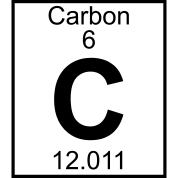
What is the basic structural unit of matter?
atom
compound
element
nucleus
The positively charged subatomic particle contained in the nucleus of an atom:
proton
neutron
electron
nucleus
A negatively charged subatomic particle that orbits the nucleus of an atom:
proton
neutron
electron
quark
A row on the periodic table is also called a:
family
period
group
column

Which colour on the image of the periodic table corresponds with the metalloids.
bright yellow
black
teal
light blue
On the periodic table, which elements are on the left side of the staircase?
metals
nonmetals
metalloids
synthetics
Group 1 elements are called:
halogens
noble gases
alkali metals
alkaline earth metals
Group 2 elements are called:
transition metals
halogens
alkali metals
alkaline earth metals
Which halogen is found in period 4?
Krypton
Xenon
Bromine
Iodine
Which element has similar chemical properties as sodium but has 7 electron orbits?
Francium
Cesium
Rubidium
Potassium
What is the element symbol for boron?
B
Bo
Bn
Br
Which elements have the most similar chemical properties?
K and Na
K and Ca
K and Cl
K and S
The amount of space something takes up:
density
volume
mass
matter
What cannot be broken down into other substances?
Compounds
Mixtures
Solids
Elements
A combination of substances is called a:
Pure Substance
Compound
Element
Mixture
Chocolate milk is an example of a:
Mechanical mixture
Homogeneous mixture
Suspension
Solution
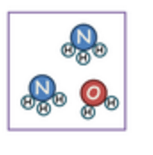

Which of these pictures represents a pure substance?
1 and 2
1 and 3
2 and 3
1
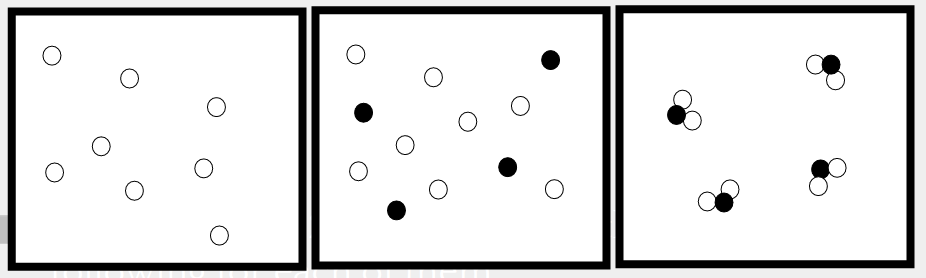
Which of these pictures represents a mixture?
1, 2 and 3
2
3
1 and 3
A chemical property of a substance could be the ability to:
rust
conduct heat
take up space
dissolve in water
Which of the following is a physical change?
Ice melting
Wood burning
Food digesting
Metal rusting
Which of the following is a chemical change?
Crushing an aspirin
Chopping wood
Boiling water
Burning paper
A physical change could be:
A new substance forming
A colour change occuring
Heat being produced
A change of state
Which of the following is not a chemical property:
Reacts with vinegar
Combustible
Reacts with water
Melts at 0oC
The first person to propose the concept of an atom was:
Rutherford
Democritus
Dalton
Bohr
He developed the planetary model of the atom.
Rutherford
Bohr
Thomson
Dalton
What part of the atom did Thomson discover?
electron
proton
neutron
nucleus

What group does this element belong to?
Alkali metals
Noble Gases
Alkaline-Earth Metals
Halogens

This element is located in group ___ of the periodic table.
2
9
16
17

How many valence electrons does this atom have?
2
6
8
10

This element is found in group ___ of the periodic table.
2
3
13
15

When this atom becomes stable, it resembles:
Li
He
Be
B

Which element would be in group 15?
V
W
X
Y
Z

Which element would be in row 2?
V
W
X
Z
Not enough information provided to answer.
What is a positive ion called?
anion
cation
ionic
molecular
Which group of elements form cations?
metals
nonmetals
halogens
noble gases
Some atoms form ionic bonds in order to:
Gain a charge
Lose a charge
Become stable
Share electrons
How many electrons does a nitrogen atom gain/lose?
loses 5
gains 5
loses 3
gains 3
How many electrons does a calcium ion gain/lose?
loses 1
gains 1
loses 2
gains 2
What is the symbol for a cesium ion?
Cs+
Cs-
Cs2+
Cs2-
How many total electrons does O2- have?
8
10
6
2
If an element has 3 valence electrons, what charge will its ion most likely have?
3+
5+
3-
5-
What is the symbol for the most stable form of Sulfur?
S2-
S2+
S
S6-
Name the following compound: CaCl2
calcium dichloride
calcium chloride
carbon dichloride
calcium chlorine
What is the formula for sodium sulfide?
NaS
Na2S
SaS
NaS2
What is the formula for magnesium phosphide?
Mg3P2
Mg2P3
Mn2P3
Mn3P2
The formula for diphosphorus pentoxide is
P2O5
PO5
P5O2
P2O6
The chemical formula of carbon tetrachloride is
CCl
C₄Cl
CCl₄
CaCl
The name of P₄S₁₀ is
phosphorous sulfide
phosphorus sulfur
tetraphosphorus decasulfide
tetraphosphorus sulfide
What is the correct name for NO?
Mononitrogen monoxide
Nitrogen monoxide
Mononitrogen dioxide
Nitrogen oxide
When a glowing splint is put into oxygen we will observe....
the splint relight
the splint go out
a squeaky pop
no change

How does carbon dioxide react with a lit splint?
Squeaky pop
It explodes
Increases flame
Extinguishes flame
The positive gas test result for a lit splint in hydrogen is:
a squeaky pop
the flame will reignite
the flame will extinguish
no change

