
 Worksheets
LIGHT- REFLECTION AND REFRACTION
Total questions: 40
Worksheet time: 26mins
When light hits an area and bounces back it is called:
echo
refraction
reflection
absorbing
When light goes from one material(medium) to another it becomes bent, what term means bent?
reflected
refracted
absorbed
turned
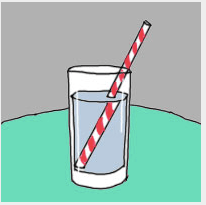
Why does the straw appear to be bent?
light is reflected
light is absorbed
light is turned
light is refracted
When light passes from air to water, what happens to the speed of the light?
speeds up
slows down
stays the same

What is happening in this picture?
Reflection
Refraction

What is the angle of reflection (θr) in the image?
56o
90o
124o
34o

Which of the following characteristics are correct for the image formed in a plane mirror?
I. Upright
II. Inverted
III. Real
IV. Same size as the object
V. Virtual
I, II, III
I, III, IV
I, IV, V
III, IV, V
flint glass n=1.70
barium glass n=1.60
crown glass n=1.523
water n=1.33
diamond n=2.45
Which figure represents the path light takes through a converging lens?
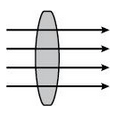
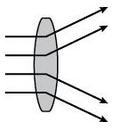
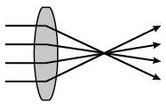
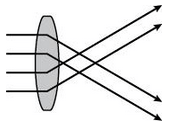
The type of mirror used in reflector in automobile lights is
Plane mirror
Concave mirror
Convex mirror
None of the above
A mirror having focal length –15 cm is _________________
Plane mirror
Concave mirror
Convex mirror
None of these

Tick the correct of TWO devices which use the principle of light reflection in our daily lives.


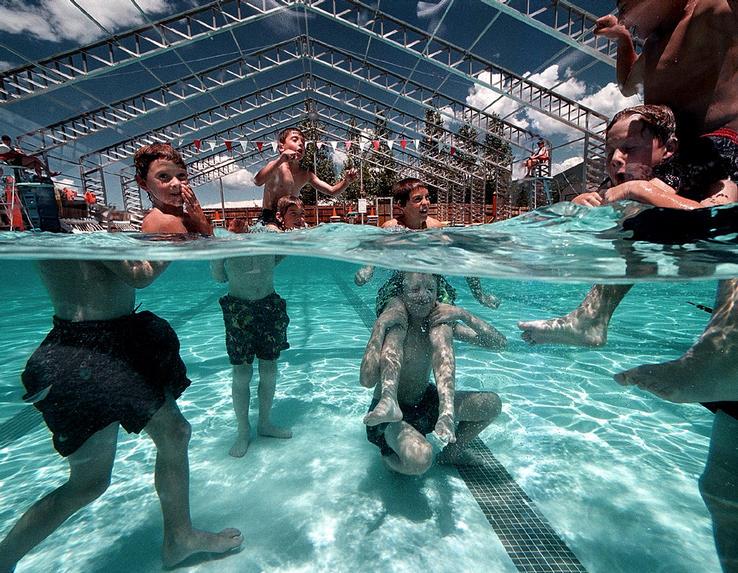

What might explain why light travels in a straight line?
If there is nothing to interfere with light waves, they should travel in a straight line.
Light waves will always travel in a straight line, even if they come into contact with another object.
Light waves don't travel in a straight line.
Light waves travel in a straight line because sound waves travel in a straight line.
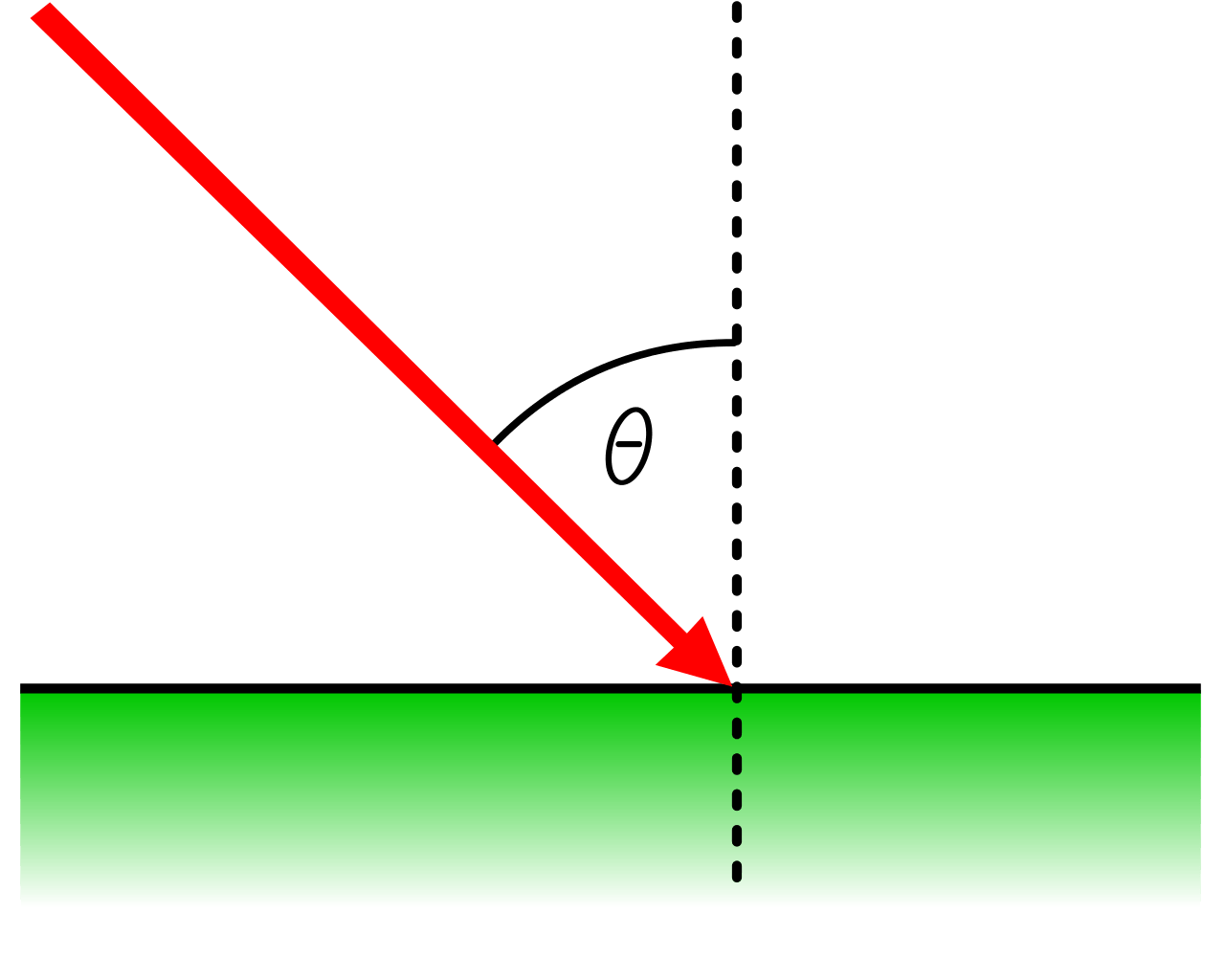
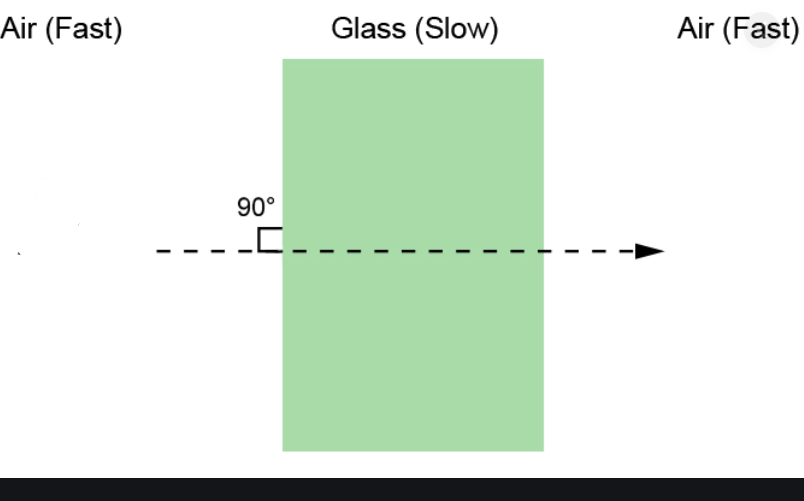
The line 90 degress through the refracting or reflecting surface is called?
Medium
Normal
Incidence
Reflection

What happens to light passing through a hand lens that makes the image of the penny appear larger? The light is-
The law of reflection states that
Angle of incidence = Angle of reflection
Angle of incidence = Angle of incidence
Angle of reflection = Angle of translucence
Angle of reflection = Angle of reflection
Objects that reflect well are
Matte surfaces
Smooth, shiny surfaces
Dark coloured surfaces
Medium coloured surfaces
A concave mirror
Curves inwards
Curves outwards
Curves sideways
Curves in multiple directions
What is the relation between radius of curvature R and focal length f of a mirror ?
R = 2f
R=2/f
R=1/2f
f=2R
What is the mirror formula ?
1/f = 1/v + 1/u
1/f = 1/u -1/v
1/u = 1/f + 1/v
1/f = u + v
An object is placed at the centre of curvature of a concave mirror.The distance between the object and its image is
Equal to f
Equal to 2f
Zero
Equal to 4f
An object is placed at a distance of 10cm from a convex mirror of focal length 15cm.find the position and nature of the image
v = -6cm, real & inverted
v = -3cm , real & inverted
v = +6cm , virtual & erect
v = +15cm ,virtual & erect
We get a virtual image with a concave mirror when the object is placed between
Pole and Focus
Focus and Centre of curvature
On centre of curvature
Beyond centre of curvature
The magnification is always 1 for the following mirror
Convex Mirror
Concave Mirror
Plane Mirror
None of these
The mirror for which the magnification is always less than 1
Convex Mirror
Concave Mirror
Plane Mirror
None of these
A concave mirror forms a point sized image for a object at
Focus
Infinity
Beyond centre of curvature
Centre of curvature
Which of the following mirrors is used by Archimedes to burn the ships?
Bi-concave
Bi-convex
Concave
Convex
Where is the object placed in front of concave mirror to get virtual image?
Between mirror and F
On focal point
Between F and C
On C
A concave mirror has a focal length of 25 cm. A person wants to see his face in this mirror. At what distance should the person stand?
40 cm
30 cm
20 cm
25 cm
To get an image larger than the object, one can use
Convex mirror
Concave mirror
Plane mirror
Both Convex and Concave mirror
Magnification has a plus sign, then the image is
Virtual and erect
Real and erect
Real and inverted
At infinity
When parallel rays are incident on a concave mirror on reflection they meet at the
Pole
Radius of curvature
Focus
None of these

