
 Worksheets
Chemistry F4- Chapter 4
Total questions: 37
Worksheet time: 41mins
Which scientist proposed the Law of Octaves?
Saintis yang manakah mencadangkan Hukum Oktaf?
Antoine Lavoisier
Johann W Dobereiner
John Newlands
Lother Meyer
Which scientist proposed the Law of Octaves?
Saintis yang manakah mencadangkan Hukum Oktaf?
Antoine Lavoisier
Johann W Dobereiner
John Newlands
Lother Meyer
In the Periodic Table of Elements, elements are arranged according to the increasing order of ...
Dalam Jadual Berkala Unsur, unsur-unsur disusun mengikut tertib menaik ...
proton number
nombor proton
nucleon number
nombor nukleon
number of neutron
bilangan neutron
number of electron
bilangan elektron
Elements are arranged in the same group based on...
Unsur-unsur disusun dalam kumpulan yang sama berdasarkan...
same number of protons
bilangan proton yang sama
same number of electrons
bilangan elektron yang sama
same number of neutrons
bilangan neutron yang sama
same number of valence electrons
bilangan elektron valens yang sama
Why Group 18 elements are chemically unactive?
Mengapa unsur-unsur Kumpulan 18 adalah tidak reaktif secara kimia?
number of electron is equal to number of proton
bilangan elektron sama dengan bilangan proton
has 8 valence electrons
mempunya 8 elektron valens
has stable duplet or octet electron arrangement
mempunyai susunan elektron duplet atau oktet yang stabil
number of proton more than number of neutron
bilangan proton melebihi bilangan neutron
Element X has electron arrangement of 2.8.1. Which of the following statement regarding element X is incorrect?
Unsur X mempunyai susunan elektron 2.8.1. Antara pernyataan berikut yang manakah tidak benar tentang unsur X?
soft metal
logam lembut
grey shinny solid
pepejal kelabu berkilat
has high melting point and boiling point
mempunyai takat lebur dan takat didih yang tinggi
good heat and electrical conductor
konduktor haba dan elektrik yang baik
The following elements are in Group 17 in the Periodic Table except
Unsur-unsur berikut berada di kumpulan 17 dalam Jadual Berkala kecuali
bromine
bromin
chlorine
klorin
helium
helium
iodin
Why the reactivity of halogens decreases when going down the group?
Mengapakah kereaktifan halogen berkurang apabila menuruni kumpulan?
the solubility of halogens decreases
keterlarutan halogen berkurang
the electronegativity of halogens decreases
keelektronegatifan halogen berkurang
the van der Waals forces between halogen molecules become stronger
daya van der Waals antara molekul halogen semakin kuat
the physical state of halogens changes from gas to liquid then to solid at room temperature.
keadaan fizik halogen berubah daripada gas kepada cecair dan kemudian kepada pepejal pada suhu bilik.

Diagram 1 shows an air balloon filled with gas X. In which group is X located in the Periodic Table?
Rajah 1 menunjukkan sebiji belon udara berisi gas X. Dalam kumpulan manakah X terletak dalam Jadual Berkala?
Group 15
Kumpulan 15
Group 16
Kumpulan 16
Group 17
Kumpulan 17
Group 18
Kumpulan 18

Diagram 3 shows the electron arrangement of an ion L. Which of the following is the position of element L in the Periodic Table?
Rajah 3 menunjukkan susunan elektron bagi ion L. Antara berikut, yang manakah kedudukan unsur L dalam Jadual Berkala?
Group 2, Period 3
Kumpulan 2, Kala 3
Group 8, Period 2
Kumpulan 8, Kala 2
Group 12, Period 3
Kumpulan 12, Kala 3
Group 18, Period 2
Kumpulan 18, Kala 2
a row on the Periodic Table of Elements
family
period
row
isotope
one of several forms of a single element, which contains the same number of protons, but different numbers of neutrons
isotope
ion
orbital
nucleus
an atom or group of atoms that has gained or lost one or more electrons and is now either positively or negatively charged
isotope
ion
orbital
nucleus
Transition elements form _________ compound and are good ________.
Coloured
Density
Middle
Catalysts
Q1: Which of the following is not a transition metal?
Cobalt
Rhodium
Zirconium
Potassium

The Periodic Table is organized into _________ and __________.
Atoms, things
Groups, Periods
Groups, metals
Nonmetals, Periods
Halogens are in group #___.
17
7
6
18
Alkali Metals are in group # __.
2
15
1
19
Alkaline Earth Metals are in group #___.
1
17
12
2
This category of elements is kind of like a metal.
Noble Gases
Metalloids
Non-metals
Things
Which of these is a distinguishing property for the nonmetals?
Soft - can cut with a plastic knife
Unreactive - don't give or receive electrons
Shiny - exhibits luster
Poor conductors of electricity
Which of these will form a -1 charge?
transition metals
non-metals
halogens
alkali metals

The shaded elements here are known as the...
Noble Gases
Halogens
Non-Metals
Transition Metals

The distance from the nucleus of an atom to the valence electrons is the __________
Atomic Radius
Ionization Energy
Electronegativity
Electrostatic
Why does ionization energy decrease down group?
More protons in nucleus
More energy levels (rings)
Which element would have the smallest atomic radius?
Li
Be
C
Ne

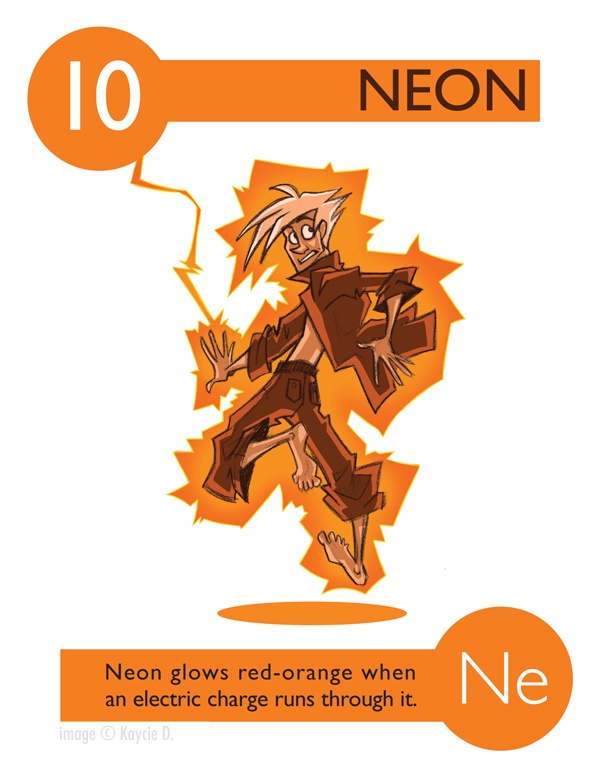
Diagram shows the symbol of neon. Which statements is not true about neon?
Neon exist as a monatomic elements
Neon has low melting and boiling point
Neon has a low density
Neon reacts with bromine to form a covalent compound
Helium is a good insulator. Why?
Helium do not contains mobile ions
Helium do not contains mobile electrons
Helium is not inert
Helium is light
Which of the following properties decreases going down the group?
Boiling point
Reactivity
Melting point
Atomic radius
Which one of the following is the correct reaction between halogens and hydrogen?
H + Cl → HCl
21H2 +21Cl2 →HCl
H2 + Cl2 → 2HCl
H2 + Cl2 → H2Cl2
What makes a valence electron more attracted to the nucleus?
less distance between the nucleus and having less protons
less distance between the nucleus and having more protons
more distance between the nucleus and having less protons
more distance between the nucleus and having more protons
less distance and having more valence electrons
P, Cs, Co, Sr
Why the reactivity of halogens decreases when going down the group?
Mengapakah kereaktifan halogen berkurang apabila menuruni kumpulan?
the solubility of halogens decreases
keterlarutan halogen berkurang
the electronegativity of halogens decreases
keelektronegatifan halogen berkurang
the van der Waals forces between halogen molecules become stronger
daya van der Waals antara molekul halogen semakin kuat
the physical state of halogens changes from gas to liquid then to solid at room temperature.
keadaan fizik halogen berubah daripada gas kepada cecair dan kemudian kepada pepejal pada suhu bilik.

