
 Worksheets
REVISION CHEMISTRY KSSM F4 & F5
Total questions: 39
Worksheet time: 26mins

A
B
C
D

A
B
C

A
B
C
D

A
B
C
D

A
B
C
D

A
B
C
D

A
B
C
D

A
B
C
D

A
B
C
D

A
B
C
D

A
B
C
D

W dan X
X dan Y
X dan Z
Y dan Z

A
B
C
D

A
B
C
D

A
B
C
D

I dan II sahaja
II dan III sahaja
II dan IV sahaja
I dan IV sahaja
Unsaturated molecules contain...
A carbon to carbon double bond
Only single bonds between carbon atoms
A water molecule
A hydroxyl group
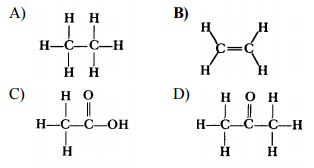
What is a functional group?
Group of atoms that give specific characteristics to a molecule
Group of molecules that give specific characteristics to an atom
Group of molecules that make up a group of atoms
Group of atoms that give specific characteristics to an element
When heat is applied to a hydrocarbon and it melts, the energy is being used to...
Break covalent bonds
Overcome intermolecular forces
Break a molecule
Separate atoms
For a compound to be considered an organic compound it must contain
Carbon
Hydrogen
Oxygen
Nitrogen
What is the observation obtained when alkene react with acidified KMnO4
decolourize purple solution
decolourize reddish brown solution
decolourize blue solution
yellow precipitate formed
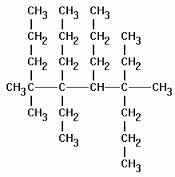
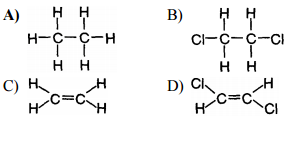
Select the formula for the following name: Octene
C8H16
C8H14
C8H18
C8H15OH
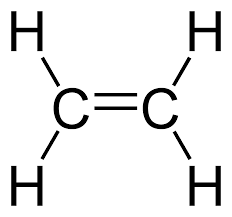

What could be the salt shown in the diagram?
Sodium carbonate
Copper (II) sulphate
Iron (II) sulphate
Iron (III) nitrate
_______ is an isotope used to detect leakage in underground gas or oil pipelines.
Sodium-24
Cobalt-60
Carbon-14
Iodine-131

Which of the following is FALSE about isotopes?
Same nucleon number
Same proton number
Different number of neutrons
Different number of electrons

The method in the diagram can be used to determine empirical formula for..
magnesium & lead
copper & calcium
copper & aluminium
lead & zinc

This scientist found the relationship of the X-ray spectrum with the proton number of each element & arranged the elements in order of increasing proton number. Who is him?
John Dalton
Henry Moseley
Dmitri Mendeleev
Neils Bohr
Which of the following is NOT an acidic oxide?
Carbon dioxide
Aluminium oxide
Sulphur dioxide
Boron oxide

Which of the following salts CANNOT be produced using acid-base titration method?
Sodium chloride
Copper (II) nitrate
Ammonium sulphate
Potassium carbonate

Which cation produces a yellow precipitate when reacted against potassium iodide, KI?
Cu2+
Pb2+
Fe2+
Zn2+

