Wayground logo

Free Printable Worksheets

Font size

S
M
L
XL
Worksheets

USI Review for USII Day 1

Total questions: 184

Worksheet time: 2hrs 0mins

Name
Class
Date
1.
The colonies in yellow belong to what region?
a)
New England Colonies
b)
Middle Colonies
c)
Southern Colonies
d)
France
2.
The colonies in green belong to what region?
a)
New England Colonies
b)
Middle Colonies
c)
Southern Colonies
d)
France
3.
The colonies in red belong to what region?
a)
New England Colonies
b)
Middle Colonies
c)
Southern Colonies
d)
France
4.
What region relied on shipbuilding? 
a)
New England Colonies
b)
Middle Colonies
c)
Southern Colonies
d)
Georgia
5.
The middle colonies were also called the___________because of their ability to grow and harvest grains.
a)
Grocery store
b)
Breadbasket 
c)
Farmers
d)
Argriculture
6.
The Southern colonies depended on cash crops to make a living.  What were the three main cash crops in the south?
a)
corn, squash, beans
b)
bananas, strawberries, apples
c)
tobacco, cotton, indigo
d)
wheat, barley, rice
7.
Which region was known for it's diversity? (People from many different places, following many different religions.)
a)
New England
b)
Middle
c)
Southern
d)
None of these
8.
Which region relied heavily on slaves?
a)
New England
b)
Middle
c)
Southern
d)
None of these
9.
After the Treaty of Paris 1783, what was the new natural boundary of the United States?
a)
Appalachian Moutains
b)
Ohio River Valley
c)
Mississippi River
d)
Great Lakes
10.
What are your 3 Unalienable Rights, as expressed by Thomas Jefferson?
a)
Peace, Love and Joy
b)
Life, Liberty, and Property
c)
Life, Leadership and Pursuit of Happiness
d)
Life, Liberty and Pursuit of Happiness
11.
"Give me Liberty or Give me Death" meant
a)
I live to die
b)
I want freedom from slavery
c)
I will die for my freedom
d)
death is the only freedom
12.
Which group is in the correct order?
a)
Yorktown, Valley Forge, Saratoga, Lexington and Concord
b)
Lexington/Concord, Saratoga, Valley Forge, and Yorktown
c)
Lexington/Concord, Valley Forge, Saratoga, and Yorktown
d)
Valley Forge, Yorktown, Lexington/Concord, and Saratoga
13.
Whose writings inspired Thomas Jefferson with the Declaration of Independence?
a)
Thomas Paine
b)
Benjamin Franklin
c)
John Locke
d)
George Washington
14.
Which pamphlet did Thomas Paine write to encourage the colonist to fight for independence from Britain?
a)
The Crisis
b)
Common Sense
c)
Declaration of Independence
d)
Unalienable Rights
15.

Q. Thomas Jefferson was the main author of what important document in 1776?

a)

U. S. Constitution

b)

Declaration of Independence

c)

Gettysburg Address

d)

Treaty of Paris

16.

Who was the Commander and Chief of the Continental Army

a)

Benedict Arnold

b)

Paul Revere

c)

George Washington

d)

Patrick Henry

17.

What were colonists called that wanted to stay loyal to the British King?

a)

Red Coats

b)

Minutemen

c)

Continental Soldiers

d)

Loyalists/Torries

18.

Why were the battles of Lexington and Concord important?

a)

They ended the French and Indian War

b)

They were the last battles of the American Revolution

c)

They took place in Virginia

d)

They were the first battles of the American Revolution

19.

Why did Britain want to tax the colonists?

a)

The British needed to make back the money to pay for The French and Indian War

b)

The colonists had more money than the British

c)

The British wanted to punish the colonists for wanting to be their own country.

20.

What year was the Declaration of Independence created on July 4th?

a)

1774

b)

1876

c)

1776

d)

1874

21.

Which battle was fought on a hill so that the Patriots could be within firing range towards the British?

a)

Battle Hill

b)

Bunker Hill

c)

Battle of Yorktown

d)

Battle of Saratoga

22.

The toughest winter where many died from hunger and freezing to death for the Continental Army took place where?

a)

Yorktown

b)

NYC

c)

Princeton

d)

Valley Forge

23.

Parliament passed the Tea Act in 1773. This led to some colonists taking action, such as the Boston tea Party. What was the Boston Tea Party?

a)

Colonists began making their own tea

b)

Colonists purchased tea from other countries

c)

Colonists paid taxes on British tea

d)

Colonists dressed as Indians and destroyed the tea by tossing it off the ship and into Boston Harbor

24.

The British surrendered to General Washington to end the war at __________________

a)

Saratoga

b)

Yorktown

c)

Trenton

d)

Philadelphia

25.

To refuse to buy goods is to ______________

a)

ramble

b)

trade

c)

boycott

d)

represent

26.

What was the name of the Patriot Army?

a)

US Army

b)

Continental Army

c)

British Army

d)

Privateer Army

27.

Who led the Continental army?

a)

John Adams

b)

George III

c)

George Washington

d)

Charles Cornwallis

28.

Which of the following was a weakness of the Continental (Patriot) Army?

a)

had little money

b)

had only a small number of people to serve

c)

had no, little navy

d)

All of the above

29.

What were the strengths of the British Army?

a)

Powerful navy

b)

Well trained army

c)

a lot of money and resources

d)

All of the above

30.

Why was the Battle of Saratoga important?

a)

First battle of the war

b)

Bloodiest battle of the war

c)

Turning point of the war

d)

Last battle of the war

31.

What was the last major battle of the American Revolution?

a)

Trenton

b)

Saratoga

c)

Bunker Hill

d)

Yorktown

32.

What agreement officially ended the American Revolution?

a)

Treaty of Paris

b)

Treaty of Ghent

c)

Treaty of Versailles

d)

Treaty of Washington

33.

What surprising thing did Washington and his troops do on Christmas Day 1776?

a)

Fled to Canada

b)

Attacked British Troops near Trenton

c)

Surrounded Cornwallis at Yorktown

d)

Eat a Christmas feast

34.

After the Battle at Saratoga, who pledged foreign aid to the Americans?

a)

Spain

b)

France

c)

Canada

d)

Germany

35.

Why is the Treaty of Paris (1783) significant?

a)

Promised African Americans freedom if they fought for the British

b)

Created an alliance between America and France

c)

Officially ended the American Revolution

d)

Created an alliance between Britain and France

36.

In which state did the Battle of Saratoga take place

a)

New York

b)

Georgia

c)

Virginia

d)

Pennsylvania

37.

Where were the first shots of the American Revolution fired?

a)

Battle of Saratoga

b)

Battle of Yorktown

c)

Battles of Lexington and Concord

d)

Battle of Bunker Hill

38.

Where did the British General Cornwallis surrender to Colonial troops ending the war?

a)

Battle of Yorktown

b)

Battle of Saratoga

c)

Battles of Lexington and Concord

d)

Battle of Ticonderoga

39.

Who was the second president of the U.S. and an editor of the Declaration of Independence?

a)

Patrick Henry

b)

Benjamin Franklin

c)

John Adams

d)

George Washington

40.

Who was an editor of the Declaration of Independence as well as a scientist and inventor?

a)

Benjamin Franklin

b)

Thomas Jefferson

c)

Benedict Arnold

d)

Paul Revere

41.

Who was the main author of the Declaration of Independence and the third president of the US?

a)

Benjamin Franklin

b)

Thomas Jefferson

c)

Benedict Arnold

d)

Patrick Henry

42.

One reason that the Colonial Army defeated the British at the Battle of Saratoga was.........

a)

British General Burgoyne was not as familiar with the geography of the area as the colonists.

b)

The Colonial Army was bigger and better trained.

c)

The British Army had fewer weapons and less money.

d)

The Colonial militia was the most powerful army in the world.

43.

Why did British General Cornwallis surrender at the Battle of Yorktown?

a)

His troops ran out of ammunition.

b)

His army was trapped and had no way to escape by land or sea.

c)

His troops ran out of food and other supplies.

d)

His army decided they were ready to quit and go home to Britain.

44.

What important idea in the Declaration of Independence can also be called natural-rights, God given rights, birth rights, human rights, and civil liberties?

a)

Elected Legislature

b)

Unalienable Rights

c)

Self Government

45.

What land did Great Britain own after the French and Indian War?

a)

Land east of the Mississippi River

b)

Land south of the Rio Grande River

c)

All of Canada

d)

the Hawaiian Islands

46.

Before the Revolutionary War, colonists organized boycotts against Great Britain. What group used violence and threats to enforce these boycotts?

a)

Imperial Policy

b)

Sons of Liberty

c)

Massachusetts Militia

d)

Second Continental Congress

47.

The Daughters of Liberty

a)

made goods so that colonists would not buy British products.

b)

supported British Loyalists.

c)

fought in the French and Indian War.

d)

wrote the Declaration of Independence.

48.

Who of the following was not a president of the United States?

a)

George Washington

b)

Thomas Jefferson

c)

John Adams

d)

Benjamin Franklin

49.

Most African Americans who lived in the British colonies were

a)

indentured servants.

b)

Puritans.

c)

Quakers.

d)

slaves.

50.
Life, liberty and the pursuit of happpiness
a)
bill of rights
b)
unalienable rights
c)
separation of powers
51.
Right that protects freedom of personal expression
a)
2nd amendment
b)
3rd amendment
c)
1st amendment 
d)
10th amendment
52.
Each branch of government has power to control the other two
a)
bill of rights
b)
separation of powers
c)
judicial review
d)
checks and balances
53.
Authority to govern must be given by the people
a)
popular soverignty
b)
2nd amendment
c)
checks and balances
d)
1st amendment
54.
Right that protects owning a firearm
a)
1st amendment
b)
5th amendment
c)
2nd amendment
d)
3rd amendment
55.
Right  that gives authority to individual states if not addressed in the constitution
a)
1st amendment
b)
10th amendment
c)
3rd amendment
d)
5th amendment
56.
Individual rights listed in the Constitution that are a result of colonial grievances
a)
tax rights
b)
judicial  review
c)
individual rights
d)
bill of rights
57.
Right that protects you from cruel and unusual punishment
a)
8th amendment
b)
10th amendment
c)
5th amendment
d)
2nd amendment
58.
Right to timely and public trial
a)
1st amendment
b)
3rd amendment
c)
6th amendment
d)
8th amendment
59.
Right to a jury in a civil case
a)
6th amendment
b)
7th amendment
c)
8th amendment
d)
10th amendment
60.
Right to other rights not necessarily listed in the Constitution
a)
9th amendment
b)
7th amendment
c)
3rd amendment
d)
5th amendment
61.
Right to refuse your home for military purposes
a)
7th  amendment
b)
4th amendment
c)
3rd amendment
d)
6th amendment
62.
Protection from unreasonable searches and seizures 
a)
5th amendment
b)
8th amendment
c)
3rd amendment
d)
4th amendment
63.
Right to refuse testimony against yourself
a)
7th amendment
b)
3rd amendment
c)
5th amendment
d)
8th amendment
64.

Which of the following decided how slaves would be counted into the figuring a state’s population?

a)

The Virginia Plan

b)

Three-fifths Compromise

c)

The New Jersey Plan

d)

The Great Compromise

65.

The Great Compromise created the structure of a bicameral legislative branch.

a)

True

b)

False

66.

first 10 amendments (freedoms) written by James Madison

a)

Separation of Powers

b)

Checks and balances

c)

Ratify

d)

Bill of Rights

67.
Which Constitutional principle states that no one is above the law and the government only has powers listed in the Constitution?
a)
Limited Government
b)
Individual Liberties
c)
Federalism
d)
Republicanism
68.
What is the name for a change or addition to the Constitution?
a)
Amendment
b)
Preamble
c)
Ratification
d)
Compromise
69.
What was the significance of the Whiskey Rebellion? 
a)
To tax whiskey
b)
Demonstrated the U.S. government’s power to enforce laws
c)
To create more whiskey
d)
Demonstrated the Supreme Court's power to create new laws
70.
What was the significance of the Louisiana Purchase?
a)
Doubled the size of the United States
b)
Finished the war between Spain and France
c)
Provided a place for the French to plant crops
d)
Tripled the size of the United States
71.
National pride, less political conflicts increase in manufacturing are all characteristics of:
a)
The Era of Bad Feelings
b)
The Era of Spoiled Feelings
c)
The Era of Cockiness
d)
The Era of Good Feelings
72.
What was Washington’s foreign policy?
a)
Kindess
b)
Patriotism 
c)
Isolationism
d)
Hate towards others
73.
The XYZ Affair was caused by:
a)
Alien Sedition Acts
b)
Embargo Act
c)
Impressment
d)
Immigration Registration Act
74.
Extreme nationalism called, “The Era of Good
Feeling” was a social effect of 
a)
Eastward expansion
b)
War of 1912
c)
Trump's presidency
d)
War of 1812
75.
After the War of 1812 led to ___X___ which led the increase of U.S. Manufacturing:
a)
Increase of British goods
b)
More slavery
c)
A reduction in taxes
d)
Decrease of British Goods
76.
Which of the following is not a cause of the War of 1812? 
a)
Impressment of US sailors by British navy
b)
British refusing to pay debts owed to US
c)
British providing Natives with weapons
d)
British attacking American ships
77.
"The Western Hemisphere is off limits to European colonizers." Which President's foreign policy includes this statement? 
a)
James Monroe
b)
James Madison
c)
George Washington
d)
Thomas Jefferson
78.
Which of the following correctly describes the outcome of the War of 1812? 
a)
Neither side won nor lost territory
b)
The United States won the war.
c)
The British won the war. 
d)
The United States gained control of Florida territory. 
79.
This law said Americans could NOT help runaway slaves.
a)
Missouri Compromise
b)
Fugitive Slave Act
c)
Kansas Nebraska Act
d)
Dred Scott Case
80.
This law meant the South would get less land and less votes in Congress.
a)
Missouri Compromise
b)
Fugitive Slave Act
c)
Kansas Nebraska Act
d)
Dred Scott Case
81.
This law said Americans could vote if their state should be free or have slaves.
a)
Missouri Compromise
b)
Fugitive Slave Act
c)
Kansas Nebraska Act
d)
Dred Scott Case
82.
This law allowed slavery to expand in the West through popular sovereignty.
a)
Missouri Compromise
b)
Fugitive Slave Act
c)
Kansas Nebraska Act
d)
Dred Scott Case
83.
This said all blacks were NOT US citizens
a)
Missouri Compromise
b)
Fugitive Slave Act
c)
Kansas Nebraska Act
d)
Dred Scott Case
84.
This law sparked three years of violence in the Midwest.
a)
Missouri Compromise
b)
Fugitive Slave Act
c)
Kansas Nebraska Act
d)
Dred Scott Case
85.

Who threatened to leave the Union after President Lincoln was elected?

a)

Southern States

b)

Northern States

c)

Hawaii

d)

Great Britain

86.

The first state to secede from the Union was

a)

Canada

b)

North Carolina

c)

Arkansas

d)

South Carolina

87.
an enslaved person who sued for his freedom after having lived in a free state  
a)
Roger B. Taney
b)
Dred Scott
c)
Stephen Douglass
John Brown
d)
Stephen Douglas
88.

The result of the Dred Scott decision was that (select all correct answers)

a)

slaves are property, not citizens

b)

slaves are free if living in a free state

c)

slavery can be outlawed in the territories

d)

slavery can spread anywhere (North or South)

89.

Which act of Congress temporarily ended the slavery debate.

a)

Fugitive Slave Law

b)

Missouri Compromise

c)

Kansas-Nebraska Act

d)

Popular Sovereignty

90.

What was the Compromise of 1850? Select all that apply.

a)

California would enter the Union as a free state.

b)

Texas would be allowed to enter the Union as a slave state.

c)

The Fugitive Slave Law was passed

d)

The slave trade would end in the nation’s capital.

91.

Which of the following best describes John Brown?

a)

radical abolitionist who used violence to try to end slavery

b)

a peaceful abolitionists who hated violence

c)

a pro-slavery Senator

d)

a strong supporter of slavery who used violence to spread slavery

92.

Popular Sovereignty was the idea that

a)

slavery would be banned in all future states.

b)

the government would decide if slavery would be legal or illegal.

c)

the people would vote to decide if their state would have slavery.

d)

slavery would be allowed in every future state.

93.

What is the purpose for Frederick Douglass's writing his slave narrative?

a)

To share his experience as a slave in hopes to bring changes for the lives of the slaves.

b)

To show off that he is a man.

c)

He just wants to write for pleasure.

d)

None of the above

94.

How was Frederick Douglass different from many other slaves of his time?

a)

Douglass did not support the antislavery movement in the United States.

b)

Douglass was well educated and had published narratives about his life.

c)

Douglass won his freedom after he petitioned the Supreme Court.

d)

Douglass was able to gain the respect of southerners for his abolitionist work.

95.

What was John Brown's master plan?

a)

To show the democratic party that he would stop at nothing to end slavery

b)

To make American's all across the country to recognize him as a political threat

c)

To get Abraham Lincoln elected

d)

To attack an arsenal and start a slave rebellion

96.
What was the key issue that was debated each time a new state was admitted to the Union before the Civil War?
a)
the expansion of slavery
b)
the building of railroads 
c)
the provision of women's suffrage
d)
support for the homesteading 
97.
What event caused Kansas to be known as “Bleeding Kansas?”
a)
John Brown's attempts to take over United States arsenals
b)
Tension between Nebraskans and Kansans over the border
c)
Fighting between free soilers and pro-slavery supporters
d)
Murders of runaway slaves on the western prairie
98.

What was life like for free African Americans in the North?

a)

They faced discrimination and were not treated as equal.

b)

They were given special privileges.

c)

They were encouraged to move to the South.

d)

They had the same rights as all other citizens.

99.

What was the Underground Railroad?

a)

A train that took people to freedom.

b)

A tunnel where people could buy slaves.

c)

A group of people who helped slaves escape to freedom.

d)

A home where Harriet Tubman grew up.

100.

When you compromise:

a)

both sides lose

b)

both sides give up a little bit of what they want to come to an agreement

c)

1 side wins and 1 side loses

d)

an agreement is NOT reached

101.

What was a cause of the Civil War

a)

state's rights

b)

slavery

c)

sectionalism

d)

All of the above

102.

What compromise over slave population did the North and South agree upon?

a)

The 3/5 Compromise

b)

The 2/3 Compromise

c)

The election of Abraham Lincoln

d)

The Kansas-Nebraska Act

103.

The Missouri Compromise said:

a)

Missouri could join Union as slave state, Maine would join as free state

b)

States north of the Mason-Dixon line would be slave states, states south of the line would be free

c)

Missouri could join the Union as a free state, Maine would join as a slave state

d)

None of these

104.

Which act allowed the people in each territory to vote on allowing slavery

a)

Compromise of 1850

b)

Texas-New Mexico Act

c)

Missouri Compromise

d)

Kansas-Nebraska Act

105.

Although, Abraham Lincoln won the presidential election, he:

a)

did not have the support of the north

b)

did not win any electoral votes in the South

c)

did not actually become president

d)

changed his viewpoint to become pro-slavery

106.

What is the term used to describe the separation of a state from a nation?

a)

sectionalism

b)

leaving

c)

secession

d)

partitioning

107.

The Dred Scott decision...

a)

angered southerners, satisfied northerners.

b)

satisfied southerners, angered northerners.

c)

promoted the abolitionist movement.

d)

resulted in a compromise between the North & South.

108.

The Missouri Compromise, the compromise of 1850, and the Kansas-Nebraska Act were all efforts to

a)

end fighting between Midwestern farmers and native American Indians

b)

increase the number of people who voted in presidential elections

c)

encourage manufacturing in the west

d)

settle disputes over the spread of slavery to the western territories

109.
What caused Southern States to secede from the Union?
a)
The Election of Lincoln in 1860
b)
The Dred Scott Decision
c)
Harper's Ferry
d)
Bleeding Kansas
110.
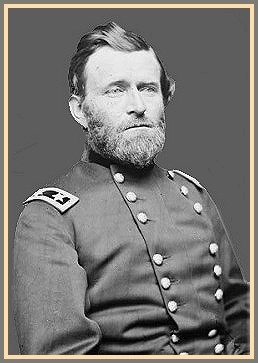
Who was this important general?
a)
Ulysses S. Grant
b)
George Washington
c)
Robert E. Lee
d)
Thomas Jefferson
111.
A person fighting against slavery was known as _________.
a)
a plantation owner
b)
a protester
c)
an abolitionist
112.
Who was Nat Turner?
a)
A slave who led a slave revolt against plantation owners.
b)
An abolitionist who helped with a slave revolt.
c)
A slave who fought for the North to end slavery.
113.
Why was John Brown so important to the fight against slavery?
a)
He led a slave revolt on plantation owners in VA.
b)
He fought for the South to maintain slavery.
c)
He fought for the North to receive his freedom after the war.
d)
He led a revolt at Harper's Ferry in an attempt to start a slave rebellion.
114.
Who was elected president in 1860, in turn causing some southern states to seced?
a)
Robert E. Lee
b)
Thomas Jefferson
c)
Abraham Lincoln
115.
Who was Harriet Tubman?
a)
A former slave owner who continued to fight for slavery.
b)
An escaped slave who helped other slaves to freedom.
116.
Who won the war?
a)
Confederacy
b)
Union
c)
England
d)
France
117.
Showing loyalty to a state or section rather than the whole country is known as
a)
states' rights
b)
secede
c)
sharecropper
d)
sectionalism
118.
Which section of the US felt more strongly in favor of states’ rights?
a)
North
b)
South
c)
Border states
119.
The Southern economy was based MOSTLY on:
a)
Paid workers
b)
Industry
c)
Agriculture
d)
Goods & Services
120.

The Northern economy was based MOSTLY on:

a)

Unpaid workers

b)

Industry

c)

Agriculture

d)

Goods & Services

121.

An abolitionist wants to

a)

spread slavery

b)

fight for the South (Confederacy)

c)

withdraw from the Union

d)

end slavery

122.

Which statement BEST explains President Abraham Lincoln's original reason for fighting the Civil War?

a)

President Lincoln wanted to end all slavery everywhere in the US

b)

President Lincoln wanted to preserve the Union

c)

President Lincoln wanted to punish the South for their rebellion

123.
What was the South's MAIN argument in support of slavery?
a)
They were an agricultural (farming) based economy that relied on free workers
b)
They had the right to limit the power of the federal government (states' rights)
c)
A workplace made up slave labor would work harder
124.

What's important about Fort Sumter?

a)

This is where Lee surrender and it ended the Civil War.

b)

The Confederates open fired on the fort, which began the Civil War.

c)

Lincoln gave the Gettysburg Address here.

125.

The Emancipation Proclamation truly freed slaves in ALL parts of the United States.

a)

True

b)

False

c)

I don't know

126.

Why is important to know about the Appomattox Courthouse's location for the Civil War?

a)

This is where Lee surrender and it ended the Civil War.

b)

The Confederates open fired on the fort, which began the Civil War.

c)

Lincoln gave the Gettysburg Address here.

127.
The south was for slavery because
a)
they wanted to be difficult
b)
they liked slaves
c)
slavery was profitable 
d)
this is wrong. 
128.
What was the time period that followed the Civil War called?
a)
The Golden Age
b)
The Roaring Twenties
c)
The Industrial Revolution
d)
Reconstruction
129.
Which amendment officially ended slavery in the United States?
a)
12th
b)
13th
c)
14th 
d)
15th
130.
The 14th Amendment of the United States Constitution...
a)
Gave African Americans citizenship
b)
Gave African Americans the right to vote
c)
Freed the slaves
d)
Gave landowners the right to sharecrop
131.
The 15th Amendment of the United States Constitution...
a)
Gave African Americans the right to own businesses
b)
Freed the Slaves
c)
Gave African American men the right to vote
d)
Forced African Americans back into slavery
132.
What did Congress think about President Andrew Johnson's Reconstruction Plan?
a)
They agreed with his plan.
b)
They helped President Johnson form his plan.
c)
They thought his plan was too easy on the South.
d)
They thought his plan was too hard on the South.
133.
The Battle of Vicksburg was important in the Civil War because it --
a)
allowed the Confederate army to seize Washington D.C.
b)
broke the Union blockade along the Gulf of Mexico
c)
enabled the Confederate army to seek French assistance
d)
gave the Union army control of the Mississippi River
134.
The speech above shows that Lincoln believed that the South should--
a)
be allowed to continue the practice of slavery
b)
pay for the damages suffered by the Union
c)
receive fair treatment after the war
d)
be punished for seceding from the Union
135.
Which number on the map labels the state that first seceded from the Union?
a)
1
b)
2
c)
3
d)
4
136.
Abraham Lincoln's Emancipation Proclamation declared --
a)
United State's freedom from Great Britain
b)
an end to the Civil War
c)
freedom for slaves in rebellious southern states
d)
the beginning of Reconstruction
137.
Why was the Battle of Gettysburg significant to the Civil War?
a)
It led to the Emancipation Proclamation
b)
It brought an end to the Civil War
c)
It resulted in the passing of the 15th Amendment
d)
It was a turning point because General Lee was forced to fight a defensive war
138.
In declaring its intention to secede from the Union in 1860, South Carolina was affirming its position on
a)
civil rights
b)
states' rights
c)
individual rights
d)
unalienable rights
139.
Ulysses S. Grant was to the Union as ___________ was to the Confederacy
a)
Jefferson Davis
b)
Stonewall Jackson
c)
Robert E. Lee
d)
Abraham Lincoln
140.
The Union General that forced General Lee to surrender at Appomattox.
a)
Fort Sumter
b)
Abraham Lincoln
c)
Robert E. Lee
d)
Ulysses S. Grant
141.
General Sherman's troops marched toward Atlanta to capture it because of Atlanta's railroad center and supplies.
a)
The Atlanta Campaign
b)
Sherman's March to the Sea
c)
John Brown's Raid on Harper Ferry
d)
Fort Sumter
142.
One of General Lee's most important generals who would stand like a "Stonewall" during battles and was accidentally killed by his own men.
a)
Jefferson Davis
b)
Thomas "Stonewall" Jackson
c)
Robert E. Lee
d)
Ulysses S. Grant
143.
War between people of the same country
a)
secede
b)
state's rights
c)
civil war
d)
slavery
144.
Southern General from Virginia who led the South's largest army and lost a major battle at Gettysburg, Pennsylvania.
a)
Jefferson Davis
b)
Robert E. Lee
c)
Abraham Lincoln
d)
Ulysses S. Grant
145.
The 1st and only President of the Confederacy during the Civil War.
a)
Abraham Lincoln
b)
Robert E. Lee
c)
Ulysses S. Grant
d)
Jefferson Davis
146.
The place where Confederate cannons opened fire thus starting the Civil War
a)
Sherman's March to Sea
b)
Gettysburg
c)
Atlanta Campaign
d)
Fort Sumter
147.
General Sherman led his troops through Georgia toward Savannah and destroyed  things that Southerners needed for war.
a)
Sherman's March to the Sea
b)
Fort Sumter
c)
Gettysburg
d)
John Brown's Raid on Harpers Ferry
148.

In the 1840s, slavery was most commonly found in the:

a)

North

b)

South

c)

West

d)

East

149.

Which states were apart of "The Union"?

a)

Northern states

b)

Southern states

c)

Eastern states

d)

Western states

150.

Rebels were soldiers from the:

a)

North

b)

West

c)

South

d)

East

151.

The president during the Civil War was:

a)

Abraham Lincoln

b)

Jefferson Davis

c)

George Washington

d)

Donald Trump

152.

The Transcontinental Railroad helped the economy to grow because-

a)

buffalo herds were located more easily and successfully

b)

goods were moved to markets more quickly and cheaply

c)

workers from California migrated to the East Coast

d)

railroad helped find new petroleum resources

153.

How was the event in the headline important to settlement of the western United States?

a)

travel across the United States was now easier and cheaper

b)

a physical divide was created between the North and the South

c)

Spanish leaders could no longer claim parts of the American West

d)

the largest cities in the United States would now be in western states

154.

Following the Civil War, which action was taken to ensure the rights of formerly enslaved people?

a)

creating the Freedman's Bureau

b)

signing of the Emancipation Proclamation

c)

readmitting the former Confederate states

d)

ratifying new amendments to the US Constitution

155.

What battle was the single, bloodiest day in the Civil War?

a)

Bull Run

b)

Antietam

c)

Gettysburg

d)

Manassas

156.

What battle was the deadliest battle of the Civil War, as well as in American History?

a)

Antietam

b)

Bull Run

c)

Gettysburg

d)

Appomattox

157.

Where was the first MAJOR battle of the Civil War?

a)

Appomattox

b)

Antietam

c)

Gettysburg

d)

Bull Run

158.

What was the official name of the south during the Civil War?

a)

Confederate States of America

b)

Rebel States of America

c)

Southern States of America

d)

Confederate States of the South

159.

What was Lincoln's main reason for fighting in the war?

a)

to get rid of slavery

b)

to bring the British and French to America

c)

to show his strength as a president

d)

to preserve the Union

160.

Jefferson Davis was

a)

President of the Union

b)

Vice President of the Confederacy

c)

Union General at Chickamauga

d)

President of the Confederacy

161.

The idea of attacking the Confederacy by squeezing them like a snake from the East and West is known as the...

a)

Snake Plan

b)

Anaconda Plan

c)

Gator Paln

d)

Enduring Freedom

162.

Who won the Battle of Bull Run?

a)

Confederates

b)

Union

c)

British

d)

Northerners

163.

Bloodiest battle of the Civil War. Turned the tide of the war in favor of the Union. Northern most battle in the civil war.

a)

Antientam

b)

Gettysburg

c)

Bullrun

d)

Vicksburg

164.

Led by Ulysses S. Grant. They blockaded the Mississippi River and split the confederate troops into smaller groups giving them a greater chance of victory.

a)

Vicksburg

b)

Gettysburg

c)

Bull Run

d)

Antietam

165.

The Battle of Gettysburg was a turning point in the war because:

a)

It triggered a four-day draft riot in New York City

b)

The outcome convinced European nations to help the Confederacy.

c)

Southern troops reached their northernmost point in Union territory.

d)

Lee lost so many troops that he would never again invade the North.

166.
What was the major goal of the Confederacy at the onset of the Civil War?
a)
To overthrow the government and set up a monarchy
b)
To become independent
c)
To spread slavery to the North
d)
To eliminate slavery in the border states
167.
What amendment abolished slavery?
a)
13th
b)
14th
c)
15th
d)
16th
168.
The 14th Amendment of the United States Constitution...
a)
Gave African Americans citizenship
b)
Gave African Americans the right to vote
c)
Freed the slaves
d)
Gave landowners the right to sharecrop
169.
The 15th Amendment of the United States Constitution...
a)
Gave African Americans the right to own businesses
b)
Freed the Slaves
c)
Gave African Americans the right to vote
d)
Forced African Americans back into slavery
170.
Who assassinated President Abraham Lincoln?
a)
Nathan Bedford Forrest
b)
John Wilkes Booth
c)
Henry Clay
d)
John Breckinridge
171.
Northerners who went south after the Civil War to make large profits from the destruction in the south were called
a)
Scalawags
b)
Ku Klux Klan
c)
Carpetbaggers
d)
Sharecroppers
172.
Laws passed by southern states soon after the Compromise of 1877.  These laws legalized segregation whites and blacks to use separate facilities. 
a)
Jim Crow Laws
b)
Black Codes
c)
Freedman's Bureau
d)
Reconstruction
173.
The process of rebuilding the South after the Civil War. 
a)
Reconstruction
b)
Freedman's Bureau
c)
Black Codes
d)
Jim Crow Laws
174.
The organization put in place after the Civil War to provide food, clothing, health care and education in the South was known as:
a)
The Civil Rights Committee
b)
The Freedmen's Bureau
c)
The Welfare Committee
d)
The Salvation Army
175.
Which three Amendments where designed to ensure equality for the slaves?
a)
17th,18th,19th
b)
13th,14th,15th
c)
13th,14th,16th
d)
8th,9th,10th
176.
In 1866, a group formed in the South to fight against the rising influence of African Americans in the South. Members of this group often turned to violence and intimidation, What was the name of this controversial group?
a)
Sons of the Confederacy
b)
Neo-Nazis
c)
Ku Klux Klan
d)
Black Separatists
177.
During Reconstruction, most former Confederate states
a)
were placed under military rule for a time
b)
were readmitted into the Union, but only after promising to end slavery within 10 years
c)
given full representation in Congress without issue
d)
supported the immediate end of slavery throughout the U.S.
178.
Northerners who migrated to the mostly destroyed post-war south to make large profits and/or help freedmen were known as
a)
Scalawags
b)
Ku Klux Klan
c)
Carpetbaggers
d)
Sharecroppers
179.

Presidential Reconstruction following the American Civil War can BEST be described as

a)

a plan to fix the damage to the White House caused by the Civil War.

b)

a desire to rebuild the southern states quickly to help control the economy.

c)

a desire to rebuild the country quickly and without ill feelings following the war.

d)

a desire to punish those southerners responsible for causing and/or prolonging the war.

180.

Which is the BEST description of the southern economy during Reconstruction?

a)

The southern economy was stabilized because of trade relationships with Great Britain and France.

b)

The southern economy was still based on agriculture and cotton, but now depended on sharecropping rather than slave labor

c)

The southern economy was transformed from being based on agriculture to being completely dependent on industry and manufacturing.

d)

The southern economy was completely restored by 1866 and was actually more productive and profitable than the pre- Civil War economy.

181.
Organizations like these worked for which of these goals? 
a)
To encourage southerners to fight against the Union 
b)
to legalize discrimination against African 
Americans
c)
To encourage African American education
d)
to promote Confederate rights
182.
Jim Crow Laws passed after Reconstruction took away African American Voting Rights using...
a)
Voter Registration Laws
b)
Political Gerrymandering
c)
Voter Identification Laws
d)
Poll Taxes and Literacy Tests
183.
Scalawags were...
a)
Northerners who took advantage of southern economic hardships 
b)
Southern Republicans
c)
former Confederate Leaders
d)
African Americans
184.

Agricultural & economic practice where a land owner allows a tenant farmer to work his land for a share of his crop

a)

sustenance farming

b)

sharecropping

c)

carpetbagger

d)

slavery