
 Worksheets
Tissues
Total questions: 70
Worksheet time: 39mins
The study of cells is called
Histology
Cytology
Biology
Cellology
What is an egg?
Tissue
Cell
Organ
Group of tissue
Group of organs
Name the biggest cell in the world
(a)
A group of specialised cells which have a special function are -
Tissues
Organs
What is protoplasm ?
Living content of the ceĺl which consists of cytoplasm and nucleus
Dead content of the cell consisting of cytoplasm and nucleus
Tick the basic components of a cell
cytoplasm
cell membrane
nucleus
Golgi apparatus
Unit of inheritance present within the nucleus
genes
nucleoplasm
protoplasm
jeans
Vacuoles are non living components of a cell
True
False
Vacuoles are usually found in
Animal cell
Plant cell
Simple primitive cell having no proper nucleus is
prokaryotic
Eukaryotic
Chromoplasts, chloroplasts and leucoplasts are types of
Plastids
Endoplasmic reticulum
Mitichondria
Largest cell in human body
(a)
Smallest cell in our body
(a)
Cell membrane is also known as
(a)
unicellular organisms
Euglena
Paramoecium
Amoeba
earthworm
jelly fish
Study of tissues is called
Cytology
Histology
Tissulogy
Tissue present at the tips of roots and stem
Phloem
Meristematic
sclerenchyma
Plant tissues which provide support
Parenchyma & epidermis
Collenchyma & Sclerenchyma
Tissue found in the outer layer of epidermis
epithelial
collenchyma
sclerenchyma
Plant cells capable of cell division
sclerenchyma
meristematic
collenchyma
parenchyma
Husk of coconut is made up of
collenchyma
parenchyma
sclerenchyma
Myelin sheath covers the
Dendrons
Axons
Erythrocytes
Thrombocytes
Tissue found in the heart wall
Skeletal
Cardiac
voluntary
Tissue which conducts impulses
Epithelial tissue
Aerolar tissue
Neurons
Cardiac
Tissue which joins bones to muscles
Cartilage
Tendons
Areolar
Unstriated tissue is
Involuntary
Voluntary
Smooth muscles are not attached to bones
True
False
Voluntary muscles are not attached to bones
True
False
Tissue responsible for conduction of water and minerals
Xylem
Phloem
Define tissue with regards to anatomy
Multiple sheets of thin paper used to clean your nose
The smallest structural and functional unit of an organism
A series of different cells in the same area
A group of structurally and functionally related cells that come together to perform common functions
What type of Connective tissue is found at the ends of bones to reduce friction?
Dense connective tissue
Cartilage
Adipose Tissue
Loose connective tissue
Which of these organelles do animal cells not have?
Chloroplasts
Mitochondria
Endoplasmic reticulum
What is the large sac that holds food, water, and waste?
Cytoplasm
Nucleus
Mitochondria
Vacuole


Type of Meristematic tissues are intercalary, apical and (a)
Which type of cell provide strength to plant
Dead cells
Alive cells
In whicg type of cell there is no demarcation of dividing and non dividing regions
Plant cells
Animal cells
Which meristem is located at internodes of leaves?
Lateral
Intercalary
The girth of stem or roots increases due to lateral meristem is caused due to
Intercalary
Apical
Lateral

An epithelium made up primarily of flattened cells is called:
squamous
cuboidal
columnar
stratified

Tissues in tendrils of a climber plant and leaf stalk of a plant are examples of which tissue?
Parenchyma
Collenchyma
Vascular
Bark

Connective tissue that connects a bone to another bone is:
Ligament
Tendon
Cartilage
None.
This name means that there are multiple layers of cells
Simple
Stratified
Columnar
Pseudostratified
Which of the following is NOT true about epithelial tissue?
it forms glandular tissue
it has a good blood supply
one side rests on a basement membrane
it forms continuous cellular sheets
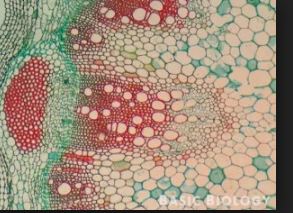
_____________________ is a vascular tissue that carries sugars and other foods throughout a plant.
stems
phloem
roots
xylem
Parenchyma walls are made up of
Pectin
Hemicellulose
Cellulose
Tissues commonly found in the fruit wall of nuts
Parenchyma
Sclerenchyma
Collenchyma
Intercalary meristems are found in which part of the plants?
Growing tips
Lateral side
Nodes
Do meristematic tissues have vacuoles present in them?
Yes
No
There is more Intercellular space found in this tissue
Collenchyma
Sclerenchyma
Parenchyma
Epidermis
This type of tissue contains cells of same types
Simple permanent tissues
Complex permanent tissues
Vacuoles are non living components of a cell
True
False
Vacuoles are non living components of a cell
True
False
Vacuoles are non living components of a cell
True
False
Tissues commonly found in the fruit wall of nuts
Parenchyma
Sclerenchyma
Collenchyma

