
 Worksheets
ELECTRICITY
Total questions: 78
Worksheet time: 1hrs 18mins
Electric current is defined as
detect electric current
negative terminal to positive terminal
positive terminal to negative terminal
the flow rate of electric charges through a conductor
Electric current flows from
detect electric current
negative terminal to positive terminal
positive terminal to negative terminal
the flow rate of electric charges through a conductor
Electrons flows from
detect electric current
negative terminal to positive terminal
positive terminal to negative terminal
the flow rate of electric charges through a conductor
Galvanometer is used to
detect electric current
negative terminal to positive terminal
positive terminal to negative terminal
the flow rate of electric charges through a conductor
Which is an example of how we use electricity?
Battery
Solar panels
Light bulb
Wind turbine
Electricity is a form of energy involving the flow of atoms.
True
False
What are the two types of electricity?
Static and electrons
Current and voltage
Series and parallel
Static and current
What 3 things does a circuit need for current to flow?
energy source, energy user, wires
energy source, switch, wires
energy source, energy user, switch
energy user, switch, wires

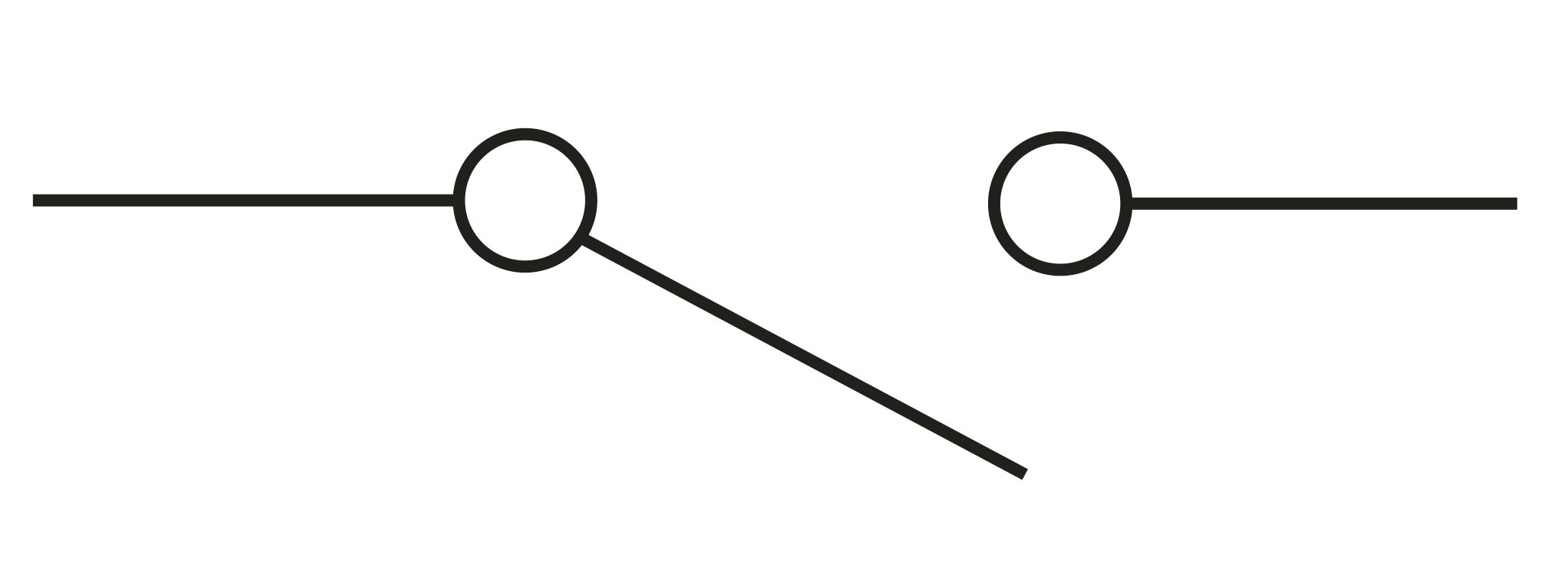
In a circuit diagram, this symbol represents a
switch
multimeter
battery
globe

Which light globe(s) would never light up?
A
B,C,D
A,B,C,D
None
What is used to measure electric current?
Voltmeter
Ammeter
Wattmeter
pH meter

What type of circuit is this?
Series
Parallel
Simple
In a series circuit, how is the brightness of a light globe affected when another globe is connected?
It gets brighter
It stays the same
It gets dimmer
It goes out
Why are Christmas lights wired in parallel?
It is cheaper to make
You can make longer strands
It uses less electricity
If a light breaks, the others keep working

If the current in an electrical circuit is constant, what will happen to the voltage if the resistance is increased?
Voltage will increase
Voltage will decrease
Voltage will stay the same

If you increase the voltage across a resistor, what will happen to the current?
Current will increase
Current will decrease
Current will stay the same

If you increase the size of the resistor and keep the voltage the same, what will happen to the current?
Current will increase
Current will decrease
Current will stay the same
Which of these materials is a good insulator?
gold
copper
silver
plastic

In a series circuit, what will happen if the path for the electrical current is broken by a burned out bulb?
The electrical current will stop fllowing and none of the bulbs will light up.
The electrical current will continue flowing and the other bulbs will light up.
The energy source will continue to move the electric charge through the circuit.
An electric tooth brush is an example of transforming
electricity into heat
electricity into sound energy
electricity into motion energy
electricity into light
Which of the folowing uses resistors to transform electricity into sound?
a teacher blowing a whistle
drums
an electric piano
a flute
Which of the following can transform electrical energy into heat?
a hair dryer
a warm sweater
a barbeque grill
the sun
The resistor in an incandescent lightbulb is called
flourescent
a filament
the Edison
the insulator
Which of the following is a good conductor?
copper
rubber
dry wood
glass
Which type of circuit has more than one path for the electrical current?
The series circuit
The parallel circuit
They both have more than one path
Neither circuit has more than one path for the electrical current
Electrical current is either alternating current (AC) which comes through the wires and outlets in your home or
direct current which comes from batteries
direct current which comes from a power plant
continuous currect which is from solar energy
discreet current which comes from batteries
What voltage is needed to cause a 50A current flow through a 10Ω resistor?
15V
500V
500 kV
0.2V
The student conducted an experiment with circuits. Why was the bulb bright when he closed the switch?
The switch produced an electric current
Closing the switch broke the circuit
Closing the switch completed the circuit
The switch did not make a difference
How can it be explained that someone's hair can stick to a balloon?
There is static electricity
There is too much dust in the air
A parallel circuit was too long
The person needs to wash his hair
Which contribution toward understanding electricity was made by Michael Faraday?
Created the first electric power generator
Discovered that lightning carried electricity
Concentrated on mass-producing long-lasting light bulbs
Improved the telegraph system
What contribution did Thomas Edison make toward the study of electricity?
He invented the light bulb
He invented a generator that would produce electricity
He discovered the nucleus of an atom
He discovered that lightning is a form of electricity
A science class was completing an experiment on electrical circuits. Why did the bulb go out each time the switch was opened?
Opening the switch broke the circuit
The battery was probably going flat
There was too much electricity flowing
Opening the switch closed the circuit
Who is the scientist that created the lightning rod?
Michael Faraday
Thomas Edison
Benjamin Franklin
George Washington


Which circuit can be used to determine the electromotive force of a battery?


One dry cell with e.m.f value of 2V and internal resistance 1Ω is connected to one resistor 4Ω
0.4A
0.5A
2.0A
2.5A

Determine:
(a) the e.m.f of the cell
*beza keupayaan(potential difference)
*Arus(current)
0.9
0.6
1.5

Determine:
(b) the internal resistance
*beza keupayaan(potential difference)
*Arus(current)
1 ohm
2 ohm
3 ohm
4 ohm
•Electromotive = potential + voltage
force difference loss
E = V + v
E = V + Ir
Internal resistance, r = ?
(E – V)
2I
(V – E)
I
(E – V)
I
(I – V)
E

y = mx + c
from graph, state the correct answer represent equation using
V, E, I and -r
V = -rE+I
E = -rI + v
V = -rI + E
V =rI +E
Which statement is FALSE about EMF?
Energy supply by a source to transfer a unit charge from one terminal to another terminal
No current flow in the circuit, voltmeter readings = e.m.f

There is current flow in the circuit. voltmeter readings = p.d across resistance

From diagram, what 1.5 V refers to
Internal resistance
Potential difference
Electromotive force
Voltage

From the graph, what is given by the gradient?
Resistance
Internal resistance
Potential difference
Electromotive force

What is the electromotive force of battery?
0.5 V
1.0 V
1.5 V
2.0 V

Calculate the internal resistance, r
0.1 ohm
0.2 ohm
0.3 ohm
0.4 ohm

The voltmeter is measuring a ...
(a)

The voltmeter is recording the reading of
(a)
It is an energy supply by a battery/ electrical source to a coulumb unit of charge.
This refers to
Potential difference
Internal resistance
Electromotive force
Current
What is the electromotive force of battery?
0.5 V
1.0 V
1.5 V
2.0 V
From the graph, what is given by the gradient?
Resistance
Internal resistance
Potential difference
Electromotive force
It is a work done or energy supply to move a unit of charge from 1 point to another point in a closed circuit
This refers to
Internal resistance
Potential difference
Electromotive force
Resistance

What is the reading of voltmeter when the switch is closed?
What is the value of the internal resistance?

What is emf?
the electro motive "force" or the force on electrons
the electromotive "force" or the Voltage of a cell measured when there is no current flowing
the electromotive "field" or the Voltage of a cell measured when there is no current
the electromotive "force" or Voltage of a cell measured when connected to a circuit
Correct
ϵ=V+Ir
ϵ=I(R+r)
ϵ=V
What is internal resistance?
the resistance inside the cell that increases with more current drawn from the cell
the resistance inside the cell that decreases with more current drawn from the cell
the resistance inside the cell that remains constant as the current drawn from the cell changes
the resistance inside each component which increases as more resistances are added in series
rheostat
resistor
thermister
variable capacitor
variable resistor
Which statement is FALSE about EMF?
Energy supply by a source to transfer a unit charge from one terminal to another terminal
No current flow in the circuit, voltmeter readings = e.m.f
There is current flow in the circuit. voltmeter readings = p.d across resistance

A student investigates how the potential difference V across the terminals of a cell varies with the current I in the cell.
Which graph correctly shows how V varies with I?
A
B
C
D
What is the SI unit for Electromotive force?
Apakah unit SI bagi Daya gerak elektrik?
V
A
Ω
W

