wayground logo

Free Printable Worksheets

NEW

Font size

S
M
L
XL
Worksheets

Biology Review

Total questions: 22

Worksheet time: 2hrs 50mins
Name
Class
Date
1.
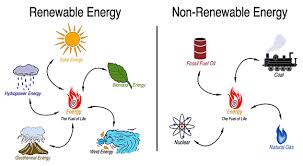
Using the heat from the Earth to generate electricity would be called...
a)
Hydroelectric
b)
Biometric
c)
Geothermal
d)
Fossil Fuels
2.
When energy is generated from the burning of wood or other organic matter, we call it_______.
a)
Solar Energy
b)
Biomass Energy
c)
Thermal Energy
3.
Which renewable resource gets its direct energy from the sun? 
a)
Geothermal
b)
Solar
c)
Wind
d)
Hydrogen
4.
Coal, gas, and petroleum are all examples of...
a)
Recycled fuels
b)
Fossil Fuels
c)
Renewable fuels
d)
Fancy Fuels
5.
What are the two types of resources?
a)
Renewable and Non-renewable
b)
Wearable and Non-wearable
c)
Usable and Non-usable
d)
Useful and Non-useful
6.
All of the following are considered alternative energy sources EXCEPT –
a)
Wind
b)
Coal
c)
Biofuel
d)
Solar
7.

What type of source do you need in a nuclear plant?

a)

Plant remains

b)

Water

c)

Uranium

d)

Petroleum

8.
Which one of these does not add CO2 to the atmosphere?
a)
cooking with gas
b)
planting trees
c)
burning wood
d)
riding in a bus
9.
When humans burn fossil fuels, most of the carbon quickly enters the                       as carbon dioxide.
a)
Water
b)
Atmosphere
c)
Sun
d)
Air
10.
In the carbon cycle, producers take in the gas __
a)
carbon dioxide
b)
oxygen
c)
nitrogen
d)
carbon monoxide
11.
How does the carbon in grass become part of a lion?
a)
The lion eats the grass
b)
Carbon from grass doesn't end up in a lion. 
c)
The carbon ends up in the lion's food chain. 
d)
The lion breathes in carbon given out by the plant
12.
Organisms that do not decompose can be buried and become what?
a)
water
b)
nutrients
c)
air
d)
fossil fuels
13.

What converts nitrogen gas into a usable form for plants and animals?

a)

bacteria

b)

rain

c)

fungi

d)

car exhaust

14.

Organisms that need nitrogen to survive.

a)

only plants

b)

only animals

c)

only bacteria

d)

all living things

15.

What is the process of combining nitrogen gas with other elements to make nitrogen into usable compounds?

a)

nitrogen composition

b)

nitrogen fixation

c)

ammonia

d)

denitrification

16.
What is the water cycle?
a)
the 3 forms of water
b)
the movement of water on, above, or below the surface of the Earth
c)
when water melts
d)
when clouds form
17.
Which is the opposite of condensation?
a)
runoff
b)
evaporation
c)
precipitation
d)
transpiration
18.
Snow, sleet, hail, and rain are all examples of  ________________. 
a)
evaporation
b)
condensation
c)
accumulation
d)
precipitation
19.

The gas form of fossil fuels is ____.

a)

petroleum

b)

natural gas

c)

coal

d)

heat

20.

The liquid form of fossil fuels is ___.

a)

coal

b)

petroleum

c)

natural gas

d)

gasoline

21.

Which of the following is NOT TRUE of fossil fuels?

a)

They are non-renewable.

b)

They produce harmful pollution.

c)

They can easily be replaced as they are used.

d)

They are inexpensive.

22.

Why are fossils fuels so widely used?

a)

They are renewable so they won't run out.

b)

They pollution they produce is less compared to renewable energy sources.

c)

They are easy to obtain and process.

d)

They don't disrupt the environment when mined from the earth.