
Font size
 Worksheets
Conceptual Physics Questions Bank 1
Total questions: 192
Worksheet time: 3hrs 24mins
What do you expect physics to be about?
Studying about nature
Studying how big and small objects move
Studying about the force due to gravity
All of the above

During which time was the object moving backwards?
A
B
C
D
E

During which segment on the graph was the object at rest?
A
B
C
D
E

Which object was moving at a faster speed?
the object graphed in green
the object graphed in red

What is the net force acting on the soccer ball?
180 N up
180 N down
60 N up
60 N down

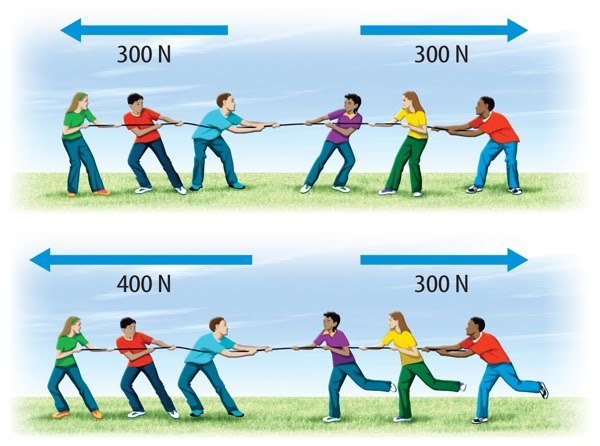
The net force acting on the rope will
cause it to move right
cause it to move left
cause it to remain still
cause it to move up

When you ride on a bus, in the bus driver's frame of reference you are
moving
not moving

When you are riding on the bus, in the frame of reference of your friend on the sidewalk you are...
moving
not moving

An objects tendency to resist a change in motion
gravity
friction
air resistance
inertia

The force that attracts masses towards the center of the Earth
gravity
friction
air resistance
inertia

The force that resists objects moving through the air
gravity
friction
air resistance
friction

The force that works in the opposite direction of the motion when two objects are in contact
gravity
friction
air resistance
inertia

If I am pulling the rope with 500 N in a tug of war and Mr. Faris is pulling the rope with 600 N on the other side it creates
a balanced force
an unbalanced force
a net force of 1100 N
the rope will not move

Forces that are equal in size and opposite in direction are
balanced forces
unbalanced force
net forces
gravitational forces

Which of the following statements matches this graph
driving at a constant speed to practice
returning to get something you forgot from home
staying at school during the day
accelerating in your motion

Which statement matches the graph
driving at a constant speed to go to practice
returning home for something you forgot
staying at school during the day
accelerating in your motino

Which statement matches the graph
driving at a constant speed to go to practice
going back for something you forgot
staying at school during the day
accelerating

Which of the following is a good reference point in trying to determine the speed you are moving in a car
a bird flying in the sky
a building
the person sitting next to you
a man running down the street
Which one of the following choices represents the smallest amount of time?
1 day
1 minute
1 second
1 week
1 year

The position vs. time graph of an object moving on a horizontal line is shown. At what time(s) is the object moving with its greatest speed?
At time 𝑡 = 3.0 𝑠 only
At time 𝑡 = 3.5 𝑠 only
At times 𝑡 = 3.5 𝑠 and 𝑡 = 9.0 𝑠
At time 𝑡 = 7.0 𝑠 only
At time 𝑡 = 9.0 𝑠 only
When a student runs and kicks a ball, they have applied an ___________ force to move the ball.
Balanced
Magnetic
Spring
Unbalanced
Standing in line is an example of a ________ ________ since you are not moving forward, backward, or sideways.
negative acceleration
balanced force
unbalanced force
1st law of motion
The __________ between the sole of you shoe and the floor keeps you from slipping.
friction
gravity
acceleration
motion
Walking down the hall and speeding up when you turn and go down the stairs is an example of ____________.
acceleration
weight
gravity
friction
Which law of motion says that for anything to move you must apply an unbalanced force to it?
1st
2nd
3rd
5th
Which law of motion says that you must push or pull objects harder if they have more mass?
1st
2nd
3rd
4th
Letting go of a balloon full of air is demonstrating Newton's ______ _______ ________ _________ because the air comes out of the back and the balloon moves forward.
1st law of motion
2nd law of motion
3rd law of motion
13th law of motion
Which is newtons first law states
An object at rest will remain at rest unless a force is applied
An object is moving
An object has stopped
An moving object will keep going when a force is applied to it
Which is newtons 2nd law
Acceleration is a change in speed
Acceleration is a change in action
Acceleration is a change in name
Acceleration is a change in velocity
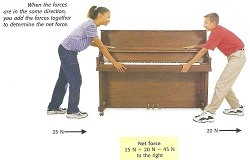
Which is newtons first law states
An object at rest will remain at rest unless a force is applied
An object is moving
An object has stopped
An moving object will keep going when a force is applied to it
Which is newtons 3rd law
for every thing there is reaction
for every reaction there is a unusual action
For every reaction there is an equal and opposite reaction
for every reaction there is an good action
Which is newtons 2nd law
Acceleration is a change in speed
Acceleration is a change in action
Acceleration is a change in name
Acceleration is a change in velocity


A contact force is from
objects physically touching
far apart objects
not touching object
always a pull
A non-contact force is between
two objects that aren't touching
two objects that are touching
the ground and wheels
you and me

The three examples pictured are of
Non-contact Forces
Contact Forces

Gravity is a
Contact Force
Myth
Non-contact Force
Friction is a
Contact Force
Myth
Non-contact Force
Magnetic Force is an example of ____________ force.
contact
non-contact
balanced
unbalanced
What is Newton's 2nd Law?
Every action has an equal and opposite reaction
An object at rest stays at rest, an object in motion stays in motion.
F = ma
Friction

If the man pushes with an equal amount of force, which object will accelerate more?
Car because it has more mass
Lawnmower because it has less mass
Car because it has less mass
Lawnmower because it has more mass

Which of the following quantities are considered vector quantities?
the velocity of a car
the mass of an apple
the number of students in a class
the displacement of an object
Which of the following are considered to be scalar quantities?
the temperature of a room
the acceleration of a runner
the speed of a snail
There are 8 blocks between RCHS and your friend's house. From the high school, you walk 4 blocks West. You notice a small child behind you who needs help crossing the street. You walk 2 blocks East to help the child. You continue on your trip until you arrive at your friend's house. What is your displacement when the trip is completed?
8 blocks
8 blocks East
8 blocks West
10 blocks
12 blocks
There are 8 blocks between RCHS and your friend's house. From the high school, you walk 4 blocks West. You notice a small child behind you who needs help crossing the street. You walk 2 blocks East to help the child. You continue on your trip until you arrive at your friend's house. What is the total distance you traveled by the end of your trip?
8 blocks
8 blocks East
8 blocks West
10 blocks
12 blocks

Which diagram represents slowing down?
A
B
C
D
Which diagram represents speeding up?
A
B
C
D
Which diagram represents uniform motion?
A
B
C
D
Which diagram represents an object at rest?
A
B
C
D

The following displacement vectors are combined: 1 km West, 2 km North, 5 km East and 3 km South. Which of the resultant vec tors shown above represents this situation?
A
B
C
D
Inertia increases when the what of an object increases?
the force of an object
the acceleration of an object
the mass of an object
the gravity of an object
A vehicle is traveling down a straight stretch of road at 100 miles per hour. A deer jumps out onto the street and the driver suddenly slams on the brakes, bringing the car to a quick stop. According to the Newton's 1st law, since the driver is not wearing a seat belt they will...
come to a quick stop as soon as the car does
be pushed against the back of their seat
be pushed against the door on the passenger side
keep moving forward at the same speed
A cup is sitting on a counter. The force of gravity is pulling the cup down. What is preventing the cup from falling to the floor and breaking? (ACTION/REACTION)
The counter is pressing back up onto the cup with a greater force
The counter is pressing back up onto the cup with an equal and opposite force
The counter is pressing back up onto the cup with a smaller force
The counter is a solid
Inertia is the property of an object to...
resist change
stay still
keep moving
change its motion
A person on a boat pushed off of the boat so that they could propel forward onto shore. When the person propels forward the boat goes in what direction? Which law of motion does this situation BEST represent?
This is the 1st law because the boat's inertia is causing it to stay in constant motion
This is the 2nd law because the person is applying a force to the mass of the boat in order to cause the boat to accelerate
This is the 3rd law because the boat is moving backwards due to a forward application of force
This is the 3rd law because the motions motion is a result of balanced forces
A hurricane is moving 55 km/h/h North. You have been given the storm's...
speed
acceleration
veocity
average speed
During tug of war between Ms. Hackett's 2nd and 6th period the rope does not move. If both class periods are pulling on the rope and the rope is not moving in either direction then you can conclude that the forces acting on the rope are...
unbalanced
action/reaction
nonexistent
balanced
During tug of war between Ms. Hackett's 3rd period and 4th period class the rope moves to the right side where the 3rd period class is pulling. You can conclude that the forces are...
unbalanced, with a greater net force going to the right
balanced
unbalanced, with a greater net force going to the left
unbalanced, with a net force of 0 N
What does unbalanced forces do to an object?
maintain the objects speed and direction
cause the net force acting on the object to be 0 N
cause the object to start moving, stop moving or change direction
maintain its state of motion
What is kinetic energy?
energy that is the greatest when the object is at the highest point
moving energy, kinetic energy is the greatest when the object is moving the slowest
stored energy
moving energy, kinetic energy is the greatest when the object is moving the fastest
What is potential energy?
moving energy
energy that is stored, potential energy is greatest when the object is at the lowest point
energy that is stored, potential energy is greatest when the object is at the highest point
energy that is stored, potential energy is greatest when the object is moving the fastest
A roller coaster starts at the top of a hill and then begins to travel downwards. The roller coaster reaches the bottom of the hill and then continues up the next hill that is smaller. At which point does the roller coaster have the greatest amount of kinetic energy?
Top of the first hill
Middle of the track
Top of the second hill
Bottom of the hill
A roller coaster starts at the top of a hill and then begins to travel downwards. The roller coaster reaches the bottom of the hill and then continues up the next hill that is smaller. At which point does the roller coaster have the greatest amount of potential energy?
Top of the first hill
Top of the second hill
Middle of the track
Bottom of the hill
What is the difference between the velocity of an object and that object's speed?
The direction is included in the object's velocity but is not included in the object's speed
The direction is included in the object's speed but is not included in the object's velocity
The velocity is how much the object's speed is changing
The speed of an object never changes but velocity can change
What is the difference between an object's acceleration and an object's velocity
Acceleration is an object's speed and direction and velocity is just an object's speed
none, both are the same thing
Acceleration is how much and how often the velocity is changing
Velocity can change but acceleration stays the same always
Race car drivers are going around the track at a constant speed. Why are the race cars accelerating?
Any object going in a circle has motion that is constant
The velocity of the race cars remains constant
The race cars' speed remains the same
The direction of the race car movement is constantly changing
A 60 kg child is being pulled on a tube by a speed boat. The force from the boat results in the child accelerating at 3 m/s/s. Calculate the force needed to cause this acceleration. (F=ma)
63 N
20 N
180 N
57 N
Which of the following are not vector quantities? Check ALL that apply.
acceleration
velocity
speed
force
What is an independent variable?
the variable that you change in an experiment, when graphing it is placed on the y-axis
the variable that you record during an experiment, when graphing it is placed on the x-axis
the variable that you change in an experiment, when graphing it is placed on the x-axis
the variable that you record during an experiment, when graphing it is placed on the y-axis
How would you decrease the inertia?
increase the mass
keep the mass the same
decrease the mass

What is the net force acting on the object?
30 N
50 N
0 N
40 N

Is the forces acting on the object balanced or unbalanced?
the net force is 0 N, therefore its balanced forces
the net force is 30 N , therefore its balanced forces
the net force is 30 N, therefore its unbalanced forces
the net force is 0 N, therefore its unbalanced forces

How many forces are acting on the object?
1
2
3
4

What is the dependent variable in this graph?
distance
speed
acceleration
force

What is the independent variable in this graph?
distance
speed
acceleration
force

What kind of acceleration is shown in the graph?
positive acceleration
constant acceleration
negative acceleration

Which colored line represents a quicker speed?
red line, steeper slope
blue line, steeper slope
red line, gentle slope
blue line, gentle slope

Which color line represents a slower speed?
blue line, steeper slope
red line, steeper slope
blue line, gentle slope
red line ,gentle slope
A small boat (100 kg) and a large boat (1000 kg) need to accelerate at the same rate of 10m/s/s. Which statement contains the correct amount of force for the small boat and the large boat
Newton’s Second Law: F = (m)(a)
small boat needs a force of 1,000N and the large boat needs a force of 10,000N
small boat needs a force of 10,000N and the large boat needs a force of 1,000N,
the small boat and the large boat both need 100N of force.
Constant acceleration has what type of forces acting on it?
balanced forces
unbalanced forces
constant velocity has what type of forces acting on it?
balanced forces
unbalanced forces
constant speed is an example of what types of forces?
unbalanced forces
balanced forces
Which of the following indicates that the forces are balanced? (check all that apply)
object slowing down
object turning
object moving at a constant velocity
object that is at rest
What is the difference between mass and weight
none, both are how heavy something is
weight is the mass mulitplied by the gravity acting on the object
mass is the weight multiplied by the gravity acting on the object
All of the following are considered forces...
Kinetic Energy and Potential Energy
Action/Reaction
Gravity
Acceleration
Friction

Based on the motion map above, the object is most clearly:
speeding up
slowing down
moving at a constant velocity
at rest
What happens to the speed of an object that is dropped from a height and allowed to fall freely?
A. it increases
B. it decreases
C. it remains the same
D. it is always zero

Based on the graph above, describe the motion of the object from 0-4 seconds
Object is moving in the positive direction and speeding up
object is moving in the positive direction and slowing down
object is moving in the positive direction at a constant speed
object is moving in the negative direction and slowing down
What happens to the acceleration of an object that is dropped from a height and allowed to fall freely?
A. it increases
B. it decreases
C. it remains the same
D. it is always zero
With respect to time, what happens to the distance covered by an object that is dropped from rest and allowed to fall freely?
A. it is always zero
B. it remains the same
C. it becomes lesser and lesser in time
D. it becomes greater and greater in time

What happened during A to B point?
not moving
increasing speed at a constant rate
moving at a constant speed
acceleration
A freely falling object's motion is under the sole influence of ____.
A. gravity
B. air resistance
C. gravity and air resistance
D. applied forces such as a persons push or pull
When an object is dropped from rest and is allowed to freely fall, the velocity and acceleration of the object after a time interval are ___.
A. both upward
B. both downward
C. velocity is upward while acceleration is downward
D. velocity is downward while acceleration is upward
Free fall is an example of a uniformly accelerated motion because the velocity is ___.
A. zero
B. constant at 9.8 m/s
C. changing by 9.8 m/s every second
D. never changing its direction
Free fall is an example of a uniformly accelerated motion (UAM) because the acceleration of a freely falling object is ___.
A. zero
B. constant
C. increasing
D. decreasing
If a bowling ball and a feather are simultaneously dropped from the same height in a room void of air, which object will reach the ground first?
A. The feather because it is lightweight.
B. The bowling ball because heavier objects fall faster than lighter objects.
C. The bowling ball because the feather will drift off from its vertical path downward.
D. The objects will reach the ground at the same time since they accelerated at the same rate from rest simultaneously.
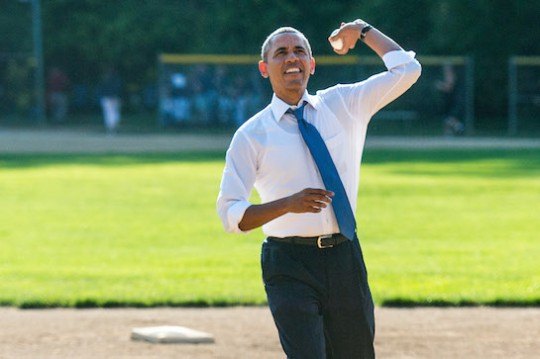
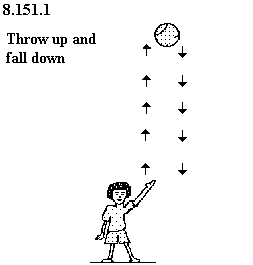
Free fall is
moving through the air under the influence of the force of gravity only.
not paying for a fall.
clothing sale with lots of orange & brown clothes.
a feather dropped from an airplane.
What makes life easier?
fried fish with bones in it
watermelons with seeds
using -10 m/s2 for acceleration due to gravity
timed exams
Velocity is...
Change in position/Change in acceleration
Change in displacement / change in time
change in acceleration / change in time
Change in time / change in position
The slope of the velocity vs time graph represents:
change in velocity
acceleration
velocity
change in position
Acceleration is...
Change in displacement / change in time
Change in Position / change in time
Change in velocity / change in time
Change in speed / change in time

Based on the graph above, the object is ______ from 6-9 seconds
moving in the positve direction and slowing down
moving in the negative direction at a constant velocity
moving in the positive direction at a constant velocity
at rest
moving in the negative direction and slowing down
Acceleration is a ____________
Vector
Scalar
both a vector and a scalar
neither a vector or a scalar
Based on the graph above, the object is ______ from 0-4 seconds
moving in the positve direction and speeding up
moving in the negative direction at a constant velocity
moving in the positive direction at a constant velocity
at rest
moving in the negative direction and speeding up

A hummingbird is hovering by a flower (vo=0). 3 seconds later, the hummingbird is in the same place. What was the bird's acceleration?
9.8 m/s2
-4.2 m/s2
1.03 m/s2
0 m/s2
1.5 ft/min could be...
velocity (v or vo)
acceleration (a)
time (t)
change in position (Δx)
the slope of the position vs time graph represents:
change in position
velocity
displacement
acceleration
Based on the graph above, the object is ______ from 4-6 seconds
moving in the positve direction and speeding up
moving in the negative direction at a constant velocity
moving in the positive direction at a constant velocity
at rest
moving in the negative direction and speeding up
An object has a negative velocity and a negative acceleration. The object is:
Speeding up
Slowing down
Moving at a constant velocity
At rest
Freely falling objects accelerate downwards at a rate of ____.
A. 9.8 s
B. 9.8 m
C. 9.8 m/s
D. 9.8 m/s/s
Based on the graph above, describe the motion of the object from 6-10 seconds
Object is moving in the positive direction and speeding up
object is moving in the positive direction and slowing down
object is moving in the positive direction at a constant speed
object is moving in the negative direction and slowing down

Based on the motion map above, the object is clearly:
speeding up
slowing down
moving at a constant velocity
at rest

Based on the motion map above, the object is clearly:
speeding up
slowing down
moving at a constant velocity
at rest
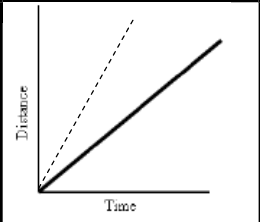


Which of the following units is the SI unit of velocity?
seconds
kilograms
meters
meters per second

What does the following diagram show?
constant displacement
constant velocity
positive acceleration
negative acceleration
A car is going around the corner at 22 meters per second. Which of the following changes?
speed
velocity
neither speed nor velocity
both speed and velocity

Where on the graph below is velocity the greatest?
0 - 2 seconds
2 - 4 seconds
5 - 8 seconds
velocity is constant from 0 - 8 seconds
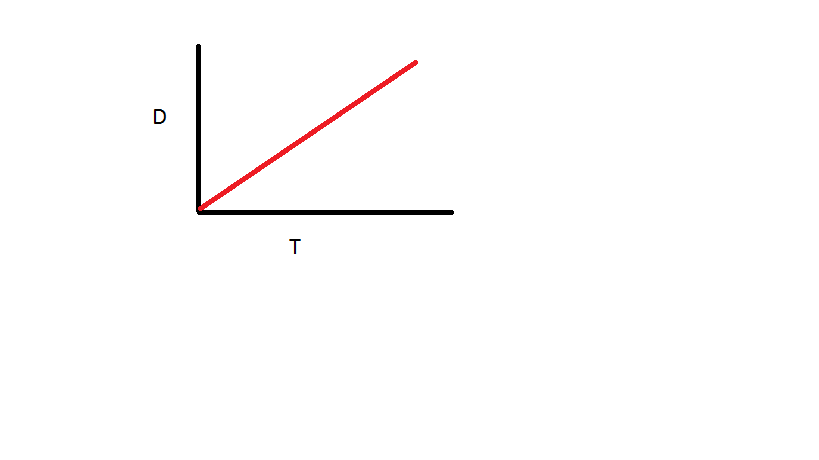
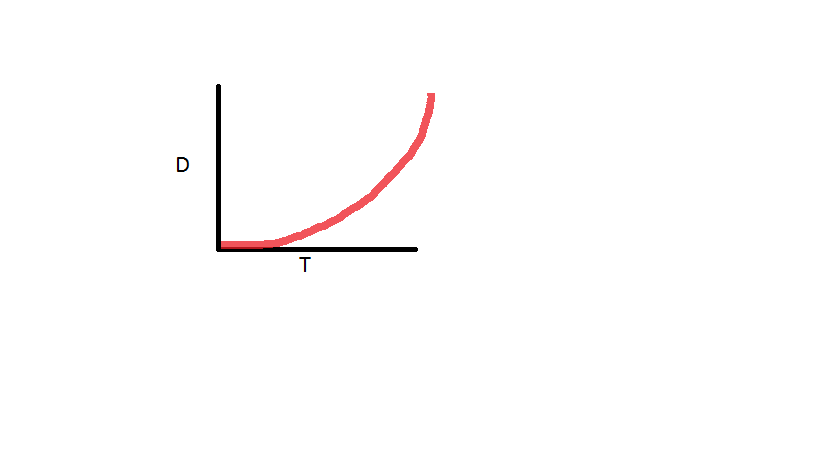


A deer running 15 meters per second due west


Choose the best definition for the word "speed".
The distance traveled by an object.
The time that has passed as an object travels.
The distance traveled by an object in given amount of space.
The distance traveled by an object in a given amount of time.
Which answer shows a measure of velocity?
m/s north
m/s2
kg/cm3
m/s
The object to which you compare another object to see if its in motion
reference point
referee point
referral point
resistance point
replica point
Distance traveled per unit of time
acceleration
velocity
speed
kinetic
inertia
When the distance between an object and a reference point is changing
speed
acceleration
velocity
inertia
motion
Distance traveled per unit time in a specified direction
speed
acceleration
velocity
potential
inertia
Motion
speed that remains the same or does not change
any change in the location or position of an object
speed in a given direction
any change in velocity which includes speeding up, slowing down, or changing direction

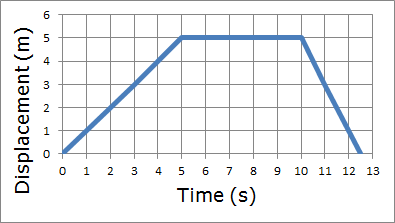

What is the average velocity of the object between 0 and 10 seconds?
6.0 m/s
1.5 m/s
-4 m/s
0 m/s

Horse A is running East at a speed of 6 m/s. Horse B is running at a speed of 8 m/s East as it passes Horse A. What is Horse B's velocity relative to Horse A?
14 m/s East
2 m/s West
2 m/s East
48 m/s West
During which time was the object moving backwards?
A
B
C
D
E
During which segment on the graph was the object at rest?
A
B
C
D
E
Which object was moving at a faster speed?
the object graphed in green
the object graphed in red
The net force acting on the rope will
cause it to move right
cause it to move left
cause it to remain still
cause it to move up
When you ride on a bus, in the bus driver's frame of reference you are
moving
not moving
When you are riding on the bus, in the frame of reference of your friend on the sidewalk you are...
moving
not moving
An objects tendency to resist a change in motion
gravity
friction
air resistance
inertia
The force that attracts masses towards the center of the Earth
gravity
friction
air resistance
inertia
The force that resists objects moving through the air
gravity
friction
air resistance
friction

