
NEW
Font size
 Worksheets
Control and Coordination_A_6
Total questions: 46
Worksheet time: 23mins

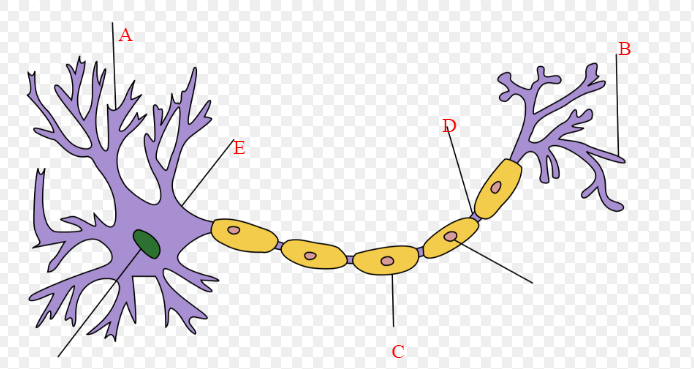


Which is the following is represented by the letter B?
cell body
nucleus
dendrite
axon

Which of the following is represented by letter C?
Cell body
nucleus
axon
dendrite
Which of the following is represented by letter C?
Cell body
nucleus
axon
dendrite

Which is represented by the letter E?
Axon
Myelin sheath
schwan cells
terminal branches

Which is represented by the letter G?
axon
myelin sheath
schwan cell
terminal branches

Which is represented by the letter H?
axon
myelin sheath
schwan cell
terminal branches
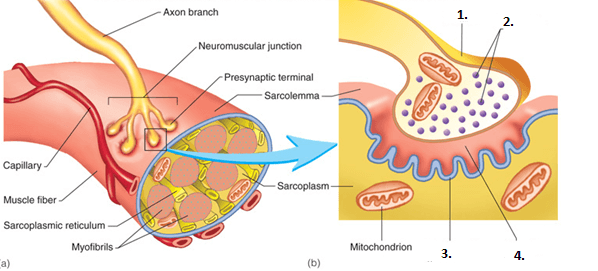
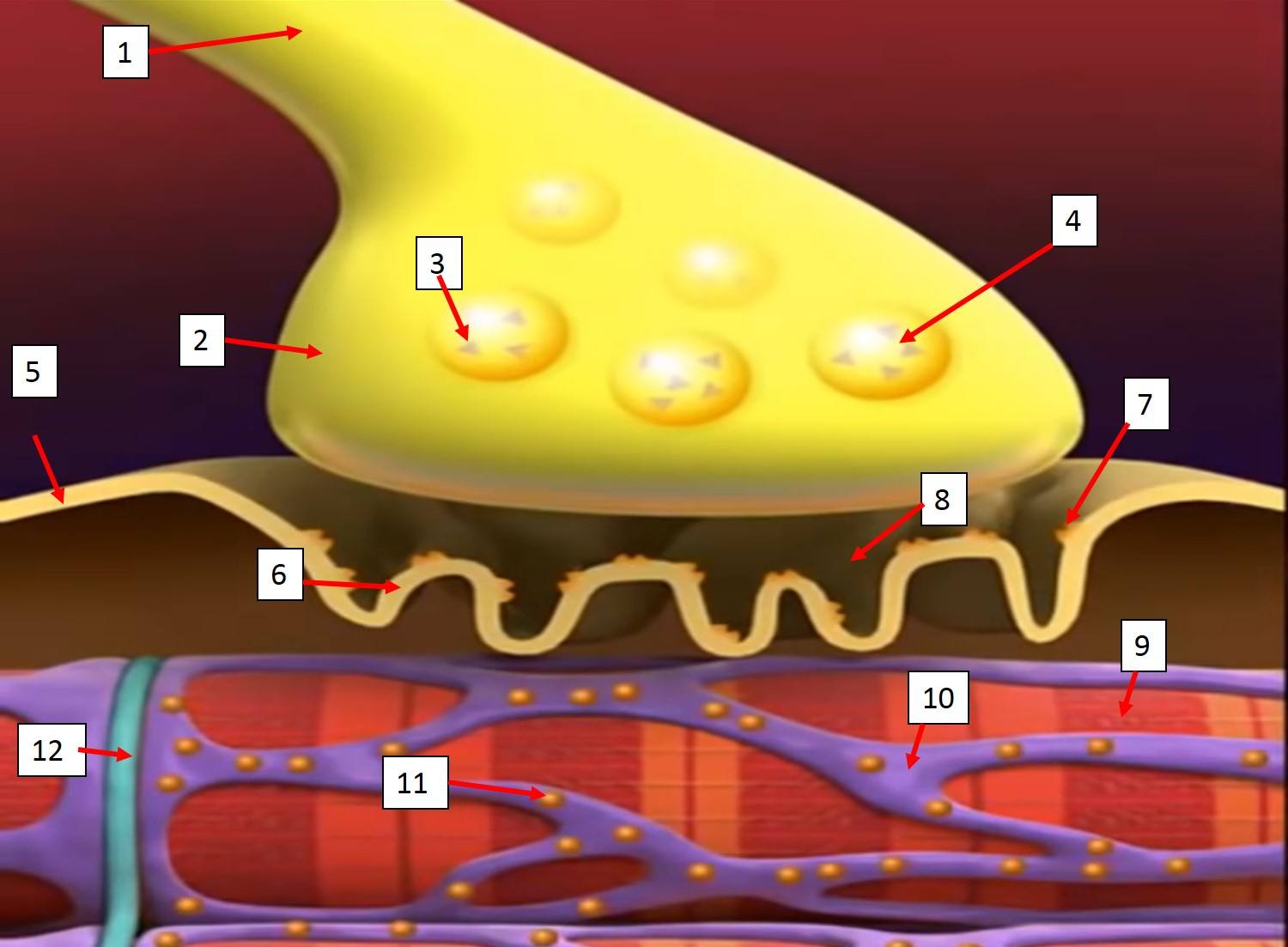
How are the occipital lobe and the olfactory lobe of the forebrain differ from each other? What is the first statement of the audio clip?
Occipital lobe of the fore-brain is for sight
whereas olfactory lobe is for sense of smell.
How are the occipital lobe and the olfactory lobe of the forebrain differ from each other? What is the second statement of the audio clip?
Occipital lobe of the fore-brain is for sight
whereas olfactory lobe is for sense of smell.
Midbrain connects the forebrain and hindbrain. Write its role in CNS. What is the first statement of the audio clip?
Midbrain connects forebrain to the hindbrain
It controls the movement of the head, neck and trunk to locate sounds and visual reflexes
that are involved in focusing on the objects.
It controls reflex that are involved in movement of eye muscles, pupil size etc.
Midbrain connects the forebrain and hindbrain. Write its role in CNS. What is the second statement of the audio clip?
Midbrain connects forebrain to the hindbrain
It controls the movement of the head, neck and trunk to locate sounds and visual reflexes
that are involved in focusing on the objects.
It controls reflex that are involved in movement of eye muscles, pupil size etc.
Midbrain connects the forebrain and hindbrain. Write its role in CNS. What is the third statement of the audio clip?
Midbrain connects forebrain to the hindbrain
It controls the movement of the head, neck and trunk to locate sounds and visual reflexes
that are involved in focusing on the objects.
It controls reflex that are involved in movement of eye muscles, pupil size etc.
Midbrain connects the forebrain and hindbrain. Write its role in CNS. What is the fourth statement of the audio clip?
Midbrain connects forebrain to the hindbrain
It controls the movement of the head, neck and trunk to locate sounds and visual reflexes
that are involved in focusing on the objects.
It controls reflex that are involved in movement of eye muscles, pupil size etc.
Write the type of response that occurs when an organism eats food. What is the first statement of the audio clip?
When we put food in our mouth that response is a voluntary response
and after that, the process of digestion and excretion comes under the involuntary response.
Write the type of response that occurs when an organism eats food. What is the second statement of the audio clip?
When we put food in our mouth that response is a voluntary response
and after that, the process of digestion and excretion comes under the involuntary response.
‘Tropism is directional whereas nastic movement is non-directional’. Justify this statement. What is the first statement of the audio clip?
Tropism is the movement in the presence of any stimulus.
If the movement is towards the stimulus then it called positive tropism
and if the movement is away from the stimulus then it is called negative tropism.
In nastic movement, there is not directional movement in the presence of stimuli.
These movements always occur in a particular direction irrespective of the type of stimuli.
‘Tropism is directional whereas nastic movement is non-directional’. Justify this statement. What is the second statement of the audio clip?
Tropism is the movement in the presence of any stimulus.
If the movement is towards the stimulus then it called positive tropism
and if the movement is away from the stimulus then it is called negative tropism.
In nastic movement, there is not directional movement in the presence of stimuli.
These movements always occur in a particular direction irrespective of the type of stimuli.
‘Tropism is directional whereas nastic movement is non-directional’. Justify this statement. What is the third statement of the audio clip?
Tropism is the movement in the presence of any stimulus.
If the movement is towards the stimulus then it called positive tropism
and if the movement is away from the stimulus then it is called negative tropism.
In nastic movement, there is not directional movement in the presence of stimuli.
These movements always occur in a particular direction irrespective of the type of stimuli.
‘Tropism is directional whereas nastic movement is non-directional’. Justify this statement. What is the fourth statement of the audio clip?
Tropism is the movement in the presence of any stimulus.
If the movement is towards the stimulus then it called positive tropism
and if the movement is away from the stimulus then it is called negative tropism.
In nastic movement, there is not directional movement in the presence of stimuli.
These movements always occur in a particular direction irrespective of the type of stimuli.
‘Tropism is directional whereas nastic movement is non-directional’. Justify this statement. What is the fifth statement of the audio clip?
Tropism is the movement in the presence of any stimulus.
If the movement is towards the stimulus then it called positive tropism
and if the movement is away from the stimulus then it is called negative tropism.
In nastic movement, there is not directional movement in the presence of stimuli.
These movements always occur in a particular direction irrespective of the type of stimuli.
Do organisms have hormones, who control their directional growth? Justify. what is the first statement of the audio clip?
Plants have auxin which is synthesized at the tip of the shoot and it is responsible for the directional growth of the shoot towards the light.
In the presence of light auxin is released or is synthesized at the tip of the shoot which helps the cells to grow.
.When the light comes from one side, auxin diffuse towards the shady part of the shoot.
This concentration of auxin elongates the cells of the shady part of the shoot
and hence it appears that the plant is bending towards the light.
Do organisms have hormones, who control their directional growth? Justify. what is the SECOND statement of the audio clip?
Plants have auxin which is synthesized at the tip of the shoot and it is responsible for the directional growth of the shoot towards the light.
In the presence of light auxin is released or is synthesized at the tip of the shoot which helps the cells to grow.
.When the light comes from one side, auxin diffuse towards the shady part of the shoot.
This concentration of auxin elongates the cells of the shady part of the shoot
and hence it appears that the plant is bending towards the light.
Do organisms have hormones, who control their directional growth? Justify. what is the Third statement of the audio clip?
Plants have auxin which is synthesized at the tip of the shoot and it is responsible for the directional growth of the shoot towards the light.
In the presence of light auxin is released or is synthesized at the tip of the shoot which helps the cells to grow.
.When the light comes from one side, auxin diffuse towards the shady part of the shoot.
This concentration of auxin elongates the cells of the shady part of the shoot
and hence it appears that the plant is bending towards the light.
Do organisms have hormones, who control their directional growth? Justify. what is the Fourth statement of the audio clip?
Plants have auxin which is synthesized at the tip of the shoot and it is responsible for the directional growth of the shoot towards the light.
In the presence of light auxin is released or is synthesized at the tip of the shoot which helps the cells to grow.
.When the light comes from one side, auxin diffuse towards the shady part of the shoot.
This concentration of auxin elongates the cells of the shady part of the shoot
and hence it appears that the plant is bending towards the light.
Do organisms have hormones, who control their directional growth? Justify. what is the Fifth statement of the audio clip?
Plants have auxin which is synthesized at the tip of the shoot and it is responsible for the directional growth of the shoot towards the light.
In the presence of light auxin is released or is synthesized at the tip of the shoot which helps the cells to grow.
.When the light comes from one side, auxin diffuse towards the shady part of the shoot.
This concentration of auxin elongates the cells of the shady part of the shoot
and hence it appears that the plant is bending towards the light.
‘Pancreas’ is the overall controller of the blood glucose level. Give your views. WHAT IS THE FIRST STATEMENT OF THE AUDIO CLIP
?.
Pancreas produce insulin which helps in maintaining the blood glucose level in the body.
When glucose level increases pancreas produced insulin which makes sure that cells take up glucose from the blood.
Soon blood glucose level starts to drop and as it decreases the production of insulin also decreases.
‘Pancreas’ is the overall controller of the blood glucose level. Give your views. WHAT IS THE Second STATEMENT OF THE AUDIO CLIP?.
Pancreas produce insulin which helps in maintaining the blood glucose level in the body.
When glucose level increases pancreas produced insulin which makes sure that cells take up glucose from the blood.
Soon blood glucose level starts to drop and as it decreases the production of insulin also decreases.
‘Pancreas’ is the overall controller of the blood glucose level. Give your views. WHAT IS THE Third STATEMENT OF THE AUDIO CLIP?.
Pancreas produce insulin which helps in maintaining the blood glucose level in the body.
When glucose level increases pancreas produced insulin which makes sure that cells take up glucose from the blood.
Soon blood glucose level starts to drop and as it decreases the production of insulin also decreases.
‘There is a close coordination between nerves and hormones’. Explain in brief. WHAT IS THE FIRST STATEMENT OF THE AUDIO CLIP?
Hypothalamus is part of hind-brain.
So it becomes the part of CNS and is responsible for maintaining the homeostasis of the body.
y. Also, it is responsible for secreting the hormones in the human body.
So because of the hypothalamus there is close coordination between nerves and hormones.
Also when adrenaline is released into the blood supply of oxygen increases to the muscle which helps to run and is made of nerves.
‘There is a close coordination between nerves and hormones’. Explain in brief. WHAT IS THE Second STATEMENT OF THE AUDIO CLIP?
So nerves and hormones together work in case of stress.
So it becomes the part of CNS and is responsible for maintaining the homeostasis of the body.
y. Also, it is responsible for secreting the hormones in the human body.
So because of the hypothalamus there is close coordination between nerves and hormones.
Also when adrenaline is released into the blood supply of oxygen increases to the muscle which helps to run and is made of nerves.
‘There is a close coordination between nerves and hormones’. Explain in brief. WHAT IS THE Third STATEMENT OF THE AUDIO CLIP?
So nerves and hormones together work in case of stress.
So it becomes the part of CNS and is responsible for maintaining the homeostasis of the body.
y. Also, it is responsible for secreting the hormones in the human body.
So because of the hypothalamus there is close coordination between nerves and hormones.
Also when adrenaline is released into the blood supply of oxygen increases to the muscle which helps to run and is made of nerves.
‘There is a close coordination between nerves and hormones’. Explain in brief. WHAT IS THE Fourth STATEMENT OF THE AUDIO CLIP?
So nerves and hormones together work in case of stress.
So it becomes the part of CNS and is responsible for maintaining the homeostasis of the body.
y. Also, it is responsible for secreting the hormones in the human body.
So because of the hypothalamus there is close coordination between nerves and hormones.
Also when adrenaline is released into the blood supply of oxygen increases to the muscle which helps to run and is made of nerves.
‘There is a close coordination between nerves and hormones’. Explain in brief. WHAT IS THE Fifth STATEMENT OF THE AUDIO CLIP?
So nerves and hormones together work in case of stress.
So it becomes the part of CNS and is responsible for maintaining the homeostasis of the body.
y. Also, it is responsible for secreting the hormones in the human body.
So because of the hypothalamus there is close coordination between nerves and hormones.
Also when adrenaline is released into the blood supply of oxygen increases to the muscle which helps to run and is made of nerves.
‘There is a close coordination between nerves and hormones’. Explain in brief. WHAT IS THE Sixth STATEMENT OF THE AUDIO CLIP?
So nerves and hormones together work in case of stress.
So it becomes the part of CNS and is responsible for maintaining the homeostasis of the body.
y. Also, it is responsible for secreting the hormones in the human body.
So because of the hypothalamus there is close coordination between nerves and hormones.
Also when adrenaline is released into the blood supply of oxygen increases to the muscle which helps to run and is made of nerves.
What are receptors with reference to the nervous system? List three types of receptors and mention their functions. How do receptors pass the information to the brain? WHAT IS THE FIRST STATEMENT OF THE AUDIO CLIP?
Receptors are tissues which are capable of receiving any stimuli and start the impulse which is passed to the CNS.
Three types of receptors are: - 1. Olfactory receptor: - They detect the smell
2. Gustavo receptor: - They detect the taste
3. Thermoreceptor: - they detect the temperature of the outer world.
Receptor through sensory-motor passes the information to the spinal cord which then sends the information to the brain.
What are receptors with reference to the nervous system? List three types of receptors and mention their functions. How do receptors pass the information to the brain? WHAT IS THE Second STATEMENT OF THE AUDIO CLIP?
Receptors are tissues which are capable of receiving any stimuli and start the impulse which is passed to the CNS.
Three types of receptors are: - 1. Olfactory receptor: - They detect the smell
2. Gustavo receptor: - They detect the taste
3. Thermoreceptor: - they detect the temperature of the outer world.
Receptor through sensory-motor passes the information to the spinal cord which then sends the information to the brain.
What are receptors with reference to the nervous system? List three types of receptors and mention their functions. How do receptors pass the information to the brain? WHAT IS THE Third STATEMENT OF THE AUDIO CLIP?
Receptors are tissues which are capable of receiving any stimuli and start the impulse which is passed to the CNS.
Three types of receptors are: - 1. Olfactory receptor: - They detect the smell
2. Gustavo receptor: - They detect the taste
3. Thermoreceptor: - they detect the temperature of the outer world.
Receptor through sensory-motor passes the information to the spinal cord which then sends the information to the brain.
What are receptors with reference to the nervous system? List three types of receptors and mention their functions. How do receptors pass the information to the brain? WHAT IS THE Fourth STATEMENT OF THE AUDIO CLIP?
Receptors are tissues which are capable of receiving any stimuli and start the impulse which is passed to the CNS.
Three types of receptors are: - 1. Olfactory receptor: - They detect the smell
2. Gustavo receptor: - They detect the taste
3. Thermoreceptor: - they detect the temperature of the outer world.
Receptor through sensory-motor passes the information to the spinal cord which then sends the information to the brain.
What are receptors with reference to the nervous system? List three types of receptors and mention their functions. How do receptors pass the information to the brain? WHAT IS THE Fifth STATEMENT OF THE AUDIO CLIP?
Receptors are tissues which are capable of receiving any stimuli and start the impulse which is passed to the CNS.
Three types of receptors are: - 1. Olfactory receptor: - They detect the smell
2. Gustavo receptor: - They detect the taste
3. Thermoreceptor: - they detect the temperature of the outer world.
Receptor through sensory-motor passes the information to the spinal cord which then sends the information to the brain.

