Wayground logo

Free Printable Worksheets

Font size

S
M
L
XL
Worksheets

Chapter 1 and 2 Practice Quiz CHEM 1114

Total questions: 60

Worksheet time: 50mins

Name
Class
Date
1.
A possible explanation to a problem that has not yet been tested. 
a)
data
b)
theory
c)
hypothesis
d)
fact
2.
An organized procedure used by scientists to test a hypothesis. 
a)
scientific method
b)
experiment
c)
data collection
d)
metric system
3.
The factors in an experiment that can be changed. 
a)
variables
b)
quantitative data
c)
hypothesis
d)
steps
4.
In a controlled experiment, how many variables can be worked with at a time? 
a)
one
b)
none
c)
two or more
d)
how ever many makes sense.
5.
This part of the experiment serves as a basis of comparison; the one variable being tested has been omitted. 
a)
experimental group
b)
control group
c)
data
d)
variables
6.
The factor that will happen because of the change. 
a)
dependent variable 
b)
independent variable
c)
controlled variabe
d)
not this one.
7.
There are two types of data. Which type of data involves numbers that are obtained by counting or measuring?
a)
quantitative
b)
qualitative
8.
There are two types of data. Which type of data involves descriptions that cannot be counted or measured?
a)
quantitative
b)
qualitative
9.
Should experiments be repeated over and over to see if the results are the same each time?
a)
yes
b)
no
10.
A broad and comprehensive statement of what is thought to be true; it is supported by much evidence.
a)
hypothesis
b)
theory
c)
guess
d)
fact
11.

The first step of the scientific method is to _____________________________.

a)

ask a question/state a problem

b)

do an experiment

c)

research

d)

draw a conclusion

12.
In a well designed experiment, you should change how many variables?
a)
only one
b)
no more than two
c)
none at all
d)
as many as are needed
13.
The one variable you change is called the ___________ variable.
a)
independent
b)
dependent
c)
controlled
14.
The change that happens because of your experiment is called the ___________ variable.
a)
independent
b)
dependent
c)
controlled
15.
A change where one or more new substances are created.
a)
Physical Change 
b)
Chemical Change 
16.
Is melting butter for popcorn a chemical or physical change?
a)
chemical
b)
physical
17.
Which of the following is NOT an example of a physical change?
a)
crumpled paper
b)
pencil sharpening
c)
shrunken clothing
d)
rust
18.

Silverware tarnishing is an example of a _____ change

a)

Physical

b)

Chemical

19.
When you break a cracker into pieces it is a...
a)
Chemical change
b)
Physical change
20.
Is sour milk a physical or chemical change?
a)
Physical
b)
Chemical
21.

Cutting hair is an example of a _____ change

a)

Physical

b)

Chemical

22.
Is sharpening a pencil a physical or chemical change?
a)
Physical 
b)
Chemical
23.
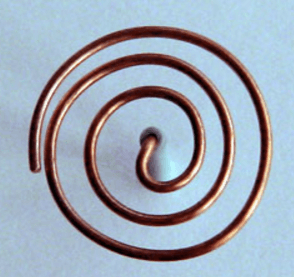
Is bending copper wire a physical or chemical change?
a)
Physical
b)
Chemical
24.

Is mixing chocolate syrup into milk a chemical or physical change?

a)

Chemical

b)

Physical

25.

During a chemical change, atoms...

a)

Are rearranged to form something new

b)

Stay the same

c)

Arranged to become a liquid

26.

(Accidentally) breaking a car window with a baseball is a ____ change

a)

Chemical

b)

Physical

27.

Using bleach to get rid of a stain on a shirt is a _____ change

a)

Physical

b)

Chemical

28.
It is a measure of how close measurements come to each other when they are made in the same way
a)
Accuracy
b)
Precision
c)
Error
d)
Extrapolation
29.
a)
Student A
b)
Student B
c)
Student C
d)
Cannot be determined
30.
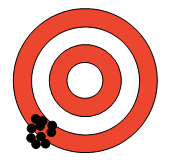
This bullseye demonstrates...
a)
High Accuracy & High Precision
b)
High Accuracy & Low Precision
c)
Low Accuracy & High Precision
d)
Low Accuracy & Low Precision
31.

How close a measurement is to the accepted value is called..

a)

Accuracy

b)

Precision

c)

Significant

d)

Estimate

32.
The students measured length during a science experiement, they got 12 cm. But the actual measurement was 14.25 cm. What was the percent error?
a)
15.79%
b)
18.75%
c)
2.25%
d)
18%
33.

Which is the more precise measurement?

a)

4 mL

b)

4.3 mL

c)

4.30 mL

d)

4.300 mL

34.
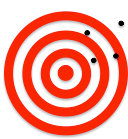
Describe the accuracy and precision of the image
a)
Accurate and Precise
b)
Accurate and not precise
c)
Not Accurate and Precise
d)
not accurate and not precise
35.
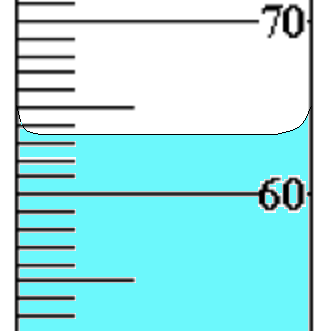
Volume?
a)
63.5 mL
b)
63 mL
c)
63.55 mL
d)
6 mL
36.

Which Student is the most Precise?

a)

Alex

b)

Shandra

c)

Luis

37.
Convert into kilometers.
452.159 meters.
Round to the nearest thousandth.
a)
0.452159
b)
4.52159
c)
45.2159
d)
452159
38.
Convert into grams.
763.1247 milligrams.
a)
7631.247
b)
76312.47
c)
0.7631247
d)
7631247
39.
Convert into centimeters.
25.12 meters.
a)
2512
b)
2.512
c)
0.2512
d)
0.2512
40.
You know that 1000 mL = 1 L.  Convert 600 mL into L.
a)
0.6 L
b)
0.006 L
c)
600,000 L
d)
0.06 L
41.
Convert 12 km to m
a)
120 m
b)
1,200 m
c)
12,000 m
d)
120,000 m
42.
Convert 1.7 km to m
a)
1700
b)
17
c)
170
d)
0.17
43.
The appropriate abbreviation of centimeter is..
a)
cm
b)
Cm
c)
cM
d)
CM
44.
What does this measure?
a)
mass
b)
volume
c)
distance
d)
weight
45.

What is the basic unit of length in the metric system?

a)

gram

b)

meter

c)

Liter

d)

cm3

46.

What might you measure using millimeters?

a)

The distance to school.

b)

An insect.

c)

The length of a car.

d)

The length of a football field.

47.

Which unit(s) can be used to measure volume?


Check all that apply.

a)

kg

b)

cm3

c)

mL

d)

K

e)

L

48.

Sally wants to find the volume of a marble. What instrument should she use to determine this volume?

a)

Metric ruler

b)

Digital Scale

c)

Graduated Cylinder

d)

Thermometer

49.

How many centimeters are there in one meter?

a)

1

b)

10

c)

100

d)

1,000

50.

Which temperature in degrees Celsius is closest to standard room temperature?

a)

0 °C

b)

25 °C

c)

50 °C

d)

100 °C

51.

Water boils at a temperature of 100 °C. Use the formula below to convert this temperature to Kelvin.


K = 273 + °C

(a)  

52.
How many sig. fig. are in the number below:
106.00
a)
2
b)
3
c)
4
d)
5
53.
How many sig. fig. are in the number below:
0.056
a)
1
b)
2
c)
3
d)
4
54.
How many sig. fig. are in the number below:
100.5
a)
1
b)
2
c)
3
d)
4
55.
How many sig. fig. are in the number below:
14.500
a)
2
b)
3
c)
4
d)
5
56.
Calculate 1.23 m x 0.89 m and give your answer with the appropriate number of significant figures.
a)
1.0 m2
b)
1.1 m2
c)
1.0947 m2
d)
1.09 m2
57.
Calculate 923 g ÷ 20312 cm3 and give your answer with the appropriate number of significant figures.
a)
0.04 g/cm3
b)
0.045 g/cm3
c)
0.0454 g/cm3
d)
4 x 10⁻² g/cm3
58.

13.59 cm + 23.25 cm + 21 cm =

a)

57.84 cm

b)

57.8 cm

c)

57 cm

d)

58 cm

e)

60 cm

59.

42.828 m + 67.4629 m =

a)

110.2909 m

b)

110.29 m

c)

110.291 m

d)

110.3 m

e)

110. m

60.

39.3 L - 0.804 L =

a)

38.496 L

b)

38.50 L

c)

38.5 L

d)

39 L

e)

40 L