
 Worksheets
Dichotomous Key Practice
Total questions: 17
Worksheet time: 24mins


What is the name of bird X?
Certhidea
Geospiza
Camarhynchus
Platyspiza

Leaf S
Eastern white pine
balsam poplar
sweet gum
ginko

following observations of the plant’s characteristics would be useful in determining its identity with a dichotomous key?
A student discovers an arachnid with a segmented abdomen, long legs, and a tail with no stinger.
The student uses the dichotomous key below to identify it.
1. a) Abdomen segmented.............go to 2
b) Abdomen not segmented ......go to 4
2. a) Abdomen with tail....................go to 3
b) Abdomen without tail...............go to 5
3. a) Tail with stinger..........................Scorpion
b) Tail without stinger.....................Whip scorpion
4. a) Legs longer than body.............Daddy Long Legs
b) Legs not longer than body……….Wind scorpion
5. a) Covered with spines .......................Mite
b) Few spines.....................................Tick
Whip Scorpion
Daddy Long Legs
Mite
Tick

Which shark is the picture of?
Cow Shark
Great White Shark
Hammerhead Shark
Saw Shark

Use the dichotomous key to identify this white wildflower
Starflower
Chickweed
Common Strawberry
Bowman's root

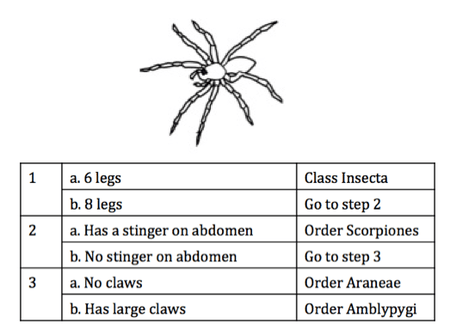
arachnids and insects?

A student discovers an arachnid without a segmented abdomen, and legs longer than its body. The student uses the dichotomous key below to identify it. Which arachnid has the student found?
Whip Scorpion
Wind Scorpion
Daddy long legs
Scorpion
What does the prefix "di-" mean?
1
2
7
12
You've identified the first organism. Awesome! Now you are going to identify the second organism. Which step do you start with on the dichotomous key?
1
2
4
It really doesn't matter where you start, but where you finish.

