
 Worksheets
Hominid evolutionary trends 2024 updated
Total questions: 49
Worksheet time: 36mins

The femur of Primate A has a greater carrying angle than Primate B. This is because Primate A is
human and the carrying angle allows it to have a wider pelvis than an ape, to assist in childbirth
an ape and the carrying angle increases the length of the femur to allow for quadrupedal walking
an ape and the carrying angle allows the knee to bend and straighten for bipedal walking
human and the carrying angle places the foot under the centre of gravity for a striding gait

The foot of primate A would have...
a larger heel bone than primate B
a longitudinal arch that is lacking in primate B
greater opposability of the big toe than primate B
a more flexible ankle joint than primate B

Based on the information shown in the phylogenetic tree, the most recent common ancestor for Kenyanthropus and Homo was at point...
I
II
III
IV
What ability does the opposable thumb provide to humans that other primates do NOT have?
grasping hands to effectively grip branches
power grip for hammering objects
precision grip for fine manipulation of objects
weight bearing limbs to assist in large movements
A fossil skull with a cranial capacity of 430cc was found at a site in East Africa and was dated at 3.5 million years old. This fossil would most likely be
Homo erectus
Paranthropus robustus
Australopithecus afarensis
Homo habilis

There is agreement between the two interpretations in some aspects of these models. According to both models, how many million years ago did three fossil species exist?
3
2.5
2
1.5

Which of the following statements shows a difference between Models 1 and 2?
Model 1 shows H habilis as having no influence on the development of H sapiens
Model 1 shoes H erectus occurring at the same time as H habilis
Model 2 shows H ergaster and H habilis as being descendants of H erectus
Model 2 shows A africanus as an ancestor of H ergaster and H sapiens

Scientists have found evidence that about 2.4 million years ago a gene regulating jaw muscles mutated and may have led to the more graceful human jaw we see today. The diagram below shows the skulls of 3 hominid species. Which statement below most closely explains the link between jaw size and hominid evolution?
The jaws of hominids evolved to be smaller and less protruding over time as did the skull.
The jaws of hominids evolved to be larger and more protruding over time.
There appears to be no change in the jaws of hominids over time.
The jaws of hominids changed over time due to a change in brain size

Based on the illustration, what do the similarities between human and chimpanzee hands and feet suggest about the different organisms?
Chimpanzees and humans both have hands and feet adapted for walking upright, showing they have identical DNA.
Chimpanzees and humans both have similar hands for grasping, proving they make and use complex tools.
Humans and chimpanzees both developed five digits on their hands and feet, suggesting they have a common ancestor.
Humans and chimpanzees both have thumbs, proving they eat similar foods like meat, nuts, and vegetation.
How is the scientific theory of evolution supported by the comparison of the skulls and skeletons of modern humans and extinct hominids?
By making the hip, spine, and skull comparisons, the age of different hominid specimens can be determined.
Comparison of skull and skeletons provides evidence that humans and different hominid species interacted.
Similarity in skull shapes, hands, and hips between extinct hominids and humans supports a common ancestry.
Skull and skeleton comparisons can explain why hominids were inferior and became extinct while humans evolved.
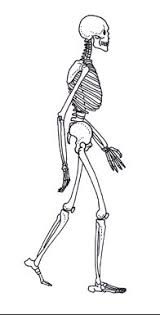
The ability to walk upright on two legs is called:
bipedalism
quadropedalism
bicyclepedalism
tripedalism

A measurement of the volume of the skull, used to estimate brain size.
cranial capacity
foramen magnum index
maxillary angle
sagittal crest
How do scienctist determine if an organism was bipedal?
Femur length
Shoulder angles
Spinal cord length
Pelvis Shape

If you wanted to excavate fossils of the earliest human ancestors, to what country might you travel?
Australia
China
Kenya
Iceland
Best definition for "carrying angle".
the angle between the ground and the femur
The angle of the femur
the angle formed between the vertical and the femur
the difference between a primate and a human's femur
Best reason why having a carrying angle helps bipedal locomotion
ensures the knee is positioned under the pelvis when striding forward
helps carry the upper body weight
helps you carry stuff
helps humans shift their weight from side to side while walking
The weight of the abdomen is supported by
the cervical curvature
the bowl-shaped pelvis
the longitudinal arch
the proportionally large legs

Broad hip bones assist bipedalism because
they connect to the femurs widely
they enable weight to be shifted from leg to leg in apes
they stabilize the hips during walking
they provide for the attachment of larger buttock muscles
Having a long, narrow pelvis makes you
an ape
walk in a balanced way
a hominin
stable whilst standing on one leg
The lateral condyle is closest to the
pelvis
knee
ankle
toe
Which best describes a human's first foot digit compared with that of an ape?
smaller and closer to the ankle
more robust and parallel to other toes
not as long but more opposable
less opposable and longer

Which statement about bones in the foot is correct?
The transverse arch is shown in blue and green. It is absent in hominins.
The longitudinal arch is shown in green. It is absent in apes.
The transverse arch is shown in red. It is absent in apes.
The longitudinal arch is shown in blue. It is absent in apes.
Having proportionally larger legs than apes means that
apes are less likely to tip over when walking bipedally
apes have a lower centre of gravity
humans are less likely to overbalance whilst walking bipedally
humans have a carrying angle and apes do not
Which of the following features of the foot does not contribute to extra stability for bipedalism?
longitudinal arch
parallel toes
very straight metatarsals and phalanges
large heel bone
The manipulative ability of the human hand is due mainly to
the size and position of the thumb
practice
the structure and arrangement of the finger bones and the development of the brain
the fact that we do not walk on our hands

Scientists have found evidence that about 2.4 million years ago a gene regulating jaw muscles mutated and may have led to the more graceful human jaw we see today. The diagram below shows the skulls of 3 hominid species.
Which statement below most closely explains the link between jaw size and hominid evolution?
The jaws of hominids changed over time due to a change in brain size.
There appears to be no change in the jaws of hominids over time.
The jaws of hominids evolved to be larger and more protruding over time.
The jaws of hominids evolved to be smaller and less protruding over time.
What advantage did the development of bipedalism most likely confer to early hominids?
It allowed them to evolve a complex social structure
It allowed them to move and hold objects at the same time
It allowed them to evolve an opposable thumb
It allowed them to see with binocular vision
What capability made Lucy different from apes?
a larger brain
the ability to use language
walking on two feet
the ability to swing between trees
Handy man was the first hominin to use
food
tools
shoes
hats
Upright man was the first hominin to use
food
shoes
fire
houses
how did Lucy get her food
gathering
hunting
farming
shopping
how did wise man get his food?
gathering
hunting
farming
shopping
How did Upright man get his food?
gathering
hunting
farming
shopping
Which hominin group are we, the modern humans, related to?
Handy Man
Wise Man
Upright Man
Lucy and Her Relatives
Neanderthal Man
This hominin group made better weapons such as bows, arrows, and spear throwers.
Handy Man
Wise Man
Upright Man
Lucy and Her Relatives
Neanderthal Man
This hominin group created fire for the first time.
Handy Man
Wise Man
Upright Man
Lucy and Her Relatives
Neanderthal Man
This hominin group was the first to walk on two feet.
Handy Man
Wise Man
Upright Man
Lucy and Her Relatives
Neanderthal Man
For many years, whole or fragmented hominid skulls have been excavated. Some of these skulls date from as early as 6 million years ago. By comparing these skulls with other archeological findings, scientists are able to determine when major accomplishments were successfully achieved. Which of the following statements correctly states the evolutionary progression of hominids?
Hominids first developed tools, then language. The brain increased in size.
Hominids first developed language, then tools for farming. The size of the brain increased.
Hominids first developed language, then tools. Brain size decreased.
Hominids first developed tools, then language. The brain got smaller.
Which of the following statements makes an accurate correlation between stages of hominid evolution?
The brain increased in size which resulted in hominids developing tools.
The brain decreased in size allowing for hominids to use tools.
As the brain decreased in size the skull increased in size.
Language developed as a result of increasing the size of the skull.

The illustrations below represent different stages of hominid skull evolution.
What is the correct order of the evolution of the skull beginning with the earliest example?
D,C,B,A
C,A,D,B
A,C,B,D
B,D,A,C

