
 Worksheets
Government Unit 1 Review
Total questions: 65
Worksheet time: 33mins

Who believed in a separation of powers by dividing the government into separate branches?
Montesquieu
Rousseau
Hobbes
Voltaire

Which philosopher argued that if the government violates our natural rights, we have a right to overthrow the government?
Thomas Hobbes
John Locke
Jean-Jacques Rousseau
Mary Wollstonecraft

A society in which private property and social class do not exist and the government controls the factors of production is called
Capitalism
Communism
Socialism
None of the above

Which type of government was established by the United States Constitiution?
Theocracy
Oligarchy
Monarchy
Republic

Which type of government uses religion as a basis for decision making?
Theocracy
Democracy
Dictatorship
Monarchy

Which important document established that monarchs (Kings and Queens) were required to follow the law.
Declaration of Independence
U.S. Constitution
Magna Carta
U.S. Bill of Rights

Who wrote the "Two Treatises of Government" which stated that all people were given natural rights that the government was contracted to protect?
Charles de Montesquieu
John Locke
Thomas Hobbes
William Blackstone

In a direct democracy
the people vote directly on every issue.
the government is centered around a religious belief.
a ruler has complete and total power.
the people elect leaders to solve their problems through legislation.
Much of the Declaration of Independence consists of
desires to separate from England
lists of rights of all people
complaints of wrongs done to colonists
threats of revenge
The government set up by the Articles of Confederation had which branch of government?
Legislative
Executive
Judicial
All of these
Power distribution among the three branches of government is referred to as
Federalism
Separation of Powers
Bicameralism
Supremacy
Which is NOT a characteristic of a 'political state'?
Territory
Population
Government
Anarchy
The system that allows each branch of government to prevent others from gaining too much power
Federalism
Unicameralism
Bicameralism
Checks and balances

Division of Power between the 3 branches of government
Checks & Balances
Tripartite Government
Federalism
Bicameral Legislature
Which level of government makes decisions for the United States of America?
Federal Government
State Government
County Government
City Government
Why is it useful for our country to have a constitution? Pick the BEST answer.
To determine the role of government
To make sure basic needs are met
To make sure no one ever breaks laws.
To enforce peace
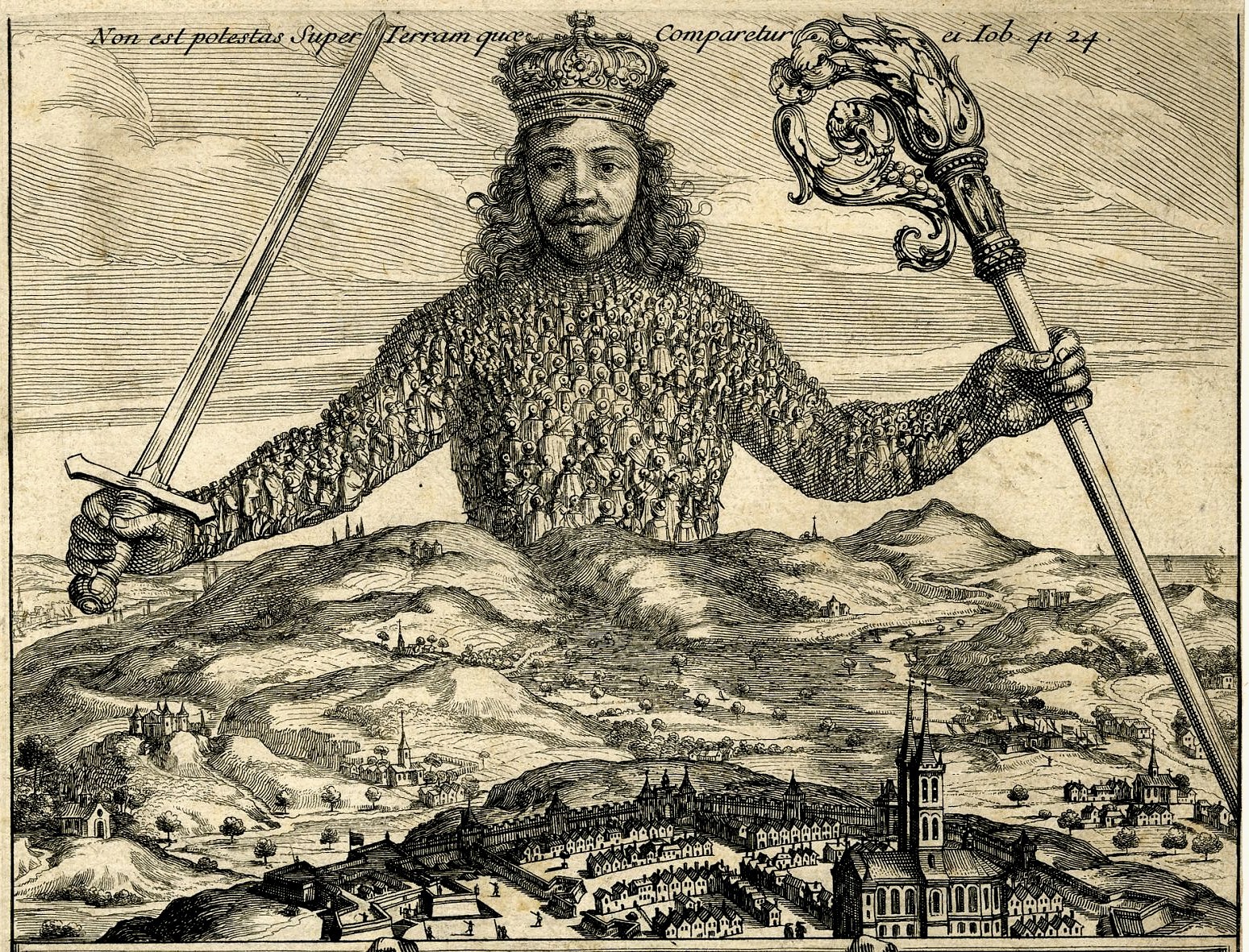
Which person believed in a strong central authority was the only way to avoid the evil of war.
Hobbes
Locke
Machiavelli
Montesquieu

Why was the Declaration of Independence written?
To stop taxes from Great Britain
To make a United States army.
To sever government control from the Great Britain
To install their own king in America
Who was the main author of the Declaration of Independence?
George Washington
James Madison
Thomas Jefferson
Alexander Hamilton
Can a country exist and not be a state?
Yes
No
When citizens choose their representatives for government, and those representatives would do all of the governing for them it's called a _____?
Republic
Constitutional Monarchy
Dictatorship
Citizenship
What kind of legislature was created by the Articles of Confederation?
Unicameral
Bicameral
Tricameral
Quid Pro Quo
Which are complaints the colonists had about the King?
Quartering of soldiers
Taxation without proper representation
Limited their natural right of life, liberty, and property
Forcing them to not buy British goods
Having to fund the War for Independence
Which idea was Montesquieu's biggest contribution?
The separation of church and state
The social contract theory
The need for an absolute ruler
The separation of powers
When citizens vote for a Senator to serve in the government, they are practicing this type of democracy:
Direct democracy
Representative democracy
Absolute democracy
Theocratic democracy
A oligarchy is rule by:
Religion
A small group of people
The people
A monarchy
Which philosopher was most know for his idea that absolute ruler was necessary to control the people?
John Locke
Thomas Hobbes
Montesquieu
Rousseau
A democracy is rule by:
Religion
A small group of people
The people
A monarchy
Which type of government is ruled by one person who took power by force?
Democracy
Monarchy
Theocracy
Totalitarian Dictator
Which type of government is controlled by a one person who gained power through heredity?
Democracy
a Republic
Monarchy
Oligarchy

The people elect government officials to represent them
individual rights
checks and balances
separation of powers
republicanism
If President Biden is pulled over for speeding he too will receive a ticket. This is an example of ...
limited goverment
individual rights
consent of the governed
natural rights
What is the idea that people agree, or consent, to government authority and in return the government protects the people and their rights?
Representative government
Limited government
Consent of the governed
Rule of law
Individual rights
Voting in elections, serving jury duty, and staying informed are examples of what?
Rights
Responsibilities
Opportunities
English
In a __________ democracy, citizens are involved into the day-to-day workings of the government.
Indirect
Direct
Representative
Monarchy
Form of government that recognizes a god or divine being as the ultimate authority.
Oligarchy
Democracy
Anarchy
Theocracy
The form of government where only a small group of people have political rights.
Autocracy
Oligarchy
Democracy
Theocracy
A ______________________ is an implicit agreement among the members of a society to cooperate for social benefits, for example by sacrificing some individual freedom for state protection.
natural law
polity
social contract
democracy
______________ is a form of government in which a small group of people, usually the wealthiest, control the political unit (nation, state, or region).
Democracy
Anarchy
Monarchy
Oligarchy
A ___________ government is one that combines both private and public (state-owned) efforts to assure all citizens have access to necessary products and services but the market is allowed to regulate non-essential items.
Communist
Republican
Liberal
Socialist
____________ is a principle under which all persons, even the most high-ranking, and all institutions, including the government, are accountable to laws that are made public, equally enforced, and upheld by an independent court.
A constitution
The rule of law
Arbitrary rule
Tripartite government
Under a ______________ system, the law may be based on statute and/or precedent, that is the previously accepted practices of the people or the government.
customary law
civil law
religious law
common law
Under a ____________ system, the law relies almost entirely on a written code of laws to decide what actions and interactions are prohibited and which are permitted.
religious law
common law
arbitrary law
civil law
_______________ is an economic and governmental system that seeks to create a classless society in which the major means of production, transportation, retail, and housing are owned by the public as a whole. This often requires a very powerful central authority that exercises authority for the public.
Socialism
Fascism
Communism
Libertarianism
______________ is the principle by which decisions of a group or political unit is managed by the will of the largest number of group members/citizens.
Rule of law
Republicanism
Majoritarianism
Social contract
A ___________________ is a system of government in which the supreme power is held by the people through their elected representatives and which has a nominated or elected head of government (such as a president), under a constitution that provides protections for minorities against a pure rule by majority.
democracy
republic
theocracy
monarchy
______________ is a system of government in which the central authority controls the major means of production but leaves other aspects of the economy open to the market. The central authority also enforces a particular form of nationalism and ethnocentrism, and suppresses criticism and opposition.
Fascism
Socialism
Communism
Anarchism
What was written that separated the American colonies from Great Britain in 1776?
Articles of Confederation
Magna Carta
Declaration of Independence
Mayflower Compact
What document was replaced by the constitution due to it being too weak?
Mayflower Compact
Articles of Confederation
Bill of Rights
The division of power among legislative, judicial and executive branches is called what?
(a)
What states that no one is above the Law?
Judicial Review
Checks balances
Rule of Law
Separation of powers
The Constitution can be amended in order to keep the government responsive to the current needs of the citizens.
Which political philosopher inspired this?
Machiavelli
Plato
Aquinas
Hume
“We hold these truths to be self-evident, that all men are created equal,”
Which political philosopher inspired this?
Hume
Aristotle
Hobbes
Rousseau
“We, the people…” which means that the people always keep their sovereignty.
Which political philosopher inspired this?
Cicero
Machiavelli
Locke
Rousseau
There are three branches to the government; legislative, executive, and judicial.
Which political philosopher inspired this?
Hume
Montesquieu
Locke
Rousseau
“That to secure these rights, Governments are instituted among Men, deriving their just powers from the consent of the governed,”
Which political philosopher inspired this?
Locke
Hume
Machiavelli
Aristotle
Each branch has powers that can check and balance the powers of the other two branches.
Which political philosopher inspired this?
Rousseau
Cicero
Aquinas
Locke
“...it is their right, it is their duty, to throw off such Government, and to provide new Guards for their future security.”
Which political philosopher inspired this?
Hume
Locke
Aquinas
Rousseau

