Wayground logo

Free Printable Worksheets

Font size

S
M
L
XL
Worksheets

APES Unit 1: THe LIving World Ecosystems Review

Total questions: 75

Worksheet time: 2hrs 0mins

Name
Class
Date
1.

An ecosystem consists of ______ and _______ components.

a)

Human

b)

Living

c)

Non-Living

d)

Physical

2.

Abiotic components are

a)

Non-living things

b)

Living things

c)

Plants

d)

Animals

3.
Cattle egrets forage (feed) in fields among cattle. The egret gets easy access to flying insects stirred up by the cattle, and the cattle don't care if they are there or not.
a)
mutualism
b)
commensalism
c)
competition
d)
parasitism
4.
A relationship between two organisms in which one organism benefits and the other is unharmed...
a)
Mutualism 
b)
Competition
c)
Parasitsm 
d)
Commensalism 
5.
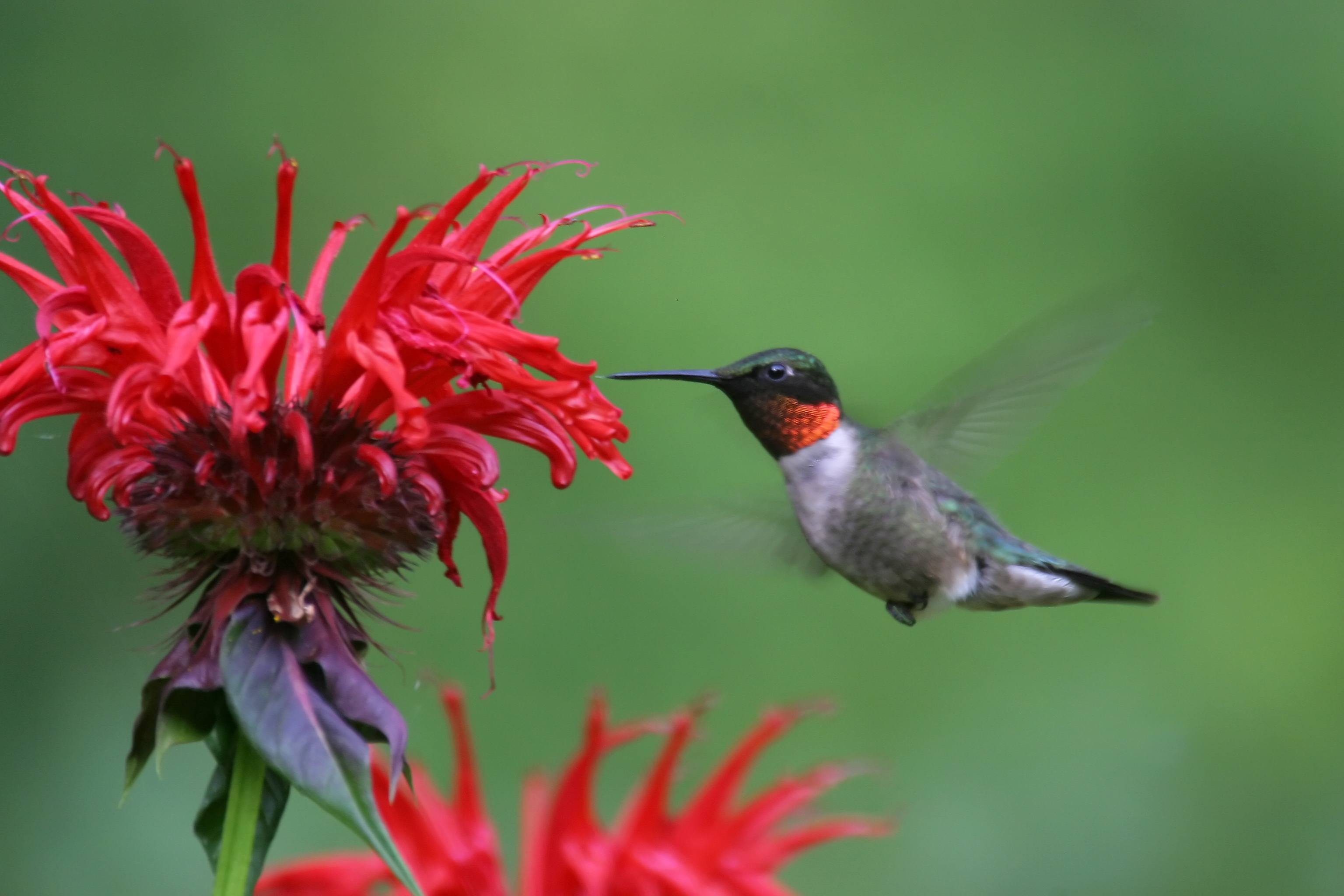
What type of symbiosis?  Hummingbirds feed on nectar from flowers.  The flowers are pollinated by hummingbirds as they move from flower to flower.
a)
commensalism
b)
mutualism
c)
parasitism
d)
predation
6.
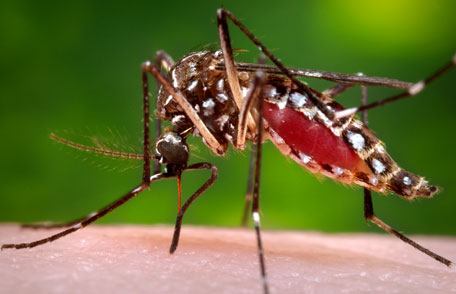
When a mosquito bites you, you are the __________ and the mosquito is the  ____________.
a)
host, hostess
b)
parasite, host
c)
host, parasite
d)
prey, predator
7.

Aphids are tiny insects that live on and eat the leaves of plants, removing vital nutrients from the plants.

a)

Predation

b)

Parasitism

c)

Commensalism

d)

Mutualism

8.
An organism that is killed and eaten by another organism
a)
Predator
b)
Prey
c)
Competition
d)
Adaptation
9.
Barn owls hunt shrews. In this example what is a barn owl?
a)
Herbivore/Predator
b)
Carnivore/Prey
c)
Carnivore/Predator
10.
How do consumers get their energy? 
a)
laying in the sun
b)
eating other organisms 
c)
providing food for other organisms
d)
surviving in an ecosystem 
11.
Which of the following is a herbivore?
a)
cricket
b)
frog
c)
hawk
d)
shrew
12.
How many carnivores are shown in this food web?
a)
6
b)
4
c)
5
d)
3
13.

The ecological role an organism performs in their specific environment is considered the organism's...

a)

Habitat

b)

Population

c)

Biome

d)

Niche

14.

a relationship between two species in which both species compete for limited resources such that both species are negatively affected by the relationship

a)

Symbiosis

b)

interspecific competition

c)

species richness

d)

species-area effect

15.

the differentiation of niches that enables similar species to coexist in a community

a)

character displacement

b)

climax community

c)

resource partitioning

d)

pioneer species

16.
The ecological niches of three bird species are shown in the diagram. What is the advantage of each bird species having a different niche?
a)
As more birds feed higher in the tree, available energy increases.
b)
More abiotic resources are available for each bird.
c)
Predators are less likely to feed on birds in a variety of locations.
d)
There is less competition for food.
17.
Most of the photosynthesis in lakes and ponds occurs in the
a)
benthic zone
b)
littoral zone
c)
limnetic zone
d)
profundal zone
18.
The closer a biome is to the equator, the more we would expect it to be
a)
warmer & wetter
b)
warmer & drier
c)
cooler & wetter
d)
cooler & drier
19.
The tropical rain forest & tropical savanna biomes are similar in ___________, but ________________________________.
a)
temperature / the savannah doesn't receive enough rainfall to be a forest
b)
precipitation / the rain forest is hotter
c)
precipitation / the savanna is cooler
d)
temperature / the rain forest doesn't receive enough sunlight to be a savanna
20.
Terrestrial biomes are defined mainly by their
a)
climate & plants
b)
climate & animals
c)
animals & plants
d)
climate only
21.
The most biodiverse biome is: 
a)
Taiga
b)
Chaparral
c)
Savanna
d)
Tropical Rainforest
22.
Look at the following graph to determine biome
a)
Savanna Grassland
b)
Chapparal
c)
Desert
d)
Tundra
23.
The most important abiotic factors when studying biomes are...
a)
Food and Water
b)
Water and Sunlight
c)
Temperature and Oxygen
d)
Precipitation and Temperature 
24.
What are the 2 types of aquatic biomes?
a)
rivers and streams
b)
lakes and oceans
c)
marine and fresh water
d)
marine and oceanic
25.
What are the 2 types of freshwater biome?
a)
pond and lake
b)
river and stream
c)
marine and oceanic
d)
running water and still water
26.
phytoplankton are
a)
tiny autotrophic organisms in water
b)
large plants 
c)
tiny heterotrophic organisms in water
d)
large animals
27.
What does not produce carbon dioxide?
a)
Photosynthesis
b)
Burning Fossil Fuels
c)
Animal respiration
d)
Plants decaying
28.
Which of the following removes carbon from the atmosphere?
a)
Combustion
b)
Respiration
c)
Photosynthesis
d)
Death
29.

The amount of primary productivity generated by all producers in a given ecosystem is called __________________________________

a)

Gross primary production

b)

Net primary production

c)

Total cell respiration

d)

Trophic levels

30.
.What is the effect of deforestation on the carbon cycle? 
a)
 Increase in the amount of CO2 in the atmosphere  
b)
Decrease in the amount of CO2 in the atmosphere 
c)
Increase in the amount of photosynthesis 
d)
Deforestation has no impact on the carbon cycle 
31.
Which one of these does not add CO2 to the atmosphere?
a)
cooking with gas
b)
planting trees
c)
burning wood
d)
riding in a bus
32.
Why is the ocean important to the carbon cycle?
a)
It keeps sediment containing carbon underwater for millions of years
b)
The ocean gives out more carbon then it takes in (increases global warming)
c)
The ocean isn't important to the carbon cycle.
33.

Which of the following is the most abundant gas in the atmosphere?

a)

Oxygen

b)

Nitrogen

c)

Argon

d)

Hydrogen

e)

Helium

34.

The largest reservoir of nitrogen is the:

a)

Oceans

b)

Rivers

c)

Rock, Lithosphere & Land

d)

Atmosphere

35.

Nitrogen is added to the atmosphere by:

a)

Denitrification

b)

Fixation

c)

Reduction

d)

Oxidation

36.

Nitrogen is removed from the atmosphere by:

a)

Denitrification

b)

Fixation

c)

Reduction

d)

Oxidation

37.
What is the process of combining nitrogen gas with other elements to make nitrogen into usable compounds?
a)
nitrogen composition
b)
ammonia 
c)
nitrogen fixation
d)
denitrification
38.
Organisms that break down dead plants & animals and release nitrogen back into atmosphere...
a)
bacteria
b)
plants
c)
animals
d)
producers
39.
Organisms that need nitrogen to survive
a)
only plants
b)
only animals
c)
only bacteria
d)
all living organisms
40.
If the atmosphere is 78% N2, why can't we just get our nitrogen by breathing?
a)
We have no mechanism to break the triple bond of nitrogen between the atoms.
b)
Our lungs would be damaged by the N2.
c)
We need Oxygen for cellular respiration.
d)
The legumes take it up first.
41.
_____ is the conversion of organic nitrogen into ammonia
a)
Nitrogen Fixation
b)
Ammonification
c)
Denitrification
d)
Assimilation 
42.
Nitrification happens in the ______
a)
Air 
b)
Soil 
c)
Ground Water 
d)
Plants 
43.

This is NOT a part of the phosphorus cycle.

a)

Phosphate is incorporated into sedimentary rocks

b)

Phosphate bound to soil

c)

Atmospheric phosphate

d)

Phosphate is absorbed from the soil by plants

44.
_____ brings phosphorous into our waterways. .
a)
precipitation
b)
runoff
c)
transpiration
d)
condensation
45.
Which of the following statements is true of the phosphorus cycle?
a)
Phosphorus enters the atmosphere as phosphates.
b)
The phosphorus cycle utilizes the processes of erosion, and weathering.
c)
Phosphates are used in carbohydrate and glucose storage.
d)
The phosphorus cycle utilizes bacteria to breakdown phosphates and make them available for plants.
46.

Too much phosphorus in waterways (rivers, lakes) can lead to___________.

a)

eutrophication

b)

Nothing

c)

Death

d)

diseases

47.
97% of the water on earth is _________, making it undrinkable for humans.
a)
fresh water
b)
ground water
c)
salt water
d)
surface water
48.
What is it called when plants give off water vapor as a waste product?
a)
condensation
b)
evaporation
c)
sublimation
d)
transpiration
49.
The supply of freshwater under the Earth's surface.
a)
watershed
b)
mouth
c)
headwaters
d)
groundwater
50.
__________productivity = the organic materials that remain after photosynthetic organisms in the ecosystem have used some of these compounds for their cellular energy needs (cellular respiration).
a)
Gross
b)
Primary
c)
Net
d)
Secondary
51.

Ecological efficiency from one trophic level to the next is generally:

a)

1%

b)

10%

c)

75%

d)

90%

52.
Autotrophs
a)
use photosynthesis
b)
are able to survive without oxygen
c)
cannot assimilate carbon
d)
are at the top of the food chain
53.
Ecosystem boundaries are
a)
based primarily on topographic features
b)
boundaries to nutrient flows
c)
only used for ecosystems smaller than a few square hectares
d)
depend on many subjective factors
54.
At which trophic level do organisms use a process that produces oxygen as a waste product?
a)
Producers
b)
decomposers
c)
primary consumers
d)
secondary consumers
55.
The arrows in a food chain or web represents what?
a)
They point to the organism that is being eaten.
b)
It shows how sunlight flows within an ecosystem.
c)
They show what direction the energy is flowing between organisms. 
d)
They represent how water is transferred within a habitat.
56.
Eat primary consumers (can be carnivores and omnivores)
a)
Tertiary Consumers
b)
Secondary Consumers
c)
Quaternary Consumers 
d)
Top Predators 
57.
Which organism do the owl and the weasel compete for in the food web?
a)
Hawk
b)
Spider
c)
Grasshopper
d)
Shrew
58.

In which biome would you expect to find an area with an average temperature of 10oC and 200 cm of precipitation annually?

a)

Temperate seasonal forest

b)

Temperate rainforest

c)

Woodland/shrubland

d)

Tropical seasonal forest

59.

A positive feedback loop occurs

a)

when a system responds to a change by returning to its original state

b)

when feedback into a system decreases a rate of response

c)

when a system is in a steady state

d)

when feedback into a system increases a rate of response

60.

Which best describes the concept of net primary production?

a)

total amount of energy available from the Sun

b)

total amount of cellular respiration conducted within an ecosystem

c)

energy captured minus energy lost

d)

total amount of energy available from the producer

61.

What is a herbivore?

a)

receives energy from the sun

b)

only eats meat

c)

only eats plants

d)

eats both plants and meat

62.
What may happen if the snowshoe hare was removed from the food web pictured?
a)
The insects in the habitat would increase.
b)
The shrew population would decrease due to being only hawk food source.
c)
The willow tree population would decrease.
d)
Foxes would dies due to no food source. 
63.
A secondary consumer 
a)
eats primary consumers
b)
eats producers
c)
eats plants
64.
All the organisms on earth get their energy directly or indirectly from?
a)
Oxygen
b)
Water 
c)
Nitrogen
d)
The Sun
65.

What does a biomass pyramid compare?

a)

the amount of biomass at each trophic level

b)

the amount of energy available at each trophic level

c)

the amount of biomass consumed at each trophic level

d)

the amount of individuals at each trophic level

66.

Organisms that die in the ocean may __________ to the bottom and form limestone rock of a period of time.

a)

sink

b)

float

c)

rise

d)

increase

67.

How much freshwater on Earth is accessible for use?

a)

.02%

b)

2%

c)

20%

d)

97%

68.

_____________ states that energy cannot be created or destroyed. It can only be changed from one form to another.

a)

1st law of thermodynamics

b)

2nd law of thermodynamics

69.

___________ states that energy quality always decreases.

a)

1st law of thermodynamics

b)

2nd law of thermodynamics

70.
The idea that no two species within an ecosystem can occupy the exact same niche
a)
niche overlap
b)
niche differentiation
c)
competitive exclusion
d)
niche decay
71.
When put together, one organism outcompetes the other for resources.  This is an example of:
a)
competitive exclusion principle
b)
speciation
c)
biological niche
d)
evolution
72.
This is known as the set of resources a population is theoretically capable of using in the wild.
a)
niche
b)
realized niche
c)
fundamental niche
d)
competition
73.

Which of these is an example of intraspecific competition?

a)

Hyenas fighting one another for access to food

b)

Barnacles and oysters competing for space on the rocky shore

c)

Eucalyptus trees secreting chemicals that kill of nightshade plants

74.
A connection of food chains with many food energy paths in an ecosystem is a ____________
a)
ecosystem
b)
food web
c)
environment
d)
population
75.

Which of the following biomes has the highest NPP?

a)

Tundra

b)

Temperate Deciduous Forest

c)

Tropical Rain Forest

d)

Savanna