Wayground logo

Free Printable Worksheets

Font size

S
M
L
XL
Worksheets

Alabama Biology Standard 2 Study Guide

Total questions: 27

Worksheet time: 17mins

Name
Class
Date
1.

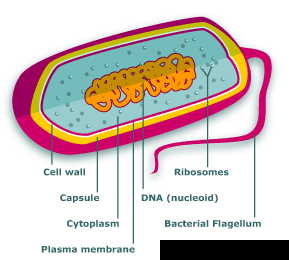
Organisms whose cells do not have a nucleus are called _____.

a)

Eukaryotes

b)

Unicellular

c)

Multicellular

d)

Prokaryotes

2.
What three things do ALL cells have?
a)
Cytoskeleton, Cell membrane, vacuole
b)
DNA, ribosome, nucleus
c)
Cell wall, cytoskeleton, golgi apparatus
d)
Cell membrane, cytoplasm, DNA
3.
What type of cells have a cell wall and chloroplasts?
a)
Plant cells
b)
Animal cells
c)
Plant and animal cells
d)
Neither plant NOR animal cells
4.
Controls what enters and exits the cell, like a fence
a)
Cell membrane
b)
Cytoplasm
c)
Nucleus
d)
Ribosome
5.
Jelly-like substance that holds all the organelles in place
a)
Cytoplasm
b)
Cytoskeleton
c)
Nucleus
d)
Cell membrane
6.
Break down molecules and dead organelles, works like a “garbage disposal”
a)
Mitochondria
b)
Vacuole
c)
Lysosome
d)
Ribosome
7.
“Powerhouse” of the cell, breaks food down into energy for the cell
a)
Vacuole
b)
Chloroplast
c)
Nucleus
d)
Mitochondria
8.

What is the role of the cell/plasma membrane?

a)

controls the activities of the cell

b)

controls movement of substances into and out of the cell

c)

contains genetic materials

9.

Which do BOTH prokaryotes and eukaryotes contain?

a)

nucleus

b)

mitochondria

c)

ribosomes

d)

cell wall

10.

Which does only eukaryotic cells contain?

a)

nucleus

b)

DNA

c)

cell membrane

d)

ribosomes

11.

Prokaryotic cells do not have...

a)

membrane bound organelles

b)

cell membrane

c)

DNA or RNA

d)

life

12.

Which cell type tends to be smaller and more simple?

a)

Prokaryote

b)

Eukaryote

13.

Bacteria is an example of a(n)

a)

prokaryotic cell.

b)

eukaryotic cell.

14.

The smallest unit of a living thing are

a)

atoms

b)

cells

c)

DNA

d)

organelles

15.
Which type of cell?
a)
Prokaryote
b)
Eukaryote
16.
Where is the DNA found in a eukaryotic cell? 
a)
floating around in the cytoplasm 
b)
in the nucleus 
17.
All cells come from___________ cells.
a)
pregnant
b)
pre-existing
c)
paternal
d)
pin size
18.
______________ are the basic unit of life.
a)
DNA
b)
RNA
c)
Cells
d)
Takis
19.
Why are microscopes important when studying most cells?
a)
Most cells are very large.
b)
Most cells are very small.  
c)
Most cells move very quickly.
d)
Most cells are dead.  
20.
The basic unit of life is called a (n)
a)
atom
b)
compound
c)
cell
d)
energy
21.
True or False: there are more than two scientist who contributed to the cell theory
a)
True 
b)
False
22.

____ is credited with being the first scientist to observe cork cells.

a)

Hooke

b)

Leewenhoek

c)

Schwann

d)

Virchow

23.

Schwann and Schleiden discovered that

a)

all cells come from preexisting cells

b)

cells are the basic unit of life

c)

all living things are made of cells

24.

All of the following organelles deal with either making, moving, or shipping proteins EXCEPT

a)

Ribosomes

b)

Rough ER (Endoplasmic Reticulum)

c)

Mitochondria

d)

Golgi Body

25.

Which cell organelle/structure is responsible for making proteins?

a)

Golgi Body

b)

Endoplasmic Reticulum

c)

Nucleus

d)

Ribosome

26.

The Golgi Apparatus

a)

modifies proteins to be shipped (moved) out of the cell through a vesicle

b)

makes proteins through protein synthesis

c)

codes for traits and proteins

d)

holds the genetic information

27.

This membrane bound organelle has small, round structures on the outside of the membranes making the organelle appear "bumpy" or rough. Which cell organelle is being observed?

a)

Smooth ER

b)

Rough ER

c)

Golgi Body

d)

Nucleus