
 Worksheets
Grand quiz for grade8
Total questions: 50
Worksheet time: 23mins
What do you call a scientist who studies objects in space?
meteorologist
astronomer
astronaut
Most distances in space and to stars outside of our solar system are measured using.....
light-years
astronomical units
feet
meters
A large group of stars, gas, and dust is called....
a universe
a cluster
a galaxy
a solar system
The sun provides the Earth with…
Heat and light
Light and darkness
Heat and cold temperatures
Light and cold temperatures
Which planet is the largest planet in the solar system?
Earth
Jupiter
Neptune
Mercury

The star which appears stationary from the earth
Pole star
Shooting Stars
Sirius
Alpha Centauri
how many stars are there in the constellation 'THE GREAT BEAR' ?
5
6
7
8
which of the following constellation is like a distorted form of letter W or M?
Big dipper
Small dipper
Cassiopeia
Sirius
The changes in the moon's appearance is called
Earth
Solar system
Moon phases
Constellation
Why do seasons occur?
Because of the distance earth is from the sun
Because earth tilts on its axis
Because earth rotates on its axis
Because earth is surrounded by air

In the diagram, which letter represents the angle of incidence?
A
B
C
D

Which diagram represents specular reflection?
A
B
According to the laws of reflection, if i = angle of incidence and r = angle of reflection,

A straight glass rod appears to bend when placed in a beaker of water, as shown in the diagram below. What is the best explanation for this phenomenon?
The water is warmer than the air
Light travels faster in water than in air
Light is reflected at the air-water interface
Light is refracted as it crosses the air-water
interface

What is a Spectrum?
A band of 7 colors
A group of 10 colors
A band of 10 colors
A mixture of 7 colors
The breaking up of white light into its component .
Based on the statement given, name the process that takes place in the white light.
Dispersion
Reflection
Refraction
Scattering
This is the example of dispersion of light
sky looks bright orange in the evening
shadow
Pool seems shallower
rainbow
Convex lens is used to correct this defect.
(a)
bifocal lens is used to correct this defect.
Myopia
hypermetropia
cataract
presbyopia
this problem arises due to foggy or cloudy lens .
presbyopia
myopia
cataract
hypermetropia

What structure of the eye controls the size of the pupils?
Ciliary Muscles
Iris
Lens
Retina

What is the function of the Lens?
Lining of the back of the eye that contains light receptor cells.
Regulates how much light enters the eye
Tough, transparent, protective coating that bends light as it enters the eye
Focuses light onto the retina

What happens to your eyes if you are in a dark room?
Your Iris will narrow to allow more light in
Your pupils will widen to let in more light
Your pupils will narrow to let in more light
This structure is the outer coating of the front of the eye ball.
Cornea
Lens
Retina
Optic Nerve
This structure is the back of the eye and it sends images to the optic nerve.
Cornea
Lens
Retina
Pupil
This structure sends images to the brain so we see the image correctly.
Iris
Optic Nerve
Cornea
Lens
This structure is the colored part of the eye.
Pupil
Iris
Retina
Optic Nerve
This structure is the black, center part of the eye. Light enters the eye here.
Iris
Optic Nerve
Pupil
Lens
A place where no sound exists is...
in the air.
under water.
space.
all of the above
When people speak their ________ vibrate.
Ear drums
Vocal chords
Ears
Tongue
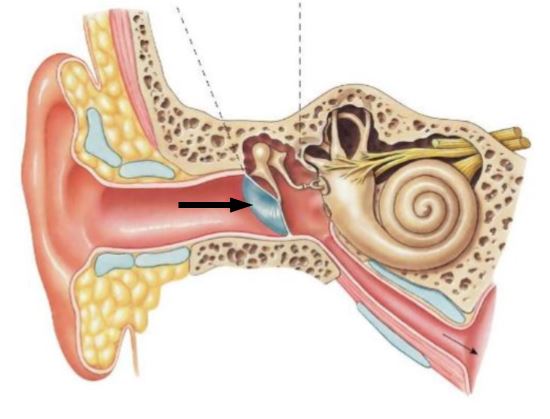
What is this?
Ear Drum
Ear Canal
Nerve
Cochlea

flute
piano
cello
keyboard
What is the unit that is used to measure the intensity of sound?
decibel
frequency
Hertz
wavelength
................should be created around hospitals
schools
silent zone
ground
Restrict the use of ............in public places
loud speakers
schools
music
The sound level which is comfortable for the human ear.
80-85 decibels
120-125 decibels
60-65 decibels
100-105 decibels
What is the lowest sound the average 20yrs old can hear?
5Hz
10Hz
20Hz
40Hz

What is noise pollution?
Dirty things in the air
Unwanted sounds
Dirty water in the river
Which one is not a cause of noise pollution?


How do we get affected by noise pollution? Choose 2.
Our sleep gets disturbed
Our music gets nicer
Our ear drums get torn
Our health gets better
What are the three tiny bones in the middle ear? Check all that applies.
anvil
cochlea
hammer
stapes

What type of Pollution do you see above?
Land
Soil
Light
Noise

