
 Worksheets
Periodicity and stability
Total questions: 49
Worksheet time: 44mins
How many electrons go in the first shell (ring) ?
6
8
4
2

This is a Bohr Diagram of Aluminum. How many valence electrons does Aluminum have?
3
4
5
How many valence electrons does Tin (Sn) have?
8
7
5
4
How many valence electrons does Lithium (Li) have?
8
1
5
2
How many valence electrons does Bromine (Br) have?
5
6
7
8
Which of these is incorrect?


Which of these is correct?


Which element is this?
Nickel
Neon
Sodium
Nitrogen

What is this element?
Beryllium (atomic #4)
Boron (atomic #5)
Carbon (atomic #6)
Nitrogen (atomic #7)

How many valence electrons?
2
3
4
5
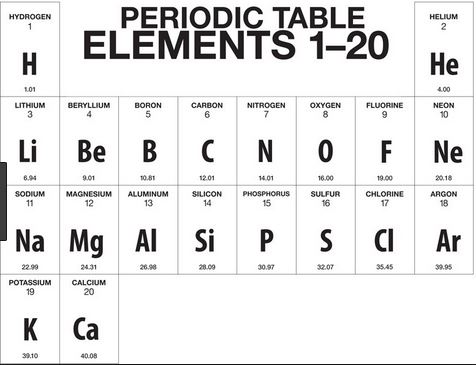
How many valence electrons does Helium Have?
1 Valence electron
2 Valence electron
3 Valence electron
4 Valence electron
5 Valence electron
How many valence electrons does Magnesium Have?
1 Valence electron
2 Valence electron
3 Valence electron
4 Valence electron
5 Valence electron
How many valence electrons are found in atoms of group 14?
4
3
14
16
Which elements have the most similar chemical properties?
boron and carbon
oxygen and sulfur
aluminum and bromine
argon and silicon
When trying to identify an unknown element, a scientist determines what other elements reacts with chemically. Which property of the unknown element determines the other element it reacts with?
The total number of neutrons in the unknown element
The total number of particles in the nucleus of the unknown element
The number of protons in the nucleus of the unknown element
The number of valence electrons in the unknown element
What group is the most reactive metals?
2
18
1
16
What group is the most reactive non metals?
1
17
2
1
Why are halogens so reactive?
They want to get rid of their only valance electron
They only need one more electron
They are non reactive, they have a full shell
How do electrons of an element determine that element's reactivity?
If the valence shell has missing electrons it is very reactive to attract or lose more electrons.
If the valence shell has a full ring of electrons it is very reactive because it needs more.
If the valence shell has a full shell of electrons it is very reactive because it is already full.
If the valence shell has missing electrons it is not reactive because it is missing electrons.
Appear Vertically on the periodic table
Periods
Groups
Which statement is NOT accurate describing the element krypton?
The element has 36 protons
The element has 48 neutrons
The element has 6 valence electrons
The element has properties similar to neon

Where are valence electrons located on the model?
Near the nucleus
In the middle of the atom
At the innermost level
At the outermost level
Which of the following is a correct electron dot structure?


Which of the following is the correct electron dot structure for nitrogen?


What are the elements (Be, Mg, Ca,...) in Group 2 called?
Alkali metals
Alkaline earth metals
Halogens
Noble Gases

USE THE PERIODIC TABLE
How many dots would an electron dot diagram for Calcium (Ca) have?
(Click on image to enlarge it or use your own periodic table.)
20
2
40
4
The _____ the element is in determines the number of valence electrons it has.
period/row
group/column
According to the Octet Rule, atoms of elements react with each other in order to attain ____ electrons in their outermost energy level or shell.
2
4
6
8
10

All of the elements in column 18 or group 8A have 8 electrons EXCEPT ______, which is actually stable with only 2 electrons.
Hydrogen
Helium
Neon
Fluorine
States that atoms react in order to become stable like a noble gas.
octet rule
electron rule
ionic rule
coordination rule

What is the chemical formula of this substance?
HO
OH
H2O
H2O2

What family is highlighted in the picture?
Alkali Metals
Alkaline Earth Metals
Halogens
Noble Gases

What family is highlighted in the picture?
Alkali Metals
Alkaline Earth Metals
Halogens
Noble Gases

What family is highlighted in the picture?
Boron Group
Alkaline Earth Metals
Transition Metals
Lanthanides

What family is highlighted in the picture?
Boron Group
Halogens
Transition Metals
Noble Gases

What family is highlighted in the picture?
Lanthanides
Actinides
Transition Metals
Halogens

What family is highlighted in the picture?
Lanthanides
Actinides
Transition Metals
Halogens
What group of metals is the MOST reactive?
Transition Metals
Metalloids
Alkaline Earth Metals
Alkali Metals

What type of elements are green in the picture?
Nonmetals
Metals
Metalloids
What type of elements are blue in the picture?
Nonmetals
Metals
Metalloids

