

Wayground logo

Free Printable Worksheets

Font size

S
M
L
XL
Worksheets

KS3 Energy quiz

Total questions: 30

Worksheet time: 49mins

Name
Class
Date
1.

Energy is measured in what units?

a)

Hertz

b)

Watts

c)

Joules

d)

Newtons

2.

What is power measured in?

a)

Joules

b)

Hertz

c)

Watts

d)

Newtons

3.

What is the unit of temperature?

a)

volts

b)

degrees celcius

c)

metres

d)

amps

4.

What do we use to measure temperature?

a)

stop watch

b)

ruler

c)

thermometer

d)

voltmeter

5.

How many watts in a kilowatt?

a)

10

b)

100

c)

1000

d)

10000

6.

What is the unit of energy

a)

N

b)

kg

c)

J

d)

W

7.

What is the law that states "energy can neither be created nor destroyed; rather, it can only be transformed or transferred from one form to another"?

a)

Consumption of energy

b)

Conservation of energy

c)

Conversion of energy

d)

Conversation of energy

8.

Which of these are fossil fuels?

a)

Coal

b)

Oil

c)

Gas

d)

All of the above

9.

Wind, solar and waves are examples of:

a)

Renewable energy resources

b)

Non renewable energy resources

c)

Fossil fuels

d)

Finite energy resources

10.

Which of these is not a store of energy?

a)

chemical energy store

b)

thermal energy store

c)

kinetic energy store

d)

electrical energy store

11.
Gravitational potential energy depends on the ________ and ________ of the object. 
a)
Height and mass
b)
Friction and movement
c)
Mass and Movement
d)
Height and Friction 
12.
When an object is moved to a higher position, what name is given to the energy it then stores?
a)
Gravitational Potential
b)
Elastic
c)
Height
d)
Kinetic
13.
Energy due to motion is ____________ energy. 
a)
Potential 
b)
Energy
c)
Kinetic
d)
Friction
14.
What type of energy is stored in food and fuel?
a)
Chemical
b)
Thermal
c)
Potential
d)
Calories
15.
A cat is sleeping on a tree branch. What type of energy does the cat possess?
a)
kinetic energy
b)
gravitational energy
c)
elastic energy
16.
Where is the potential energy the greatest?
a)
A
b)
B
c)
C
d)
D
17.
When a moving car slows down, a lot of the kinetic energy is transferred by forces to a thermal energy store in the brakes.
a)
TRUE
b)
FALSE
18.
You hit the brakes on your bike. The bike slows down and the brake pads increase in temperature.
What type of energy decreased when you hit the brakes?
a)
kinetic energy
b)
gravitational energy
c)
elastic energy
d)
thermal energy
19.
In which of these cases is work being done? 
a)
A student sleeps
b)
A student pushes a locked door that does not move
c)
a student carries his chair into another room
d)
A student sits on the carpet
20.
What is the name for energy stored in a hot object?
a)
Thermal
b)
Potential
c)
Fire
d)
Electrical
21.
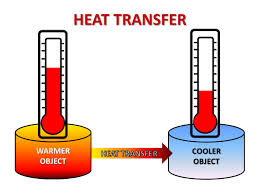
Heat transfers from an area of ____temperature to an area of ___ temperature.
a)
high to low
b)
low to high
c)
high to high
d)
It can travel high to low and low to high. 
22.

What will transfer energy more quickly?

a)

Insulators

b)

Conductors

23.
The handle of a frying pan is often coated in rubber because rubber provides...
a)
Heat insulation
b)
Heat conduction
c)
A low melting point
d)
A nonstick surface
24.

An example of an insulator would be:

a)

Plastic

b)

Metal

25.
Is iron a conductor or insulator?
a)
Conductor
b)
Insulator
26.

Particles in cool objects vibrate ________ those in hotter objects.

a)

slower than

b)

longer than

c)

faster than

d)

as much as

27.
Warm air is __________ dense than cold air and rises creating convection currents.
a)
more
b)
less
28.
What is the definition of CONDUCTION?
a)
When heat is transferred from objects like rays of light or electromagnetically.
b)
a  hot liquid or air that  expands, becomes less dense, and rises or becomes more dense, and sinks.
c)
When heat transfers from objects that are touching.
d)
When heat transfers through the heater or AC in your house.
29.
What is the definition of CONVECTION
a)
When heat transfers through waves.
b)
When heat transfers from objects that are touching.
c)
a  hot liquid or air that  expands, becomes less dense, and rises or becomes more dense, and sinks.
d)
Heat traveling from the sun
30.

When two objects reach the same temperature, they are said to be in

a)

pairs

b)

equal

c)

equilibrium

d)

transfer
