wayground logo

Bảng tính có thể in miễn phí

Cỡ chữ

S
M
L
XL
bảng tính

Unit 2: the Science of Chemistry

Total câu hỏi: 95

Worksheet time: 47mins

Tên
Lớp học
Ngày
1.

Molecules bonded together make up atoms.

a)

true

b)

false

2.

How many atoms make up one molecule of laughing gas?

a)

1

b)

2

c)

3

d)

4

3.

When we combined vinegar and baking soda and created carbon dioxide what was the product?

a)

vinegar

b)

carbon dioxide and baking soda

c)

carbon dioxide

d)

vinegar and baking soda

4.
What kind of change is a phase change?
a)
Physical - it's still the same substance
b)
chemical - it's made of chemicals 
5.
A chemical change happens when...
a)
a substance is changed at the atomic level 
b)
bonds are broken and formed 
c)
a new substance is made
d)
all of the above! 
6.
The compounds or elements present at the end of a reaction 
a)
reactants
b)
catalyst
c)
products
d)
energy 
7.
The compounds and elements that are present at the beginning of a reaction:
a)
reactants
b)
catalyst
c)
products
d)
energy 
8.
What is a reactant?
a)
The starting substance
b)
The ending substance
9.
Using the following chemical reaction
Hydrogen + Oxygen --> water
Identify the reactant(s).
a)
Hydrogen and Oxygen
b)
water
10.
Angelina mixes 2 substances together in a beaker. The beaker becomes hot and the liquid changes color.
Did a chemical reaction occur?
a)
yes, because the properties changed and a new substance was made.
b)
no, because the properties did not change.
11.
What is a precipitate?
a)
a change in color 
b)
a change in temperature
c)
a solid formed
d)
a gas formed
12.
Burning is always a chemical reaction.
a)
True
b)
false
13.
Sandra was burning a vanilla candle. Was there a chemical reaction?
a)
no, because burning is never a chemical reaction.
b)
Yes, because the properties of the wick changed.
c)
yes, because heat was added.
d)
no, because the ash formed was a different substance.
14.
Which of the following is NOT a chemical reaction?
a)
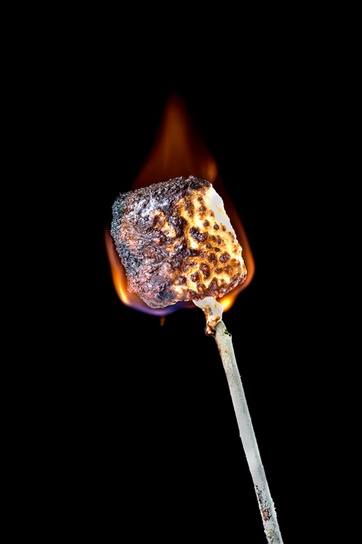
burning a marshmallow in a campfire.
b)
a campfire
c)
acid rain turning a copper roof green.
d)
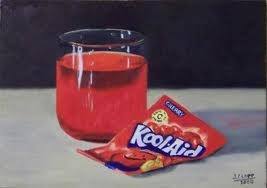
Dissolving red Koolaid in water.
15.
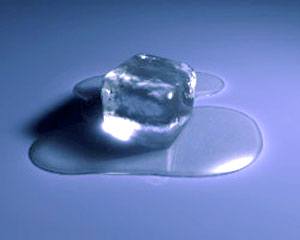
Ice melting
a)
Chemical Change
b)
Physical Change
16.
Water freezing
a)
Chemical Change
b)
Physical Change
17.
Cake batter baked in an oven
a)
Chemical Change
b)
Physical Change
18.
Glass bottle that is shattered
a)
Chemical Change
b)
Physical Change
19.
Is melting butter for popcorn a chemical or physical change?
a)
chemical
b)
physical
20.

Tearing paper into small pieces is an example of a

a)

Mixture

b)

Physical change

c)

Chemical change

21.

Which of the following is a chemical change?

a)

Cutting bread

b)

Slicing carrots

c)

Melting butter

d)

Soured milk

22.

Heating a solid until it changes color and produces an odor, and noting the solid cannot be changed back is an example of

a)

Physical Change

b)

Chemical Change

23.
Sodium Hydroxide dissolves in water
a)
Chemical Change
b)
Physical Change
24.

A Chemical Change is also known as what?

a)

Physical Change

b)

Physical Property

c)

Chemical Reaction

d)

Chemical Property

25.

Which of the following could indicate that a chemical change took place?

a)

Change in color

b)

Production of Energy

c)

Formation of Gas

d)

All are correct

26.

Identify what type of change happening in the picture below...

a)

Chemical Reaction

b)

Physical Change

c)

Change in State

d)

Change in appearance only

27.
The ability to burn is a ___ property.
a)
physical
b)
chemical
c)
conservitive
d)
reversed
28.

A characteristic that can be observed using our senses is a ___.

a)

chemical property

b)

physical property

c)

melting point

d)

chemical change

29.
A change in a substance that only affects size, shape or state of matter.
a)
chemical change
b)
physical change
c)
chemical property
d)
endothermic
30.

100 degrees Celsius is the boiling point of water, which is a ---

a)

Physical property

b)

Chemical property

31.

Reactivity, like burning, bubbling, or fizzing, is a ---

a)

Chemical property

b)

Physical property

32.

Ductility is the ability to be stretched into thin wires, which is a ---

a)

Chemical property

b)

Physical property

33.

The ability to combust, or explode, is a ---

a)

Chemical property

b)

Physical property

34.

Malleability is the ability to be flattened into thin sheets, which is a ---

a)

Physical property

b)

Chemical property

35.

Color is a ---

a)

Physical property

b)

Chemical property

36.

A characteristic of matter that can only be observed when matter is changed into a new kind of matter is called a ---

a)

Chemical property

b)

Physical property

37.

Is the following a pure substance or mixture? Baking Soda ( NaHCO3NaHCO_3 

a)

pure substance

b)

mixture

38.

Is the following an element or compound? A silicon (Si) chip.

a)

element

b)

compound

39.

Is the following an element or compound? hydrogen peroxide (H2O2)

a)

element

b)

compound

40.

Is the following a homogeneous or heterogeneous mixture? coffee mixed with cream and sugar

a)

homogeneous mixture

b)

heterogeneous mixture

41.

Is the following homogeneous or heterogeneous? Fruit salad

a)

homogeneous mixture

b)

heterogeneous mixture

42.

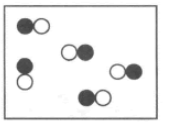
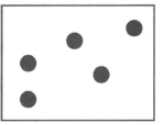
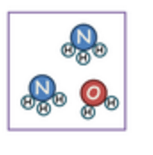
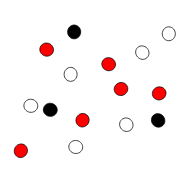
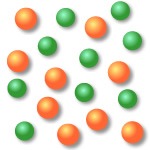
Classify the particle diagram.

a)

element

b)

compound

c)

mixture of elements

d)

mixture of compounds

e)

mixture of elements and compounds

43.

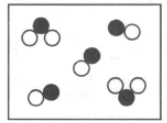
Classify the particle diagram.

a)

element

b)

compound

c)

mixture of elements

d)

mixture of compounds

e)

mixture of elements and compounds

44.

Classify the particle diagram.

a)

element

b)

compound

c)

mixture of elements

d)

mixture of compounds

e)

mixture of elements and compounds

45.

Classify the particle diagram.

a)

element

b)

compound

c)

mixture of elements

d)

mixture of compounds

e)

mixture of elements and compounds

46.

Classify the particle diagram.

a)

element

b)

compound

c)

mixture of elements

d)

mixture of compounds

e)

mixture of elements and compounds

47.

How would you classify this image?

a)

homogeneous mixture

b)

heterogeneous mixture

48.

How would you classify this image?

a)

homogeneous mixture

b)

heterogeneous mixture

49.

Is the following a pure substance or mixture? Brass (Cu and Zn)

a)

pure substance

b)

mixture

50.

How would you classify this image?

a)

homogeneous mixture

b)

heterogeneous mixture

51.
A combination that can be separated by physical processes is a .....
a)
Pure Substance
b)
Glucose
c)
Element
d)
Mixture
52.
A mixture that is NOT evenly distributed is called ....
a)
Compounded
b)
Homogenous
c)
Heterogenous
d)
Salty
53.
Substance with atoms that are all alike.
a)
element
b)
compound
c)
homogeneous mixture
d)
heterogeneous mixture
54.
This picture represents: 
a)
Element
b)
Compound
c)
Mixture of Elements
d)
Mixture of Compounds
55.
This picture represents: 
a)
Element
b)
Compound
c)
Mixture of Elements
d)
Mixture of Compounds
56.
All matter is made up of .....
a)
Compounds
b)
Atoms
c)
Molecules
d)
Sunshine
57.
This picture represents: 
a)
Element
b)
Compound
c)
Mixture of Elements
d)
Mixture of Compounds
58.
Which of the following would you use to separate sand from iron?
a)
a bar magnet
b)
paper
c)
hot plate
59.
Which of the following is an element?
a)
Sugar
b)
Salt
c)
Water
d)
Oxygen
60.
Which one of these pictures represents a pure substance? 
a)
1 and 2
b)
1 and 3
c)
2 and 3
d)
1, 2 and 3
61.
Aluminum
a)
Element
b)
Compound
c)
Homogeneous Mixture
d)
Heterogeneous Mixture
62.
Carbon
a)
Element
b)
Compound
c)
Homogeneous Mixture
d)
Heterogeneous Mixture
63.
O2
a)
Element
b)
Compound
c)
Homogeneous Mixture
d)
Heterogeneous Mixture
64.
NaCl
a)
Element
b)
Compound
c)
Homogeneous Mixture
d)
Heterogeneous Mixture
65.
Sweet Tea
a)
Element
b)
Compound
c)
Homogeneous Mixture
d)
Heterogeneous Mixture
66.
This picture represents which of the following?
a)
element
b)
compound
c)
mixture
67.

What type of mixture is black ink?

a)

heterogeneous mixture

b)

homogeneous mixture

68.

True or False: The two types of pure substances are elements and compounds.

a)

True

b)

False

69.
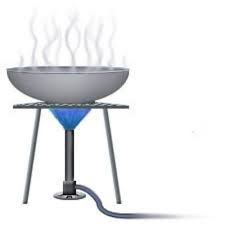
Name the separation method that causes wet clothes on a clothes line to dry
a)
Chromatography
b)
Filtration
c)
Distillation
d)
Evaporation
70.

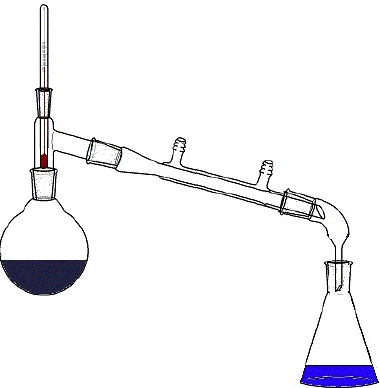
Name the separation technique shown in the diagram.

a)

evaporation

b)

distillation

c)

filtration

71.

Dyes in water soluble markers may be separated by means of..

a)

crystallization

b)

sublimation

c)

chromatography

d)

sedimentation

72.
Water and alcohol are easily separated by distillation because of their
a)
 different melting points
b)
different colours
c)
different densities
d)
different boiling points
73.
To separate a mixture of soil and water what separation method is used?
a)
Filtration
b)
Distillation
c)
Chromatography
d)
Evaporation
74.
To separate a mixture of salt and water what separation method is used?
a)
Filtration
b)
Distillation
c)
Chromatography
d)
Evaporation
75.
Can you separate salt from water using filtration?
a)
yes
b)
no
76.
The separation technique that involves heating a solution until the liquid changes into a gaseous state, leaving behind a solid is known as
a)
decanting
b)
 evaporation
c)
loading
d)
chromatography
77.
Iron fillings can be separated from iron and Sulphur mixture by
a)
sedementation
b)
heating
c)
magnetic attraction
d)
seiving
78.

A mixture is a combination of elements where no ___________ reaction takes place

a)

physical

b)

chemical

79.

Which process would you use to separate solid particles from larger particles in a mixture with filter paper in a funnel to trap solids so that the liquids will pass through.

a)

Chromatography

b)

Magnetic Attraction

c)

Filtration

d)

Flotation

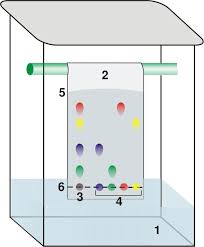
80.

Name the separation technique shown in the diagram

a)

Filtration

b)

Chromatography

c)

Centrifugation

d)

Distillation

81.

Which of the following mixtures can be separated by Evaporation?

a)
b)
c)
d)
82.

Which of the following is the correct setup of Filtration?

a)
b)
c)
d)
83.

Which of the following mixtures can be separated using Decantation?

a)
b)
c)
d)
84.

Anything that has mass and volume is...

a)

Weight

b)

Volume

c)

Mass

d)

Matter

85.

What is gold, Au?

a)

element

b)

compound

c)

mixture

86.

What is sugar, C12H22O11?

a)

element

b)

compound

c)

mixture

87.
Which one can be found on the periodic table?
a)
Compound 
b)
Element
88.
Which one has more than one type of atom in it?
a)
Element
b)
Compound 
89.
Carbon is considered an element while carbon dioxide is considered a compound. This is because carbon dioxide is –
a)
a gas at room temperature.
b)
made of two different elements.
c)
given off by green plants.
90.
This picture represents which of the following?
a)
element
b)
compound
c)
mixture
91.
This picture represents which of the following?
a)
element
b)
compound
c)
mixture
92.
What is krypton?
a)
element
b)
compound
c)
mixture
93.

Which of the following is NOT a compound?

a)

HCl

b)

Cl

c)

NaCl

d)

CO2

94.

An _____ has only one capital letter.

a)

element

b)

compound

95.
Is the following an element or compound?
a)
element
b)
compound