
 Worksheets
Ch. 1 Review
Total questions: 150
Worksheet time: 2hrs 22mins


To tame wild animals and breed them for human use
Agricultural Revolution
Domesticate
Surplus
Specialization
What is an example of a tool?
hunting
gathering
bones made into a spear
a dead deer
Early human was well acquainted with the forest produce and movement of animals.
YES
NO
The ______________________ were long periods of extreme cold that affected all of Earth.
Stone Ages
Ice Ages
Salt Ages
Clone Wars
To get from Asia to North America, nomads would _________________________________.
Use the Ice Age land bridge
Jump from Asia over to North America
Swim across the water
Use surf boards
A big change in the New Stone Age was that people had _____________________________________.
Domesticated Animals
Gathered food
Wrote down information
Which of the following is a way that early people adapted to living in a cold climate?
They built houses out of stone
They lived close to water
They stayed inside
They made clothes from animal skins
A land bridge made it possible for Paleolithic people to travel from Asia into North America.
True
False
Which of the following happened during the ice ages?
Large pieces of ice melted, flooding the Earth
Earth's oceans froze
Thick sheets of ice moved across much of the northern part of the Earth
Water separated Asia and North America
Cave paintings are an example of Old Stone Age art.
True
False

What is the job of an Archaeologist?
to study past cultures, by analyzing artifacts, remains and ruins
To study scientific and historical fossils from dinosaurs
To find cool stuff underground
To study the relationship between geography and fossils
An area where archaeologist dig things up from the past is called
excavation site
crypt
hole
laboratory
The customs, art , language and achievements of a group of people is their
artifacts
ethnicity
culture
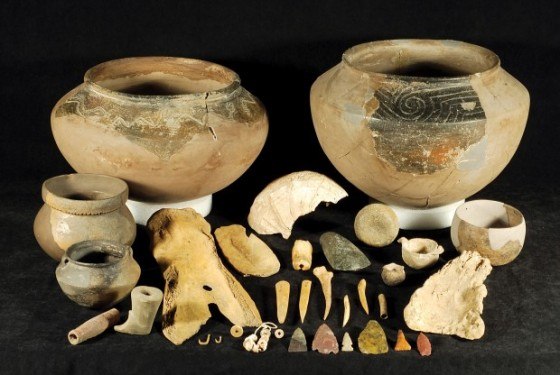


On which continent is mankind though to have started from?
Asia
Europe
Africa
Australia
Prehistoric people could not produce food on a large scale because the climate was too cold. They survived by...
inventing new foods
farming
hunting and gathering
Before wide-scale farming was possible, people survived by hunting and gathering. This describes the __________ period.
new stone age
old stone age
middle ages
Large-scale farming often led to the harvesting of extra food called a...
surplus
scarcity
Thousands of years ago, the Earth was covered in glaciers and farming was impossible. This era is known as...
Middle Ages
Ice Age
New Stone Age
When were the first animals domesticated?
New Stone Age
Old Stone Age
The Copper Age
Which prehistoric gender were most responsible for gathering fruits, nuts and seeds?
males
females
Which prehistoric gender were most responsible for hunting animals for food?
males
females
Which continent do historians believe all human beings originate from?
Antarctica
Australia
Asia
Africa
Development of agriculture allowed prehistoric humans to settle down and grow crops for food.
True
False
What is prehistory?
period of history when hieroglyphics were used
period of history when cuneiform was used
period of history before written language was invented

In Old Stone Age age human learnt to............
Make simple stone tools and weapons for hunting.
do the agriculture
Became keen observers
Stone tools became sharper during ..............
Mesolithic age
Old Stone Age age
New Stone age
Both B and A
1. What were the primary jobs of people during the Old Stone Age?
Hunters & Gathers
Toolmakers
Farmers
During the New Stone Age
People learned to grow food
People migrated to find food
People were nomadic
What was the greatest benefit to people when early farmers began to raise plants and animals?
Easy travel
They kept pets
Shared most work
Stable food supply
Which of the following is NOT a possible reason for the cave paintings made by the Old Stone Age people?
The paintings were the first expressions of art.
The paintings taught young hunters how to hunt.
The paintings taught young farmers how to plant seeds.
The paintings had religious significance.
A Old Stone Age diet would consist of
Corn, squash
Wheat
Berries, hunted animals
Beans, barley
Old Stone Age homes were _______ so they could move a lot; New Stone Age homes could be ______ because they didn't move.
temporary; permanent
permanent; temporary
As a result of constant food supply (domesticated plants and animals), the size of New Age populations ...
Increased
Decreased
Stayed the same
Disappeared
What does MIGRATE mean?
moving from one place to another.
A group of people living together
Two biggest improvements during the Neolithic Revolution were...
Buying and Selling
Herding and Hunting
Gathering and Farming
Herding and Farming
Farming and Herding led to the creation of...
Counties
Villages
Grocery Stores
Farms
A __________ is a thick mountain of ice that forms over many years.
ice age
mammouth
glacier
Beringia
A time when the Earth was much colder and large areas were covered with snow was called the __________.
Ice Age
migration
glacier
continent
The land bridge first used by people to come to America was called __________.
Bering Strait
Beringia
continent
migration
What happens to the sea level during an Ice Age?
It goes up.
It goes down.
It remains the same.
It does not change.
What is a land bridge?
A steel road that connected two pieces of land.
A bridge that went over the ocean.
A small strip of land that connected two land masses.
What did the men who were hunter-gatherers look for?
plants
animals to hunt and eat
water
What is a herd?
A small group of people.
A small group of animals that live together.
A large group of animals that live and travel together.
The Beringia land bridge connected which two continents?
Asia and North America
Asia and Australia
Africa and Asia
North America and South America
How did the people from prehistory explain their stories?
Wrote a book
Wrote in the dirt
Wrote on cave walls
Used sign language
A definition for New Stone Age:
The latest period of the Stone Age.
The mid period of the Stone Age.
The first period of the Stone Age.
The Stone Age is divided into 2 periods:
New Stone Age
Old Stone Age
Bronze Age
Metal Age
The New Stone Age occurred during:
10,000 to 5,000 years ago
3.5 million to 10,000 years ago
The Old Stone Age occurred during:
10,000 to 5,000 years ago
3.5 million to 10,000 years ago
During the Old Stone Age __________.
little progress was made
a lot of progress was made
During the New Stone Age __________.
little progress was made
a lot of progress was made
During the Old Stone Age _____________.
technology improved at a slow rate
technology improved rapidly
During the New Stone Age _____________.
humans relied on stone tools
humans used new techniques in stone working and began making polished rock tools
Archaeologists have pieced together what life was like from the objects the villagers left behind.
True
False
The Ice Age ended around ________________.
11,000 years ago
20,000 years ago
1.5 million years
Where are most of the best kept cave paintings found?
Spain
France
Germany
England
Corns, beans, and squash are the most important crops, but they are also know as ______________.
the 3 heros
the 3 sisters
the 3 brothers
The end of the New Stone Age is known as the...
Late Stone Age
Metal Stone Age
Old Stone Age
A landform is a....
surface feature such as a hill or mountain
physical feature such a house or car
The study of how people have developed and live in cultural groups.
Archaeology
Paleontology
Anthropology
Study of landforms, climate and people is called __________________.
anthropology
geology
geography
anthropology
Where is Clovis located?
Mexico
Arizona
New Mexico
Arizona
Where is Skara Brae located?
Europe
Asia
Africa
North America
During the Stone Age most tools were made out of stone.
True
False
Jute was used to make rope and fishing nets.
True
False
How are domesticated animals different from wild animals?
Because they depend on humans.
They develop traits that are not found in the wild.
They eat more than normal.
The animals tend to have more diseases.
Sheeps and goats were the 1st animals to be domesticated.
True
False
The raising of plants and animals for human use is agriculture.
True
False
Donkeys and camels provide additional ways to move people and goods (along with horses).
True
False
People did not domesticate insects, such as honeybees.
True
False
The silkworm was domesticated about ___________ years ago in China to create silk cloth.
5000
4000
3000
2000
The Skara Brae formed _______________ to divide up the work in the village. This was due to the fact that they raised surplus food.
social divisions
farms
tools
dwellings
_________________ is the average weather condition of places over a long span of time.
Geography
Climates
Agriculture
Surplus
__________________- is used to determine the age of things based off the carbon.
archaeology
geology
carbon dating
After learning to grow crops small bands started to form villages.
True
False
In Europe, the variety of landforms, climates, and soil produced different cultures.
True
False
1st came farming and later settlements
True
False
The Stone Age is when people made tools and weapons from stone. The earliest part of the Stone Age is the _____ Age.
Old Stone Age
New Stone Age
Middle Stone Age
Bronze Age
During the Old Stone Age, people learned how to make ___________.
earth
water
air
fire
____________________ helped people in Old Stone Age communicate better with each other.
Fire discovery
Spoken language
Tools
Farming
Early artists painted the walls of their caves with ______ made from crushed rock mixed with animal fat.
brushes
oil
paints
chalk
During the New Stone Age, the levels of the oceans dropped because so much water was taken from the oceans to form the ice.
True
False
A ____________ is a strip of dry land that was once covered by water.
land strait
land bridge
terrain bridge
glacier
What is the biggest achievement of the New Stone Age?
agriculture
copper tools
flint axes
spoken language
How did agriculture change the lifestyle of the early peoples?
They continued to hunt and gather.
They stopped farming.
They were still nomads.
They began to settle.
Identify the text structure of the passage.
The switch from hunting and gathering to farming is called the Agricultural Revolution. Once humans learned how to grow crops and tame animals, their lives became very different. There was a steady supply of food. The population, or the number of people who live in a place, grew. People stopped moving around to look or food. They began to live in settled communities.
compare and contrast
description
cause and effect
problem and solution
In the Old Stone Age the people were _______________. They moved from place to place.
sedentary
crops
nomads
farms
Tick all the characteristics of the Old Stone Age Period
They lived in caves.
They used stone tools.
They discovered fire.
They became artisans
Tick all the characteristics in the New Stone Age Period
They domesticated animals.
They were hunter-gatherers.
They farmed crops.
They were no longer nomads.
All of these would be considered artifacts except
weapons
tools
works of art
bones
Most prehistoric people were nomadic meaning they built permanent houses to live in.
True
False
Which best describes the New Stone Age?
Major battles fought between people of Asia and Africa
The shift from hunting and food gathering to food producing
The shift from food gathering to hunting
Major battle fought between the people of Asia
Why did people change from nomads to villagers?
Game animals became extinct
Farming allowed people to stay in one place
Moving constantly was difficult for most children
People wanted to connect with their family members
How might early people have crossed from Asia into North America?
landmass
mountain range
land bridge
glacier
The first part of the Stone Age
Old Stone Age
Middle Stone Age
New Stone Age
Bronze Age

If you live in the New Stone Age Period, what new kind of tool would you use?
Bones
Antlers
Polish/shiny stones
Metal tools
The New Stone Age is the earliest period of the Stone Ages .
True
False
How did Old Stone Age people survive?
Fire
Agriculture
Farming
Hunting and Gathering
When scientists study prehistoric people, what do they look at?
maps
fossils
artifacts
animals
Once people learned how to raise plants and animals they no longer had to:
hunt
fish
cook
migrate
Survival was harder in the Old Stone Age.
True
False

