
NEW
Font size
 Worksheets
CP World History Fall Benchmark #1 2025 Study Guide
Total questions: 61
Worksheet time: 31mins

A city-state that operated like an independent country was known as?
Ephors
Acropolis
Polis
Agora

The unified fighting formation greek soldiers used was called?
Ephors
Hoplites
Blitz
Phalanx

Which civilization did the Greeks borrow the idea for an alphabet from?
Romans
Egyptians
Persians
Phoenicians
What was most important to Spartans?
Philosophy
History
Money
Military
Who tried to invade Greece twice?
Persians
Egyptians
Sumerians
Assyrians
He believed that people should be ruled by a Philosopher King
Socrates
Aristotle
Plato
Homer

Which of the following statements is true concerning the Greco-Persian Wars?
The Persians defeated the Greek city-states
Athens started its decline after the end of the war
Sparta and Athens were united against the Persians
Persian ideas were adopted by the Athenians

What gave Constantine the inspiration to fight under the Christian cross when he approached Rome?
He saw a cross on a hill while marching to Rome
His mother gave him a small cross right before the battle
He had a vision in a dream
Constantine did not fight under the Christian cross
What religion did Constantine convert to?
Islam
Judaism
Hinduism
Christianity
The city of Constantinople is known as what major world city today?
Moscow
Athens
Istanbul
Jerusalem
How did Constantine change things for Christians?
He killed many of them
He had them leave the empire
He gave them a city of their own
He ended their persecution
What was the name of the leader of the Huns?
Hannibal
Alexander the Great
Attila
Hammurabi
Plato was a student of Socrates
True
False

Socrates was put to death by . . .
Hanging
Speared
Drinking poison hemlock juice
The culture created by Alexander's empire was called -
Macedonian Culture
Hellenistic Culture
Ptolemic Culture

Which areas was NOT part of Alexander's Empire?
Rome
Egypt
India
Persia
Where was Alexander the Great from?
Macedonia
Greece
North Africa
Spain


Which branch of the Roman government included two consuls?
Legislative Branch
Judicial Branch
Executive Branch
State Governments
How did Caesar die?
He was assassinated in the Senate
His ship was sunk while sailing home from Egypt
He died of old age on his estate in the Italian countryside
He was killed in battle defending Rome
He died in a duel with Pompey the Great
According to belief in the Mandate of Heaven, earthquakes and floods might be signs that:
The king did not govern well
The end of the world was near
The people did not obey the laws
The natural world ignored humans
The Zhou claimed that they had the Mandate of Heaven, which they believed was
the majority of votes in an election.
permission from the people to rule.
a divine right to rule China.
a set of laws written by the first Zhou king.

Why do they call it the Fertile Crescent?
because the women had a lot of babies
because the animals had a lot of babies
because the moon was in a crescent form all of the time
The land was fertile and shaped like a crescent moon.
What is polytheism?
an amphibian with many legs
the worship of many gods
the worship of one god
the worship of no god/gods
Mesopotamia means the land between two rivers. Name the two rivers.
The Nile and the Amazon
The Tigris and the Euphrates
The Snake and the Colorado
The Pol and the Yangtze.

The Sumerian writing system was called
Ziggurat
Stele
Heiroglyphs
Cuneiform


The longest river in the world; associated with Ancient Egypt.
Tigris River
Nile River
Amazon River
Niger River
The Nile River's flooding could be described as
unpredictable
destructive
predictable
rare
A government in which the same person is both the political and religious leader is called a
dynasty
theocracy
bureaucrat
pharaoh
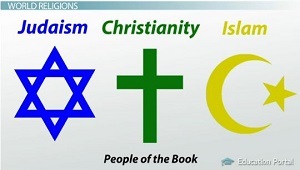
The belief in one god is called...
atheism
polytheism
monotheism
Buddhism
One of the first monotheistic religions, particularly one with a wide following. It was central to the political and religious culture of ancient Persia.
Monotheism
duality
Vohu Mano
Zoroastrianism
Heavenly power which granted the right to govern. Rulers are link between heavens and earth.
Mandate of veneratioin
Filial Piety
Confucianism
Mandate of Heaven

The two major rivers in India are
The Indus and the Ganges
The Ganges and the Mekong
The Indus and the Tigris
The Tigris and the Euphrates

Which are the two major rivers that flow through China?
The Yellow and Red Rivers
The Yellow and Yangtze Rivers
The Yangtze and East Rivers
The Yingtze ane Yangtze Rivers

How did a person become a member of a caste?
They were born into it
They got to choose their caste
The Brahmins selected it for you
What is the social system developed in India based on the social class into which someone was born?
reincarnation
caste
ahimsa

