Wayground logo

Free Printable Worksheets

Font size

S
M
L
XL
Worksheets

Science 9 Unit A Section 1.0

Total questions: 42

Worksheet time: 39mins

Name
Class
Date
1.

The ecological role an organism performs in their specific environment is considered the organism's...

a)

Habitat

b)

Population

c)

Biome

d)

Niche

2.

the differentiation of niches that enables similar species to coexist in a community

a)

character displacement

b)

climax community

c)

resource partitioning

d)

pioneer species

3.
The ecological niches of three bird species are shown in the diagram. What is the advantage of each bird species having a different niche?
a)
As more birds feed higher in the tree, available energy increases.
b)
More abiotic resources are available for each bird.
c)
Predators are less likely to feed on birds in a variety of locations.
d)
There is less competition for food.
4.

a)

A

b)

B

c)

C

d)

D

5.

Which of the following best shows the process of Natural selection?

a)

A population of mosquitoes develops resistance to a pesticide over the course of several years.

b)

A lizard's color becomes brown as it sits on a log.

c)

A plant loses its leaves in a drought.

d)

A population of foxes increases as more prey becomes available.

6.

_____________ refers to all the different kinds of living organisms within a given area.

a)

Biodiversity

b)

Biology

c)

Biome

d)

Ecology

7.
Cattle egrets forage (feed) in fields among cattle. The egret gets easy access to flying insects stirred up by the cattle, and the cattle don't care if they are there or not.
a)
mutualism
b)
commensalism
c)
competition
d)
parasitism
8.
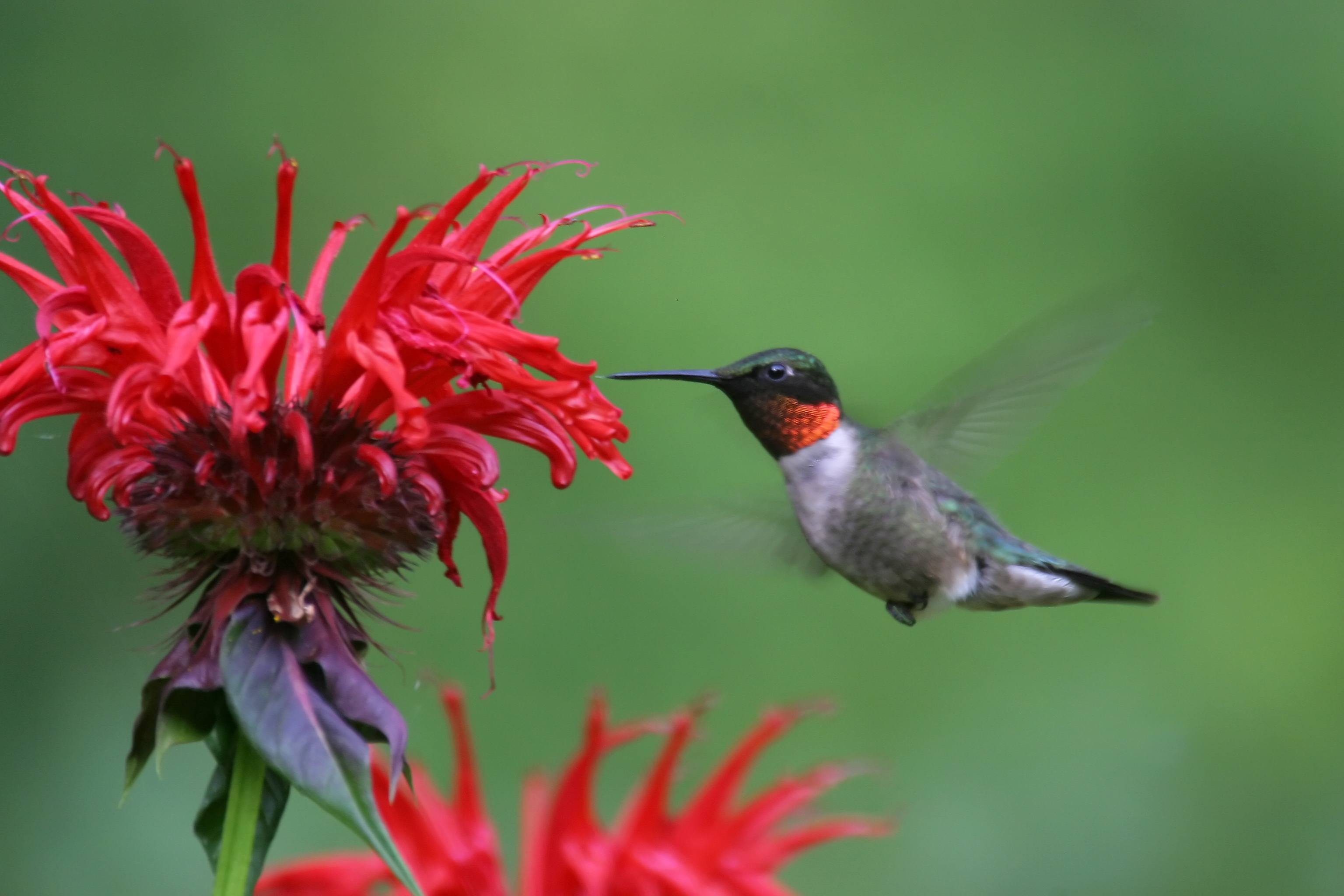
What type of symbiosis?  Hummingbirds feed on nectar from flowers.  The flowers are pollinated by hummingbirds as they move from flower to flower.
a)
commensalism
b)
mutualism
c)
parasitism
d)
predation
9.
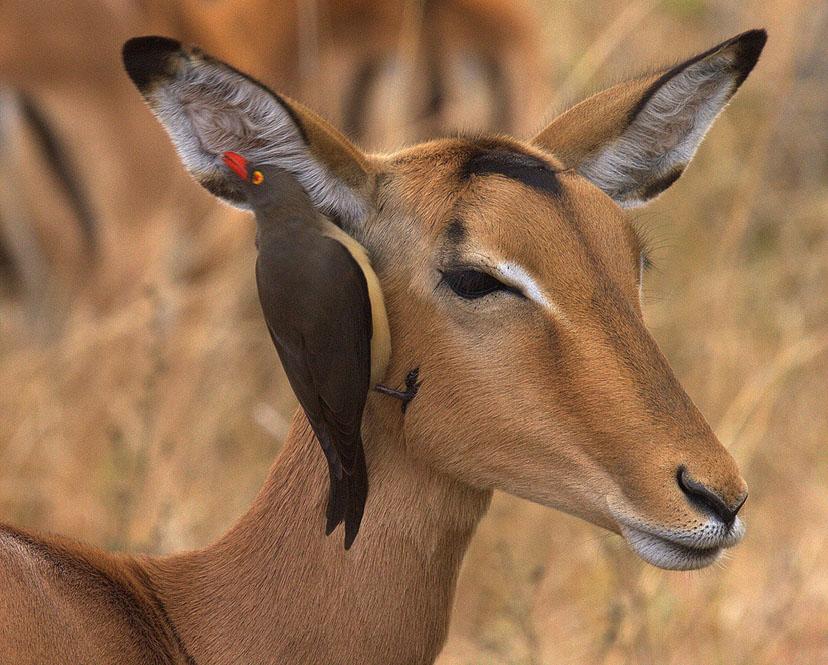
Red-billed oxpeckers are birds that often feed on parasites that infest impala.  This is an example of _______.
a)
commensalism
b)
mutualism
c)
neutralism
d)
competition
10.

Aphids are tiny insects that live on and eat the leaves of plants, removing vital nutrients from the plants.

a)

Predation

b)

Parasitism

c)

Commensalism

d)

Mutualism

11.
What does biodiversity mean?
a)
Only one species in an area.
b)
The different amount of species in an area
c)
All abiotic life
d)
Nitrogen fixation
12.
All living and nonliving things in an environment and the many ways they interact are called ______
a)
ecosystem
b)
community
13.
A drought has hit this grassland biome. How will this effect the rabbit population?
a)
The rabbits will increase in number.
b)
The rabbit population will stay the same.
c)
The rabbit population will decrease.
d)
The rabbit population will become extinct immediately.
14.
Competition can occur between organisms for both biotic and abiotic resources.  Competition for biotic resources can be illustrated by organisms fighting for a limited amount of –
a)
air to breath
b)
mates for breeding
c)
water to drink
d)
space for nesting
15.
The struggle between organisms to survive as they attempt to use the same resource
a)
Predator
b)
Prey
c)
Competition
d)
Adaptation
16.
On a safari at night, a lion hunts and feeds on an antelope. In this relationship, the lion is the ____________________ and the antelope is the _________________.
a)
Parasite/host
b)
Predator/prey
c)
Prey/Predator
17.

A population is

a)

a group of similar species in different areas

b)

a group of the same species in the same geographic area.

c)

a group of several species in the same geographic area

d)

a group of several species along with their abiotic factors in a small area.

18.

A community is

a)

Several different populations scattered across several states.

b)

Several different organisms in the same geographic area

c)

One type of organism in the same geographic area

d)

Several different populations in the same geographic area

19.

In general, as you move from the equator to the poles, what happens to biodiversity>

a)

Increases

b)

Decreases

c)

Remains the same

20.

Why is biodiversity in an ecosystem so important?

a)

Because it can help humans where to determine good places to develop farm land.

b)

Because places that have a healthy biodiversity are unaffected by major disturbances.

c)

Because having a high biodiversity allows ecosystems to withstand major changes.

d)

Because having a high biodiversity allows for fewer opportunities of competition for similar resources.

21.

All of the different organisms interacting in a pond make up

a)

a community

b)

a population

c)

the habitat

d)

an organism

22.

A titmouse and a chickadee are living in the same territory and are using the same resources. The best way to classify this interaction is...

a)

Mutualism

b)

Intraspecific Competition

c)

Interspecific Competition

d)

Commensalism

e)

Symbiosis

23.

A niche is best described as which of the following?

a)

the place or role that an organism has in its habitat

b)

The location in which an organisms lives

c)

How the organism fits into the food web

d)

The species interaction

24.

When Natural Selection is taking place, it will always go in favor for the stronger species. If pollution were to make trees darker, which of the following would take place?

a)

Economy of that region would suffer

b)

White moth population will increase

c)

Darker moths will have the advantage

d)

Lichens will keep the environment healthy

25.

What has a higher biodiversity: a temperate forest or a frozen tundra?

a)

Frozen Tundra

b)

Temperate Forest

c)

They have a similar biodiversity

26.
a)

A

b)

B

c)

C

d)

D

27.

a)
b)
c)
d)
28.


(a)  

29.
the most specific level of classification: includes only one specific organism
a)
kingdom
b)
genus
c)
species
d)
family
30.

The scientific name for an organism is made from the:

a)

class and family name

b)

genus and species name

c)

species and kingdom name

d)

kingdom and phylum name

31.

What is the genus name here:

Canis lupus

a)

Canis

b)

lupus

32.

What is the species name here:

Canis lupus

a)

Canis

b)

lupus

33.
If two species share the same class, they also share the same______.
a)
phylum
b)
order
c)
genus
d)
species
34.
Who is the closest relative to the birds?
a)
crocodiles
b)
sharks
c)
fish
d)
amphibians
35.
Who is the closest relative to the sharks?
a)
crocodiles
b)
sharks
c)
ray-finned fish
d)
amphibians
36.
In a properly written scientific name, which part is lowercase?
a)
species
b)
genus
37.

the 5 kingdoms are

a)

animals, plants, Monera, fungi, and Protista

b)

archae, plants, protist, bacteria, mammals

c)

mammals, reptiles, plants, bacteria, mammals
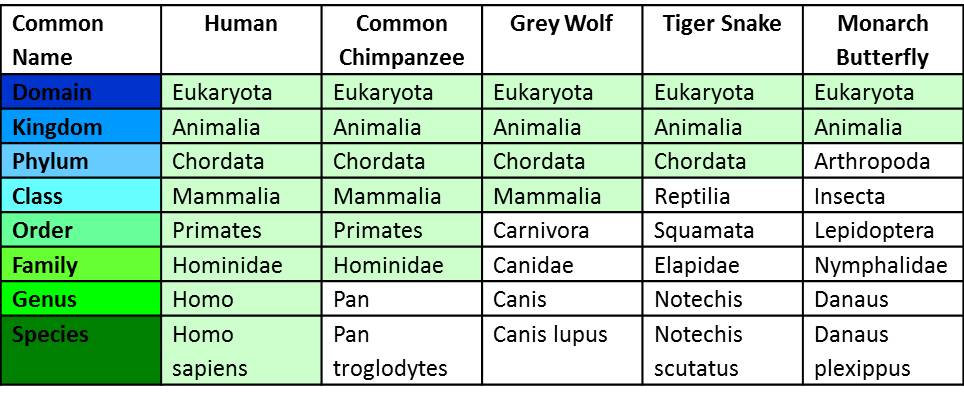
38.
Which organism in the table is least closely related to the chimpanzee?
a)
human
b)
grey wolf
c)
tiger snake
d)
monarch butterfly
39.

Which 2 organisms would be able to reproduce and produce fertile offspring?

a)

2 organisms in the same class

b)

2 organisms in the same family

c)

2 organisms in the same genus

d)

2 organisms in the same species

40.

When two of the same species species compete for resources, it is ____________ competition.

a)

interspecies

b)

habitat

c)

symbiosis

d)

intraspecies

41.
Which one of these is NOT one of the characteristics of living things?
a)
All living things drink water.
b)
All living things are composed of one or more cells.
c)
All living things grow develop and have life spans.
d)
All living things reproduce.
42.
Which one of these is NOT one of the characteristics of living things?
a)
All living things eat.
b)
All living things reproduce.
c)
All living things require energy for life processes.
d)
All living things respond to the environment/stimuli.