
 Worksheets
First Six Weeks Exam Review Geography
Total questions: 154
Worksheet time: 3hrs 43mins
A group of people having a way of life such traditions and beliefs can be defined as?
Cultural Diffusion
Multiculturism
Culture
Religion

The length of one year is the time it takes
the moon to complete its phases.
Earth to complete 12 rotations around its axis
Earth to complete one revolution around the sun.
the moon to complete one revolution around the Earth.
It is necessary to add a day to the calendar every four years because
the axis of Earth is tilted.
the gravitational pull of the Sun affects Earth's revolution.
the revolution of Earth is not exactly 365 days.
the axis of Earth’s orbit is parallel to its orbit
The seasons are caused by Earth’s tilted axis as it travels around the sun. What causes winter in the Southern Hemisphere?
The North Pole tilts away from the sun
The equator receives more direct light
The South Pole tilts away from the sun
Earth moves further away from the sun
32. Which of the following is a direct result of Earth’s rotation?
Lunar eclipses
Winter weather
Daylight and night
seasons
What controls the length of a day?
the amount of time it takes Earth to complete a
turn on its axis
the amount of time it takes Earth to complete an
orbit around the sun
the amount of time it takes the moon to complete
an orbit around Earth
the amount of time it takes the sun to complete
a turn on its axis
The average weather in an area over a long period of time
climate
weather
summer
spring
The atmospheric condition in one place over a short period of time
climate
weather
summer
spring
Because of the Earth's tilt, every part of the planet receive the exact same amount of direct sunlight
true
false
The trapping of solar radiation by the atmosphere is called
equinox
solstice
greenhouse effect
midnight sun
Why is the Greenhouse Effect necessary?
It makes the earth warm enough for life.
It keeps the earth cool.
It makes water less salty
It makes icebergs
Why is the temperature at the Equator always warm?
Global warming affects it the most
Ocean currents make it warm
It receives direct sunlight year round
It has lots of volcanoes
Why are the North and South Pole always cold?
Storms make them cold
They don't get enough direct sunlight to be warm
Solar eclipses block the sun
The other continents block the sun
What does "temperate" mean?
Intense
Unpredictable
Dependable
Mild
Why do the seasons change?
The tilt of the earth changes, so the amount of sunlight changes.
Volcanoes make them change
The moon makes them change
Oceans make them change
What is it called when the Earth's nights and days are equal in time?
aquifer
equinox
equal nights
equinix
What is the name given to the longest day of sunlight in the Northern Hemisphere?
solstice
equinox
midnight sun
axis


What does the phrase " Very rich soil'' means?
soil has many money
soil has many nutriens
soil has many crude
Plains are area that are often in ...............
valleys
mountains
Hills
Plains

The point marked ''B'' is the mountain's ..............
plain
peak
slope

Low area between mountains or hills is called
slope
plains
valleys
desert
A ........................ is a feature made of rock and dirt.
landform
desert
canyon
Which of these contains a lot of nutrients so that plants will grow very well in the soil?
Valleys
plains
mountains
hills
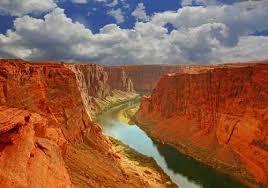

Land formation that is flat on top with steep walls. Usually in a dry area
Hill
Plateau
Basin

A peninsula is a landmass surrounded by water on all sides.
True
False

What is a coast?
land that has water all around it
land with water touching 3 sides
land that borders the sea or ocean
a large body of salt water

What is a harbor?
a long body of water that flows across land
a large body of salt water
a sheltered area where ships can anchor safely
a very high piece of land

What is a peninsula?
land with water touching 3 sides
land that has water all around it
land that borders the sea or ocean
an area of flat land

What is a plain?
land that borders the sea or ocean
low land between mountains or hills
an area of flat land
land with water touching 3 sides

This landform is formed by
water erosion
wind erosion
deposition
glaciers

What is this landform?
delta
canyon
valley
sand dune

This landform is formed by
water erosion
weathering
deposition of sediments
glaciers
Glaciers are masses of ice that move slowly on land. Which of these features was most likely formed by a glacier?
A wide valley
A deep ocean
A lava flow
A mountain range
A triangular landform where a river empties into another body of water.
Landform
Canyon
Delta
Valley
A deep gorge in the surface of Earth formed by the erosion of moving water and sediment.
Valley
Delta
Canyon
Landform
The build up of land by the settlement of sediments and soil in a new location.
Weathering
Erosion
Deposition
River
The movement of sediment down a fast-moving river.
Weathering
Erosion
Deposition
River
What is the process of moving sediments from location to another?
Deposition
Erosion
Weathering
Compaction
Which of these is an example of erosion?
Light shinning onto a mountain
Rain breaking down rock
Wind blowing away sediment
All of the above
Rain washing away soil from a hillside
Weathering
Erosion
Deposition
How do sandy beaches form?
Waves pounding pebbles int smaller and smaller peices
Wind eroding pebbles into smaller pieces
Water freezing and thawing the cracks of pebbles
Rain wearing away rocks into smaller and smaller pieces
How do plants in the soil affect how fast erosion happens?
It doesn't affect erosion.
It slows down erosion.
It speeds up erosion.

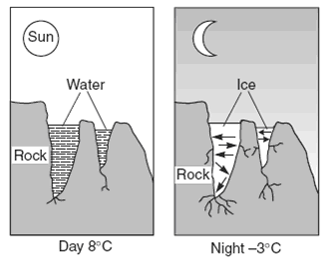
Which statement best explains why this process results in weathering?
Which of the following is NOT an element of erosion?
Water
Wind
Chemical
Electrical Current
Which of the following was formed through erosion?
Eiffel Tower
The Grand Canyon
Mt. Rushmore
The Pyramids of Giza
Which term BEST describes the rate at which glacial erosion takes place?
Quick
Short
Slow
Sudden
______________________ occurs when eroded materials stop moving and begin to build up.
Weathering
Erosion
Deposition
_____________________ changes the identity of rocks and it involves a chemical reaction or change.
Physical weathering
Chemical weathering
Deposition

This is an example of _____________________________.
physical weathering
chemical weathering
Which process describes water getting into cracks, freezing, and breaking the rocks or pavement apart?
Weathering
Erosion
Deposition
Which process describes waves dropping sand on the beach?
Weathering
Erosion
Deposition
Which process describes wind blasting sand at rock and carving out arches?
Weathering
Erosion
Deposition
What is it called when layers pile up and press down on the material below?
Compaction
Layering
Cementation
Concentration


What does the word "organic" mean?
natural
living
healthy
expensive

1. This side of the mountain is dry and desert like because of the rain shadow effect.
Leeward
Sideward
Windward
Land

On the leeward side of a mountain, you might find _____.
Heavy rainfall
Desert
More vegetation
More snow

What landform causes the rain shadow effect?
Mountains
Lakes
Plains
Valleys

What statement is FALSE about rain shadows?
As air falls(descends) on the lee side of a mountain range, its moisture-holding capacity increases and it picks up moisture rather than releasing it.
The leeward side of the mountain has moisture in the air but it is not condensing to form clouds and therefore leads to very little precipitation on this side of the mountain.
Rain Shadows DO NOT exist in WA because it is near the ocean.
The windward side of the mountain is not a rain shadow because there is moderate to high precipitation on this side of the mountain.

Review the image and answer the following question.
In the western United States, most rain shadows occur on what side of the mountain ranges?
The west side of the mountain
The Southern Part of a mountain
The Northern part of a mountain
The Eastern part of a mountain

This side of the mountain is where the wind originates and evaporation occurs
windward
leeward
rain shadow
prevailing winds

This side of the mountain is the direction in which the wind is blowing so it is sometimes called the "downwind" or the "lee" side
windward
prevailing winds
leeward
wind currents
As you go to the top of a mountain, what happens to the air temperature?
nothing
it decreases
it increases
it fluctuates between warm and cold
A rain shadow forms on the ___________ side of a mountain as a result of ___________ precipitation there.
windward; more
windward; less
leeward; more
leeward; less
Warm air can carry more water vapor (moister) than cool air.
true
false
As air rises, it expands. This expanding air also ______.
warms and condenses
cools and condenses
Which side of the mountain usually gets deserts and why?
windward, because of rising, moist air
leeward, because of rising, dry air
windward, because of sinking, moist air
leeward, because of sinking, dry air
What is the windward side of a mountain?
The wet side that is upwind of the mountain.
The side of the mountain with the most people.
The dry side that is downwind of the mountain.
The side of the mountain with the rain shadow.
The movement of deep, cold, nutrient filled water to the surface of the ocean is..
Ocean Current
Upwelling
Deep Currents
Surface Currents
Why is upwelling important?
Upwelling regulates ocean temperature
Upwelling provides nutrient rich water that sustains life
Upwelling controls the tides
Upwelling helps sailors to navigate the seas


Salinity is
The salt content of a substance
The Pepper content of a substance
The circulation of hot and cold matter
the weather pattern of a region
What heats the Earth's oceans?
People
Boats
a heater
sun
Climate is affected by many factors including:
latitude, elevation, and proximity to bodies of water
tides and currents
wind
snow and sleet
Which two factors determine the climate in a particular region?
temperature and latitude
precipitation and humidity
temperature and precipitation
humidity and air pressure
At which latitude would you expect to find the warmest air temperatures?
23.5° S
0°
66.5°N
66.5°S
At which latitude would you expect to find the coldest air temperatures?
66.5°N
0°
23.5° S
23.5°N
These areas is located between 66.5°N and the North Pole and 66.5°S and the South Pole. It has low temperatures and very little precipitation.
Polar Climate Zones
Temperate Climate Zones
Tropical Climate Zones
The Arctic Climate Zones
What is elevation?
the depth of the ocean
the height of the atmosphere
the depth of a lake
the height above sea level
What is the temperature and humidity of a mountain region?
very warm in summer and cooler in other seasons with high humidity
Low temperatures due to altitude, humidity is lower the higher you go
very hot temperatures during the day and cold at night, little to no humidity
very cold year round, high humidity
What is a sea breeze?
cooler air moving inland from the ocean
warmer air moving inland from the ocean
cooler air moving to sea
warmer air moving to sea
What are the three main climate zones?
tropical, thermal, polar
tropical, temperate, polar
cold, super hot, blah
polar, tropical, humid
What climate zone is located near the equator where the sun is directly overhead all year?
polar
tropical
desert
temperate
Which factor does NOT affect the kind of climate an area has?
distance from the equator (latitude)
elevation
proximity to bodies of water
wind direction
These areas are located between 23.5°N and 23.5°S of the equator. These zones receive direct sun rays, have higher temperatures, and lots of rain.
Polar Climate Zones
Temperate Climate Zones
Tropical Climate Zones
Oceanic Climate Zones
The rising and sinking of matter in a circular pattern due to differences in temperature:
convection current
ocean current
convection oven
climate zone
The climate of a particular region is NOT affected by:
latitude
minerals
nearby water
elevation
The temperature and humidity of a swamp is:
very warm during the summer and the higher humidity during the warmer seasons
very cool during the summer and the humidity is low during the warmer seasons
very warm all year long with very little humidity
very cold all year long with little humidity
At what latitude do ice caps remain frozen throughout the year?
between 66.5°N and the North Pole and 66.5°S and the South Pole
between 23.5°S and 23.5°N
between 0° and 23.5°S
between 23.5°N and 66.5°N
Which city would you expect to have the overall colder climate?
Atlanta, Georgia (elevation of 1,050 feet)
Baton Rouge, Louisiana (elevation of 56 feet)
Chicago, Illinois (elevation of 579 feet)
Steamboat Springs, Colorado (6, 732 feet)
Which biome is very dry for most or all of the year?
rainforest
temperate forest
swamp
desert
Cities near the ocean are cooler in the summer and warmer in the winter.
True
False
Swamps have a lot of plant life because the ground is wet.
True
False
Tundras have less plant life than rain forests because they receive less __________.
wind
precipitation
barometric pressure
altitude
Areas closer to the equator receive more direct energy from the Sun and have warmer temperatures.
True
False
Areas closer to the __________ receive more direct Sun.
Prime Meridian
Equator
Poles
Tropic of Capricorn
The largest continent
Europe
Australia
Africa
Asia
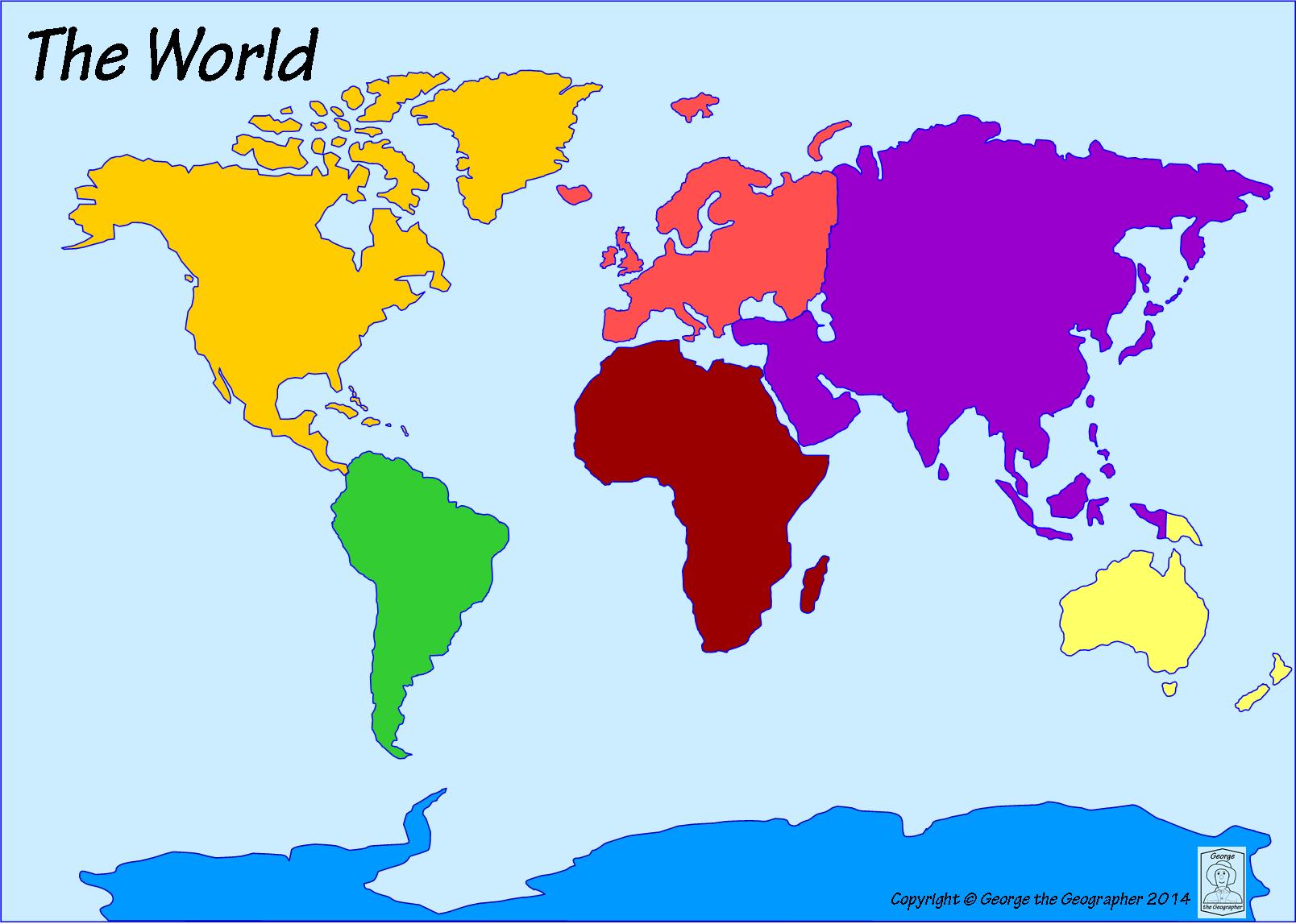
What is the name of the dark yellow continent?
South America
North America
Asia
Africa
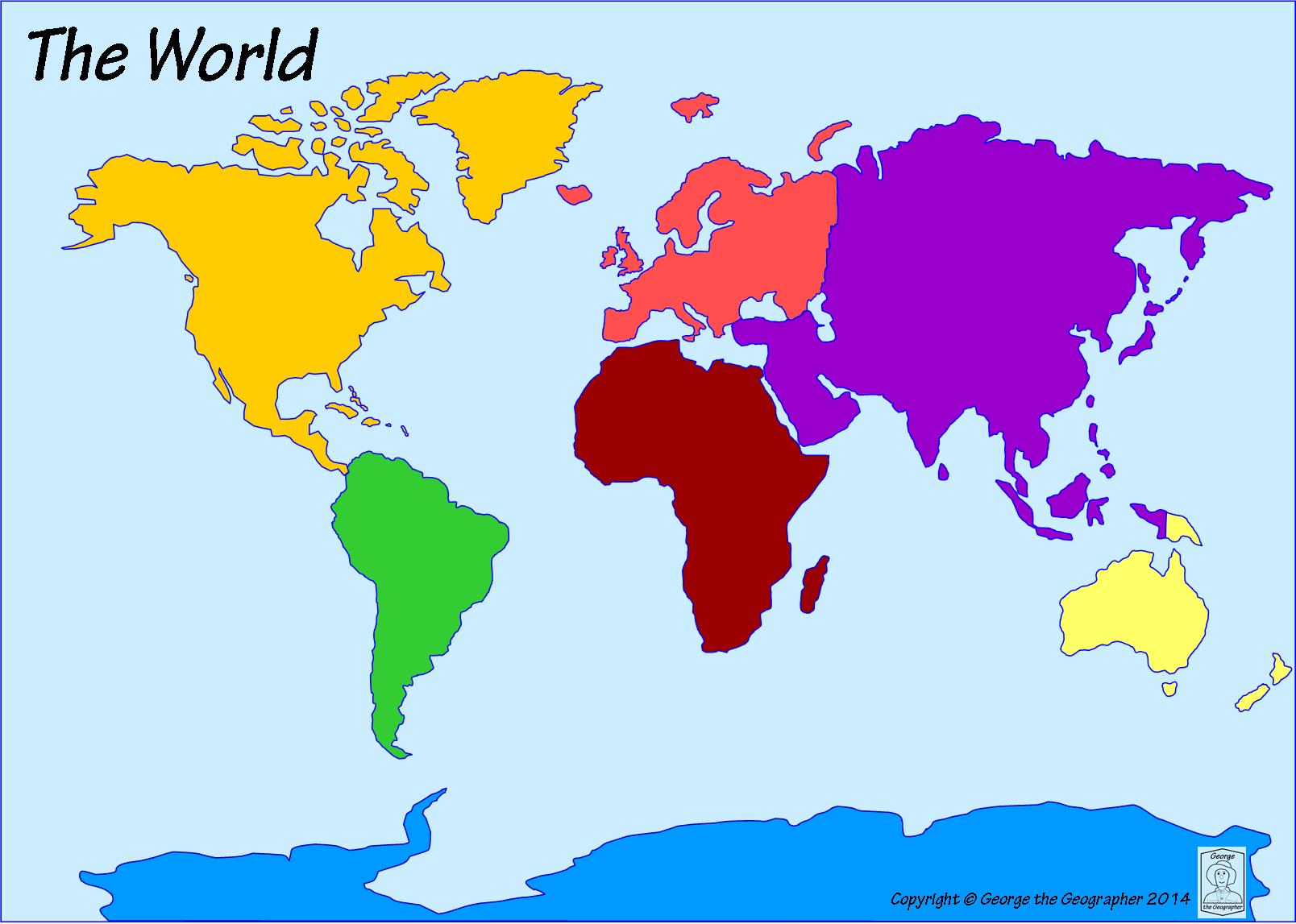
What continent is directly south of North America?
Australia
Europe
Africa
South America
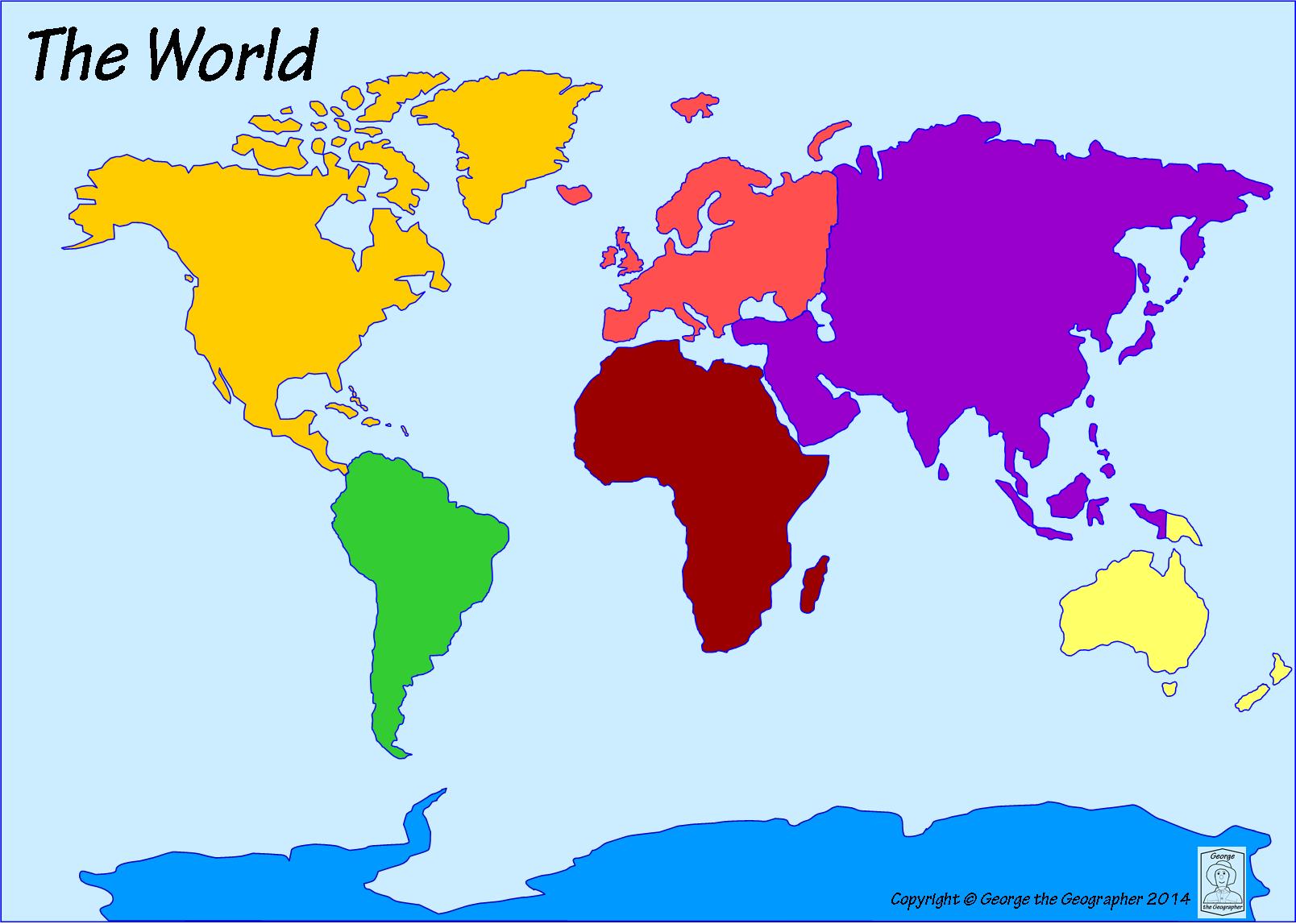
Which ocean is located off the east coast of North America?
Pacific Ocean
Atlantic Ocean
Indian Ocean
Southern Ocean
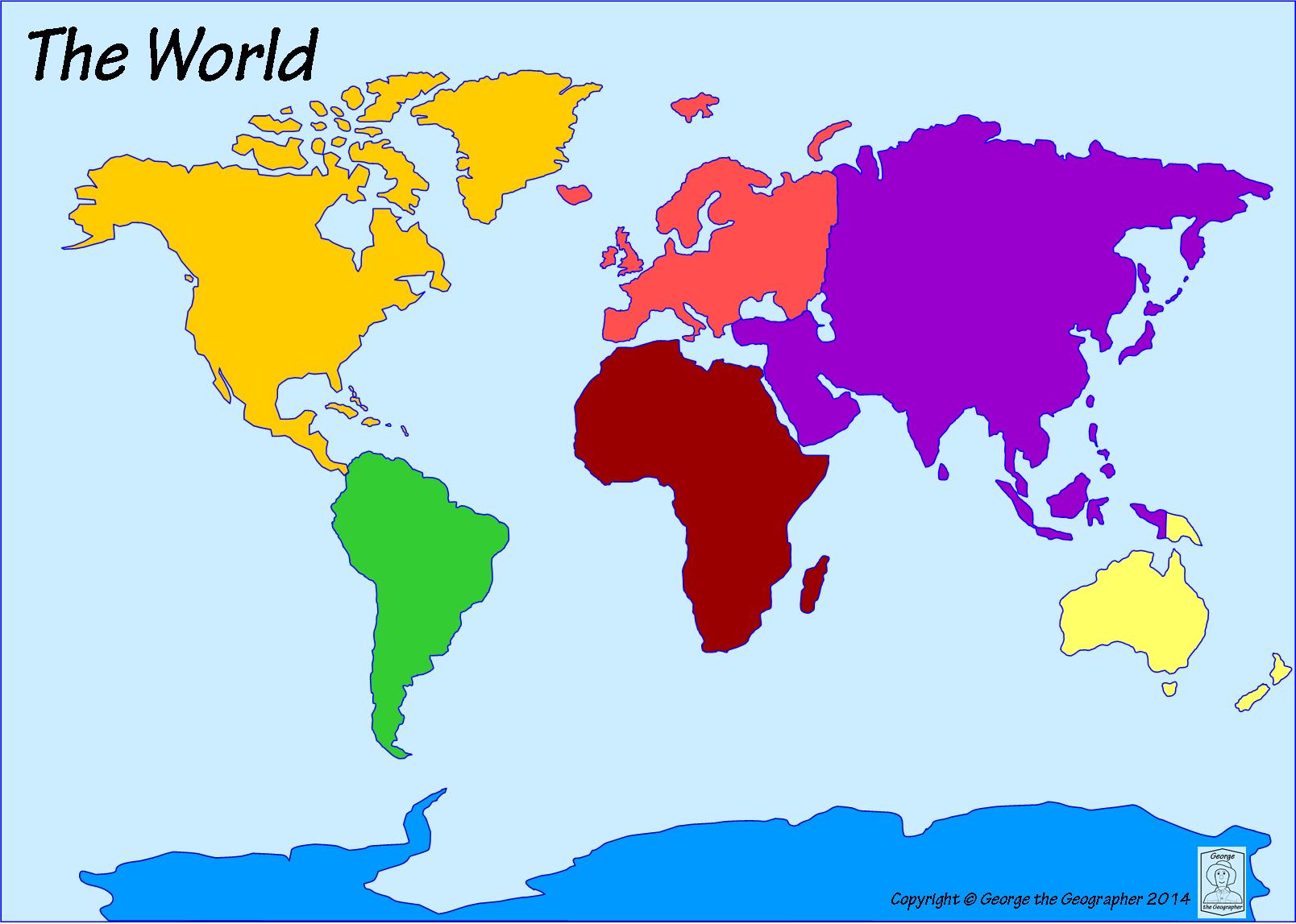
Which continent is located west of Asia?
Europe
Antarctica
Australia
South America
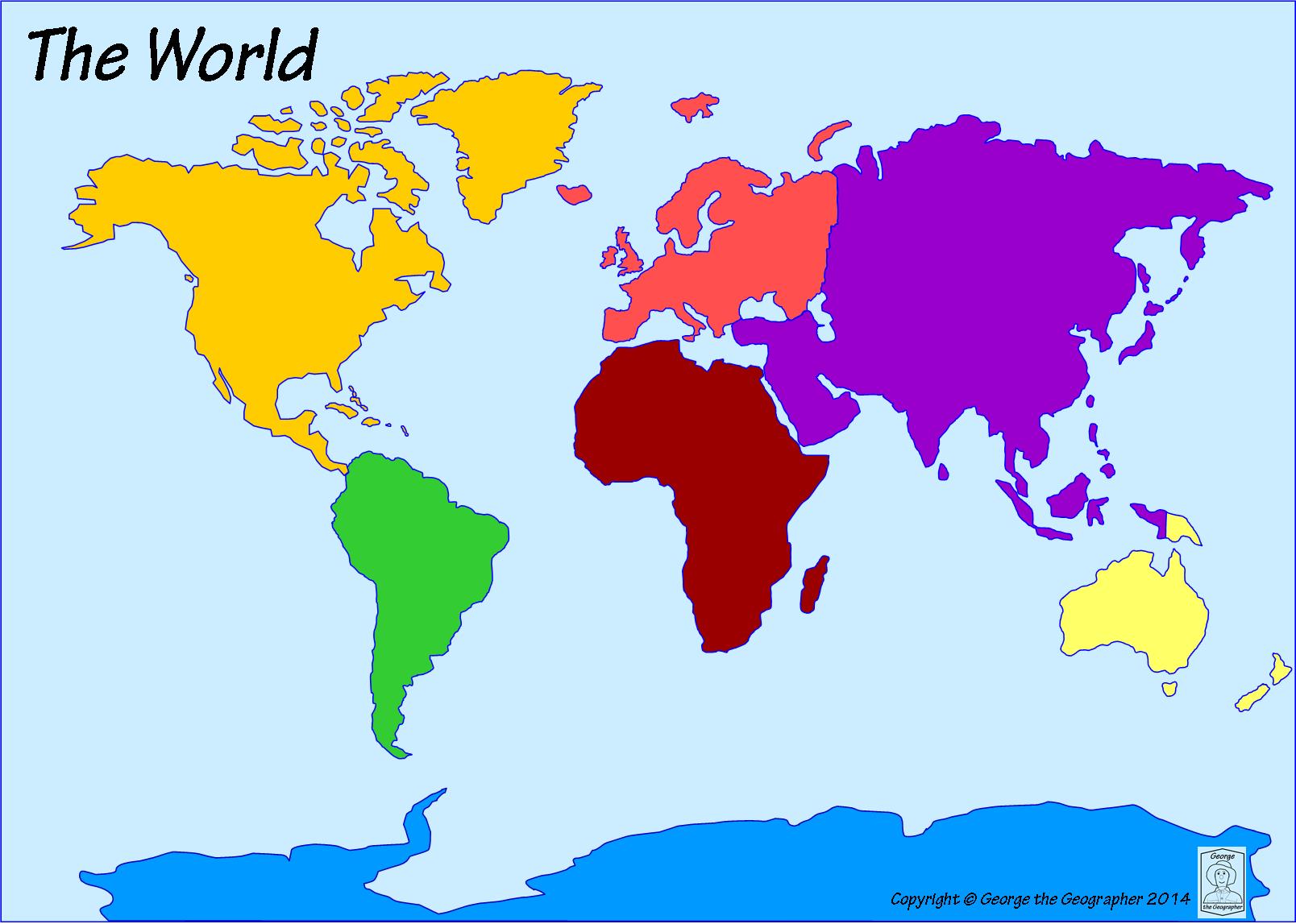
Which ocean is the farthest north?
Indian Ocean
Southern Ocean
Arctic Ocean
Atlantic Ocean
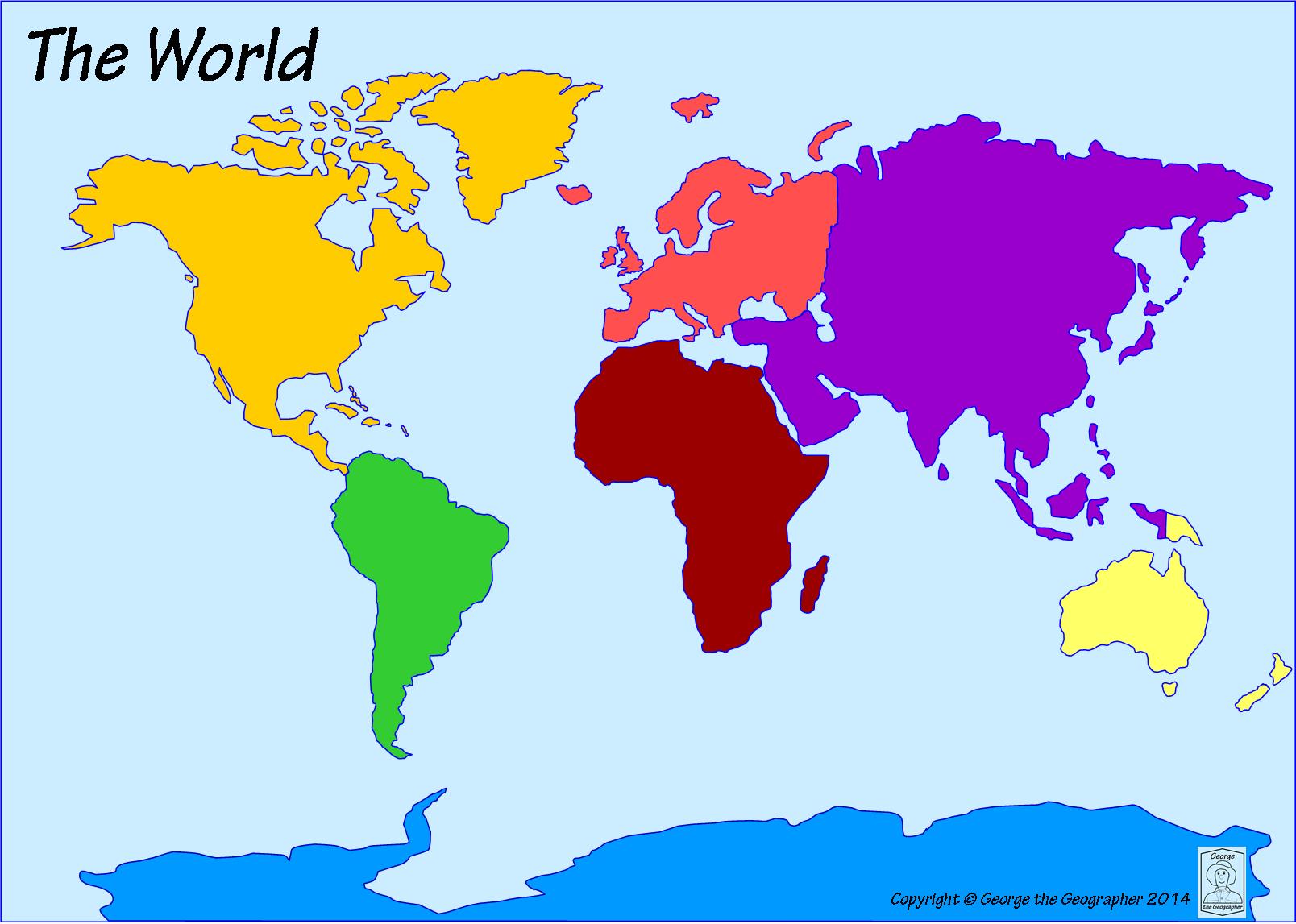
What is the name of the most southern continent?
Australia
Africa
Asia
Antarctica
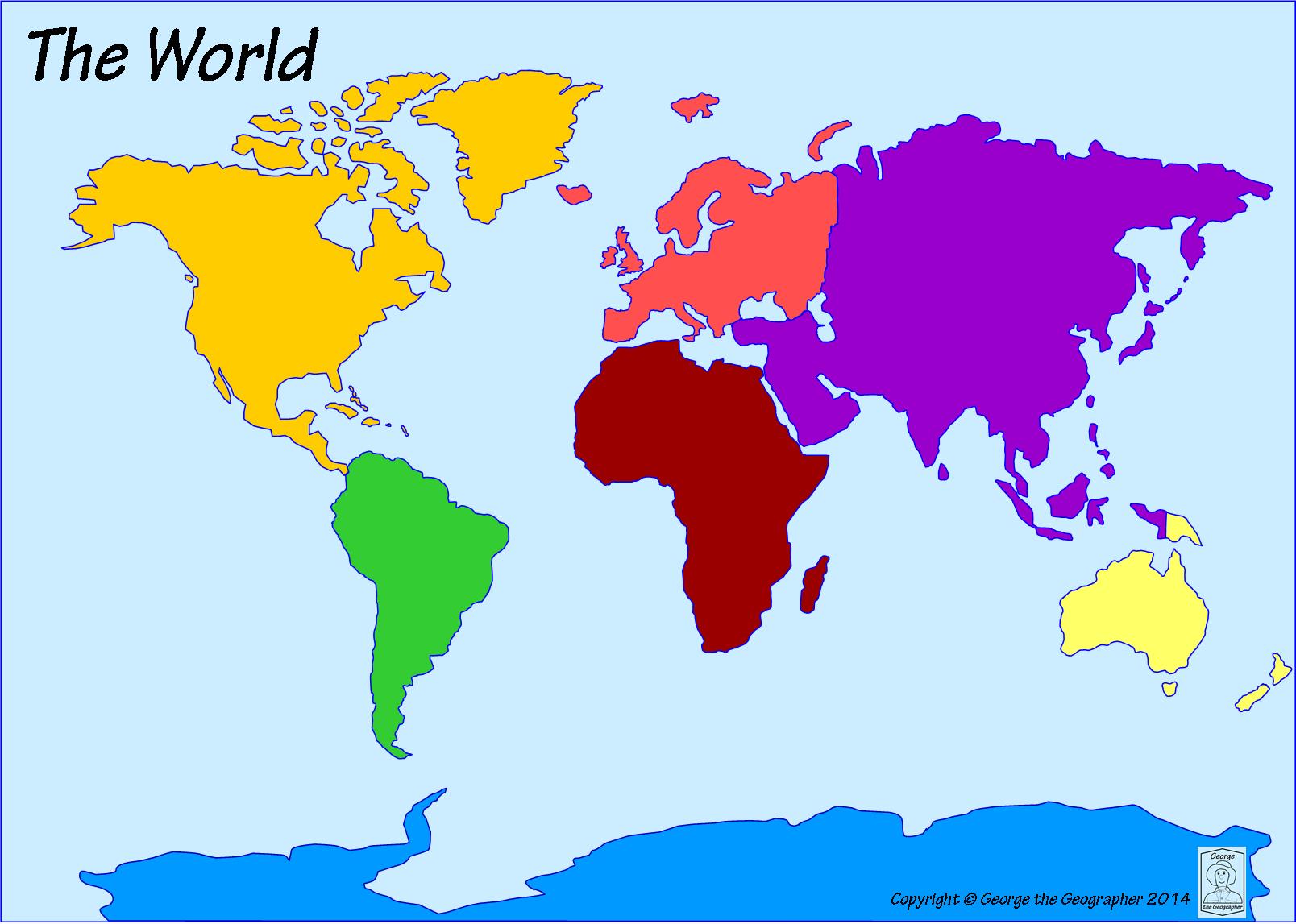
Which ocean is located to the east of Africa and to the west of Australia?
Atlantic Ocean
Indian Ocean
Pacific Ocean
Arctic Ocean
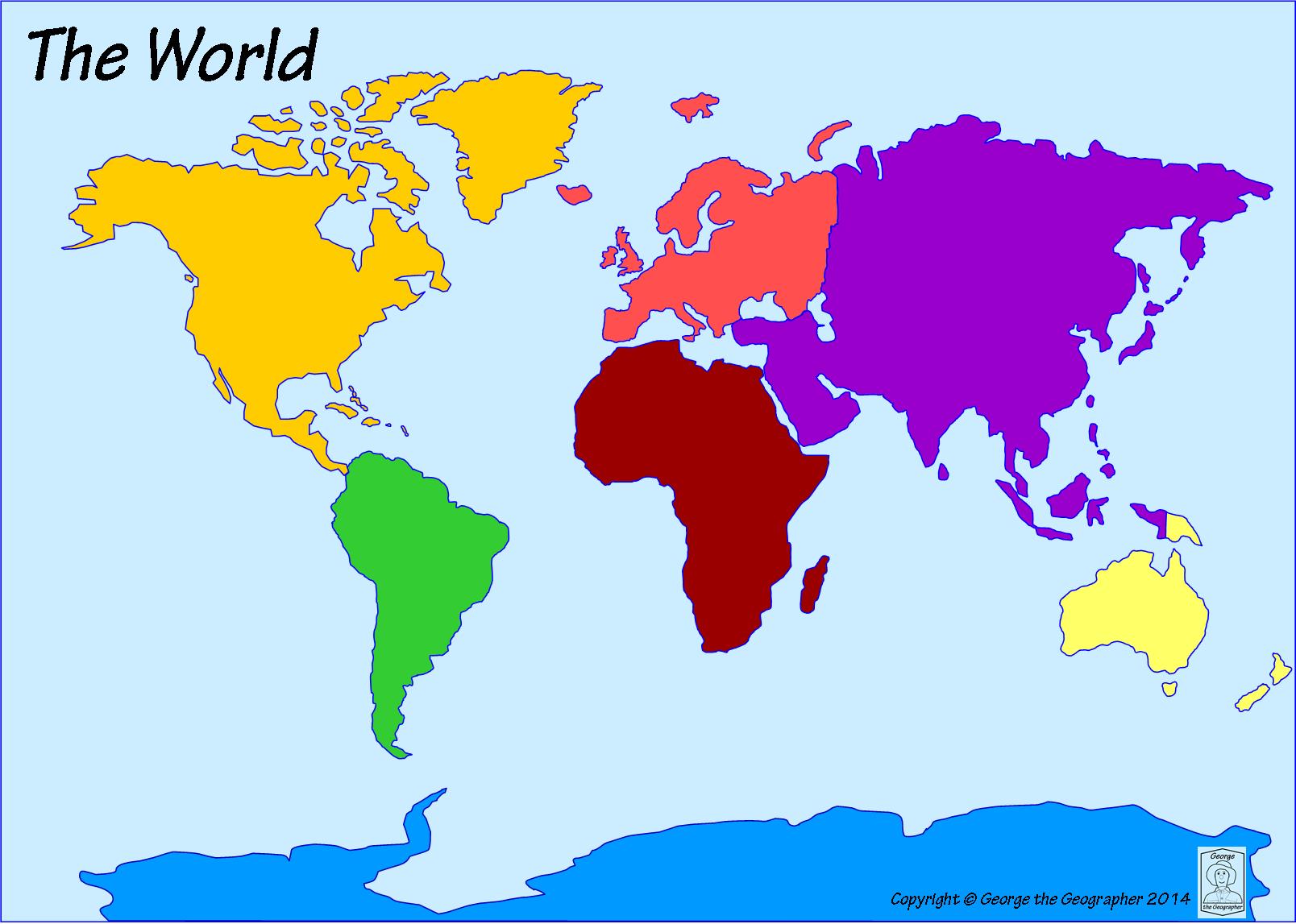
Which continent is to the east of the Indian Ocean and to the west of the Atlantic Ocean?
Africa
Europe
North America
Asia

