Wayground logo

Free Printable Worksheets

Font size

S
M
L
XL
Worksheets

Atomic Structure

Total questions: 43

Worksheet time: 32mins

Name
Class
Date
1.

What is a subatomic particle with a positive charge that is in the nucleus of an atom?

a)

neutron

b)

proton

c)

electron

d)

valence electron

2.

What is a subatomic particle without an electric charge, located in the nucleus of an atom?

a)

neutron

b)

proton

c)

electron

d)

valence electron

3.

What is a subatomic particle with a negative charge? It is found in the electron cloud surrounding the nucleus.

a)

neutron

b)

proton

c)

electron

d)

electron cloud

4.

What is the center of an atom containing protons and neutrons?

a)

nucleus

b)

neutron

c)

proton

d)

electron cloud

5.

What is the number of protons in the nucleus of an atom that determines the chemical properties of an atom?

a)

mass number

b)

atomic mass

c)

atomic number

d)

atomic symbol

6.

What is the combined mass of all the protons and neutrons of an atom and is approximately equal to the number of protons and neutrons?

a)

atomic mass

b)

atomic number

c)

subatomic particles

d)

nucleus weight

7.

What is the combined mass of all the protons and neutrons of an atom and is approximately equal to the number of protons and neutrons?

a)

atomic mass

b)

atomic number

c)

subatomic particles

d)

nucleus weight

8.

What is material that has mass and takes up space?

a)

volume

b)

mass

c)

matter

d)

density

9.

What is the atomic number?

a)

the number of protons in the nucleus

b)

the number of protons and neutrons in the nucleus

c)

the number of neutrons in the nucleus

d)

the number of protons in the energy levels

10.

What is the mass number?

a)

the number of protons in the nucleus

b)

the number of protons and neutrons in the nucleus

c)

the number of neutrons in the nucleus

d)

the number of protons and electrons in the atom
11.

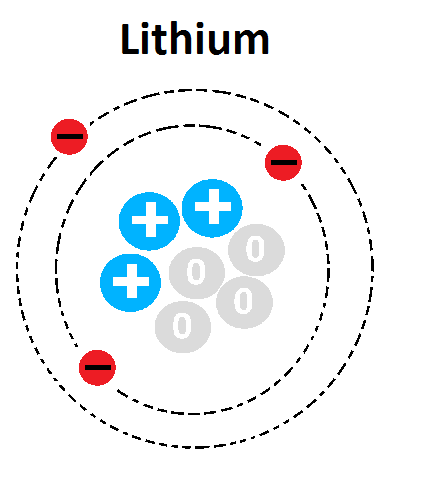
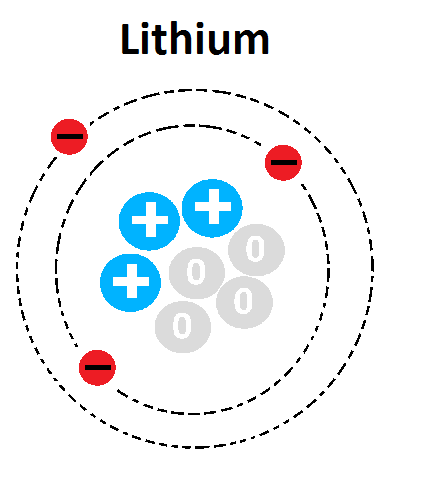
What is the atomic number of this atom?

a)

1

b)

3

c)

4

d)

7

12.

What is the mass number of this atom?

a)

1

b)

3

c)

4

d)

7

13.
Most of the mass in an atom is made up of _____________________?
a)
protons and electrons
b)
protons and neutrons
c)
neutrons and electrons
d)
electrons and quarks
14.
In order for an atom to be neutral what has to be true?
a)
The atom has more protons than neutrons
b)
The atom has more neutrons than protons
c)
The atom has the same number of protons and neutrons
d)
The atom has the same number of protons and electrons
15.
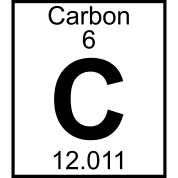
What does the C represent?
a)
atomic mass
b)
atomic number
c)
element name
d)
chemical symbol 
16.

What does the 6 represent?

a)

Atomic mass

b)

atomic number

c)

chemical symbol

d)

element name

17.
What subatomic particles would you find in the nucleus of an atom?
a)
Protons only
b)
Protons and Neutrons
c)
Neutrons and Electrons
d)
Protons and Electrons 
18.
Which subatomic particles contribute the most to the mass of an atom?
a)
Protons, Neutrons, Electrons
b)
Protons only
c)
Protons and Electrons
d)
Protons and Neutrons
19.
If an atom has 12 positively charged subatomic particles, which of the following must it also have to be considered a neutral atom?
a)
12 neutrons
b)
12 electrons
c)
12 protons
d)
24 protons and neutrons
20.

An atom has 10 protons, 15 neutrons and 10 electrons what is its mass number.

a)

20

b)

10

c)

35

d)

25

21.

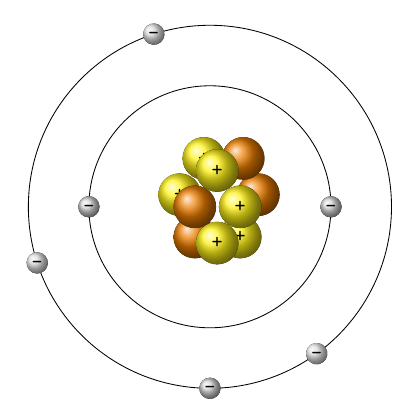
How many electrons does this atom have?

a)

2

b)

4

c)

6

d)

10

22.
The atomic number of an element that has 9 protons, 9 electrons, and 10 neutrons is _____.
a)
9
b)
10
c)
19
d)
28
23.
An element with a mass number of 11 and an atomic number of 5 has how many neutrons?
a)
11
b)
5
c)
6
d)
16
24.
Where is most of the mass in an atom located?
a)
in the nucleus
b)
in the protons
c)
in the neutrons
d)
in the electrons
25.
An atom has an atomic number of 15 and a mass number of 31. How many protons are there in the atom?
a)
15
b)
31
c)
16
d)
47
26.
What is the atomic number of the atom pictured? 
a)
9
b)
10
c)
18
d)
19
27.

Which of the following determines the identity of an element?

a)

number of protons

b)

atomic mass

c)

number of neutrons

d)

number of shells

28.
Subatomic particles with a positive charge
a)
neutrons
b)
atomic mass
c)
protons
d)
isotopes
29.

Subatomic particles with a negative charge

a)

Electrons

b)

Neutrons

c)

Protons

d)

Quarks

30.
Subatomic particle with a charge of 0
a)
neutron
b)
proton
c)
electron
d)
quark
31.

electrons are discovered by _________experiment

a)

cathode ray tube

b)

gold foil

c)

oil drop

32.

The figure shows _____________experiment

a)

oil drop

b)

cathode ray tube

c)

gold foil

33.

The name of the model of the atom ( shown in the figure) is _______________

a)

plum pudding model

b)

nuclear model

c)

energy levels model

d)

quantum model

34.

Who proposed the Quantum Mechanical Model of the Atom?

a)

Erwin Schrodinger

b)

James Chadwick

c)

Niels Bohr

d)

Mr. Do's cousin, John Doe

35.
Double 33
a)
66
b)
16.5
c)
44
d)
6
36.
-9 - 8
a)
-17 
b)
-1
c)
1
d)
17
37.

smallest 3-digit number?

a)

200

b)

999

c)

111

d)

100

38.

2 x 2 x 2 x 2x 2?

a)

10

b)

16

c)

32

d)

64

39.

your amazon prime discount of 20% was applied to your $50 game.what was the discount ?

a)

$40

b)

$5

c)

$10

d)

$15

40.

select all numbers which are factors of 128 ?

a)

3

b)

32

c)

48

d)

8

41.

What is it called if there are three pairs of electrons being shared?

a)
Triple bond
b)
Bond length
c)
Tribond
42.
What is it called when atoms share two pairs of electrons?
a)
A double bond
b)
A single bond
c)
A triple bond
d)
A quadruple bond
43.
What is it called when atoms share one pair of electrons?
a)
A double bond
b)
A triple bond
c)
A quadruple bond
d)
A single bond