
 Worksheets
Chemistry!
Total questions: 39
Worksheet time: 42mins
Name
Class
Date
1.
How many elements are in C6H12O6?
a)
1
b)
2
c)
3
d)
4
2.
How many atoms of carbon (C) are in C6H12O6?
a)
3
b)
6
c)
12
d)
24
3.
Element or compound?
H2O
H2O
a)
element
b)
compound
4.
Element or compound?
O2
O2
a)
Element
b)
Compound
5.
Which of the following is a compound?
a)
Co
b)
O2
c)
C
d)
CO2
6.
Which is the correct formula for:
three hydrogen (H)
one sulfur (S)
four oxygen (O)
three hydrogen (H)
one sulfur (S)
four oxygen (O)
a)
H3SO4
b)
HSO4
c)
H4S3O
d)
H2O
7.
Which is the correct formula for:
one carbon (C)
two oxygen (O)
one carbon (C)
two oxygen (O)
a)
CO2
b)
CO
c)
C2O
d)
2CO
8.
How many elements are in H2O?
a)
1
b)
2
c)
3
d)
4
9.
Which of the following is NOT an element?
a)
H2O
b)
H2
c)
O2
d)
Au
10.
How many atoms are there TOTAL in:
H2SO4
H2SO4
a)
6
b)
5
c)
7
d)
3
11.

The red numbers in the image below represent ________
a)
subscripts
b)
coefficients
c)
I don't know, and don't want to try
d)
None of the answers are correct
12.

The blue numbers in the image below represent ________
a)
I don't know, and don't want to try
b)
coefficients
c)
subscripts
d)
none of the answers are correct
13.
The substances at the beginning of a chemical equation are called the ____
a)
product
b)
yield
c)
chemical symbol
d)
reactants
14.
In the equation, 2Mg + O2 ---> 2MgO, which are the reactants?
a)
Mg and O
b)
MgO
c)
Mg and MgO
d)
O and MgO
15.
In a chemical reaction, everything to the rightof the arrow is called ______________.
a)
Products
b)
Yields
c)
Molecules
d)
Reactants
16.
How many atoms of aluminum are on each side of the following equation: 4Al + 3O2 --> 2Al2 O3
a)
2
b)
6
c)
1
d)
4
17.
Is the following equation balanced or unbalanced?
Fe + S --> FeS
Fe + S --> FeS
a)
balanced
b)
unbalanced
18.
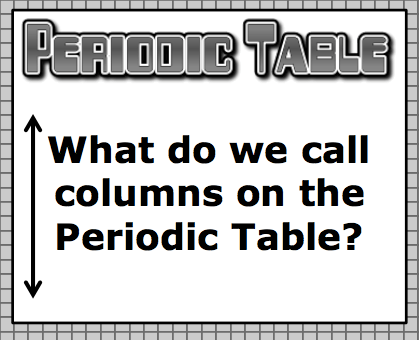
a)
Periods
b)
Groups
19.
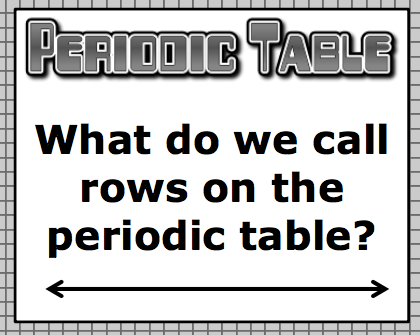
a)
Periods
b)
Groups
20.

a)
energy levels
b)
valence electrons
c)
protons
d)
neutrons
21.
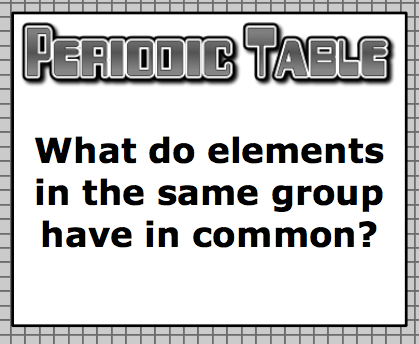
a)
energy levels
b)
valence electrons
c)
protons
d)
neutrons
22.
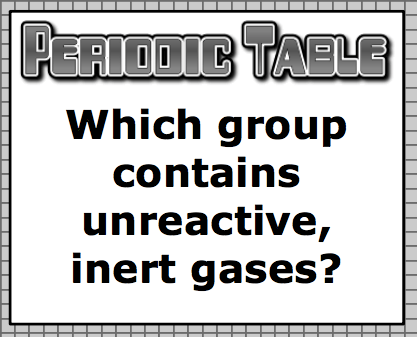
a)
Group 1
b)
Group 17
c)
Group 2
d)
Group 18
23.
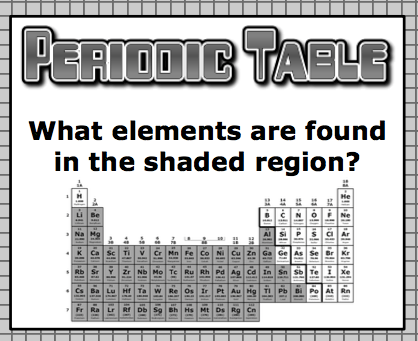
a)
Metals
b)
Nonmetals
c)
Metalloids
24.
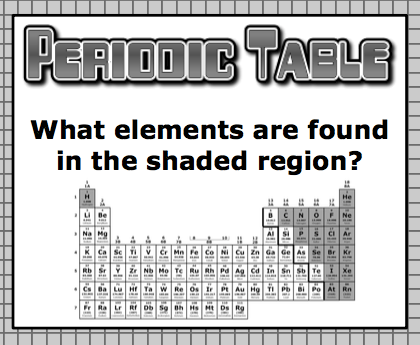
a)
Metals
b)
Nonmetals
c)
Metalloids
25.
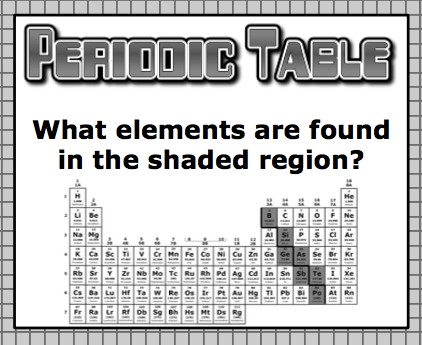
a)
Metals
b)
Nonmetals
c)
Metalloids
26.
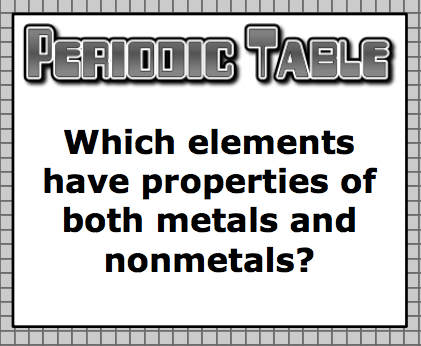
a)
Metals
b)
Nonmetals
c)
Metalloids
27.

What element is this?
a)
Helium
b)
Hydrogen
c)
Argon
d)
Silver
28.

What element is represented in this Bohr Model?
a)
Carbon
b)
Hydrogen
c)
Aluminum
d)
Lithium
29.

?
a)
Lithium
b)
Boron
c)
Carbon
d)
Neon
30.

?
a)
Boron
b)
Carbon
c)
Nitrogen
d)
Lithium
31.

?
a)
Helium
b)
Hydrogen
c)
Argon
d)
Silver
32.
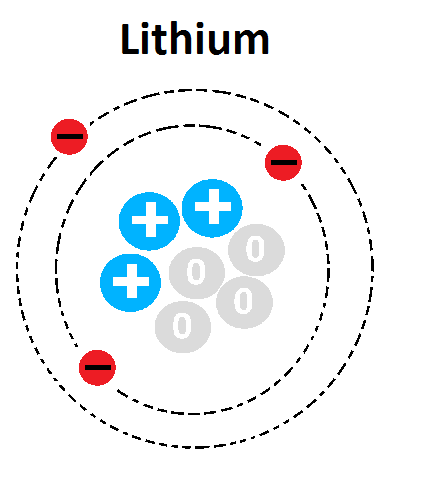
What is the mass number of this atom?
a)
1
b)
3
c)
4
d)
7
33.

What is the atomic number of this atom?
a)
2
b)
4
c)
6
d)
none of the above
34.

What group does this element belong to?
a)
Group 1: Alkali metals
b)
Group 18: Noble Gases
c)
Group 2: Alkaline-Earth Metals
d)
Group 17: Halogens
35.
The law of conservation of mass states that
a)
matter is created
b)
matter is destroyed
c)
matter is neither created nor destroyed
d)
matter does not change
36.
True or false: The law of conservation of mass means that the number of atoms of the products is more than the number of atoms in the reactants.
a)
True
b)
False
37.
What is the law of conservation of mass?
a)
Matter changes when reacted or changed.
b)
The mass of all reactants are changed during a physical or chemical change
c)
The mass of the reactants is the same as the mass of the products
d)
The mass of the products is different than the mass of the reactants.
38.
The total amount of matter (atoms) before and after a chemical reaction remains the same.
a)
True
b)
False
39.
What will weigh more when a chemical change is complete: the reactants before the chemical reaction or the product after the reaction is complete?
a)
They both will weigh the same
b)
The product always weighs more than the reactant
c)
The reactant will weigh more than the product
d)
They both will loose mass after the reaction
100 %

