
 Worksheets
Chemical Reactions Unit
Total questions: 35
Worksheet time: 52mins


According to the law of conservation of mass, matter cannot be created or (a)
True or False: In a complete chemical equation, there must be the same number of atoms of each element on the reactants and products side.
True
False
A chemical change is different than a physical change because in a chemical change
chemicals are used
molecules do not physically touch
a new substance is formed and in a physical no new substance is formed
the change can be seen but in a physical change it cannot
Which of the following 2 are chemical reactions?
sugar dissolving in water
water turning into steam
burning wood
mixing baking soda and vinegar
tearing paper
Which of the following is a common sign that a chemical change has occurred?
A chemical has turned a different color, bubbled, and/or changed temperature.
A chemical has changed to a different state of matter, such as a liquid to a solid.
A chemical has changed size.
A chemical has become a different shape.
You know that a chemical reaction has occurred if
there is a precipitate (new solid)
there is a color change.
there is a temperature change.
All of these answers are evidence.
In chemical reactions, what does the Law of Conservation of Matter mean?
Matter is not created or destroyed.
The total mass of the reactants is greater than the total mass of the products.
The total mass of the reactants is less than the total mass of the products.
Matter is not changed.
The smallest particle of an element; made of electrons, protons, and neutrons
Atoms
Elements
Molecules
Products
The simplest unit of a chemical compound that can exist; formed when two or more atoms join together chemically
Atom
Compound
Molecule
A substance produced during a chemical reaction
Product
Reactant
Properties
A chemical reaction or process that absorbs heat from the surroundings
Endothermic
Exothermic
A chemical reaction or process that releases heat.
Endothermic
Exothermic
Which subatomic particle has a negative charge?
proton
neutron
electron
Which subatomic particle has a positive charge?
proton
neutron
electron
Which subatomic particle has a neutral or no charge?
proton
neutron
electron
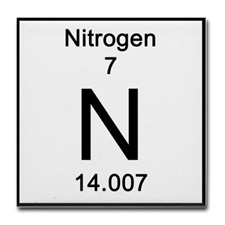

What is an atom?
The smallest unit of matter
The smallest unit of measurement
Your next door neighbor
anything that has mass and takes up space
matter
atom
element
nucleus

