
 Worksheets
DC REVIEW
Total questions: 81
Worksheet time: 43mins

Standing up to cyberbullying.
Standing by and letting cyberbullying happen.

Standing up to cyberbullying.
Standing by and letting cyberbullying happen.

Standing up to cyberbullying.
Standing by and letting cyberbullying happen.
Standing up to cyberbullying.
Standing by and letting cyberbullying happen.

Standing up to cyberbullying.
Standing by and letting cyberbullying happen.

From: no_reply@emailinternet.chase.com
Subject: Account Status
Attention US Bank Customer,
Due to a recent security check on your account, we require you to confirm your details. Failure to do so within 24 hours will lead to account suspension. Sorry for the inconveenince.
Click here to confirm your account
Regards,
US Bank Online Customer Service
This email has been sent by US Bank.
What is cyberbullying?
constant harassment online
watching TV online
being watched online
another word for texting

Madison is online playing her Xbox, and she suddenly gets several rude messages from players she thought were her friends. Is this an example of cyberbullying?
Yes
Maybe
Not sure
When I see someone being teased online, who should I report that to?
friend
teacher
my bff
super hero
A bystander is a person who does _____________ when he or she witnesses something happening to someone else.
the right thing
too much
nothing

If you think someone accessed your school Google account without your permission, what should you do?
Never use the computer at school again.
Try to find out who did it so that you can get back at them.
Delete everything in your account.
Tell a teacher.
What can you infer from the fact that people are more likely to say mean things online than in person?
The Internet doesn't have the same rules of behavior as real life.
Using chat rooms and message boards makes some people angry.
The Internet is much more dangerous than real life.
Being anonymous can make some people forget their manners.
What's the best way to prove that you've been a victim of cyberbullying?
Talking about it to an adult you trust.
Telling a good friend about what has been happening.
Saving screenshots of instances where you've been harassed.
Replying to harassing texts or emails.

Which of these is NOT correct way to end cyberbullying?
Block people.
Don't do anything about it.
Reach out for help.
Protect your accounts.
Which of these text messages could be viewed as cyberbullying?
Let's meet at the park at 2pm
I think the red sweater looks best
Don't tell Tina about going to the park
I like my flip phone
Your friend, Johnny, just got an mean IM (instant message) from a friend and he wants to retaliate. How do you respond to Johnny?
Help him write his retaliation message.
Encourage him to walk away for a little while
Tell him to respond as soon as possible.
What are some signs that you friend may be facing a cyberbully?
She is withdrawing from her regular activities
She has a quick temper
She has stopped her regular social media usage
All of these
How often is a cyberbully a friend or acquaintance of the victim?
About half the time
Most of the time
Less than half the time
Always
True or False: Most teens don't think that cyberbullying is a big problem
True
False
True or False: There may be legal consequences for cyberbullies.
True
False
If you suspect your friend is being cyberbullied, you should:
Talk to him
Assume you are crazy and ignore your concern
What could you say to help your friend keep from cyberbullying someone?
Explain that bullying can hurt feelings
Explain the social and legal consequences of bullying
Ask if that's the way she would like to be treated
All of these
An activity might be cyberbullying if...
it involves organizing a game of basketball
it excludes a person or group of people
it involves submitting your homework
All of these
An activity might be cyberbullying if...
it could make a person feel unsafe
it could embarrass a person
an adult, like your teacher, would disapprove of it
All of these
True or False: Spreading rumors about someone on social media or websites is cyberbullying?
True
False
True or False: Impersonating someone online to make him look bad is cyberbullying?
True
False
True or False: Explaining the English homework to your friend online is cyberbullying?
True
False
True or False: Creating an embarrassing video of your friend is cyberbullying?
True
False
What question(s) can you ask yourself to determine of an action might be cyberbullying?
Could this action hurt someone else's feelings?
Could this make someone happy today?
Could this help my grade?
All of these
What question(s) can you ask yourself to determine if an action might be cyberbullying? Select all that apply!
Could this make someone feel humiliated or embarrassed?
Could this make a person feel threatened or unsafe?
Does this action happen without use of technology?
Would adults, like your teacher, approve of this?
What is typically true of cyberbullying victims?
All victims react the same way to cyberbullying
Most victims don't like to draw attention to themselves
Most victims don't get upset
All of the above
What is the best thing for a person to do after receiving a threatening email?
Save it for evidence
Delete it immediately
Ignore it
Respond with a counter threat
"your account has been accesed" is a sentence that can be sent to you by crooks to make you click on a link in an email.
False
True
If you receive an email from someone you don't know that has a ***CLICK HERE*** link. What do you do.
Click the link
Click the link and then send it to your friends
Delete it straight away.
Who is likely to be targeted by phishing scams.
School children
Adults
Companies
Everyone
You should always change your password regularly.
True
False
What should you never give out over the phone, through email or on the Internet.
Personal Information
The Morton score
Tomorrow's lunch choices
Select all examples of private information.
Lucas's password
Michelle's home address
Reina's favorite song
Yency's lunch choice
Juliana's age
Gloria should not share her favorite school subject because it is considered private information.
True
False

Select the information that is not safe to post.
Eli
February 2, 2005
Rogers Elementary
Soccer
soccerfan32@myemail.com


What is Malware?
Software that protects your computer from viruses
Software that protects your computer from spyware and adware infections
Software that updates your computers operating system
Software that may harm your computer
What is a virus? Best answer)
Software that attaches itself to another file and when the file is opened it runs and causes damage.
Software that runs independently doing damage to your computer
Software that masquerades as something it isn’t in an effort to trick the user
Software that sends information about you to someone else
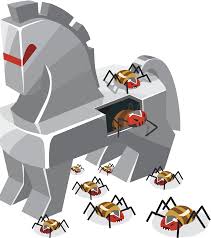
What is a Trojan virus?
A story from Greek mythology
Something that can break your computer
When you download an app and it's actually a virus
A virus only made by hackers
Which is NOT a type of computer virus?
a caterpillar
a Trojan horse
a worm
What is a computer virus?
A self-replicating software that infects other programs or files
A malicious hardware component
A harmless software tool
Which types of malware can self replicate
Trojan
Virus
Spyware
Adware
Worm
Malware is a generic term for software that :
replicates itself and spread to other computers
hides on a computers and gathers information to pass on.
is designed to cause harm to the system it infects.
encrypts data on the system
What is ransomware?
Malware that steals your personal information
Malware that steals your money
Someone steals your computer and returns it when you pay them money
Locks your computer till you pay money
What type of malware is used to collect your browsing habits, keystrokes, usernames or passwords.
Trojan
Spyware
Virus
Adware
Ransomware
Malware used to take over and link a large number of computers in order to execute a DDOS attack.
Phishing
Zero-Day Exploit
Social Engineering
Backdoor
Botnet

