
 Worksheets
Usage of Mirrors, Reflection of Light
Total questions: 50
Worksheet time: 22mins
Image behind the mirror is
virtual
real
upside down
upright

Name the mirror that curves inwards
plane mirror
convex mirror
concave mirror
spherical mirror
A real image is always
erect
upright
inverted

The size of an object and its image are the same in this type of mirror...
Plane
Convex
Concave
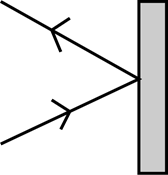
In the illustration, the light ray striking the object is-

A shopkeeper wants to keep an eye on his store in order to prevent shoplifting. What could the shopkeeper hang on the wall in order to see a wider image of his store and his customers?
a convex mirror
a concave mirror
a convex lens
a concave lens
A flat mirror is an example of a ___.
plane mirror
concave mirror
convex mirror
spherical mirror
A dentist uses a small dental mirror to help magnify teeth in your mouth. What type of mirror is this?
a convex mirror
a concave mirror
a convex lens
a concave lens
The side view mirrors on your car help shrink the image on both sides of the car, allowing you to see a larger field of view. What type of mirror is this?
a convex mirror
a concave mirror
a convex lens
a concave lens

Type of mirror used as a side mirror on a vehicle to provide a wide angle view...
Plane
Convex
Concave

Images in a plane mirror are
real
larger
same size
smaller
The two types of spherical mirrors are ...............
flat and plane
concave and plane
convex and concave
plane and rectangular


The diagram shows
refraction of light.
absorption of light.
reflection of light.
scatter of light.

Which is the reflected ray?
A
B
C
D

Which is the reflected ray?
A
B
C
D

Which is the reflected ray?
A
B
C
D

Which is the reflected ray?
A
B
C
D

Which is the reflected ray?
A
B
C
D

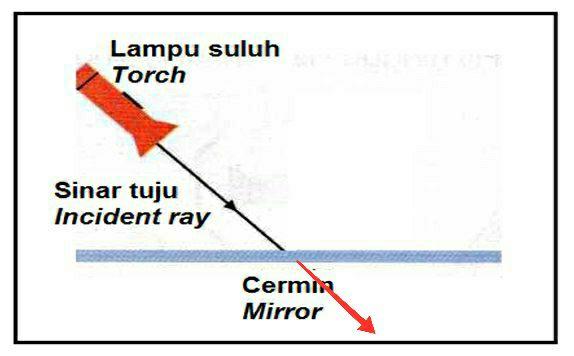
Diagram shows a phenomenon occurs when the spotlight is directed onto a mirror surface. What is the principle of light shown in the situation?
Light travels in a straight line
Refraction of light
Reflection of light
Light travels in parallel
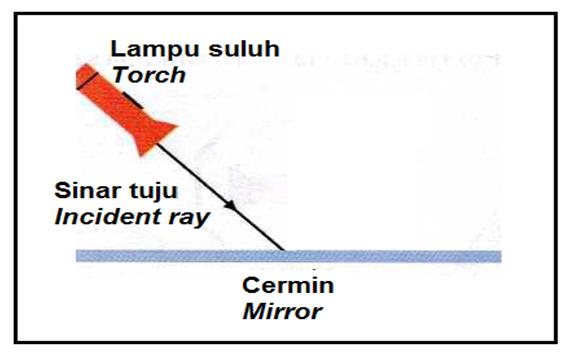
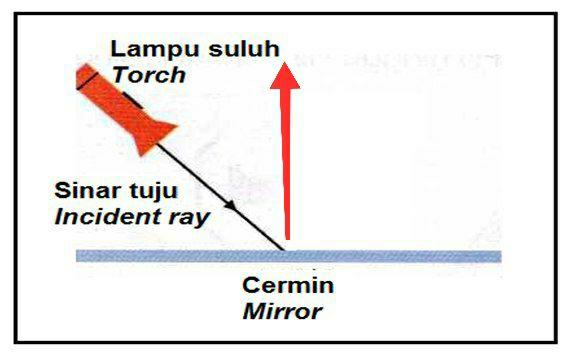
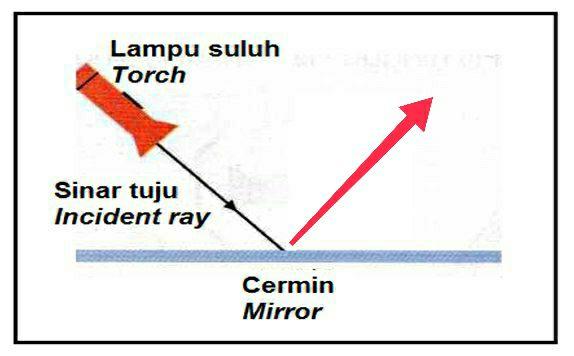
The following diagram shows the ray diagram when a torch light is torched towards a mirror. Which of the following is the correct reflected ray?
Tick the correct of TWO devices which use the principle of light reflection in our daily lives.


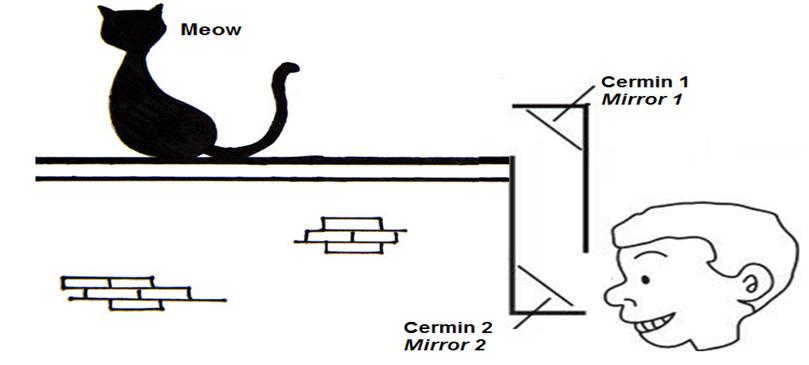
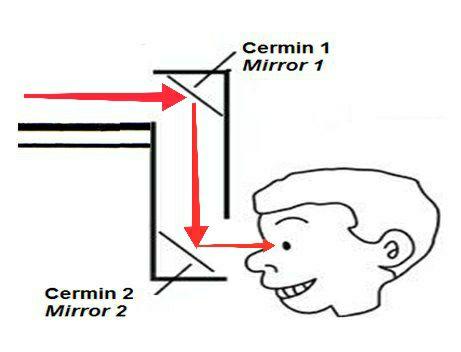
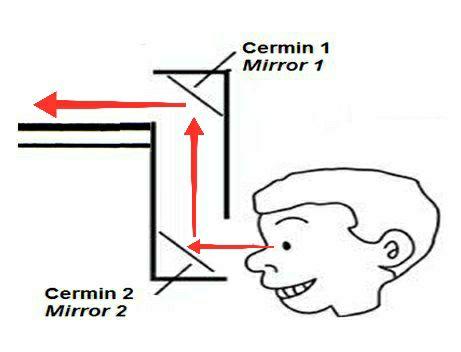
Ariff is watching a cat on a wall using a periscope. Which of the following is the correct reflected ray diagram in the periscope? Tick the correct answer.
None
None


When light hits an area and bounces back it is called:
echo
refraction
reflection
absorbing

In the diagram, which letter show reflected light?
A
B
C
D
One of these is not a source of light


Sir David Brewster is the man who invented the kaleidoscope. He made the first one around 1816. He was interested in light and reflection.
When was the first kaleidoscope made?
It was made about 205 years ago!
It was made in 1816.
It reflects light.
What is the angle of mirror in periscope
35
45
55
65
How does periscope works?
A periscope works by using two mirrors to reflect light from one mirror to another for the person to see the things that is behind a high obstacle.
It works by using one mirror to reflect for us to see things behind a high obstacle.
It works by using one glass to reflect for us to see things behind a high obstacle.
What is the type of mirror use in periscope?
Convex mirror
Concave mirror
Plane mirror
What the meaning of real image?
Image that forms on a screen
Image that cannot be formed on the screen
Image that formed behind the screen
Which of the following is a usage of plane mirror?
help a dancer to correct their movement
use as a safety feature at the dangerous corner
use by a dentist to see a patient's teeth
to help a dancer to correct their movement
A plane mirror apply the concept of _________________
Light refraction
Light dispersion
Light Reflection
Which is not a usage of concave mirror
Make a living room look spacious
Help a dentist to see patient's teeth so that the image formed looks bigger and closer
Easier for someone to apply makeup
Which of the following is the properties of the image formed on the plane mirror?
real image
laterally inverted
inverted
the size of the object is not same with the size of the image
virtual image is_________________________
is the image that can be form on screen
is the image that cannot be form on screen
convex mirror image _____________ size
same
bigger
smaller

