
 Worksheets
Waves Quizizz
Total questions: 50
Worksheet time: 49mins
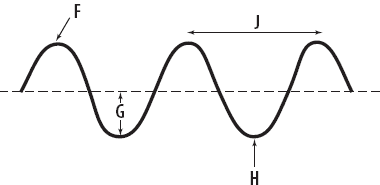
The highest part of a transverse wave is
the crest
the trough
the wave point
the hotel transylvania
The lowest parts of a transverse wave are the
crests
troughs
wave points
low nodules
The distance between two corresponding parts of a wave is its
amplitude
frequency
wavelength
velocity
A wave that needs a medium to travel is called a(n)
electromagnetic wave
mechanical wave
ocean wave
any wave can do this
A wave that can travel with or without a medium is called a(n)
electromagnetic wave
mechanical wave
surface wave
all waves can travel in any way

Longitudinal waves have:
crests and troughs
crests and compressions
compressions and rarefactions
troughs and rarefactions
Transverse waves have:
crests and troughs
crests and compressions
compressions and rarefactions
troughs and rarefactions

What is the amplitude of this wave?
3 cm
-3 cm
6 cm
4 cm

What is the wavelength of this wave?
3 cm
10 cm
4 cm
8 cm
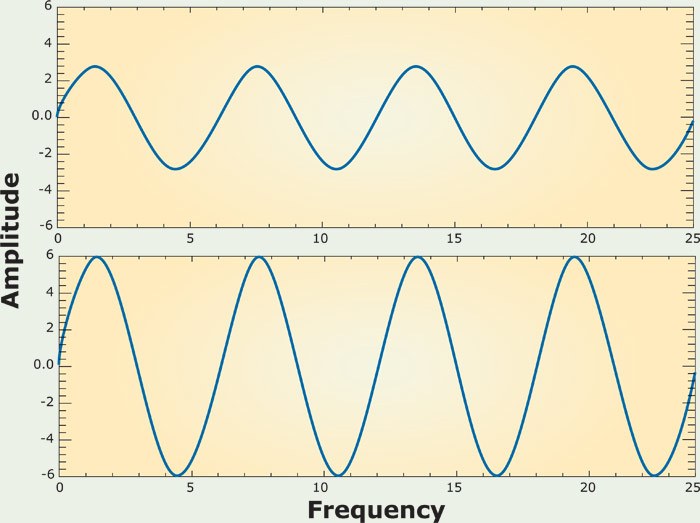
Which property of these sound waves differs?
Volume
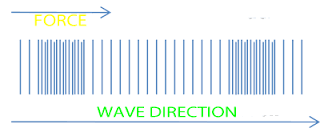
surface wave
transverse wave
electromagnetic wave
longitudinal wave
Particles travel perpendicular to the direction the energy travels in a longitudinal wave.
Only longitudinal waves can travel through a medium.
Particles travel parallel to the direction the energy travels in a longitudinal wave.

Which wave has the most energy and why?
The top wave because it has the larger amplitude
The bottom wave because it has the larger amplitude
The top wave because it has the greater frequency
The bottom wave because it has the greater frequency
Which one of the following would provide more energy in a wave?
a shorter amplitude
a shorter wavelength
a lower frequency
a longer wavelength
For a wave, the larger the amplitude, the _____ energy the wave carries.
more
less
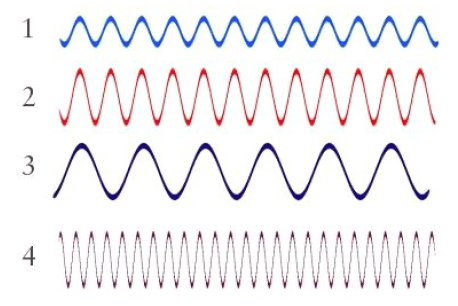
Which wave in the diagram has the greatest wavelength?
1
2
3
4
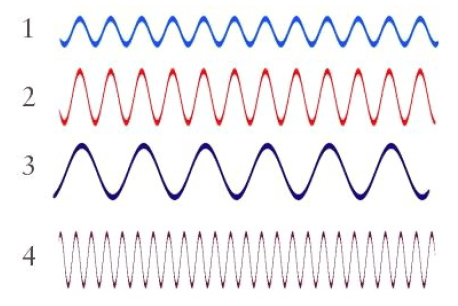
Which wave in the diagram has the greatest frequency?
1
2
3
4
the number of complete waves that pass a point every second is a wave's

What wave has the loudest sound in the diagram?
A
B
C
D

Use the diagram to determine which wave has the HIGHEST frequency.
Wave 1
Wave 2
Wave 3
Wave 4

The diagram illustrates the interaction of waves with the ocean floor. Which zone of waves show the highest energy based on wavelength and why?
Zone 1 because the waves have the longest wavelength
Zone 3 because the waves have the longest wavelength
Zone 3 because the waves have the shortest wavelength
Zone 1 because the waves have the shortest wavelength
The volume of a sound depends on the amplitude of the sound waves. The lower the amplitude of a sound wave, the quieter the sound. Which of the following sound waves illustrates the quietest sound?


Sound waves travel as ________ waves.
Transverse
Longitudinal
Surface
Sound waves CANNOT travel through which of these:
Paper
Milk
Outer space
High frequency sounds have _______ pitch
HIgh
Low


Low Frequency = _______ Pitch

Sound waves travel the fastest through __________
gas

amplitude
frequency

Which wave represents a shouting sound?
A
B
A and B

If I moved the waves closer together, what would happen to the frequency?
decrease
increase
no effect
applesauce
If a sound wave's amplitude determines volume of the sound, what do you think amplitude determines about a light wave?
intensity/brightness of the light
volume of the light
color of the light
type of light

If these were sound waves, which diagram shows the loudest sound?
A
B
C
D

Which diagram shows the lowest wavelength?
A
B
C
D

Which diagram represents a sound wave with the lowest pitch?
A
B
C
D
High frequency sounds have _______ pitch
HIgh
Low

Janice was standing outside and heard the loud boom a firework made as it exploded in the night sky. Which medium allowed the sound waves to reach Janice's ear?
Water
Air
Ground
Ear
George is watching waves at the beach and notices that 10 waves go by every second. George is calculating _______________
Frequency
Wavelength
Amplitude
None of the above

A ringing bell makes noise inside a glass jar. Then the air is removed from the glass jar using a vacuum pump. When all of the air leaves the jar, the sound of the ringing bell can no longer be heard. Which of the following best explains why the students can no longer hear the bell?
Removing the air from the jar allows the bell to ring only very softly.
The sound in the empty jar is reflected off the inside of the glass sides.
The air in the jar provides a medium for the sound to travel through.
The difference in pressure inside and outside the glass jar is too great.

