wayground logo

Free Printable Worksheets

Font size

S
M
L
XL
Worksheets

Reactions 2

Total questions: 70

Worksheet time: 1hrs 17mins

Name
Class
Date
1.

the smallest particle of an element that can exist

a)

atom

b)

chemical

c)

matter

d)

bond

2.

in chemistry, the force that holds the atoms in a molecule together

a)

product

b)

compound

c)

property

d)

bond

3.

composed of more than one element, ingredient or part

a)

atom

b)

matter

c)

compound

d)

conserve

4.

to protect from loss; to use carefully

a)

chemical

b)

reaction

c)

property

d)

conserve

5.

a substance formed in a chemical reaction

a)

reactant

b)

reaction

c)

product

d)

bond

6.

in chemistry, the change that happens when two or more substance act on each other to form a different substance

a)

matter

b)

conserve

c)

chemical

d)

reaction

7.
What reaction type is characterized by the reactant breaking down as the reaction progresses?
a)
Synthesis
b)
Decomposition
c)
Combustion
d)
Double Replacement
8.
What is the term for the → sign in a reaction?
a)
makes
b)
produces
c)
yields
d)
all are correct
9.
What two molecules are produced in a combustion reaction?
a)
CO+ NH4
b)
SiO2 + H2O
c)
H2O + CO2
d)
CO+ H2O2
10.
Is the reaction below exothermic or endothermic?
CH4 + 2O2 → CO2 + H2O + heat
a)
exothermic
b)
endothermic
11.
___________________ are the elements/compounds formed in a chemical reaction (on the right)
a)
Polymers
b)
Bonds
c)
Reactants
d)
Products
12.

On the left side of the reaction. These are the chemicals that you start with.

a)

Product

b)

Reactant

c)

Coefficient

d)

Subscript

e)

Law of Conservation of Mass

13.

States that mass cannot be created or destroyed in a chemical reaction.

a)

Product

b)

Reactant

c)

Coefficient

d)

Subscript

e)

Law of Conservation of Mass

14.

On the right side of the reaction. These are the chemical that are made.

a)

Product

b)

Reactant

c)

Coefficient

d)

Subscript

e)

Law of Conservation of Mass

15.

What is the type of reaction? Fe2O3 --> Fe + O2

a)

Decomposition

b)

Synthesis

c)

Single Replacement

d)

Double Replacement

e)

Combustion

16.

What type of reaction is CH4 + O2 --> CO2 + H2O

a)

Decomposition

b)

Synthesis

c)

Single Replacement

d)

Double Replacement

e)

Combustion

17.

Which of the following equations is NOT balanced?

a)

Fe + S FeSFe\ \ +\ \ S\ \ \rightarrow\ \ FeS

b)

KOH + HCl KCl + H2OKOH\ +\ HCl\ \rightarrow\ KCl\ +\ H_2O

c)

2Mg + O2 2MgO2Mg\ +\ O_2\ \rightarrow\ 2MgO

d)

NaCl + H2SO4 Na2SO4 + HClNaCl\ +\ H_2SO_4\ \rightarrow\ Na_2SO_4\ +\ HCl

18.

A synthesis reaction between magnesium (Mg) and oxygen (O2) might produce

a)

Mg2Mg_2

b)

O4O_4

c)

MgOMgO

d)

MgCO2MgCO_2

19.

In an exothermic reaction, energy is transferred from

a)

the reactants to the surroundings

b)

one reactant to another

c)

the surroundings to the reactants

d)

the container to the chemicals

20.

The product of the synthesis reaction between sodium and chlorine gas is

a)

polyethylene

b)

carbon dioxide

c)

sodium chloride

d)

copper (II) chloride

21.

What happens in a chemical reaction?

a)

atoms are destroyed

b)

atoms are created

c)

atoms are heated and cooled

d)

atoms are rearranged

22.
What is the chemical symbol for the element hydrogen
a)
H
b)
He
c)
h
d)
he
23.
What is the chemical symbol for the element Silicon
a)
S
b)
Si
c)
si
d)
Sl
24.
What is the chemical symbol for the element Carbon
a)
ca
b)
co2
c)
C
d)
Cd
25.
What is the chemical symbol for the element copper?
a)
co
b)
c
c)
Cu
d)
cu
26.
What is the chemical symbol for the element Aluminum
a)
A
b)
AL
c)
Al
d)
al
27.
What is the chemical symbol for the element Nitrogen
a)
Ni
b)
N
c)
No
d)
Nb
28.
What is the chemical symbol for the element oxygen
a)
O
b)
Oxy
c)
ox
d)
Oy
29.
What is the chemical symbol for the element Silver
a)
S
b)
Si
c)
Au
d)
Ag
30.
What is the chemical symbol for the element Chlorine
a)
C
b)
Cl
c)
cl
d)
Ch
31.
What is the chemical symbol for the element Gold
a)
G
b)
go
c)
AU
d)
Au
32.
What element is represented by the Chemical symbol Mg
a)
Manganese
b)
Magnesium
c)
Molybdenum
d)
Mitrium
33.
What is the chemical symbol for the element Iron
a)
I
b)
Ir
c)
Fe
d)
fe
34.
What is the chemical symbol for the element Zinc
a)
Z
b)
Zn
c)
Zr
d)
zn
35.
What is the chemical symbol for the element Helium
a)
He
b)
he
c)
H
d)
h
36.
What is the chemical symbol for the element Calcium
a)
C
b)
Ca
c)
Cl
d)
CL
37.
What is the chemical symbol for the element Potassium
a)
K
b)
P
c)
Po
d)
Pt
38.
What is the chemical symbol for the element Phosphorus
a)
p
b)
P
c)
Ph
d)
Ps
39.
What is the chemical symbol for the element Sodium
a)
Na
b)
So
c)
S
d)
Sd
40.
What is the chemical symbol for the element Iodine
a)
I
b)
Io
c)
Id
d)
In
41.
What is the chemical symbol for the element Fluorine
a)
F
b)
Fl
c)
Flu
d)
f
42.
Which is the correct formula for:
one carbon (C)
two oxygen (O)
a)
CO2
b)
CO
c)
C2O
d)
2CO
43.
How many elements are in H2O?
a)
1
b)
2
c)
3
d)
4
44.
What is Fe2O3
(rust) made up of?
a)
1 flourine, 2 einsteinium,
3 oxygen
b)
2 fluorine, 3 oxygen
c)
2 iron, 3 oxygen
d)
2 iron, 3 osmium
45.
What reaction type is characterized by the reactant breaking down as the reaction progresses?
a)
Synthesis
b)
Decomposition
c)
Combustion
d)
Double Replacement
46.
What two molecules are produced in a combustion reaction?
a)
CO+ NH4
b)
SiO2 + H2O
c)
H2O + CO2
d)
CO+ H2O2
47.
Is the reaction below exothermic or endothermic?
CH4 + 2O2 → CO2 + H2O + heat
a)
exothermic
b)
endothermic
48.
The Law of Conservation of Mass states
a)
that matter exists in all states and reacts the same
b)
that matter can only be changed into new substances by introducing a catalyst
c)
that matter exists in the same state throughout any chemical change
d)
that matter cannot be created or destroyed and that the mass of the products must equal the mass of the reactants
49.
___________________ are the elements/compounds formed in a chemical reaction (on the right)
a)
Polymers
b)
Bonds
c)
Reactants
d)
Products
50.
What are the reactants in the chemical equation pictured?
a)
CH4 and CO2
b)
CH4 and O2
c)
CO2 and H2O
d)
O2 and H2O
51.
Is this balanced?...
Al + O2 --> 2Al2O3
a)
Yes!
b)
NO!
52.
Is this balanced?...
Fe + S --> FeS
a)
YES!
b)
NO!
53.

A chemical change is different than a physical change because in a chemical change

a)

chemicals are used

b)

molecules do not physically touch

c)

a new substance is formed and in a physical no new substance is formed

d)

the change can be seen but in a physical change it cannot

54.

Which of the following 2 are chemical reactions?

a)

sugar dissolving in water

b)

water turning into steam

c)

burning wood

d)

mixing baking soda and vinegar

e)

tearing paper

55.

How many Carbons are present on the reactant side?

a)

1

b)

2

c)

3

d)

4

56.

How many Hydrogens are on the product side of this chemical equation?

a)

1

b)

2

c)

3

d)

4

57.

How many Oxygens are on the product side of this chemical equation?

a)

1

b)

2

c)

3

d)

4

58.

Why are chemical equations always balanced? Select ALL that apply.

a)

Matter cannot be created.

b)

Matter cannot be destroyed.

c)

Matter can only be rearranged/conserved.

d)

Matter doesn't matter.

59.

In a chemical reaction, if the reactants are heated, the reaction usually happens

a)

slower

b)

faster

c)

at the same rate

d)

in a smaller volume

60.

What does it mean for a reaction to be endothermic? Choose 2 of the following.

a)

When two substances react, the temperature of the mixture decreases.

b)

When two substances react, the temperature of the mixture increases.

c)

There is less energy going into the reactant to break the bond than there is energy leaving the product.

d)

There is more energy going into the reactant to break the bond than there is energy leaving the product.

e)

The amount of energy entering and leaving is the same.

61.

What does it mean for a reaction to be exothermic? Choose 2 of the following.

a)

When two substances react, the temperature of the mixture decreases.

b)

When two substances react, the temperature of the mixture increases.

c)

There is less energy going into the reactant to break the bond than there is energy leaving the product.

d)

There is more energy going into the reactant to break the bond than there is energy leaving the product.

e)

The amount of energy entering and leaving is the same.
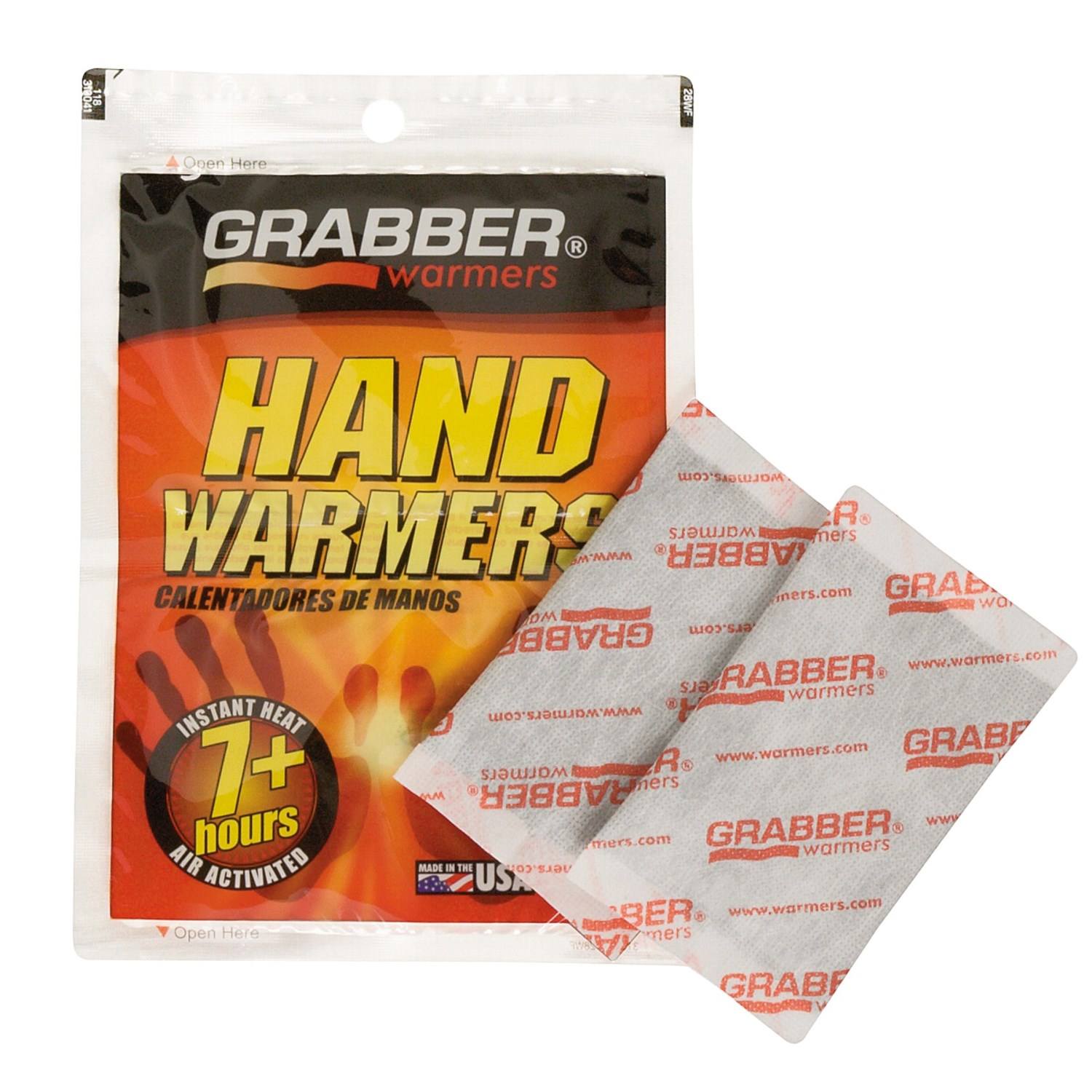
62.
Exothermic reactions...
a)
Absorb energy
b)
Release energy
c)
Release Color
d)
Absorb Color
63.
What type of reaction occurs in a hand warmer
a)
exothermic
b)
endothermic
64.
In an endothermic reaction, heat is ...
a)
taken in or absorbed
b)
given out or released 
65.
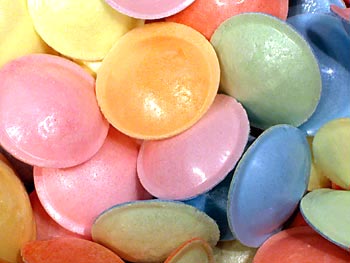
Have you ever eaten sherbet sweets candy? They fizz in your mouth and your tongue feels cold. Why do you think that is?
a)
It is an exothermic reaction
b)
It is an endothermic reaction
c)
It is made of ice
d)
It is dissolving your mouth
66.
If they energy required to break the bonds is greater than the energy given out by making new bonds the reaction is
a)
Exothermic
b)
Endothermic
c)
Neutralisation
67.

 O2(g) + 2 H2 (g)  2 H2O (g) + EnergyO_2\left(g\right)\ +\ 2\ H_2\ \left(g\right)\ \rightarrow\ 2\ H_2O\ \left(g\right)\ +\ Energy  

a)

endothermic

b)

exothermic

68.

 6 CO2+ 6 H2O + Energy  C6H12O6 + 6 O26\ CO_2+\ 6\ H_2O\ +\ Energy\ \rightarrow\ C_6H_{12}O_6\ +\ 6\ O_2 

a)

endothermic reaction

b)

exothermic reaction

69.

_____ reactions usually feel hot!

a)

endothermic

b)

exothermic

70.

____ reactions usually feel cold.

a)

endothermic

b)

exothermic