
 Worksheets
Modules 9 and 10
Total questions: 59
Worksheet time: 42mins
Part of a neuron that receives information from other neurons.
dendrite
axon
cell body
myelin
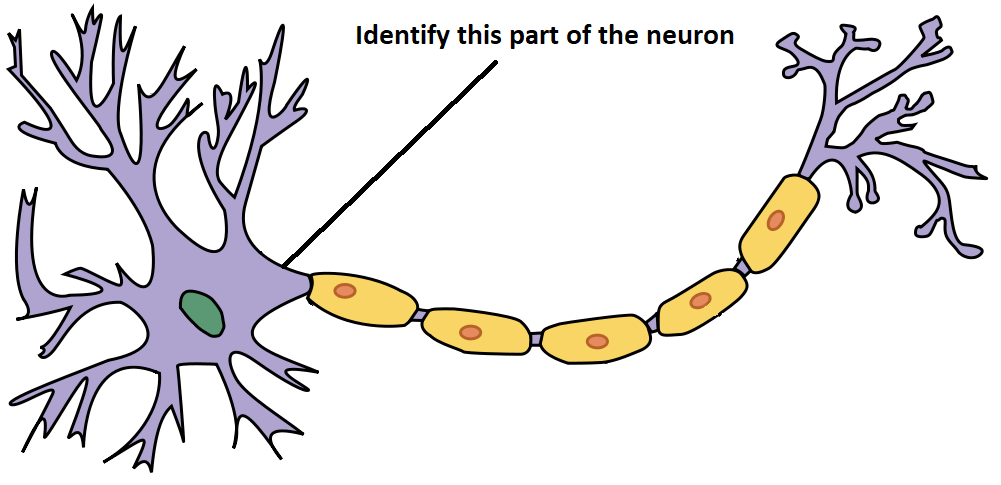
Nucleus
Cell Body
Axon
Node of Ranvier
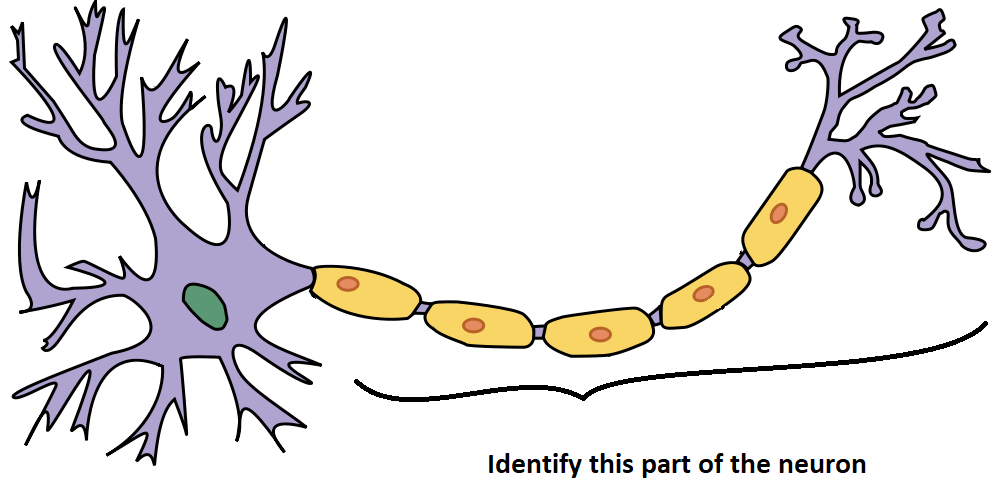
Nucleus
Cell Body
Axon
Node of Ranvier
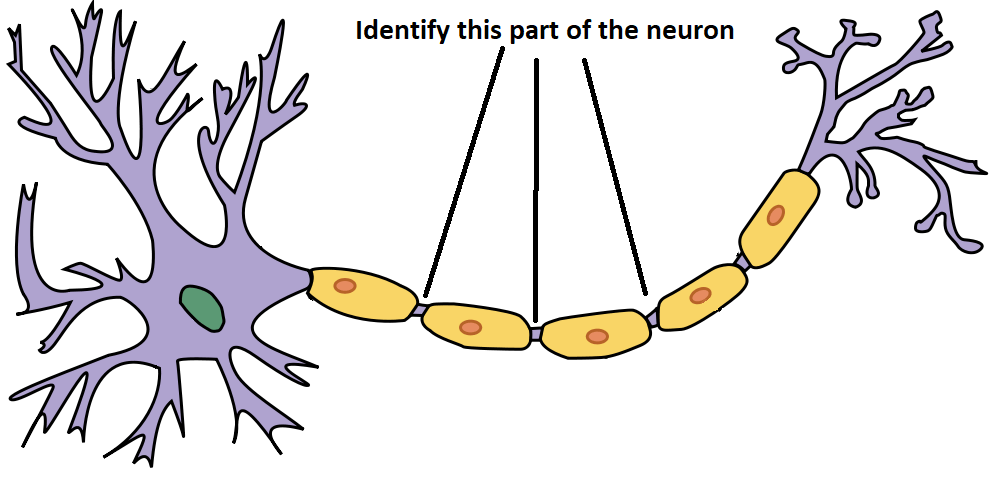
Nucleus
Cell Body
Axon
Node of Ranvier
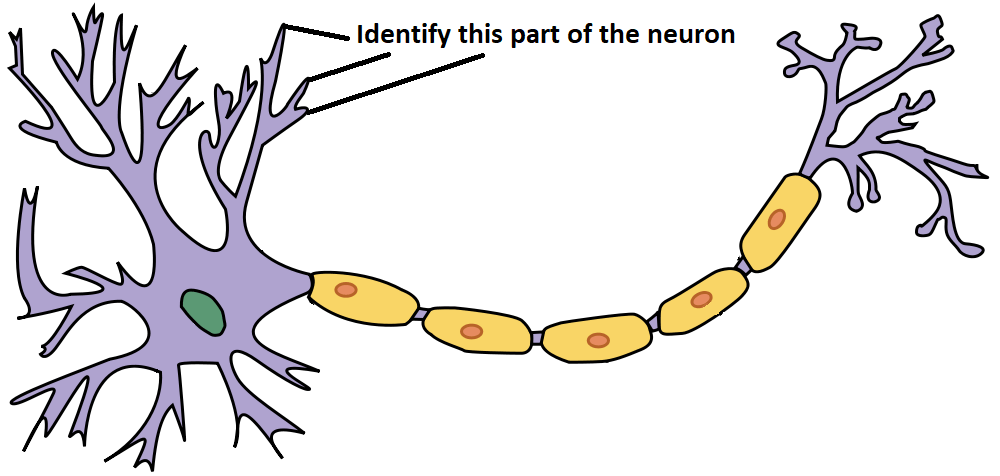
Dendrites
Axon Terminals
Myelin Sheath
Schwann Cells
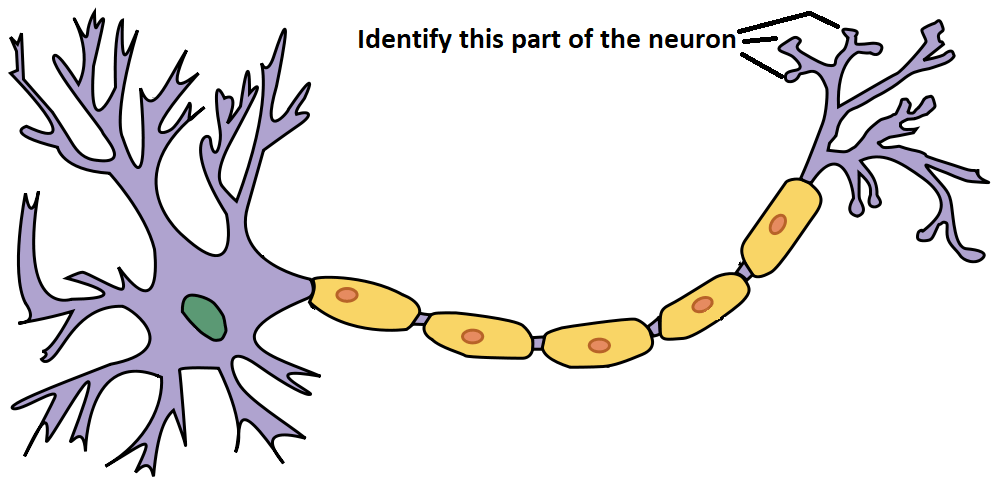
Dendrites
Axon Terminals
Myelin Sheath
Schwann Cells
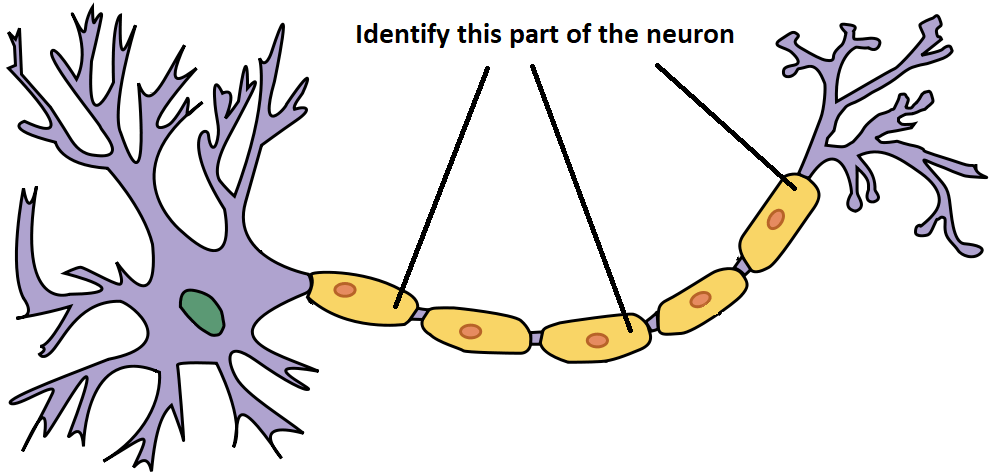
Dendrites
Axon Terminals
Myelin Sheath
Schwann Cells
What direction foes the electrical signal travel through the neuron?
From dendrites, down the Axon, and out Axon terminals
From Axon terminals, down the Axon, & out of the dendrites
Any direction up or down the cell
From the Axon, to the Dendrites, and out the Axon terminals
What does the neuron's Myelin Sheath do?
Controls the actions of the neuron
Produces food for the neuron
Carries information from the cell body to other neurons
Surrounds and insulates the axon
What do Axon Terminals do?
Intakes information from other neurons
Produces fatty tissue for the Myelin Sheath
Sends information to the next cell
Controls the speed of electrical signal through the axon
Fatty white material produced by Schwann cells that encases long neuron fibers:
axon
dendrite
cell body
myelin
The electrochemical signal carried by a neuron:
neurotransmitter
resting potential
action potential
zapper
Action potential stage: Na+ enters the axon
depolarization
repolarization
refractory period
resting potential
Positive Sodium ions maintained outside axon;
Negative Potassium ions maintained inside axon
depolarization
repolarization
refractory period
resting potential
Period after a neuron fires and before it can fire again:
depolarization
repolarization
refractory period
resting potential

The tiny gap between neurons where nerve impulses are sent from one neuron to another.
synapse
axon terminal
impulse
myelin
Under supply of Norepinephrine can lead to:
Anxiety disorders
Painkiller addiction
Depressed mood
Huntington's disease
Dopamine...
Contributes to voluntary movement control
Contributes to mood and arousal
Plays a key role in pain relief
Resembles opiate drugs
Neurotransmitter associated with Alzheimer's disease
Dopamine
Acetylcholine
Serotonin
GABA
Both Parkinson's Disease and Schizophrenia are associated with dysregulation of...
GABA
Dopamine
Serotonin
Endorphins
_______ plays a key role in Reward Pathways and is implicated in addictive disorders
Acetylcholine
Serotonin
Dopamine
GABA
Prozac and similar antidepressant drugs predominately affect which circuit
GABA
Dopamine
Serotonin
Endorphins
_________________ resemble/s opiate drugs in structure and effects
Dopamine
GABA
Endorphins
Serotonin
Depressive disorders are associated with dysregulation of...
Acetylcholine & Dopamine
Norepinephrine & Serotonin
Serotonin & Dopamine
GABA & Norepinephrine
What is the main function of the nervous system?
to inhale oxygen and exhale carbon dioxide
to break down food consumed by a person for nutrients
to control the body's activities by relaying messages
to control the body's movements
What are the two divisions of the nervous system?
Central and Lower nervous systems
Central and Peripheral nervous systems
Lower and Cerebral nervous systems
Central and Muscular nervous systems
What are the three parts of the nervous system?
brain, spinal cord, nerves
brain, lungs, spinal cord
heart, brain, nerves
brain, nerves, neurons
What are the 2 major divisions of the peripheral nervous system (PNS)?
Sensory & Motor
Peripheral & Central
Somatic & Autonomic
Brain & Spinal Cord
Which of the following is regulated by the autonomic nervous system
Breathing
Kicking a soccer ball
Balancing on one foot
Raising your hand
An involuntary, automatic response to a stimulus controlled by the spinal cord is a ____.
stimulus
reflex
paralysis
cerebellum
Which hormone is produced in the testes
Insulin
Adrenalin
Testosterone
Thyroxine
Where is insulin produced
Liver
Heart
Pancreas
Pineal gland

Where is the pancreas? (pick the correct number in diagram)
3
2
6
8
Which gland(s) is sometimes referred to as the master gland?
Adrenal
Pituitary
Testes
Ovaries
In a moment of danger, which of the following help trigger the body’s fight-or-flight response through the release of epinephrine and norepinephrine?
Thyroid glands
Limbic system
Afferent neurons
Adrenal glands
Jerry was out for a walk when he was approached by a thief who demanded his wallet. Immediately his pupils dilated, he began to perspire, and his heart accelerated. These changes were activated by his
sympathetic nervous system
parasympathetic nervous system
somatic nervous system
peripheral nervous system

Which of the following systems produces, circulates, and regulates levels of hormones in the body?
Peripheral Nervous System
Sympathetic Nervous System
Endocrine system
Limbic System
After they are released, excess neurotransmitters that remain in the synaptic gap are often reabsorbed by the sending neuron through a process known as
action potential
depolarization
reuptake
refractory
As you are reading this question, the cells in your eyes are firing in response to the light coming from this screen. Which type of neuron is carrying this message to the brain?
Interneuron
Motor
Sensory
Endocrine
Why is it possible that some weak signals (such as a mosquito landing on your arm) go completely unnoticed?
The signal gets weaker as it moves down the axon
The mosquito may not provide enough stimulation for a neuron to reach its threshold
The mosquito is sending only inhibitory responses to our neuron
Only a few neurons a firing and they are too weak to detect
Curare blocks action at acetylcholine synapses and causes paralysis. This drug is an example of a(n)
antagonist
agonist
reuptake inhibitor
excitatory neurotransmitter
Which of the following occurs when a neuron is stimulated to its threshold?
The movement of sodium and potassium ions across the membrane creates an action potential
Neurotransmitters are released from the dendrites
The absolute refractory period of the neuron prevents it from responding
The neuron’s equilibrium potential is reached
A person accidentally touches a hot stove and quickly pulls the hand away, even before sensory information about the hot stove reaches the brain. The person’s reaction is enabled by
the hypothalamus
a spinal reflex
the adrenal glands
a fight-or-flight response

