Worksheets
Chemistry Test Review
Total questions: 43
Worksheet time: 35mins
Define a physical change.
A change to a substance that occurs without forming a new substance.
A change in matter that produces one or more new substances.
A change that undergoes a chemical reaction.
None of the above.
Define a chemical change.
A change to a substance that occurs without forming a new substance.
A change in matter that produces one or more new substances.
A change that doesn't form something new.
None of the above.

Ripping paper is an example of...
a physical change
a chemical change
both
neither

Rust forming over time is an example of ...
a physical change
a chemical change
both
neither
Which of these provides evidence that a chemical reaction occurs? (Remember: City Girls Love Their Phones)
2NO + O2 → 2NO2
colorless gas + colorless gas = brown gas
a gas is present
the total number of atoms remains unchanged
the state of matter remains the same
a brown gas is produced
Which of the following is NOT an example of a physical change?
crumpled paper
shrunken clothing
pencil sharpening
sour milk
Two liquids are mixed, and as a result a solid is formed. This is evidence of a ...
new substance being formed
chemical property
physical change
physical property
Which subatomic particle determines the reactivity of a group of elements on the periodic table
number of protons
number of electrons
number of neutrons
number of valence electrons
An element is identify by
its number of neutrons
its number of protons
its atomic mass
the type of charge
Properties such as magnetism, luster, and malleablity have been used to group together which category of elements on the periodic table?
metals
nonmetals
metalloids
noble gases
How many neutrons does Bromine (Br) have?
35
45
80
115
Which element belongs to the least reactive group of elements?
Neon (Ne)
Silver (Ag)
Carbon (C)
Potassium (K)
How can the element carbon be classified?
metal
nonmetals
metalloid
halogen
What is the smallest unit of an element that would still have all the properties of the element?
Particle
Molecule
Atom
What kind of charge does a neutron have?
Positive
Negative
Neutral
Extreme positive
What kind of charge does a proton have?
Positive
Negative
Neutral
Extremely negative
What kind of charge does an electron have?
Positive
Negative
Neutral
Very very neutral

How many protons does Potassium have?
19
39
20
37
The _____________ shows the number of protons and electrons.
atomic weight
nucleus
atomic number
mitochondria
The ____________ is approximately double the atomic number and includes the number of protons and neutrons.
Atomic weight
Atomic number
Element number
Radius of the atom
Which of the following contains the correct three properties of metals?
Conductive, malleable, ductile.
ductile, stretchy, conductive
heavy, malleable, conductive
pretty, ductible, conductive
Which particles are in the nucleus of an atom? Check all that apply.
protons
electrons
neutrons
elements

How many neutrons does titanium have?
22
47
48
26
A horizontal row in the periodic table is referred to as what?
column
family
group
period
Where is most of the mass of an atom located?
in the electrons
the electron cloud
even spread out in the atom
the nucleus

How many electrons does Iron have?
26
55
56
30
Which group is the most reactive nonmetals?
1
2
17
18
Which group is the most reactive metals?
1
2
17
18
Which group is the only stable (nonreactive, inert) group on the periodic table
1
2
17
18
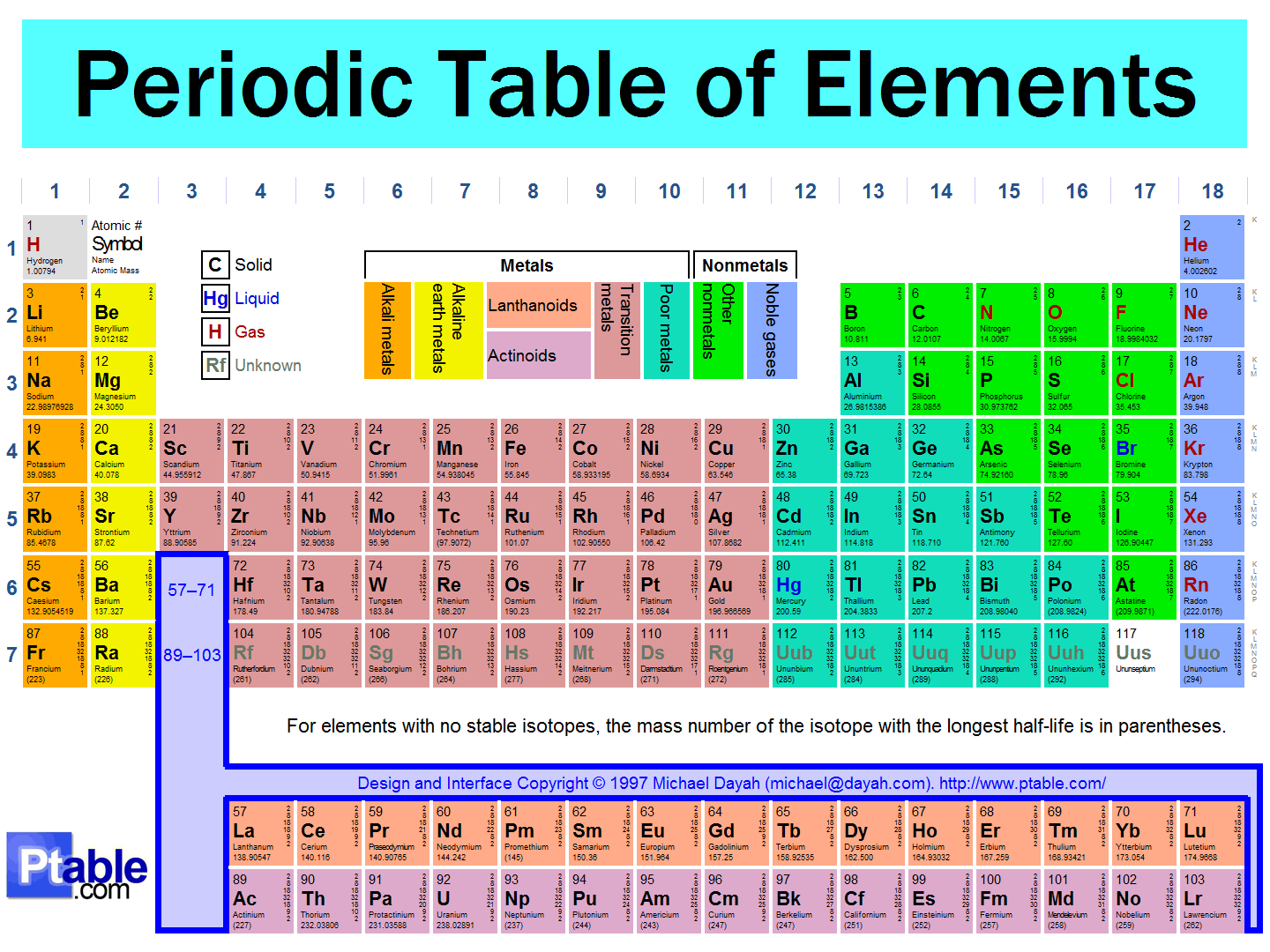
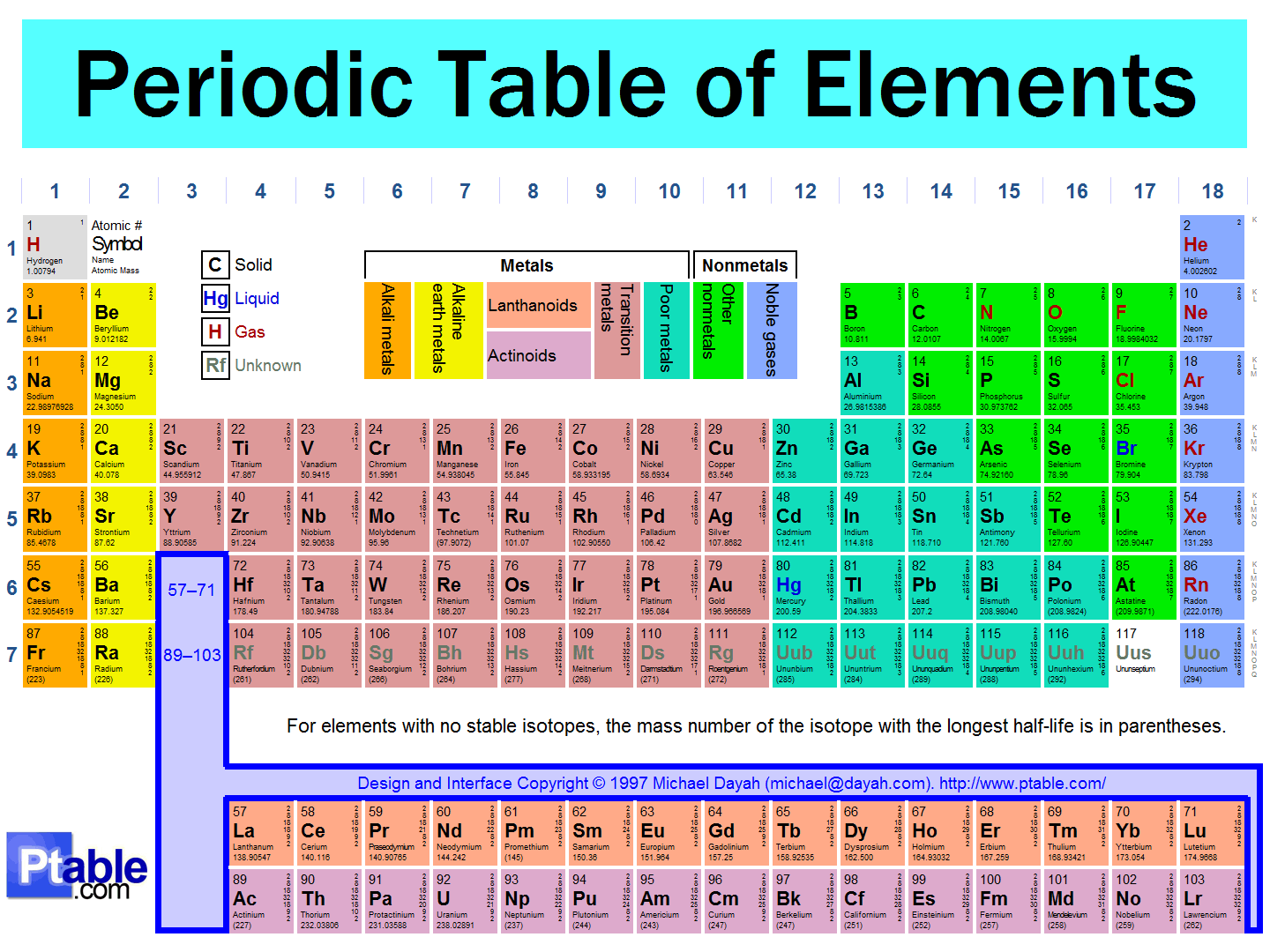
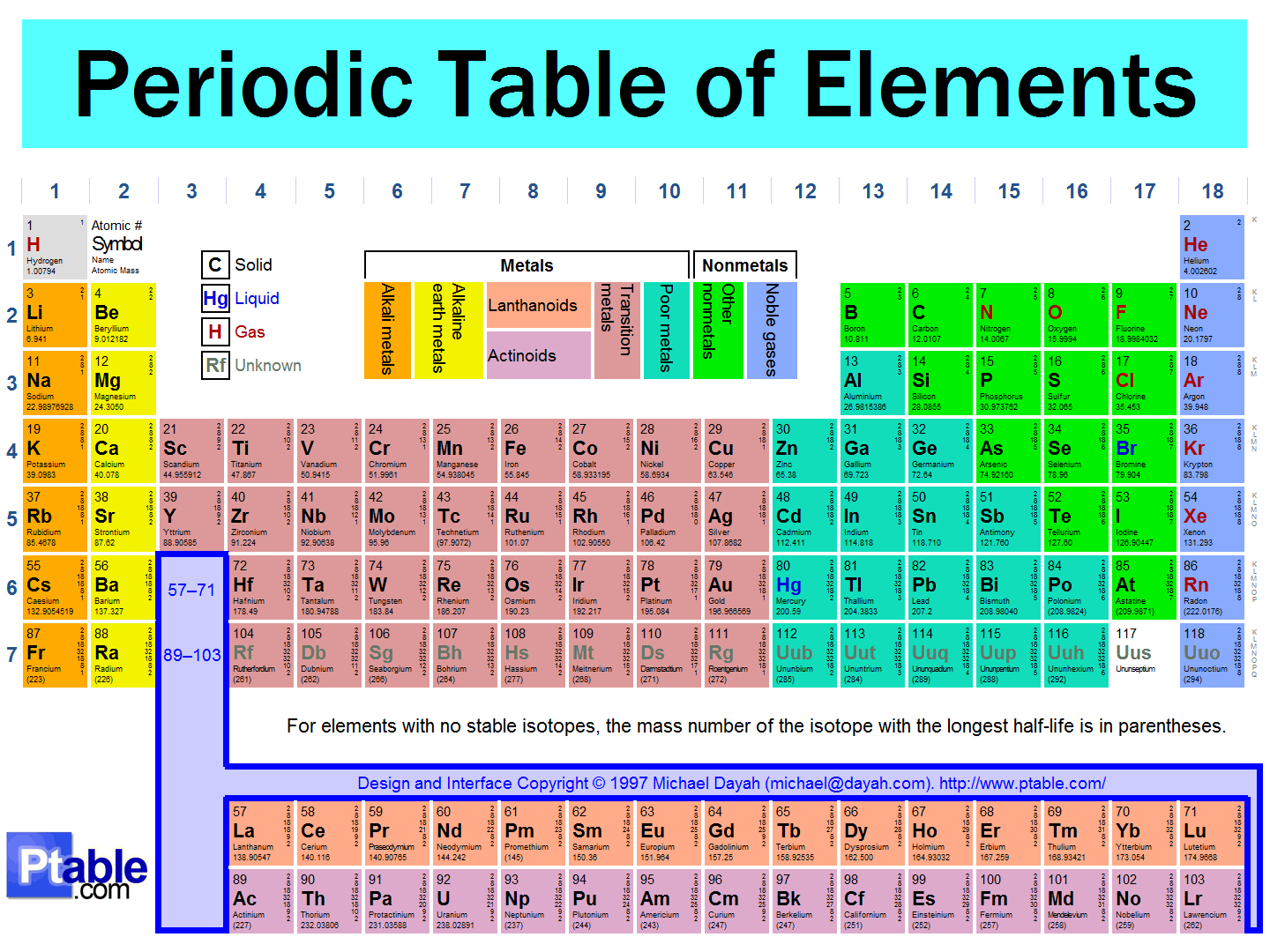
What are the three main groups of the periodic table?
groups
metal
nonmetals
metalloids
periods
What do the horizontal rows on the periodic table tell us?
The number of orbitals
The number of valence electrons (the electrons on the outer most shell)
How do you calculate the number of neutrons? *
Mass = Atomic number - Neutrons
Mass - Atomic number = Neutrons
Atomic number = Neutrons

How many protons and electrons does nickel have?
28
58.69